Skip to content
DidYouSearch DidYouSearch
  • did you search?
  • Baby Plus+
    • Baby Activities
      • Arts & Crafts
      • Indoor Activities
      • Montessori
      • Music
      • Outdoor Activities
      • Reading
      • Sensory Play
      • Tummy Time
    • Baby Development
      • Brain Development
      • Cognitive Development
      • Emotional Development
      • Fine Motor Skills
      • Growth Milestones
      • Monthly Milestones
      • Motor Skills
      • Physical Development
      • Social Development
      • Speech Development
    • Baby Feeding
      • Allergies
      • Baby Led Weaning
      • Bottle Feeding
      • Breast feeding
        • Breastfeeding Diet
        • Breastfeeding Positions
        • Latch Problems
        • Low Milk Supply
        • Mastitis
        • Pumping Schedule
        • Weaning
      • Burping
      • Cluster Feeding
      • Feeding Schedule
      • Formula Feeding
        • Formula Amount
        • Formula Brands
        • Formula Comparison
        • Formula Preparation
        • Formula Storage
      • Hydration
      • Pumping
      • Solid Foods
    • Baby Gear Reviews
      • Best Baby Carrier
      • Best Baby Monitor
      • Best Baby Strollers
      • Best Bottles
      • Best Breast Pump
      • Best Car Seat
      • Best Cribs
      • Best Diapers
      • Best Formula
      • Best Toys
    • Baby Growth
      • Growth Spurts
      • Height Charts
      • Monthly Growth
      • Percentiles
      • Weight Charts
    • Baby Health
      • Allergies
      • Cold
      • Constipation
      • Cough
      • Diarrhea
      • Ear Infection
      • Fever
      • Flu
      • Pediatric Visits
      • Rashes
      • Teething
      • Vaccines
      • Vomiting
    • Baby Nutrition
      • Dairy
      • Drinks
      • Eggs
      • Fish
      • Fruits
      • Healthy Recipes
      • Meat
      • Snacks
      • Vegetables
      • Vitamins
    • Baby Products
      • Baby Carriers
      • Bassinets
      • Bottles
      • Breast Pumps
      • Car Seats
      • Cribs
      • Diaper Bags
      • High Chairs
      • Monitors
      • Strollers
      • Swings
      • Toys
      • Walkers
    • Baby Recipes
      • BLW Recipes
      • Breakfast
      • Dinner
      • Finger Foods
      • Lunch
      • Purees
      • Snacks
    • Baby Safety
      • Baby Proofing
      • Car Seats
      • Choking Hazards
      • CPR
      • Home Safety
      • Poison Prevention
      • Safe Sleep
      • Sun Protection
      • Water Safety
  • Baby Names
    • Boy Names
    • Girl Names
    • American baby boy names
    • American baby girl names
    • Biblical Names
    • Middle Names
    • Modern Names
    • Short Names
    • Unique Names
    • Unisex Names
  • Recommended
    • Baby Shopping
      • Baby Registry
      • Budget Baby Shopping
      • Hospital Bag
      • Must Have Products
      • Newborn Checklist
      • Nursery Ideas
    • Baby Sleep
      • Bedtime Routine
      • Co Sleeping
      • Crib Safety
      • Nap Schedules
      • Night Wakings
      • Sleep Environment
      • Sleep Products
      • Sleep Regression
      • Sleep Training
      • Wake Windows
      • White Noise
    • Childcare
      • Daycare
      • Babysitters
      • Kindergarten
      • Nannies
      • Preschool
    • Newborn Care
      • Nail Care
      • Baby Hygiene
      • Bathing
      • Crying
      • Diapering
      • Ear Care
      • Eye Care
      • Skin Care
      • Soothing Techniques
      • Temperature
      • Umbilical Cord
    • Special Needs
      • Premature Babies
      • Autism Signs
      • Developmental Delays
      • Down Syndrome
      • NICU
      • Twins
    • Seasonal Baby Care
      • Spring
      • Summer
      • Travel
      • Fall
      • Holidays
      • Winter
  • Parenting
    • Bonding
    • Discipline
    • Emotional Intelligence
    • First Time Parents
    • Gentle Parenting
    • Positive Parenting
    • Routines
    • Single Parents
    • Working Parents
  • Pregnancy
    • Pregnancy Complications
    • Labor & Delivery
    • Postpartum Recovery
    • Pregnancy Exercises
    • Pregnancy Medications
    • Pregnancy Nutrition
    • Pregnancy Sleep
    • Pregnancy Symptoms
    • Pregnancy Tests
    • Pregnancy Vitamins
    • Pregnancy Weeks
  • Toddler
    • Preschool
    • Speech
    • Tantrums
    • Toddler Food
    • Toddler Sleep
    • Behavior
    • Independence
    • Learning
    • Potty Training
  • Traveling with Baby
    • Road Trips
    • Beach
    • Camping
    • Flying
    • Hotels
    • Packing Lists
  • did you search?
  • Baby Plus+
    • Baby Activities
      • Arts & Crafts
      • Indoor Activities
      • Montessori
      • Music
      • Outdoor Activities
      • Reading
      • Sensory Play
      • Tummy Time
    • Baby Development
      • Brain Development
      • Cognitive Development
      • Emotional Development
      • Fine Motor Skills
      • Growth Milestones
      • Monthly Milestones
      • Motor Skills
      • Physical Development
      • Social Development
      • Speech Development
    • Baby Feeding
      • Allergies
      • Baby Led Weaning
      • Bottle Feeding
      • Breast feeding
        • Breastfeeding Diet
        • Breastfeeding Positions
        • Latch Problems
        • Low Milk Supply
        • Mastitis
        • Pumping Schedule
        • Weaning
      • Burping
      • Cluster Feeding
      • Feeding Schedule
      • Formula Feeding
        • Formula Amount
        • Formula Brands
        • Formula Comparison
        • Formula Preparation
        • Formula Storage
      • Hydration
      • Pumping
      • Solid Foods
    • Baby Gear Reviews
      • Best Baby Carrier
      • Best Baby Monitor
      • Best Baby Strollers
      • Best Bottles
      • Best Breast Pump
      • Best Car Seat
      • Best Cribs
      • Best Diapers
      • Best Formula
      • Best Toys
    • Baby Growth
      • Growth Spurts
      • Height Charts
      • Monthly Growth
      • Percentiles
      • Weight Charts
    • Baby Health
      • Allergies
      • Cold
      • Constipation
      • Cough
      • Diarrhea
      • Ear Infection
      • Fever
      • Flu
      • Pediatric Visits
      • Rashes
      • Teething
      • Vaccines
      • Vomiting
    • Baby Nutrition
      • Dairy
      • Drinks
      • Eggs
      • Fish
      • Fruits
      • Healthy Recipes
      • Meat
      • Snacks
      • Vegetables
      • Vitamins
    • Baby Products
      • Baby Carriers
      • Bassinets
      • Bottles
      • Breast Pumps
      • Car Seats
      • Cribs
      • Diaper Bags
      • High Chairs
      • Monitors
      • Strollers
      • Swings
      • Toys
      • Walkers
    • Baby Recipes
      • BLW Recipes
      • Breakfast
      • Dinner
      • Finger Foods
      • Lunch
      • Purees
      • Snacks
    • Baby Safety
      • Baby Proofing
      • Car Seats
      • Choking Hazards
      • CPR
      • Home Safety
      • Poison Prevention
      • Safe Sleep
      • Sun Protection
      • Water Safety
  • Baby Names
    • Boy Names
    • Girl Names
    • American baby boy names
    • American baby girl names
    • Biblical Names
    • Middle Names
    • Modern Names
    • Short Names
    • Unique Names
    • Unisex Names
  • Recommended
    • Baby Shopping
      • Baby Registry
      • Budget Baby Shopping
      • Hospital Bag
      • Must Have Products
      • Newborn Checklist
      • Nursery Ideas
    • Baby Sleep
      • Bedtime Routine
      • Co Sleeping
      • Crib Safety
      • Nap Schedules
      • Night Wakings
      • Sleep Environment
      • Sleep Products
      • Sleep Regression
      • Sleep Training
      • Wake Windows
      • White Noise
    • Childcare
      • Daycare
      • Babysitters
      • Kindergarten
      • Nannies
      • Preschool
    • Newborn Care
      • Nail Care
      • Baby Hygiene
      • Bathing
      • Crying
      • Diapering
      • Ear Care
      • Eye Care
      • Skin Care
      • Soothing Techniques
      • Temperature
      • Umbilical Cord
    • Special Needs
      • Premature Babies
      • Autism Signs
      • Developmental Delays
      • Down Syndrome
      • NICU
      • Twins
    • Seasonal Baby Care
      • Spring
      • Summer
      • Travel
      • Fall
      • Holidays
      • Winter
  • Parenting
    • Bonding
    • Discipline
    • Emotional Intelligence
    • First Time Parents
    • Gentle Parenting
    • Positive Parenting
    • Routines
    • Single Parents
    • Working Parents
  • Pregnancy
    • Pregnancy Complications
    • Labor & Delivery
    • Postpartum Recovery
    • Pregnancy Exercises
    • Pregnancy Medications
    • Pregnancy Nutrition
    • Pregnancy Sleep
    • Pregnancy Symptoms
    • Pregnancy Tests
    • Pregnancy Vitamins
    • Pregnancy Weeks
  • Toddler
    • Preschool
    • Speech
    • Tantrums
    • Toddler Food
    • Toddler Sleep
    • Behavior
    • Independence
    • Learning
    • Potty Training
  • Traveling with Baby
    • Road Trips
    • Beach
    • Camping
    • Flying
    • Hotels
    • Packing Lists
Close

Search

Home/Pregnancy/Pregnancy Vitamins/Key nutrients before and during early pregnancy
Pregnancy Vitamins

Key nutrients before and during early pregnancy

By DrAdam
August 7, 2026 5 Min Read
0

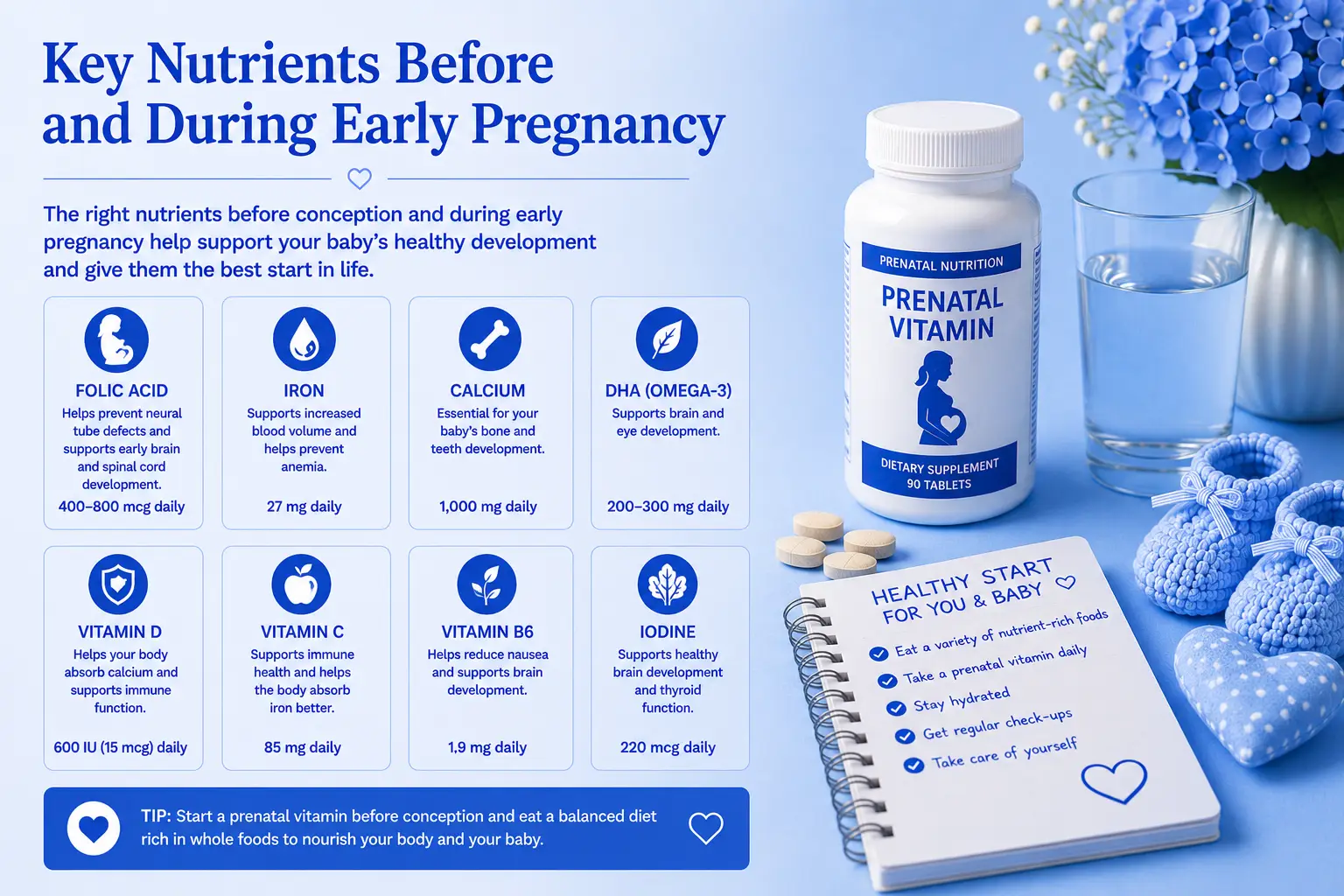
The weeks before conception and the earliest stretch of pregnancy do more heavy lifting than any other stage — this is when the neural tube closes, major organs begin forming, and your body starts building the extra blood volume it will need for the next nine months. Getting the right nutrients in place early isn’t just helpful, it’s foundational. Here’s a breakdown of what actually matters most, and why.

Why Timing Matters as Much as the Nutrients Themselves

Contents hide
1 Why Timing Matters as Much as the Nutrients Themselves
2 The Nutrients That Matter Most
2.1 Folate / Folic Acid
2.2 Choline
2.3 Iodine
2.4 Iron
2.5 Vitamin D
2.6 DHA (Omega-3 Fatty Acids)
2.7 Calcium
2.8 Zinc
2.9 Vitamin B12 and B6
3 Getting There Through Food First, Supplements Second
4 The Bottom Line
5 FAQ
5.1 What is the most important nutrient before and during early pregnancy?
5.2 Why is choline important if it’s not always in prenatal vitamins?
5.3 Do I need to start taking these nutrients before I’m actually pregnant?
5.4 Can I get all these nutrients from diet alone, without supplements?
5.5 What happens if I’m deficient in one of these nutrients during early pregnancy?

Many people don’t realize that the most critical developmental window happens before a positive pregnancy test even shows up. Since pregnancy is dated from your last menstrual period, you could be four to six weeks along by the time you find out — right around when the neural tube (which becomes the brain and spinal cord) is closing. That’s why the nutrients below are grouped as “before and during early pregnancy” rather than just “once you’re pregnant.” Building up stores in advance gives your body a head start it can’t make up for later.

The Nutrients That Matter Most

Folate / Folic Acid

This is the nutrient most closely tied to preventing neural tube defects like spina bifida, and possibly reducing the risk of cleft lip and palate as well. The recommendation is 400 mcg daily before pregnancy, increasing to 600 mcg once you’re pregnant. Because it’s difficult to get this much from food alone, a daily supplement is generally recommended starting at least one month before conception. Some people carry gene variants (like MTHFR) that make it harder to process synthetic folic acid efficiently, in which case a methylated form (L-5-MTHF) may be worth discussing with a provider.

Choline

Choline works alongside folate to support neural tube and brain development, and it’s one of the most commonly under-consumed nutrients in pregnancy. The recommended intake is 450 mg per day, but most people fall short through diet alone, and many standard prenatal vitamins contain little to none of it. Eggs are one of the best dietary sources — specifically the yolk — making them a simple addition if you’re trying to close the gap.

Iodine

Iodine is essential for your baby’s brain development and for supporting your own thyroid function, which works harder during pregnancy. Even mild iodine deficiency in early pregnancy has been associated with impaired cognitive outcomes in some studies. Good dietary sources include iodized salt, seafood, and dairy, but many prenatal vitamins now include a dedicated iodine dose to help close common gaps.

Iron

Your blood volume nearly doubles over the course of pregnancy, and iron is what makes that possible. Needs increase steadily, with the biggest jump in the second and third trimesters, but starting supplementation early — generally through a standard prenatal vitamin — helps build reserves before demand peaks.

Vitamin D

Vitamin D supports your baby’s bone and skeletal development and plays a role in brain development as well. The general recommendation is 600 IU daily. Good sources include fatty fish, fortified milk and cereal, and sunlight exposure, though supplementation is common since dietary intake alone often falls short.

DHA (Omega-3 Fatty Acids)

DHA is critical for early brain and eye development, and unlike some other nutrients, your baby depends entirely on what you supply. Recommendations typically land between 200–300 mg daily. Because many standard prenatals don’t include DHA, it’s worth checking your label or considering a separate supplement, ideally from an algae-based source if you don’t eat much fish.

Calcium

Calcium supports your baby’s developing bones and teeth, and if your intake is too low, your body may pull calcium from your own bone stores to compensate. Dairy, fortified plant milks, and leafy greens are common dietary sources.

Zinc

Zinc plays a role in healthy fetal growth, and inadequate levels have been linked to preterm birth and higher infection risk. A commonly cited target while trying to conceive is around 8 mg daily.

Vitamin B12 and B6

B12 supports red blood cell formation and neurological health, which matters especially for anyone following a vegetarian or vegan diet, since B12 is found almost exclusively in animal products. Vitamin B6 is often highlighted for its role in easing early pregnancy nausea in addition to its broader metabolic functions.

Getting There Through Food First, Supplements Second

Most guidance frames this the same way: aim for a well-balanced diet first, and use a prenatal supplement to fill in the inevitable gaps. Leafy greens, beans, eggs, dairy, fortified grains, and low-mercury fish cover a lot of ground across these nutrients — but very few diets hit every target on their own, which is exactly why a comprehensive prenatal vitamin is considered a baseline recommendation rather than an optional extra.

The Bottom Line

The nutrients that matter most before and during early pregnancy — folate, choline, iodine, iron, vitamin D, DHA, calcium, zinc, and B vitamins — are doing their most important work before you may even realize you’re pregnant. Starting a prenatal vitamin at least one month before trying to conceive, paired with a nutrient-dense diet, gives your body the best possible foundation for those critical early weeks.

FAQ

What is the most important nutrient before and during early pregnancy?

Folate (folic acid) is typically considered the top priority, since it’s directly linked to preventing neural tube defects that form in the first few weeks of pregnancy, often before a positive pregnancy test.

Why is choline important if it’s not always in prenatal vitamins?

Choline works alongside folate to support brain and neural tube development, but many prenatal formulas contain little or none of it. This means it’s worth tracking separately, either through food sources like eggs or a dedicated supplement.

Do I need to start taking these nutrients before I’m actually pregnant?

Yes, ideally. Key nutrients like folate and iodine are needed at their highest levels during the first few weeks of pregnancy, which is why doctors recommend starting supplementation at least a month before trying to conceive.

Can I get all these nutrients from diet alone, without supplements?

It’s possible in theory, but difficult in practice. Most diets fall short on at least a few of these nutrients, particularly choline, DHA, and iodine, which is why a comprehensive prenatal vitamin is generally recommended alongside a healthy diet.

What happens if I’m deficient in one of these nutrients during early pregnancy?

The specific risks vary by nutrient, ranging from neural tube defects with low folate to impaired cognitive development with iodine deficiency. If you’re concerned about a specific deficiency, bloodwork with your provider can clarify where you actually stand.

Author

DrAdam

Dr. Adam. Obstetrician and Gynecologist

Follow Me
Other Articles
Previous

Iron supplements during pregnancy — when and how much?

Next

Best prenatal gummy vitamins vs. pills

No Comment! Be the first one.

Leave a Reply Cancel reply

Your email address will not be published. Required fields are marked *

What is Did You Search?

The “Did You Search” website was created for all mothers and families. Just search to find all your needs about your children.

Links

  • about
  • contact
  • privacy policy
  • medical disclaimer
  • sitemap
Copyright 2026 — DidYouSearch. All rights reserved.