
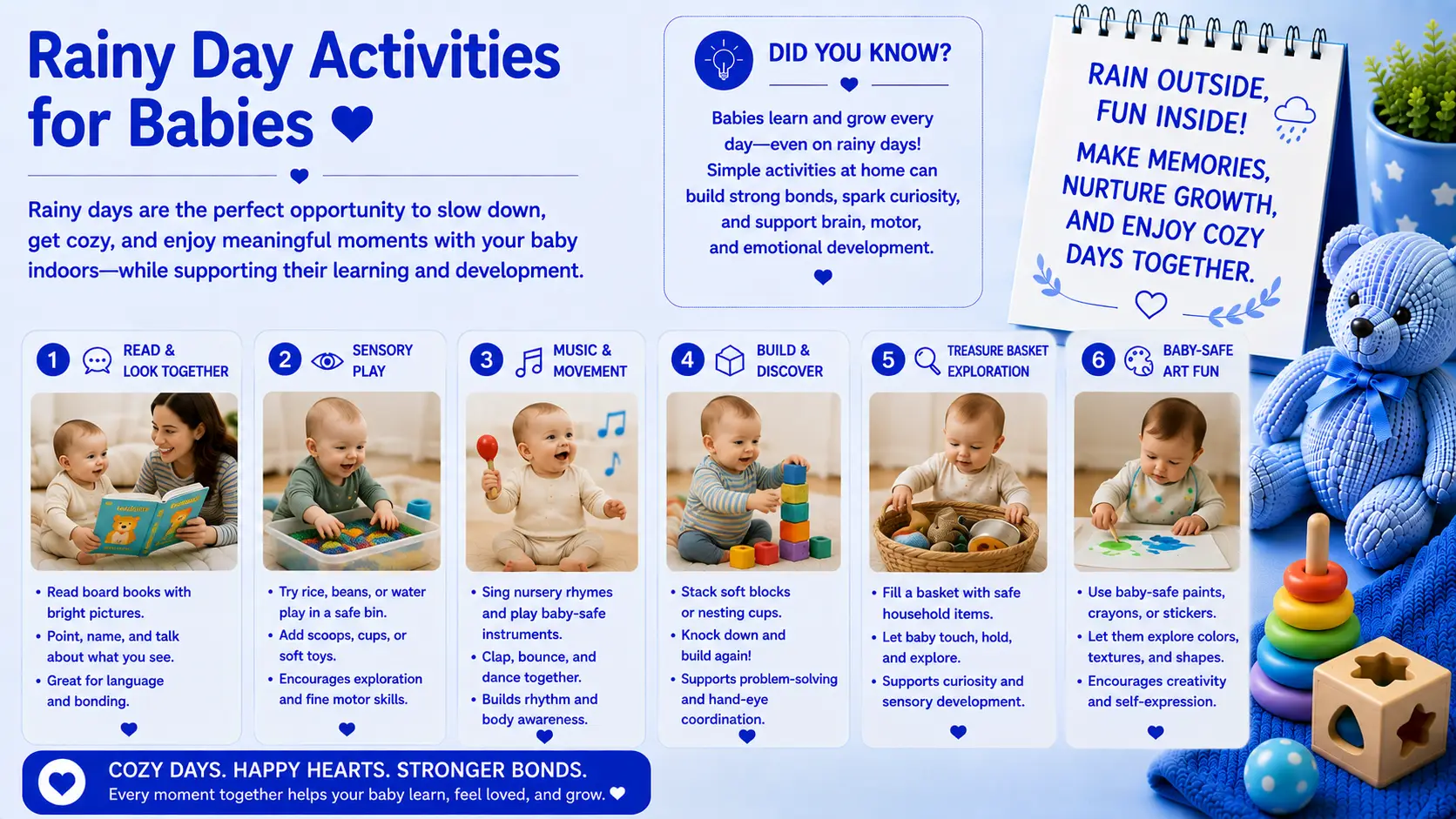

Rainy days can feel long when you have a baby at home, but they also create the perfect chance for cozy, low-pressure play. Searches for “rainy day activities for babies,” “rainy day ideas with a baby,” and “indoor activities for infants on a rainy day” show that parents want simple, screen-free options that support development without requiring a trip to the store. The best rainy day activities for babies focus on sensory exploration, movement, music, and connection using everyday items you already have.
Why Rainy Days Are Great for Baby Play
Babies thrive on routine, faces, sounds, and gentle movement. When outdoor walks and park time are off the table, indoor rainy day activities help build motor skills, language, and sensory processing while strengthening your bond. Short play blocks mixed with feeding, napping, and cuddling keep the day manageable. Experts and parent sites consistently recommend keeping things simple, supervised, and responsive to baby’s cues—overstimulation is easy to avoid when you follow their lead.
Sensory Play That Feels Like the Rain
Sensory experiences rank among the top rainy day ideas for babies because they engage multiple senses without much setup.
Make rainy-day sensory bottles: fill clear plastic bottles with water, a few drops of food coloring, and glitter or small beads. Seal them tightly and let baby shake and watch the “rain” swirl. This builds hand-eye coordination and focus.
Texture towel time works for all ages—offer a soft cloth, a ribbed one, and a smooth one. Describe the differences as baby explores. For older infants, create edible “sand” with crushed cereal mixed with a little oil, or set up shallow water play in a tray with cups and spoons on a towel for easy cleanup.
Crinkle paper sealed in a bag or a simple sound shuffle with household items (wooden spoon and pot, sealed rattle) adds auditory interest that pairs well with the real rain outside.
Movement and Energy Burners
Babies still need to move on rainy days. Tummy time remains essential. Place a mirror or high-contrast toy nearby on a play mat and keep sessions short and positive. As baby grows stronger, build a mini indoor obstacle course with pillows, rolled blankets, and soft cushions so crawlers can practice going over and around.
For younger babies, try gentle leg pedaling while they lie on their back, or hold them upright so their feet can touch different surfaces. Older babies love container play—dropping toys into a box or pulling scarves from a tissue box—and crawling through a tunnel made from your legs or a large cardboard box. A soft ball for rolling back and forth adds cause-and-effect fun.
Music, Books, and Quiet Connection
Rainy days shine for bonding activities. Hold baby close and sing weather-themed songs like “Rain, Rain, Go Away” or classic nursery rhymes with hand motions. Put on music and have a gentle dance party—swaying, spinning, or bouncing supported.
Create a cozy book nook with pillows and textured board books. Point to pictures, use different voices, and let baby help turn pages. Peekaboo with a blanket or your hands teaches object permanence and usually brings smiles. Looking out the window together and narrating what you see (raindrops, birds, cars) turns the weather itself into a learning moment.
Age-Appropriate Rainy Day Ideas
0–3 months: Face-to-face talking, slow singing, high-contrast “wall tours,” short tummy time on your chest, mirror gazing.
3–6 months: Tummy time with a mirror, reaching for toys, gentle supported sitting, simple sound toys, fabric exploration.
6–12 months: Container dumping and filling, peekaboo, pillow obstacle courses, ball rolling, supervised water or texture play, dancing with support.
Tips for a Smooth Rainy Day
Structure the day with short play blocks (10–15 minutes), reset moments for feeds and changes, and calm time for books or singing. Two to four activities are usually enough—repetition is comforting for babies. Supervise closely, avoid small choking hazards, and choose low-mess options when energy is low. Rotate a few toys so everything feels fresh. If baby seems restless, switch from movement to sensory or quiet cuddles. Your presence and voice matter more than elaborate setups.
These rainy day activities for babies turn gray weather into opportunities for growth and connection. Keep expectations realistic, follow baby’s cues, and enjoy the slower pace that rain naturally brings.
FAQ
What are the best rainy day activities for a 6-month-old?
At six months, try tummy time with a mirror, reaching and grasping toys, simple container play, peekaboo, sensory bottles or texture towels, and supported dancing or singing. Keep sessions short and mix movement with calm interaction.
How can I keep my baby entertained indoors all day without screens?
Use short, varied blocks: sensory play, movement (tummy time or crawling practice), music and dance, books, and window watching. Follow a loose routine of play, reset, and calm time. Baby’s interest in your face and voice often lasts longer than any toy.
Are sensory activities safe on rainy days for young babies?
Yes, when materials are large, non-toxic, and closely supervised. Sealed bottles, fabric textures, and edible options (like crushed cereal) work well. Avoid small parts and never leave baby unattended.
What if my baby gets bored quickly during indoor play?
Switch the type of stimulation—move from active crawling to quiet sensory or singing. Short sessions (10–15 minutes) and responsive interaction usually work better than long, elaborate setups. Sometimes a feed, cuddle, or nap is what they really need.
Do rainy day activities need to be different for newborns?
Newborns benefit most from gentle, low-stimulation options: face time, soft singing, slow movement, and short tummy time. Keep the environment calm and focus on bonding rather than structured play.