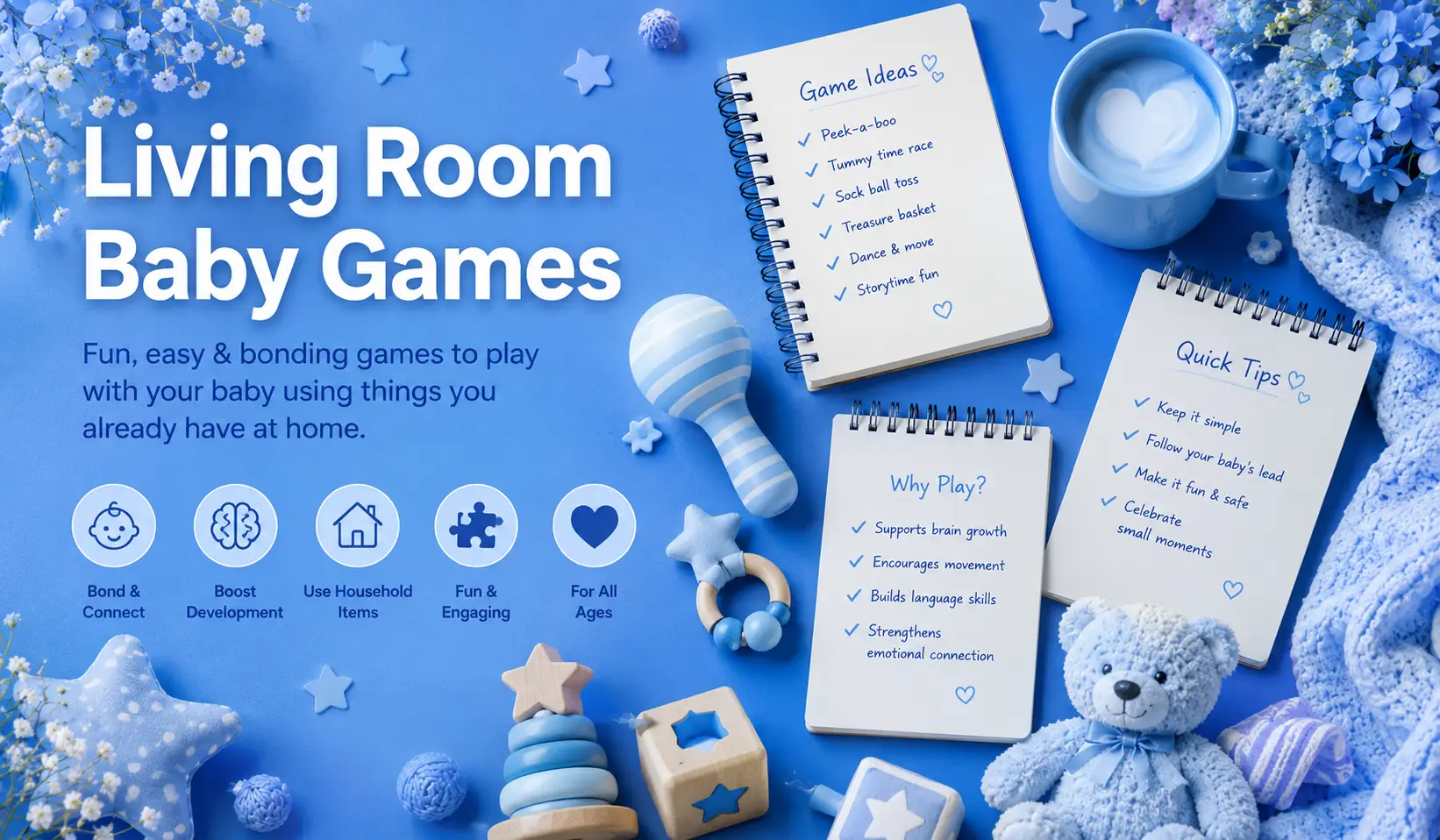

Your living room is already the perfect playground for your baby. No fancy equipment or outdoor space required—just a soft rug, a few pillows, everyday household items, and your attention. Living room baby games turn everyday moments into opportunities for bonding, movement, and early learning. These simple indoor activities keep little ones engaged while supporting motor skills, language, and social development right where you spend most of your time.
Parents searching for “indoor activities for babies,” “baby games to play at home,” or “living room activities for toddlers” often want ideas that are low-prep, safe, and actually fun. The best options use what you already have and adapt easily as your baby grows from newborn to early toddler.
Why Living Room Play Matters
Babies learn through play. Floor time builds strength for rolling, sitting, crawling, and walking. Interactive games like peekaboo teach object permanence—the understanding that things still exist even when out of sight. Songs, rhymes, and gentle movement support language and emotional connection. Research-backed classics such as tummy time, pat-a-cake, and peekaboo appear again and again because they work.
Living room games also solve real parent problems: rainy days, short attention spans, limited space, and the need for screen-free entertainment. Many of the top indoor baby games require zero setup and can be done while you sit on the couch or floor.
Safe Setup Tips for Living Room Play
Clear a soft area free of sharp edges and small objects. Use a play mat, thick rug, or blankets. Keep sessions short—babies tire quickly—and always supervise. Never leave a baby unattended with pillows, blankets, or balloons. For tummy time, start with just a few minutes and gradually increase as your baby builds strength.
Classic Living Room Baby Games by Stage
Newborn to 3 months Focus on senses and connection. Hold your baby and gently sway to soft music—a slow living-room “dance.” Practice “show and tell” by slowly moving a high-contrast toy or your face within their limited visual range. Simple face-to-face talking and smiling builds early social skills. Tummy time on the floor (or on your chest) strengthens neck and upper body muscles.
4–6 months Peekaboo becomes pure magic. Hide your face behind your hands, a blanket, or a pillow and reappear with a smile and “Peekaboo!” This classic game supports object permanence and shared joy. Pat-a-cake (or patty-cake) develops hand-eye coordination and rhythm—clap your baby’s hands together while singing. Roll a soft ball gently toward them while they sit supported, encouraging reaching.
7–12 months Crawling and early standing open new possibilities. Create a simple pillow obstacle course: arrange couch cushions in a line or low “tunnel” for your baby to climb over or crawl through. Play “carpet ride” by carefully pulling them on a soft blanket across the floor (always support their head and keep the ride slow). Mirror play—sit together in front of a safe mirror and make faces—helps with self-awareness. Animal sound games (“What does the cow say?”) boost language.
Early toddlers (12–24 months) The living room becomes an adventure zone. Balloon volleyball (keep a balloon in the air with soft taps) builds coordination without risk of broken lamps if you clear the space. Simple scavenger hunts (“Find the red sock!”) or “Simon Says” variations adapted for little ones encourage listening and movement. Build forts with couch cushions and blankets for imaginative play, or turn the floor into a giant shape or color matching game with paper cutouts or toys.
More Easy Living Room Favorites
Sensory exploration: Offer safe household items with different textures—a wooden spoon, soft scarf, crinkly paper, or a plastic bowl—under close watch.
Music and movement: Put on a playlist and dance together, or use pots and wooden spoons as living-room drums.
Hide-and-find: Hide a favorite toy under a blanket or behind a cushion and encourage your baby to find it.
Body part games: Gently touch and name body parts while singing “Head, Shoulders, Knees, and Toes.”
These activities answer common searches like “fun games to play with baby at home,” “tummy time activities,” and “best indoor games for babies.” They require almost nothing extra and fit real living-room life.
Making Play Sustainable
Follow your baby’s lead. If they lose interest, switch or take a break. Incorporate play into daily routines—after a diaper change, during a quiet afternoon, or while waiting for dinner. Short, frequent sessions often work better than long ones. As your baby grows, the same living room space evolves with them: what starts as tummy time becomes crawling courses and later imaginative fort play.
The beauty of living room baby games is their simplicity. You do not need perfect conditions or expensive toys. Consistency and warmth matter more than variety. These moments of floor play, peekaboo giggles, and shared songs create the foundation for later learning and stronger parent-child bonds.
FAQ
What are the best living room games for a 6-month-old?
Peekaboo, supported sitting with a soft ball to reach for, gentle bouncing on your lap while singing, and supervised tummy time with toys just out of reach work especially well at this age.
How can I make tummy time more fun in the living room?
Lie face-to-face on the floor, use a mirror, place interesting toys nearby, or do tummy time on your chest while talking or singing. Keep sessions short and positive.
Are pillow forts and obstacle courses safe for babies?
Yes when closely supervised and built low with soft materials. Avoid high stacks or anything that could collapse on a baby. Always stay within arm’s reach.
What indoor activities help with baby development?
Games that encourage reaching, rolling, crawling, back-and-forth interaction (like peekaboo), and language (songs and naming objects) support motor, cognitive, and social skills.
How do I keep a baby entertained in a small living room?
Focus on floor play, songs, simple hide-and-find, and movement games that use body and voice rather than space. Clear a small safe zone and rotate a few favorite toys or household items.