
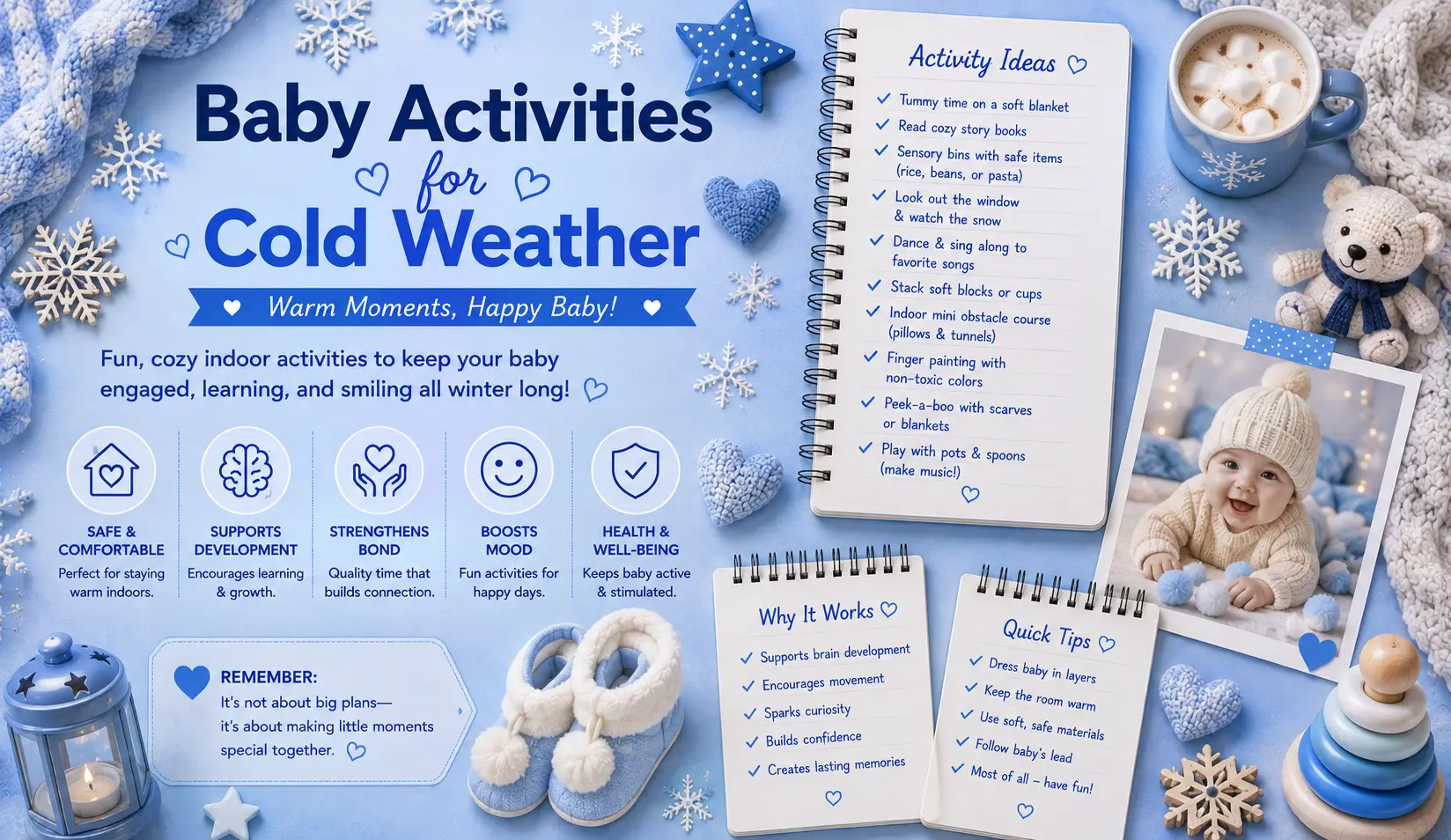

When temperatures drop and outdoor play becomes limited, keeping a baby engaged can feel challenging. Cold weather doesn’t have to mean cabin fever or endless screen time. With a mix of sensory exploration, movement, and simple household setups, you can turn indoor days into opportunities for development, bonding, and fun. These ideas work for infants through early toddlers and draw from common parent searches like “indoor activities for babies in winter,” “what to do with baby when it’s cold outside,” and “winter sensory play for babies.”
Why Indoor Play Matters in Cold Weather
Babies need movement, sensory input, and interaction for motor skills, brain development, and better sleep. When outdoor time is short or skipped due to freezing temps, wind, or ice, intentional indoor activities fill the gap. Focus on age-appropriate options: floor play and tummy time for younger babies, crawling challenges and simple cause-and-effect for those on the move. Always supervise closely, especially with small objects or water.
Sensory Play Ideas
Sensory activities rank high in searches for “baby sensory play winter” because they engage multiple senses with minimal setup.
Create a textured floor path using blankets, towels, a soft rug, and a piece of bubble wrap (supervised). Let your baby crawl or roll across different surfaces. For older infants, fill a shallow bin with dry cereal, oatmeal, or cooked pasta for scooping and dumping. A “warm snow” bin—using cotton balls, white pom-poms, or frozen (then slightly melted) ice cubes in a tray—brings winter themes inside without the chill. Add food coloring for visual interest once your baby is past the mouthing stage.
Simple water play on a cookie sheet or in a shallow tray with a few drops of water and floating toys works well on a towel-covered floor. These setups support fine motor skills and curiosity while keeping mess contained.
Movement and Gross Motor Activities
Babies and toddlers need to burn energy even when it’s too cold for long outdoor sessions. Search interest in “indoor obstacle course for babies” reflects how effective these are.
Build a simple obstacle course with couch cushions to climb over, a play tunnel to crawl through, and pillows for soft landings. Practice stairs (with close supervision) or race across the room. Turn music on for a dance party—hold your baby and sway, or let a cruising toddler bounce and stomp. Glow sticks or a flashlight in a dimmed room add novelty for older babies.
A laundry basket or cardboard box becomes a “sled” or ball pit. Fill a small inflatable pool or large bin with soft balls for diving in and out. These activities build strength, balance, and coordination without requiring special equipment.
Creative and Quiet Moments
Not every activity needs high energy. Reading and storytelling remain staples for “winter activities for infants.” Snuggle under a blanket fort made from chairs and sheets, then read winter-themed board books about snow, animals, or cozy homes. Narrate what you see out the window—falling snow, bare trees, birds—to build language even on the coldest days.
Art can be low-mess: water “painting” with a brush on colored paper, or supervised finger painting on a large sheet taped to the table or floor. Open a cardboard delivery box, set your toddler inside with crayons, and watch them create while you enjoy a quiet moment. Peek-a-boo, matching simple pictures, or stacking soft blocks keep engagement high with almost no prep.
Bring outdoor elements inside safely. On milder days, collect a bit of clean snow in a bowl for short tactile exploration (hands only, brief exposure). Or add a few ice cubes to the bathtub during a daytime bath for melting fun—always supervised and never left alone.
Safe Short Outdoor Outings
Many parents search “is it too cold to take baby outside” or “how to dress baby for cold weather.” Guidelines generally recommend limiting time in extreme cold (below about 20°F/-6°C or with high wind chill) to brief periods, and dressing in layers: one more layer than an adult would wear, including a hat, mittens, and warm socks or booties. A carrier or well-bundled stroller with blankets works well for short walks. Check frequently for cold cheeks, hands, or signs of discomfort, and head inside promptly. Fresh air and natural light still benefit mood and sleep regulation even in winter.
Practical Tips for Success
Rotate activities to prevent boredom. Keep a small bin of go-to items—scarves for peek-a-boo, soft balls, board books, and a few household objects—ready. Involve your baby in simple “helping” tasks like putting toys in a basket or “cooking” with plastic bowls. Daytime baths or kitchen dance sessions can reset energy levels. Most importantly, follow your baby’s cues: short, repeated sessions often work better than long forced ones.
These approaches address the real pain points parents voice in forums and search queries—limited outdoor options, restless little ones, and the need for developmental play without elaborate crafts or expensive toys. Consistency and responsiveness matter more than perfection.
Cold weather seasons pass. By focusing on connection and movement indoors (and brief safe outdoor time when possible), you support your baby’s growth while making the days more enjoyable for everyone. Experiment with what clicks for your child’s age and temperament, and don’t hesitate to repeat favorites.
FAQ
What are the best indoor activities for babies in winter?
Sensory bins with safe textures, cushion obstacle courses, music and dance, blanket forts with books, and simple water or ice play rank among the most effective and popular options. They promote motor skills, sensory development, and bonding with little equipment needed.
Is it safe to take a baby outside in cold weather?
Yes, for short periods when properly dressed in layers (one more than an adult), including a hat and covered extremities. Avoid prolonged exposure below freezing or in high wind, watch for signs of cold stress, and limit outings for very young infants. Always check with your pediatrician for specific concerns.
How can I keep my baby active when it’s too cold to go outside?
Create indoor movement opportunities: crawling courses with pillows and tunnels, dance parties, “sledding” on blankets or in laundry baskets, and supervised climbing on soft furniture. These help burn energy and support sleep.
What sensory play ideas work for winter with babies?
Textured floor paths, dry cereal or oatmeal bins for scooping, cotton-ball “snow,” supervised ice melting, and water trays. Start simple for younger babies and increase complexity as they grow, always prioritizing safety and supervision.
How do I dress my baby for cold weather outings?
Use the layering rule: base layer (onesie or long-sleeve), middle insulating layer, and outer weather-resistant layer, plus hat, mittens, and warm footwear. Add blankets in the stroller or carrier. Check and adjust often so your baby stays warm but not overheated.