Skip to content
DidYouSearch DidYouSearch
  • did you search?
  • Baby Plus+
    • Baby Activities
      • Arts & Crafts
      • Indoor Activities
      • Montessori
      • Music
      • Outdoor Activities
      • Reading
      • Sensory Play
      • Tummy Time
    • Baby Development
      • Brain Development
      • Cognitive Development
      • Emotional Development
      • Fine Motor Skills
      • Growth Milestones
      • Monthly Milestones
      • Motor Skills
      • Physical Development
      • Social Development
      • Speech Development
    • Baby Feeding
      • Allergies
      • Baby Led Weaning
      • Bottle Feeding
      • Breast feeding
        • Breastfeeding Diet
        • Breastfeeding Positions
        • Latch Problems
        • Low Milk Supply
        • Mastitis
        • Pumping Schedule
        • Weaning
      • Burping
      • Cluster Feeding
      • Feeding Schedule
      • Formula Feeding
        • Formula Amount
        • Formula Brands
        • Formula Comparison
        • Formula Preparation
        • Formula Storage
      • Hydration
      • Pumping
      • Solid Foods
    • Baby Gear Reviews
      • Best Baby Carrier
      • Best Baby Monitor
      • Best Baby Strollers
      • Best Bottles
      • Best Breast Pump
      • Best Car Seat
      • Best Cribs
      • Best Diapers
      • Best Formula
      • Best Toys
    • Baby Growth
      • Growth Spurts
      • Height Charts
      • Monthly Growth
      • Percentiles
      • Weight Charts
    • Baby Health
      • Allergies
      • Cold
      • Constipation
      • Cough
      • Diarrhea
      • Ear Infection
      • Fever
      • Flu
      • Pediatric Visits
      • Rashes
      • Teething
      • Vaccines
      • Vomiting
    • Baby Nutrition
      • Dairy
      • Drinks
      • Eggs
      • Fish
      • Fruits
      • Healthy Recipes
      • Meat
      • Snacks
      • Vegetables
      • Vitamins
    • Baby Products
      • Baby Carriers
      • Bassinets
      • Bottles
      • Breast Pumps
      • Car Seats
      • Cribs
      • Diaper Bags
      • High Chairs
      • Monitors
      • Strollers
      • Swings
      • Toys
      • Walkers
    • Baby Recipes
      • BLW Recipes
      • Breakfast
      • Dinner
      • Finger Foods
      • Lunch
      • Purees
      • Snacks
    • Baby Safety
      • Baby Proofing
      • Car Seats
      • Choking Hazards
      • CPR
      • Home Safety
      • Poison Prevention
      • Safe Sleep
      • Sun Protection
      • Water Safety
  • Baby Names
    • Boy Names
    • Girl Names
    • American baby boy names
    • American baby girl names
    • Biblical Names
    • Middle Names
    • Modern Names
    • Short Names
    • Unique Names
    • Unisex Names
  • Recommended
    • Baby Shopping
      • Baby Registry
      • Budget Baby Shopping
      • Hospital Bag
      • Must Have Products
      • Newborn Checklist
      • Nursery Ideas
    • Baby Sleep
      • Bedtime Routine
      • Co Sleeping
      • Crib Safety
      • Nap Schedules
      • Night Wakings
      • Sleep Environment
      • Sleep Products
      • Sleep Regression
      • Sleep Training
      • Wake Windows
      • White Noise
    • Childcare
      • Daycare
      • Babysitters
      • Kindergarten
      • Nannies
      • Preschool
    • Newborn Care
      • Nail Care
      • Baby Hygiene
      • Bathing
      • Crying
      • Diapering
      • Ear Care
      • Eye Care
      • Skin Care
      • Soothing Techniques
      • Temperature
      • Umbilical Cord
    • Special Needs
      • Premature Babies
      • Autism Signs
      • Developmental Delays
      • Down Syndrome
      • NICU
      • Twins
    • Seasonal Baby Care
      • Spring
      • Summer
      • Travel
      • Fall
      • Holidays
      • Winter
  • Parenting
    • Bonding
    • Discipline
    • Emotional Intelligence
    • First Time Parents
    • Gentle Parenting
    • Positive Parenting
    • Routines
    • Single Parents
    • Working Parents
  • Pregnancy
    • Pregnancy Complications
    • Labor & Delivery
    • Postpartum Recovery
    • Pregnancy Exercises
    • Pregnancy Medications
    • Pregnancy Nutrition
    • Pregnancy Sleep
    • Pregnancy Symptoms
    • Pregnancy Tests
    • Pregnancy Vitamins
    • Pregnancy Weeks
  • Toddler
    • Preschool
    • Speech
    • Tantrums
    • Toddler Food
    • Toddler Sleep
    • Behavior
    • Independence
    • Learning
    • Potty Training
  • Traveling with Baby
    • Road Trips
    • Beach
    • Camping
    • Flying
    • Hotels
    • Packing Lists
  • did you search?
  • Baby Plus+
    • Baby Activities
      • Arts & Crafts
      • Indoor Activities
      • Montessori
      • Music
      • Outdoor Activities
      • Reading
      • Sensory Play
      • Tummy Time
    • Baby Development
      • Brain Development
      • Cognitive Development
      • Emotional Development
      • Fine Motor Skills
      • Growth Milestones
      • Monthly Milestones
      • Motor Skills
      • Physical Development
      • Social Development
      • Speech Development
    • Baby Feeding
      • Allergies
      • Baby Led Weaning
      • Bottle Feeding
      • Breast feeding
        • Breastfeeding Diet
        • Breastfeeding Positions
        • Latch Problems
        • Low Milk Supply
        • Mastitis
        • Pumping Schedule
        • Weaning
      • Burping
      • Cluster Feeding
      • Feeding Schedule
      • Formula Feeding
        • Formula Amount
        • Formula Brands
        • Formula Comparison
        • Formula Preparation
        • Formula Storage
      • Hydration
      • Pumping
      • Solid Foods
    • Baby Gear Reviews
      • Best Baby Carrier
      • Best Baby Monitor
      • Best Baby Strollers
      • Best Bottles
      • Best Breast Pump
      • Best Car Seat
      • Best Cribs
      • Best Diapers
      • Best Formula
      • Best Toys
    • Baby Growth
      • Growth Spurts
      • Height Charts
      • Monthly Growth
      • Percentiles
      • Weight Charts
    • Baby Health
      • Allergies
      • Cold
      • Constipation
      • Cough
      • Diarrhea
      • Ear Infection
      • Fever
      • Flu
      • Pediatric Visits
      • Rashes
      • Teething
      • Vaccines
      • Vomiting
    • Baby Nutrition
      • Dairy
      • Drinks
      • Eggs
      • Fish
      • Fruits
      • Healthy Recipes
      • Meat
      • Snacks
      • Vegetables
      • Vitamins
    • Baby Products
      • Baby Carriers
      • Bassinets
      • Bottles
      • Breast Pumps
      • Car Seats
      • Cribs
      • Diaper Bags
      • High Chairs
      • Monitors
      • Strollers
      • Swings
      • Toys
      • Walkers
    • Baby Recipes
      • BLW Recipes
      • Breakfast
      • Dinner
      • Finger Foods
      • Lunch
      • Purees
      • Snacks
    • Baby Safety
      • Baby Proofing
      • Car Seats
      • Choking Hazards
      • CPR
      • Home Safety
      • Poison Prevention
      • Safe Sleep
      • Sun Protection
      • Water Safety
  • Baby Names
    • Boy Names
    • Girl Names
    • American baby boy names
    • American baby girl names
    • Biblical Names
    • Middle Names
    • Modern Names
    • Short Names
    • Unique Names
    • Unisex Names
  • Recommended
    • Baby Shopping
      • Baby Registry
      • Budget Baby Shopping
      • Hospital Bag
      • Must Have Products
      • Newborn Checklist
      • Nursery Ideas
    • Baby Sleep
      • Bedtime Routine
      • Co Sleeping
      • Crib Safety
      • Nap Schedules
      • Night Wakings
      • Sleep Environment
      • Sleep Products
      • Sleep Regression
      • Sleep Training
      • Wake Windows
      • White Noise
    • Childcare
      • Daycare
      • Babysitters
      • Kindergarten
      • Nannies
      • Preschool
    • Newborn Care
      • Nail Care
      • Baby Hygiene
      • Bathing
      • Crying
      • Diapering
      • Ear Care
      • Eye Care
      • Skin Care
      • Soothing Techniques
      • Temperature
      • Umbilical Cord
    • Special Needs
      • Premature Babies
      • Autism Signs
      • Developmental Delays
      • Down Syndrome
      • NICU
      • Twins
    • Seasonal Baby Care
      • Spring
      • Summer
      • Travel
      • Fall
      • Holidays
      • Winter
  • Parenting
    • Bonding
    • Discipline
    • Emotional Intelligence
    • First Time Parents
    • Gentle Parenting
    • Positive Parenting
    • Routines
    • Single Parents
    • Working Parents
  • Pregnancy
    • Pregnancy Complications
    • Labor & Delivery
    • Postpartum Recovery
    • Pregnancy Exercises
    • Pregnancy Medications
    • Pregnancy Nutrition
    • Pregnancy Sleep
    • Pregnancy Symptoms
    • Pregnancy Tests
    • Pregnancy Vitamins
    • Pregnancy Weeks
  • Toddler
    • Preschool
    • Speech
    • Tantrums
    • Toddler Food
    • Toddler Sleep
    • Behavior
    • Independence
    • Learning
    • Potty Training
  • Traveling with Baby
    • Road Trips
    • Beach
    • Camping
    • Flying
    • Hotels
    • Packing Lists
Close

Search

Home/Baby Activities/Montessori/Montessori Activities for Babies
Montessori

Montessori Activities for Babies

By DrAdam
August 11, 2026 5 Min Read
0

Montessori activities for babies focus on supporting natural development from the earliest months. Rather than flashy toys or structured lessons, the approach emphasizes a prepared environment, freedom of movement, and simple sensory experiences that match a baby’s unfolding abilities. Dr. Maria Montessori observed that infants learn through their senses and movement during sensitive periods, absorbing the world around them with remarkable intensity. Parents can apply these principles at home with everyday items and thoughtful setups, fostering concentration, independence, and confidence without overstimulation.

Understanding Montessori Principles for Infants

Contents hide
1 Understanding Montessori Principles for Infants
2 Montessori Activities by Age
3 Setting Up a Simple Montessori Space at Home
4 Benefits and Everyday Integration
5 FAQ
5.1 What are the best Montessori activities for newborns?
5.2 How do I make a Montessori treasure basket for a baby?
5.3 When should I introduce Montessori mobiles?
5.4 Do I need expensive Montessori toys for babies?
5.5 How can I support Montessori principles without a floor bed or special furniture?

The absorbent mind allows babies to soak up impressions effortlessly in the first years of life. Sensitive periods for movement, language, and order mean that babies are intrinsically motivated to track objects, grasp, reach, and later crawl or pull to stand. A prepared space respects this drive: uncluttered floor areas, low shelves or baskets with a few carefully chosen items, a mirror at floor level, and natural materials like wood, metal, and fabric instead of plastic or battery-powered gadgets.

Freedom of movement is central. Restrictive gear such as jumpers or prolonged time in seats can interfere with the natural progression from lifting the head to rolling, sitting, and crawling. Clothing that allows free use of hands and feet supports this process. Real-world experiences—talking to the baby, outdoor time, and simple household objects—matter more than specialized purchases.

Montessori Activities by Age

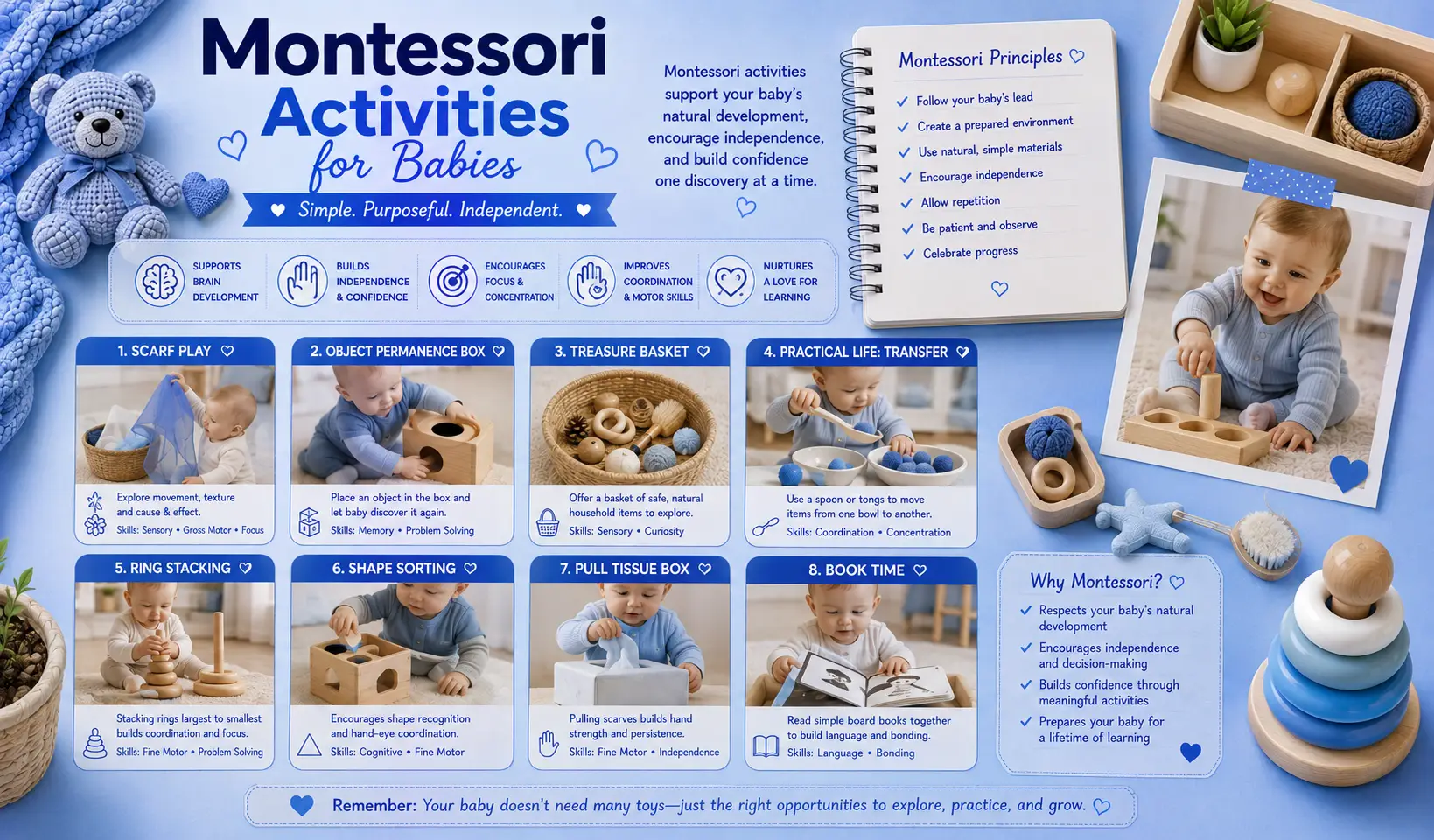
0–3 months: Visual and sensory foundations Newborns see high-contrast patterns best and benefit from calm visual focus. The classic Montessori mobile series starts with the Munari mobile (black-and-white geometric shapes), introduced around 2–3 weeks during alert awake times. It hangs slightly to one side so the baby can track movement without strain. Later come the octahedron (primary colors) and Gobbi (graduated shades of one color). These are not crib decorations for sleep but short, focused work periods on a play mat or topponcino (a thin, familiar pillow that offers continuity of touch).

Black-and-white cards or books, gentle outdoor walks, and face-to-face talking or singing build visual tracking, early language, and connection. A low, safe mirror lets the baby observe reflections and eventually their own movements. Tummy time on a firm surface strengthens the neck and core while a parent stays nearby. Keep sessions brief; follow the baby’s cues for rest.

3–6 months: Grasping, reaching, and exploration As voluntary grasping develops, replace purely visual mobiles with tactile ones—a wooden ring on a ribbon or grasping beads that invite batting and bringing objects to the mouth. Simple rattles made of natural materials, cloth balls, or rings encourage hand-eye coordination.

A treasure basket filled with safe household items of varied textures, weights, and temperatures (a wooden spoon, metal measuring cup, soft brush, fabric scrap, or pine cone) offers rich sensory input. Place the basket within reach during supervised floor time so the baby can choose and explore independently. Anticipation games, such as a simple song ending in a gentle kiss or touch, build social connection and rhythm. Reading board books with realistic images and naming everyday objects supports language during this stage.

6–12 months: Movement, object permanence, and practical life beginnings Babies gain more control and curiosity. An object permanence box (a wooden box with a hole and a ball that disappears and reappears) satisfies the emerging understanding that things continue to exist when out of sight. Simple puzzles with large knobs, stacking rings, and transfer activities (moving objects from one basket to another) refine fine motor skills.

Support gross motor development with open floor space, a pull-up bar or sturdy low furniture for cruising, and opportunities to practice sitting, crawling, and climbing under supervision. A low shelf with a few rotated toys encourages choice and independence. Practical life can begin gently: offering a spoon at mealtimes, allowing the baby to help wipe a surface with a damp cloth, or exploring water play with a shallow basin of water and a cup. Music, singing, and outdoor exploration continue to nourish the senses and body.

Setting Up a Simple Montessori Space at Home

You do not need a dedicated nursery overhaul. Clear a corner of the living room or bedroom for a movement area with a firm mat, a low mirror, a small shelf or baskets, and space to roll and crawl safely. Rotate a few materials rather than offering many at once to protect concentration. Observe what holds the baby’s interest and remove items that are ignored or cause frustration. Natural light, calm colors, and realistic artwork hung at the baby’s eye level complete the environment.

Safety remains non-negotiable: all materials must be free of small parts, sharp edges, or toxic finishes, and supervision is constant during exploration. Follow the child’s pace—some babies engage deeply with a mobile for several minutes; others prefer shorter sessions.

Benefits and Everyday Integration

These activities support motor development, sensory processing, language foundations, and emerging independence. They also reduce the pressure on parents to entertain constantly. By offering a prepared space and responsive presence, caregivers create conditions for the baby to practice concentration and problem-solving. Many families notice longer periods of focused play and smoother transitions as the baby grows.

Incorporate Montessori ideas into daily routines: talk through diaper changes, offer choices when possible (two cloths to grasp), and allow time for the baby to attempt movements without immediate rescue. Consistency and observation matter more than perfection.

FAQ

What are the best Montessori activities for newborns?

High-contrast mobiles (starting with the Munari), black-and-white cards, a floor mirror, gentle talking and singing, and supervised tummy time form the foundation. Focus on short, alert periods and free movement rather than complex toys.

How do I make a Montessori treasure basket for a baby?

Choose a low, sturdy basket and fill it with 8–12 safe, real objects of different textures, weights, and materials—wooden utensils, metal cups, natural sponges, fabric scraps, or a soft brush. Supervise closely and rotate items periodically to maintain interest, typically from around 3–6 months onward.

When should I introduce Montessori mobiles?

Begin the visual series (Munari) around 2–3 weeks of age during awake time. Progress to colored mobiles and then tactile ones as the baby develops tracking and grasping skills, usually within the first four months. Hang them where the baby can focus without straining the neck.

Do I need expensive Montessori toys for babies?

No. Many effective activities use household items, DIY mobiles, or simple wooden objects. Prioritize natural materials, safety, and a calm, ordered space over branded products. Observation of your baby’s interests guides better choices than any shopping list.

How can I support Montessori principles without a floor bed or special furniture?

Focus on freedom of movement in a safe open area, responsive language, limited and rotated materials, and respect for the baby’s efforts. A regular firm mattress at a lower height, a play mat, and low storage for a few items already create a supportive environment. Consistency in following the child matters most.

Author

DrAdam

Dr. Adam. Obstetrician and Gynecologist

Follow Me
Other Articles
Previous

Indoor Activities by Age (3,6,9,12 months)

Next

Montessori Activities by Age

No Comment! Be the first one.

Leave a Reply Cancel reply

Your email address will not be published. Required fields are marked *

What is Did You Search?

The “Did You Search” website was created for all mothers and families. Just search to find all your needs about your children.

Links

  • about
  • contact
  • privacy policy
  • medical disclaimer
  • sitemap
Copyright 2026 — DidYouSearch. All rights reserved.