
Long before your baby says their first word, they’re already listening — to your voice, your heartbeat, and the rhythm of the world around them. Hearing is one of the earliest senses to develop, which is why music activities for babies are such a powerful (and surprisingly simple) way to support growth in the first year of life. From lullabies at bedtime to homemade shakers at playtime, music gives babies a fun, low-pressure way to build language, motor, and emotional skills — all while strengthening the bond between you and your little one.
You don’t need formal training or expensive instruments to get started. Below, we’ll cover why music matters so much for infant development, the best baby music activities by age, and easy DIY ideas you can try today.
Why Music Matters for Baby Development
Research consistently shows that music does far more than entertain. Musical experiences in infancy are linked to improvements in language development, emotional regulation, and social-emotional skills, and can even influence how babies’ brains process sound and speech. One study from the Institute of Learning and Brain Sciences found that after babies were exposed to music, the regions of their brains responsible for processing both music and language looked measurably different.
Here’s what music activities can help babies build:
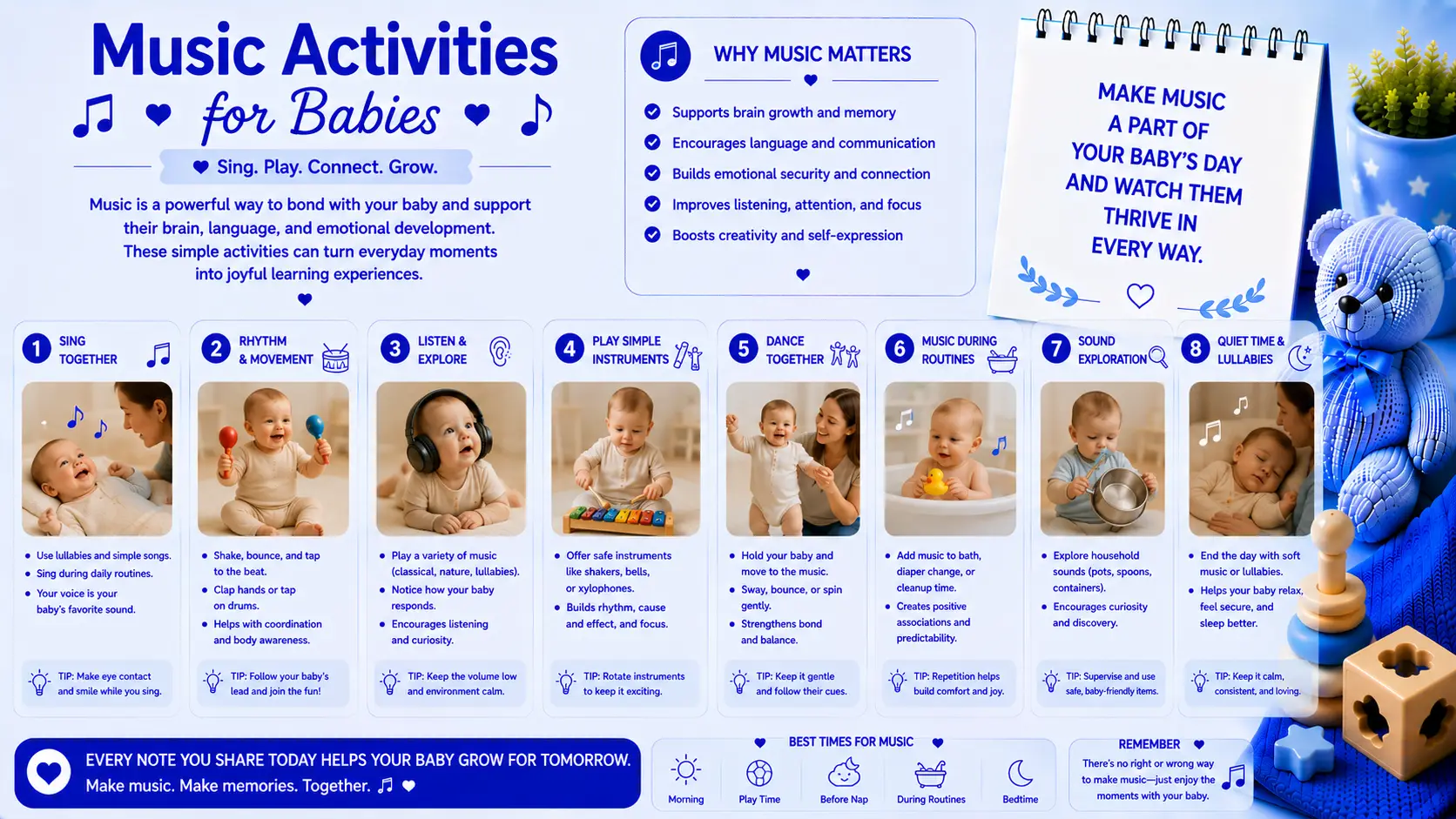
Language and communication skills. Singing exposes babies to rhythm, tone, and repetition — all building blocks of speech. Infant-directed singing (think exaggerated pitch and playful expressions) gives babies rich social-communicative cues long before they can talk back.
Motor skills. Shaking a rattle, banging a drum, or bouncing to a beat helps babies develop both fine motor skills (grasping, tapping) and gross motor skills (moving their whole body to rhythm).
Emotional regulation. Lullabies and calming songs help babies self-soothe and manage big feelings, while upbeat music can lift mood and reduce stress.
Bonding and attachment. Singing to your baby, rocking them to music, or simply humming while you hold them creates warm, secure connections that support healthy attachment.
Cognitive development. Music engages memory, attention, and cause-and-effect learning — for example, a baby quickly figures out that shaking a rattle makes noise, which is an early lesson in understanding how the world works.
Best Music Activities for Babies by Age
Newborns to 3 Months
At this stage, babies are simply soaking in sound. Focus on gentle, soothing musical interaction:
Sing lullabies while rocking or feeding your baby.
Hum or sing softly during diaper changes and bath time to build positive associations with routines.
Play soft instrumental or classical music in the background during quiet or tummy time.
4 to 6 Months
Babies start reaching, grasping, and tracking sound with more intention.
Introduce a soft rattle or jingle ball your baby can hold and shake.
Sing action songs with simple movements, like gently clapping their hands together.
Play music with a clear, steady beat and watch how your baby responds with kicks or coos.
7 to 12 Months
This is prime time for cause-and-effect play and early rhythm exploration.
Give your baby age-appropriate instruments, like a shaker, tambourine, or small drum.
Try “stop and go” games — dance or wiggle to music, then freeze when it stops, to build listening skills and early impulse control.
Bounce or sway your baby to the beat to build body awareness and a sense of rhythm.
Sing familiar songs with hand motions, like “Itsy Bitsy Spider” or “Pat-a-Cake.”
Easy DIY Musical Instruments for Babies
You probably already have everything you need at home to make simple, baby-safe instruments:
Rice or bean shaker: Fill a small sealed container with rice, beans, or dried pasta, secure the lid tightly, and let your baby shake away.
Pot-and-spoon drum: Turn a pot or plastic bowl into a drum with a wooden spoon for banging and tapping practice.
Rubber band guitar: Stretch rubber bands over an empty container (like a yogurt tub) to create different tones when plucked.
Scarf or ribbon wave: Play music and wave a lightweight scarf for your baby to watch, reach for, and eventually hold.
Always supervise babies closely with homemade instruments, and make sure small parts are sealed securely to avoid a choking hazard.
Simple Music Activities to Try Every Day
Sing during transitions. Use a specific tune for diaper changes, bath time, or naptime so your baby learns to anticipate what’s next.
Dance together. Hold your baby and sway, bounce, or spin gently to different styles of music.
Make music a two-way conversation. Pause after a song or sound and wait for your baby to respond with a coo, babble, or movement — then respond back.
Attend a baby music class. Many communities offer parent-and-baby music classes or free library storytimes that include songs and movement.
Sing in your home language. Singing familiar songs in your family’s native language supports both bonding and early language development.
Final Thoughts
Music activities for babies don’t need to be complicated, expensive, or perfectly in tune — the real value comes from the shared experience between you and your baby. Whether you’re singing a lullaby at 2 a.m. or shaking a homemade rattle during playtime, every musical moment is helping your baby’s brain, body, and bond with you grow stronger.
FAQ
What age should babies start music activities?
You can start from birth. Newborns benefit from hearing lullabies and soft singing, and as babies grow, they can begin actively participating with rattles, shakers, and movement around 4 to 6 months.
What are the benefits of music for babies?
Music supports language development, motor skills, emotional regulation, memory, and bonding between baby and caregiver. It can also help soothe babies and support healthy sleep routines.
What household items can I use as baby instruments?
Sealed containers filled with rice or beans, pots and wooden spoons, empty tissue boxes with rubber bands, and plastic bowls all make great homemade instruments for babies.
How often should I do music activities with my baby?
There’s no strict rule — even a few minutes of singing or musical play woven into daily routines, like bath time or diaper changes, provides real developmental benefits. Consistency matters more than duration.
Can music help my baby sleep better?
Yes. Soft lullabies and calming instrumental music can help babies relax and may support the development of more regular sleep patterns over time.