
You don’t need perfect pitch or a music degree to be your baby’s favorite singer. In fact, research shows babies prefer the sound of a parent’s voice over almost anything else — including a professional recording. Singing to your baby isn’t just sweet bonding time; it also supports early speech development, soothes big emotions, and can even slow a baby’s heart rate before sleep. Whether you’re rocking a newborn at 3 a.m. or looking for new songs to sing to your toddler, this guide rounds up the best lullabies and baby songs, plus tips on why (and how) to use them.
Why Singing to Your Baby Matters
Before babies can talk, they’re already tuning in to language through rhythm, repetition, and tone — and singing delivers all three in a way plain speech can’t match. Studies suggest that the repetition and rhyme in lullabies reinforce sound recognition, which helps build the foundation for speech and vocabulary. Singing also has physical benefits: research has found that lullabies can lower a baby’s heart and respiratory rate, helping them settle down for sleep more easily.
Beyond the science, singing is simply one of the easiest ways to bond with your baby. You don’t need to sound like a professional — babies aren’t judging your pitch. What matters most is the warmth, eye contact, and closeness that come with a parent singing softly to their child.
Classic Lullabies Every Parent Should Know
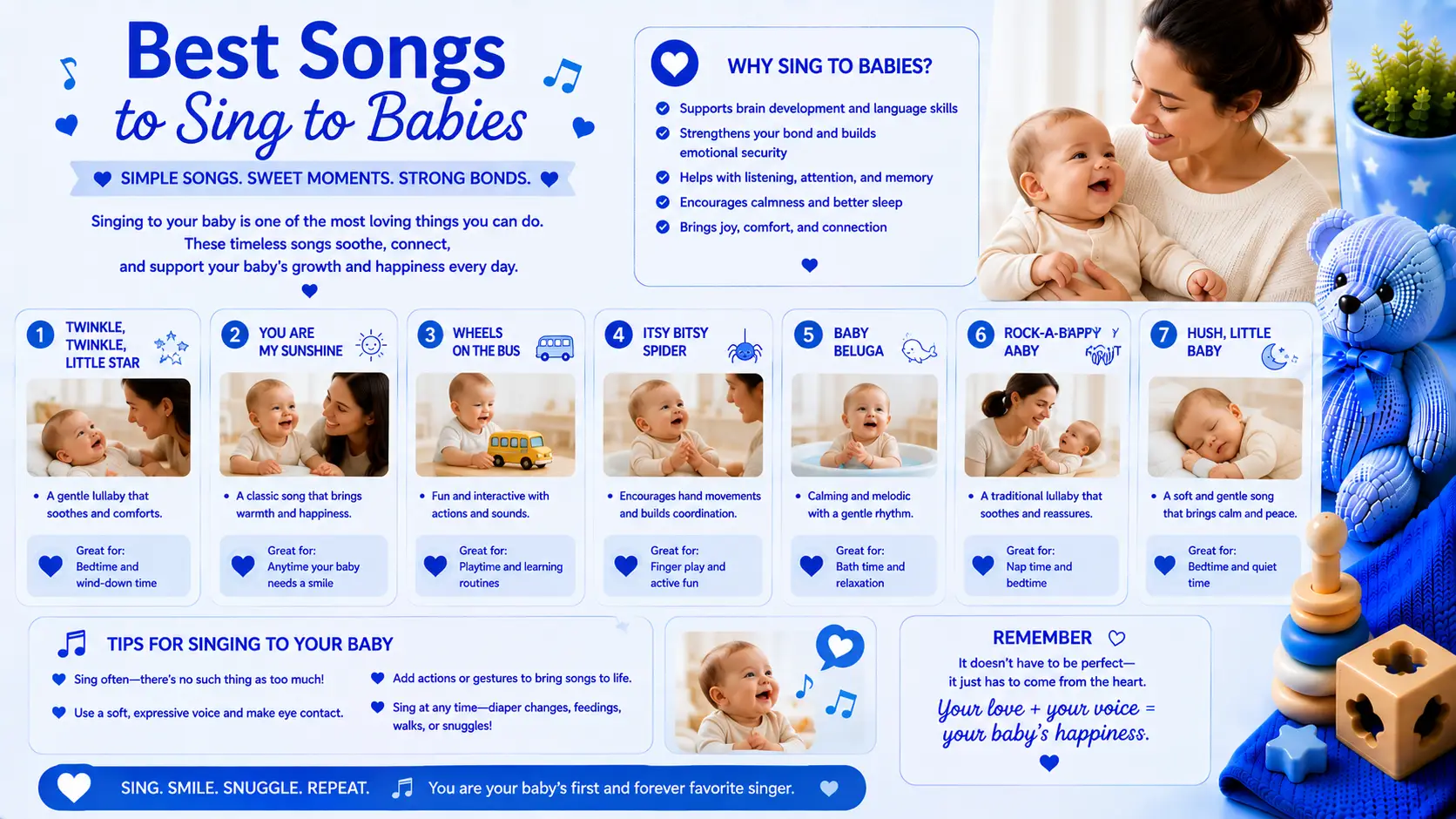
When it comes to the best songs to sing to babies, a handful of traditional lullabies stand out as timeless favorites across generations:
“Twinkle, Twinkle, Little Star” – A beloved classic based on a 19th-century poem, this gentle, simple melody is one of the most recognized bedtime songs in the English-speaking world.
“You Are My Sunshine” – Consistently ranked as parents’ favorite lullaby in reader polls, this song pairs a sweet, catchy tune with heartfelt lyrics about love and devotion.
“Hush, Little Baby” – An American folk lullaby with roots dating back over a century, known for its call-and-response structure that promises the baby all sorts of comforting gifts.
“Rock-a-Bye Baby” – One of the oldest and most iconic lullabies, often among the very first songs a baby ever hears.
“Brahms’ Lullaby” (Cradle Song) – Composed by Johannes Brahms, this soothing melody is instantly recognizable and remains a go-to choice for calming both babies and tired parents.
“Frère Jacques” – A French lullaby with origins that may stretch back to the 17th century, often taught to children in both French and English versions.
“Row, Row, Row Your Boat” – A playful, rhythmic nursery rhyme that works well for both singing and gentle rocking or bouncing.
Modern Songs That Make Great Lullabies
You’re not limited to traditional lullabies — plenty of modern songs work beautifully as bedtime or bonding music, too:
“Isn’t She Lovely” by Stevie Wonder – Written to celebrate the birth of his daughter, this joyful song is a favorite for parents of baby girls.
“Somewhere Over the Rainbow” – A dreamy, hopeful melody that translates naturally into a gentle lullaby.
“Blackbird” by The Beatles – A soft, fingerpicked song about resilience that soothes without feeling overly sentimental.
“Clair de Lune” by Claude Debussy – A stunning instrumental piece that works well hummed or played softly in the background.
“When You Wish Upon a Star” – The Oscar-winning classic from Pinocchio, instantly familiar and calming for little ones.
Some parents skip lullabies altogether and simply sing whatever song is stuck in their head that day — and that’s perfectly fine. The goal isn’t the “correct” song; it’s the connection.
Fun, Playful Songs for Awake Time
Not every song needs to be a sleepy one. Interactive, movement-based songs are great for playtime and help babies build motor skills, listening skills, and early language:
“Itsy Bitsy Spider” – Pairs simple hand motions with a catchy tune, perfect for babies starting to mimic movements.
“If You’re Happy and You Know It” – Encourages clapping and simple actions, great for building coordination.
“Wheels on the Bus” – A favorite for its repetitive structure and endless verse variations.
“Pat-a-Cake” – A classic clapping game that introduces rhythm and turn-taking.
Tips for Singing to Your Baby
Don’t worry about your voice. Babies respond to warmth and familiarity, not vocal perfection.
Use exaggerated tone and expression. Infant-directed singing — with playful pitch changes and facial expressions — captures babies’ attention far more than a flat delivery.
Repeat often. Familiar songs become comforting through repetition, so don’t be afraid to sing the same lullaby night after night.
Pair songs with routines. Singing the same song during bath time, diaper changes, or bedtime helps babies learn to anticipate what’s coming next.
Sing in your home language. Passing down lullabies in your family’s native language supports both bonding and cultural connection.
Final Thoughts
There’s no single “best” song to sing to a baby — the best song is the one you’ll actually sing, again and again, with love. Whether you lean on a timeless lullaby like “Twinkle, Twinkle, Little Star” or make up your own tune on the spot, singing to your baby is one of the simplest, most powerful things you can do for their development and your bond together.
FAQ
What is the most popular lullaby to sing to a baby?
“You Are My Sunshine” and “Twinkle, Twinkle, Little Star” consistently rank as parents’ top picks, according to reader surveys, with “Hush, Little Baby” also a popular favorite.
Does singing to a baby actually help their development?
Yes. Singing supports early language development through rhythm and repetition, and research suggests it can also help lower a baby’s heart rate and support emotional regulation.
What if I’m not a good singer — does it matter?
Not at all. Babies prefer the sound of their parent’s voice regardless of pitch or tone. What matters most is the closeness and consistency of the experience.
What age should I start singing to my baby?
You can start singing from birth — or even before, since hearing develops in the womb. Newborns respond well to soft, familiar melodies from day one.
Can I sing pop songs instead of traditional lullabies?
Absolutely. Many parents sing modern songs, movie soundtracks, or personal favorites as lullabies. What matters is a calm tone and gentle delivery, not the genre.