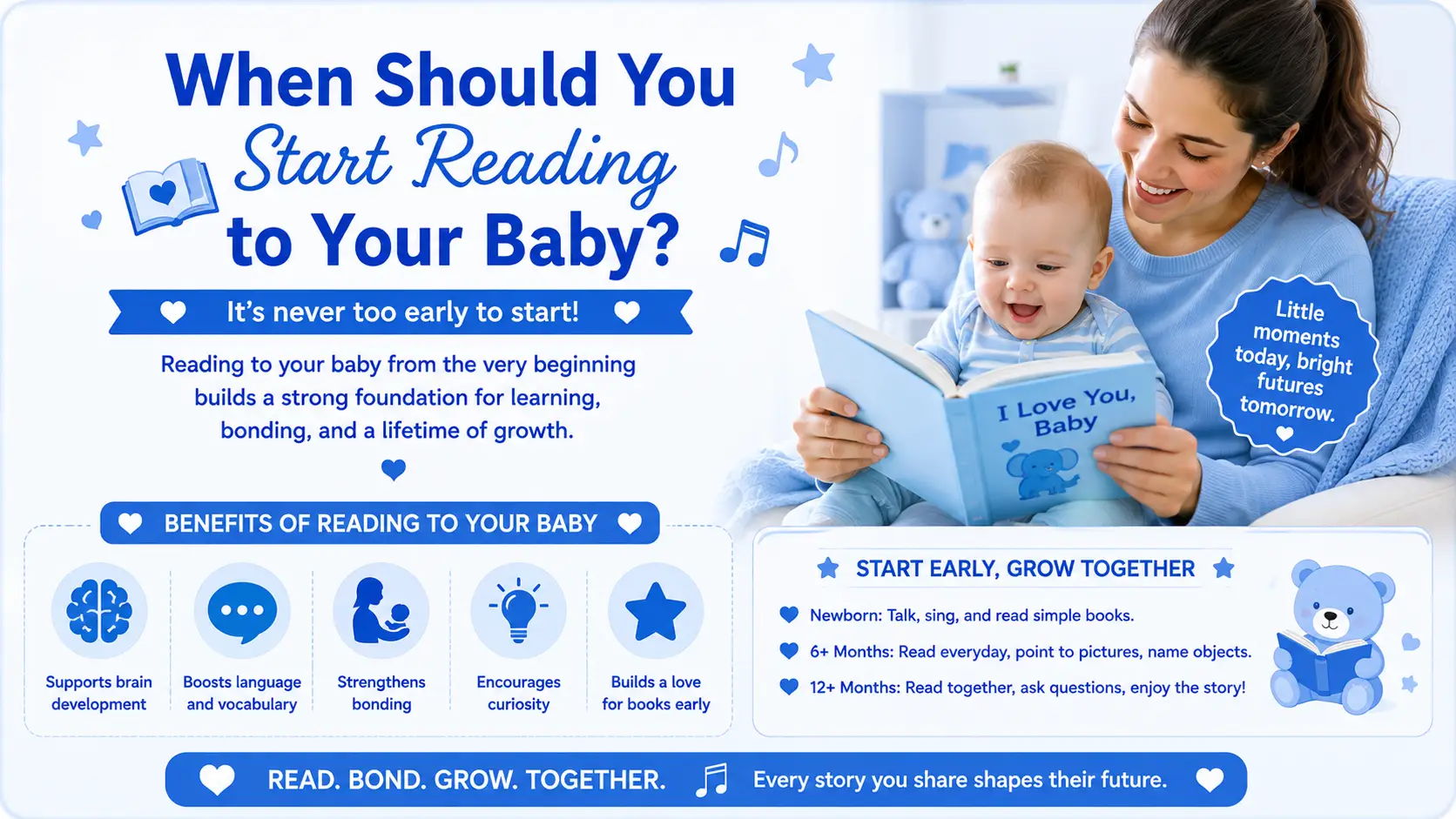

If you’ve ever sat down with a picture book and wondered whether your two-week-old is actually getting anything out of it, you’re not alone. It’s one of the most common questions new parents ask: when should you start reading to your baby? The short answer is simple — right now, whatever “now” happens to be. There’s no wrong time to start, and no age that’s “too early.”
Reading aloud to a baby who can’t yet talk, sit up, or even focus their eyes properly might feel a little strange at first. But that early exposure is doing far more than it looks like on the surface. Here’s what the research says, when experts recommend you begin, and how to make reading part of your daily routine from day one.
Is It Too Early to Read to a Newborn?
No — and many experts would argue the earlier, the better. Some parents start reading during pregnancy, since a baby’s hearing develops in the womb and they can pick up on the rhythm and tone of a familiar voice well before birth. Others begin in the first weeks after delivery, often during those long stretches of feeding or rocking when baby is awake but calm.
The American Academy of Pediatrics has been especially clear on this point, recommending that parents read aloud to their children daily starting in infancy — not toddlerhood, not preschool, but infancy. Their guidance frames early reading as a foundation for language development, literacy, and social-emotional skills that last well beyond childhood.
At this newborn stage, your baby isn’t following the plot or recognizing words. What they are doing is soaking in the sound of your voice, the rhythm of sentences, and the comfort of your closeness. That’s the real value early on — connection, not comprehension.
What Reading Looks Like at Each Stage
Because “reading to your baby” looks pretty different at two weeks versus two years, it helps to know what to expect as they grow.
Newborn to 3 months: Vision is still developing, so babies respond best to books with bold, high-contrast black-and-white patterns rather than soft pastels. Hold books close — about 8 to 12 inches from their face — since that’s roughly the limit of a newborn’s focus. At this stage, it’s less about the story and more about voice, tone, and closeness.
3 to 6 months: Babies start noticing faces, shapes, and colors, and they’ll often reach out to touch or bat at the pages. Board books with simple images and interesting textures work well here.
6 to 12 months: This is prime time for interactive books — lift-the-flap stories, touch-and-feel textures, and sturdy board books that can survive a little chewing. Yes, mouthing books is completely normal at this age, so durability matters more than delicacy.
12 to 24 months: Vocabulary is exploding, and babies start pointing to pictures, mimicking sounds, and asking (in their own way) for the same book over and over. Simple word books and short storylines fit well here — and don’t be surprised if “again!” becomes your most-heard word.
2 to 3 years: Toddlers can usually sit through a full story, ask questions like “what happens next?”, and may even fill in familiar lines from a well-loved book. This is a great age to introduce books with more of a narrative arc.
Why Reading to Babies Matters So Much
It’s easy to assume reading doesn’t “count” until a child can understand the words, but the developmental benefits kick in long before that. Reading to a baby:
Builds early language and vocabulary skills. Babies absorb speech patterns, tone, and rhythm well before they can talk, and that early exposure lays groundwork for later language development.
Strengthens the parent-child bond. The closeness, eye contact, and undivided attention that come with reading together are hard to replicate with a toy or screen.
Supports brain development. A baby’s brain roughly doubles in size during the first year, and the sensory experience of reading — hearing your voice, seeing pictures, feeling pages — helps form the neural connections behind that growth.
Establishes a comforting routine. Reading before naps or bedtime signals to your baby that it’s time to wind down, which can make sleep transitions smoother.
Sets the stage for school readiness. Research consistently links early exposure to books and language with stronger literacy outcomes once kids reach school age.
Tips for Getting Started
You don’t need a nursery full of books or a strict reading schedule to make this work. A few minutes a day is a great starting point, and you can build from there.
Don’t worry about finishing the book. If your baby loses interest halfway through, that’s fine — point at pictures, name objects, or just talk about what you see.
Use a lively, expressive voice. Babies respond to tone and inflection far more than the actual words.
Make it part of an existing routine, like after a feed or before naptime, so it becomes an easy habit rather than one more thing on your to-do list.
Let your baby explore the book physically — touching, holding, even chewing on sturdy board books is part of how they engage.
Don’t feel pressure to read every word. Reading to a baby is more about shared time than following a script.
The Bottom Line
There’s no perfect age to start reading to your baby — the best time is whenever you’re ready to begin. Whether that’s a bedtime story during pregnancy, a quiet moment with a newborn, or your first library trip with a wiggly six-month-old, every bit of shared reading time adds up. The habit matters more than the milestone.
FAQ
What age should I start reading to my baby?
There’s no minimum age — many parents start during pregnancy or in the first weeks after birth. Experts generally agree that starting before your baby’s first birthday, and ideally as early as possible, gives the biggest developmental benefit.
Can babies actually understand what I’m reading?
Not in the way older kids or adults do, but they don’t need to. Babies benefit from the sound of your voice, the rhythm of language, and the closeness of the activity long before they understand individual words.
What books are best for newborns?
Books with high-contrast black-and-white images work best for very young babies, since their vision isn’t fully developed. As they grow, board books with bright colors, textures, and simple pictures become a good fit.
How long should reading sessions be for a baby?
Start with just a few minutes a day. Babies have short attention spans, so it’s fine if they lose interest quickly — consistency matters more than duration.
Does reading to my baby really make a difference later on?
Yes. Research links early and frequent reading with stronger vocabulary, better language development, and improved school readiness down the line. It also helps build a strong emotional bond between you and your baby.