
If you’ve ever felt a little silly reading a picture book out loud to a baby who can’t talk, sit up, or even hold their head steady, you’re in good company. It’s a strange feeling at first. But the benefits of reading to babies go far beyond what it looks like in the moment — this simple daily habit shapes brain development, language skills, and emotional bonding in ways that last well into childhood and beyond.
Here’s a closer look at what the research actually shows, and why pediatricians keep telling parents to start early.
Why Reading to Babies Matters So Much
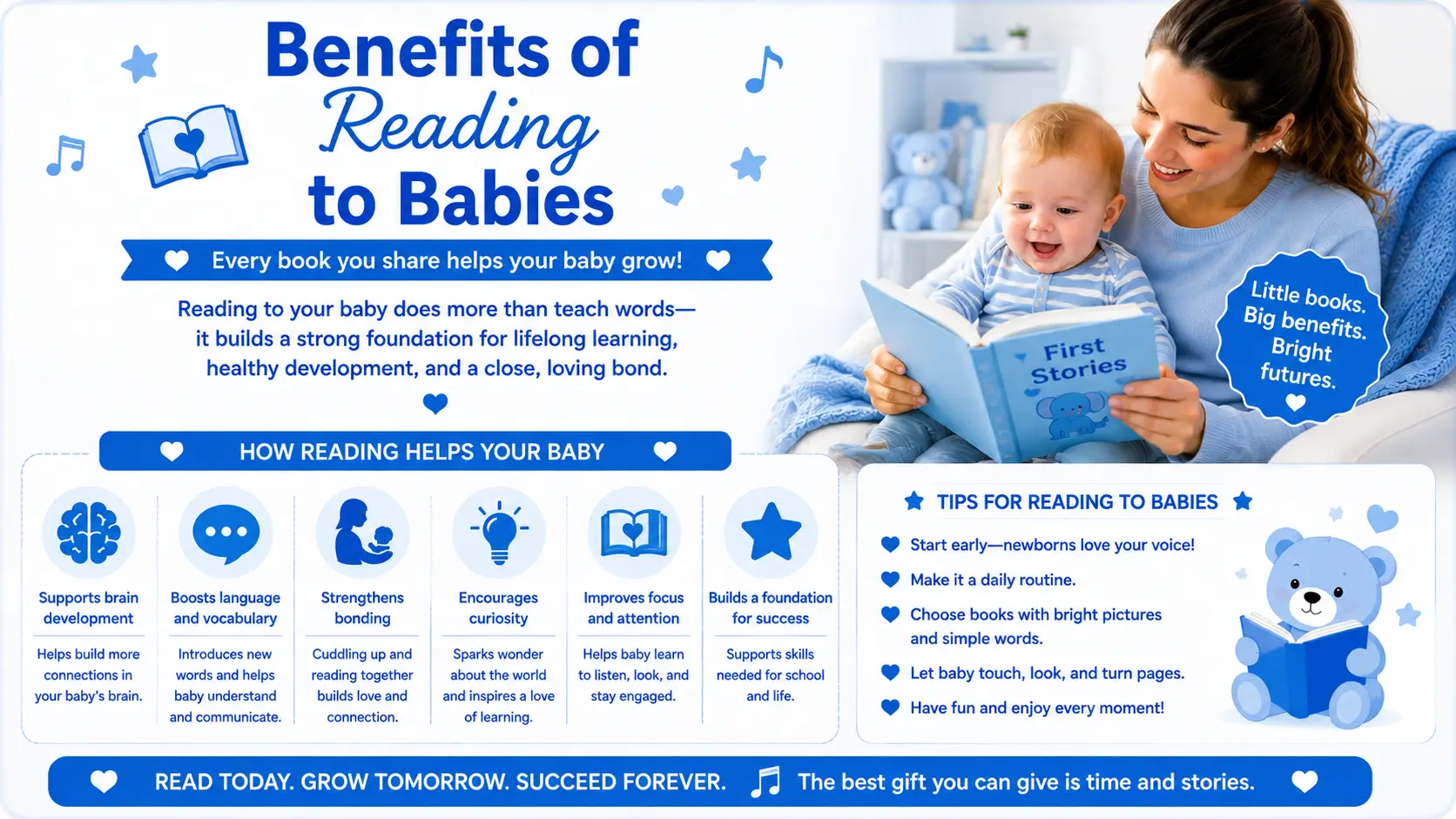
Babies aren’t just passive listeners when you read to them. Their brains are working overtime, forming an estimated one million new neural connections every second in the earliest years of life. Reading aloud — with its rhythm, repetition, and rich vocabulary — is one of the most effective ways to fuel that rapid brain growth, even before a baby understands a single word.
Here are the key benefits worth knowing.
Builds Language and Vocabulary Skills
This is the benefit most parents already suspect, and the research backs it up. Written language tends to use a richer, more varied vocabulary than everyday conversation, which means reading exposes babies to words they might not otherwise hear. A randomized study out of a rural family medicine clinic found that infants whose parents committed to reading just one book a day showed measurably stronger language scores by their first birthday compared to babies who weren’t read to consistently. Even before babies can talk, they’re absorbing pronunciation, sentence rhythm, and the building blocks of speech.
Supports Brain Development
The sensory experience of being read to — hearing a familiar voice, watching facial expressions, seeing pictures, feeling different textures — activates multiple areas of a baby’s developing brain at once. Researchers describe this as laying the neurological groundwork for language and literacy long before a child speaks their first words. It’s one reason experts consistently say there’s no such thing as starting “too early.”
Strengthens the Parent-Child Bond
Reading together is close, quiet, one-on-one time — something that’s increasingly rare in a world full of distractions. The physical closeness, the sound of a caregiver’s voice, and the shared focus on a book all reinforce feelings of safety and attachment. Interestingly, one large study of mother-child pairs found that mothers who read frequently to their one-year-olds were associated with less harsh parenting behavior when those children turned three, suggesting the benefits of shared reading time ripple into the parent-child relationship itself.
Builds Focus and Attention Span
Following a story, tracking pictures, and listening to a caregiver’s voice all require a baby to concentrate — a skill that takes practice to develop. Over time, regular reading sessions help babies build the kind of sustained attention that will later support learning in school and beyond.
Encourages Emotional Development
Books introduce babies to a wide range of emotions, expressions, and social situations, often well before they encounter them in real life. Hearing a parent’s voice shift in tone — excited, soothing, silly — helps babies begin to connect facial expressions and vocal cues with feelings, an early building block of empathy.
Establishes Comforting Routines
Babies and toddlers thrive on predictability, and reading is an easy way to build a calming routine into the day. A short story before naptime or bedtime can signal that it’s time to wind down, which often makes those transitions smoother for everyone involved.
Sets the Foundation for School Readiness
Long-term studies consistently link early and frequent reading with stronger literacy outcomes once children reach school age. Babies who are read to regularly tend to enter kindergarten with a stronger grasp of vocabulary and pre-literacy skills — a head start that can carry through their entire academic career.
How to Get the Most Out of Reading Time
You don’t need dozens of books or a strict schedule to reap these benefits. A few simple habits go a long way:
Sit face-to-face when possible. Letting your baby see your mouth and facial expressions helps them connect sounds with meaning.
Don’t worry about reading every word. Pausing to point at pictures, name colors, or make animal sounds is just as valuable as reading the text exactly as written.
Repeat favorites often. Babies actually benefit from hearing the same book again and again — repetition helps cement new words and concepts.
Use an expressive, sing-song voice. Babies are naturally drawn to “parentese,” the slower, more melodic speech pattern adults use instinctively with infants.
Make it part of your routine. Reading after a feeding or before a nap turns it into a habit rather than a chore.
The Bottom Line
The benefits of reading to babies touch nearly every part of early development — language, brain growth, emotional security, and the foundation for future learning. Best of all, it costs nothing but a few minutes and a board book. Whether your baby is two weeks old or approaching their first birthday, there’s no wrong time to start, and every reading session adds up.
FAQ
What are the main benefits of reading to babies?
Reading to babies supports language development, brain growth, emotional bonding, attention span, and long-term school readiness. It also helps build comforting daily routines around naps and bedtime.
Does reading to a baby really help even if they don’t understand the words?
Yes. Babies benefit from the rhythm, tone, and sound of language long before they understand individual words. The exposure alone helps build the neural pathways needed for later speech and comprehension.
How often should I read to my baby?
Even just one book a day has been shown to make a measurable difference in language development. Consistency matters more than the number of books or the length of each session.
Can reading to my baby improve our bond?
Absolutely. The close physical contact, eye contact, and shared attention involved in reading together are powerful ways to build emotional connection and a sense of security for your baby.
At what age do the benefits of reading to babies start?
There’s no minimum age. Many parents begin during pregnancy or in the first weeks after birth, and research supports starting as early as possible for the greatest developmental benefit.