
Babies explore the world with their hands long before they can walk or talk. Soft fur, bumpy scales, smooth silk, crinkly foil—these sensations help little ones make sense of what they see and hear. That is why touch and feel books for babies have become a favorite on nursery shelves. These interactive board books invite tiny fingers (and sometimes mouths) to discover different textures while parents read simple stories or name the pictures. The result is an engaging, multi-sensory experience that supports early development in a gentle, playful way.
Why Touch and Feel Books Matter
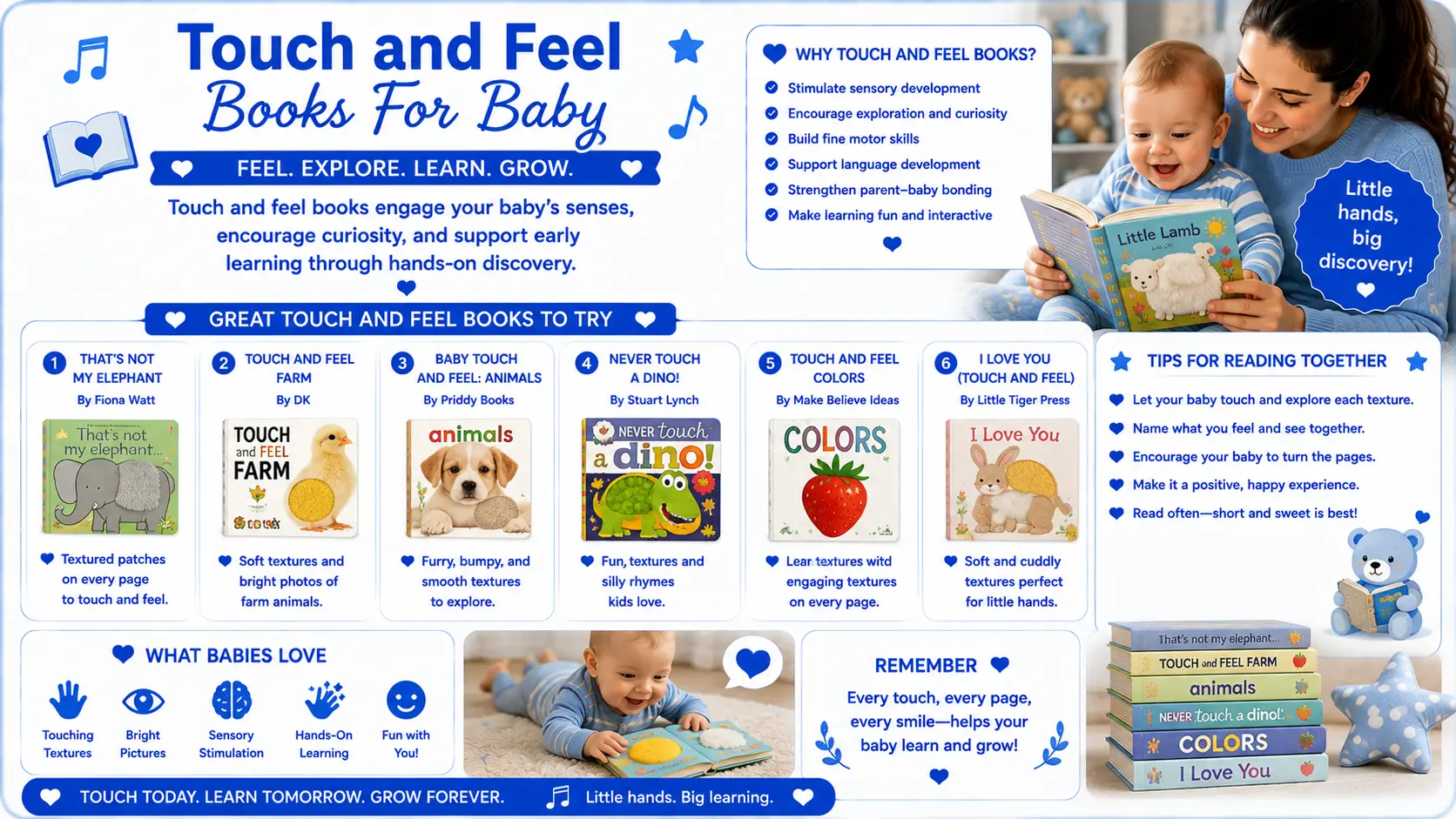
Sensory input is one of the most powerful ways young brains learn. When a baby strokes a fuzzy patch or presses a raised shape, the brain receives rich information that builds neural connections. Research and early childhood specialists note that tactile exploration supports fine motor skills, hand-eye coordination, and the ability to distinguish between different sensations.
Language grows alongside the sense of touch. Describing what your baby feels—“That’s soft like a bunny,” “Feel how bumpy the dinosaur is”—introduces new words in a meaningful context. The combination of seeing a picture, hearing a word, and touching a related texture helps vocabulary stick. Interactive books also teach cause and effect: a crinkly page makes a sound when squeezed, a flap lifts to reveal a surprise. These small discoveries keep babies interested in books long after the novelty of a flat picture page has faded.
Beyond skills, these books create warm shared moments. Sitting together, guiding little hands across the pages, and responding to a baby’s delighted squeals strengthens the parent-child bond. For babies with visual impairments or additional support needs, the tactile elements can be especially valuable, offering another way to access the story.
When to Start and How to Use Them
Most babies begin showing real interest in touch and feel books once they can reach and grasp, typically around 4 to 6 months. Younger infants may still enjoy the books if you gently guide their hands or let them mouth the textures—mouthing is a normal way babies learn about objects. By the time they are sitting or crawling, many become enthusiastic explorers, turning pages and seeking out favorite patches.
Keep sessions short and child-led. Hold the book so both of you can see it. Point to a texture, name it, and then pause so your baby can explore. Copy any sounds they make and add simple descriptions: “Smooth,” “Scratchy,” “Fuzzy.” If your baby loses interest, close the book and try again later. There is no pressure to finish every page.
Sturdy board books with securely attached textures work best. Look for rounded corners and materials that can handle occasional chewing or drooling. Some titles include mirrors, flaps, or sound elements for extra engagement.
Popular Touch and Feel Books Worth Adding
A few classics and modern favorites appear repeatedly on recommended lists:
Pat the Bunny by Dorothy Kunhardt remains the original interactive classic. Since 1940, generations of babies have patted the soft bunny, felt Daddy’s scratchy face, and peeked through the cloth. Its simple, inviting activities still captivate.
The That’s Not My… series from Usborne offers dozens of titles (puppy, dinosaur, tractor, unicorn, and more). Each page features a different texture and the repeated phrase “That’s not my…,” which becomes fun to chant together.
DK’s Baby Touch and Feel series covers animals, vehicles, first words, and more. Bright photos paired with soft, rough, or shiny patches make these reliable everyday choices.
Titles such as Tails, farm or animal touch-and-feel books, and Montessori-inspired texture books introduce natural materials like wool, bark, or sandpaper in simple formats.
Many of these books travel well and stand up to repeated use, making them practical for home, car, or waiting rooms.
Practical Tips for Everyday Reading
Choose books with a variety of textures rather than only soft or only bumpy ones. Variety keeps interest high and expands sensory experience. Rotate a few titles so the textures stay novel. Clean pages with a damp cloth when needed, and supervise closely if textures seem loose.
Talk more than you read. The printed words matter less than the conversation you create around the textures. Ask simple questions even if your baby cannot answer yet: “Do you like the soft one or the rough one?” Narrate what you see your baby doing: “You’re rubbing the shiny part!”
Pair the books with real-life textures. After feeling a fuzzy page, let your baby stroke a soft blanket or a pet’s fur (if safe). This helps transfer the book experience into everyday understanding.
Making Sensory Reading Accessible
Libraries often stock popular touch-and-feel titles, and many can be reserved online. Cloth or bath books with textures offer portable, washable options. For a low-cost approach, create a simple homemade book with fabric scraps, corrugated cardboard, and foil glued onto sturdy cardboard pages. The goal is shared exploration, not perfection.
FAQ
What are the benefits of touch and feel books for babies?
They support sensory development, fine motor skills, hand-eye coordination, and language growth. Feeling different textures while hearing words and seeing pictures creates stronger learning connections and makes reading more engaging.
When should I introduce touch and feel books to my baby?
Most babies enjoy them once they start reaching and grasping (around 4–6 months). Younger infants can still benefit if you guide their hands or allow gentle mouthing of safe textures.
Are touch and feel books safe for babies who put everything in their mouths?
Yes, when you choose well-made board books with securely attached elements and supervise closely. Mouthing is a normal way babies explore. Replace any book if textures loosen or tear.
Which touch and feel books are best for beginners?
Start with simple classics like Pat the Bunny or a basic That’s Not My… title. DK’s Baby Touch and Feel series also works well because the textures are clear and the images are realistic.
Do touch and feel books help with language development?
They do. Describing textures (“soft,” “bumpy,” “smooth”) and linking them to pictures and real objects gives babies meaningful context for new words. The interactive nature keeps attention longer, creating more opportunities for conversation.