
Seasonal sensory activities bring the changing world outside into hands-on play all year long. By matching textures, colors, scents, and themes to spring, summer, fall, and winter, these experiences help children notice the seasons while building fine motor skills, language, creativity, and a deeper connection to nature. Sensory bins, water trays, and simple nature collections make it easy to refresh play without complicated setups.
Why Seasonal Sensory Play Matters
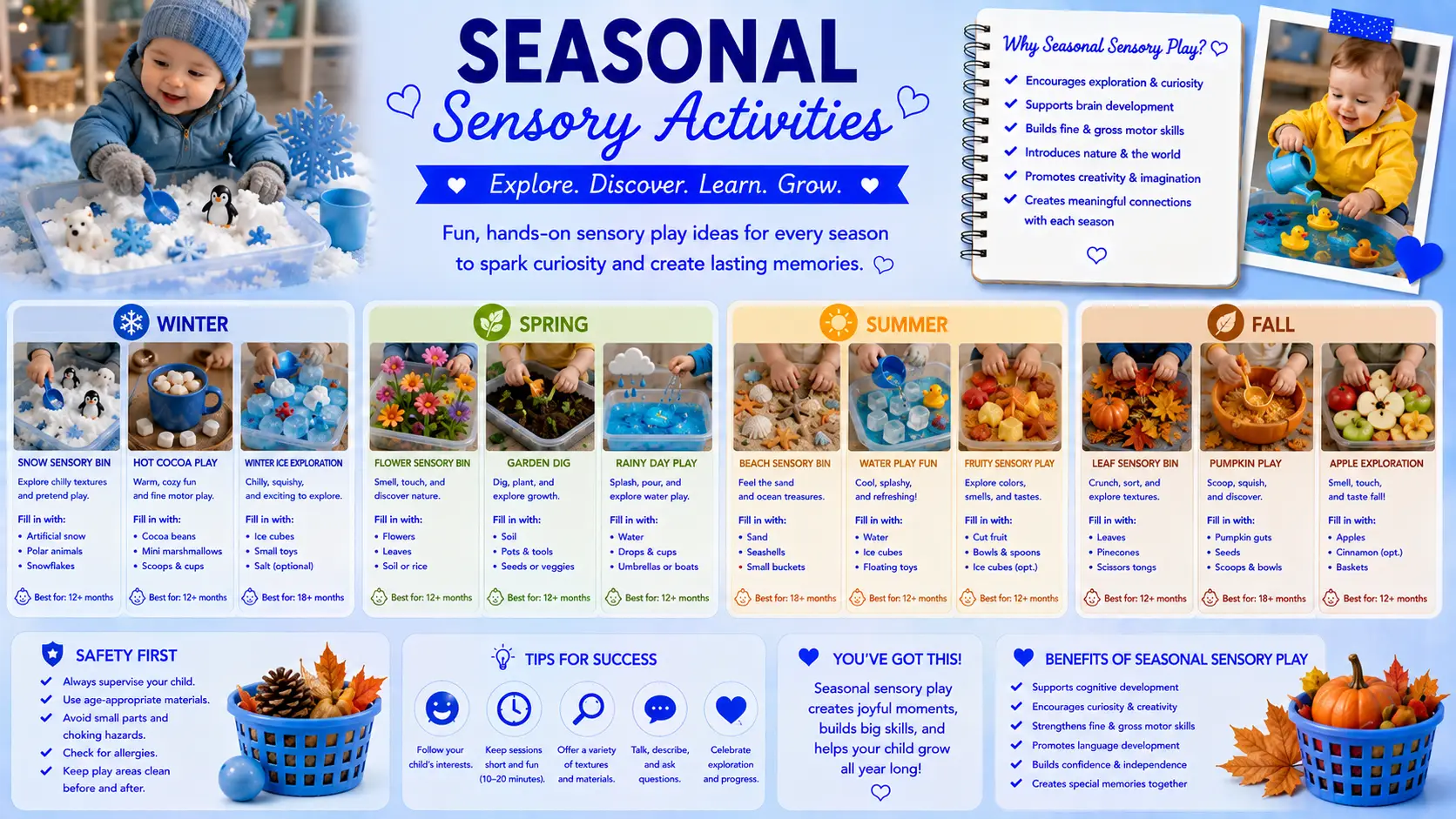
Sensory play stimulates the senses and supports brain development, motor skills, and emotional regulation. When the materials change with the calendar—crunchy leaves in autumn, cool ice in winter, soft petals in spring, or warm sand in summer—children stay curious longer. These activities also introduce seasonal vocabulary, encourage outdoor exploration, and create shared family rhythms. Whether you use a plastic bin, a water table, or the backyard, seasonal sensory activities turn everyday materials into meaningful learning.
Spring Sensory Activities
Spring invites growth, color, and new life. Focus on greens, pastels, dirt, and living things.
Create a gardening sensory bin with brown kinetic sand or real (clean) dirt, plastic flowers, mini shovels, and seeds. Children dig, plant, and water (with a small cup). Add green-dyed rice for a “flower field” and plastic bugs or butterflies for sorting and pretend play.
Try a flower petal and water tray. Collect safe petals or use store-bought ones in a shallow pan of water. Float leaves or add scoops for pouring.
A simple bug hunt bin with grass clippings, rocks, and plastic insects encourages observation with a magnifying glass. These spring sensory activities help toddlers and preschoolers explore textures while celebrating renewal.
Summer Sensory Activities
Summer calls for cool, watery, and beach-inspired play that can move outdoors.
Set up an ocean or beach bin with kinetic sand or real sand, blue-tinted water or water beads, shells, and plastic sea creatures. Add scoops, funnels, and molds for sandcastles.
Ice play is perfect for hot days: freeze large toys or fruit in water, then let children rescue them with warm water and tools.
A water table with floating objects—corks, plastic boats, or citrus slices—builds pouring skills and temperature awareness. For a festive twist, use red, white, and blue rice for patriotic sensory play. Summer sensory bins keep kids cool while strengthening hand strength and imaginative play.
Fall Sensory Activities
Autumn brings warm colors, crunchy textures, and cozy scents.
An apples and oats bin combines dry oats, real or plastic apples, cinnamon sticks, and scoops. It smells wonderful and feels soft yet scoopable.
Pumpkin pie oobleck (pumpkin puree mixed with cornstarch) offers a unique squishy texture—add plastic animals for footprints.
Collect fallen leaves for a leaf water tray or mix them with corn kernels, pinecones, and mini pumpkins. Cloud dough made with flour, oil, and cocoa creates “chocolate dirt” perfect for gourds and small tools. These fall sensory bins capture harvest vibes and invite sorting, scooping, and scent exploration.
Winter Sensory Activities
Winter sensory play focuses on cold, soft, and sparkling materials that work well indoors.
Fill a bin with cotton balls, white rice, or fake snow, then add penguins, polar bears, and snowflake confetti.
Frozen toy rescue—toys frozen in ice blocks—encourages problem-solving with warm water and spoons.
A snowy sensory bag (sealed bag with hair gel, glitter, and mini marshmallows) provides mess-free squishing. Salt dough ornaments or peppermint-scented playdough add fine-motor and creative elements. Winter sensory activities help children process the season’s quieter, colder feel while staying active inside.
Practical Tips for Year-Round Success
Rotate materials as the seasons change to maintain interest. Use what you already have—rice, oats, water, and nature finds keep costs low. For younger children, prioritize taste-safe options like oats, yogurt-based paints, or cooked pasta when mouthing is still common. Contain mess with trays or outdoor setups, and always supervise. Invite open-ended questions (“What do you notice?”) to boost language. Store dry fillers in sealed containers for reuse, and involve kids in gathering natural items on walks.
Seasonal sensory activities require little preparation yet deliver lasting engagement. They help children mark time, explore safely, and develop skills through play that feels fresh every few months.
FAQ
What are the best seasonal sensory activities for toddlers?
Simple bins with seasonal fillers work well: green rice and flowers in spring, sand and water in summer, oats and leaves in fall, and cotton or ice in winter. Keep pieces large and supervise closely.
How do I make seasonal sensory bins at home?
Start with a shallow bin, add a base filler (rice, oats, sand, or water), then include themed toys or nature items. Tools like scoops and cups extend the play. Change the theme with the season for ongoing interest.
Are seasonal sensory activities good for preschoolers too?
Yes. Older children enjoy more complex sorting, storytelling, and measuring within the same bins. Add challenges like counting pumpkins or building ice structures.
Can seasonal sensory play be done outdoors?
Absolutely. Water tables, leaf piles, sand play, and snow exploration are ideal outside and reduce indoor mess while connecting kids directly to the season.
How often should I change seasonal sensory materials?
Refresh or rotate every few weeks or when interest fades. Aligning major changes with the start of each season keeps the experience meaningful and exciting throughout the year.