
Color exploration is one of the most joyful parts of early childhood learning. When toddlers and preschoolers play with colors, they build visual discrimination, vocabulary, fine motor skills, and early science thinking. They start noticing the world in new ways—spotting a red apple, mixing yellow and blue to make green, or sorting toys by hue. Parents and teachers often search for “color activities for toddlers,” “color mixing activities for preschoolers,” and “color scavenger hunt for kids” because these hands-on experiences stick far better than flashcards or worksheets.
The best color exploration activities keep things playful, use everyday materials, and invite kids to discover rather than memorize. Below are practical, high-engagement ideas that work at home or in the classroom.
Why Color Exploration Matters
Learning colors goes beyond naming red, blue, and yellow. Children explore pure hues, shades, tints, and how colors change when mixed. They practice sorting, matching, and describing. These skills support later reading (letter and word discrimination), math (grouping and patterns), and creative expression. Everyday conversation—“Look at that bright orange leaf”—combined with play is the most natural way to teach.
Hands-On Color Exploration Activities
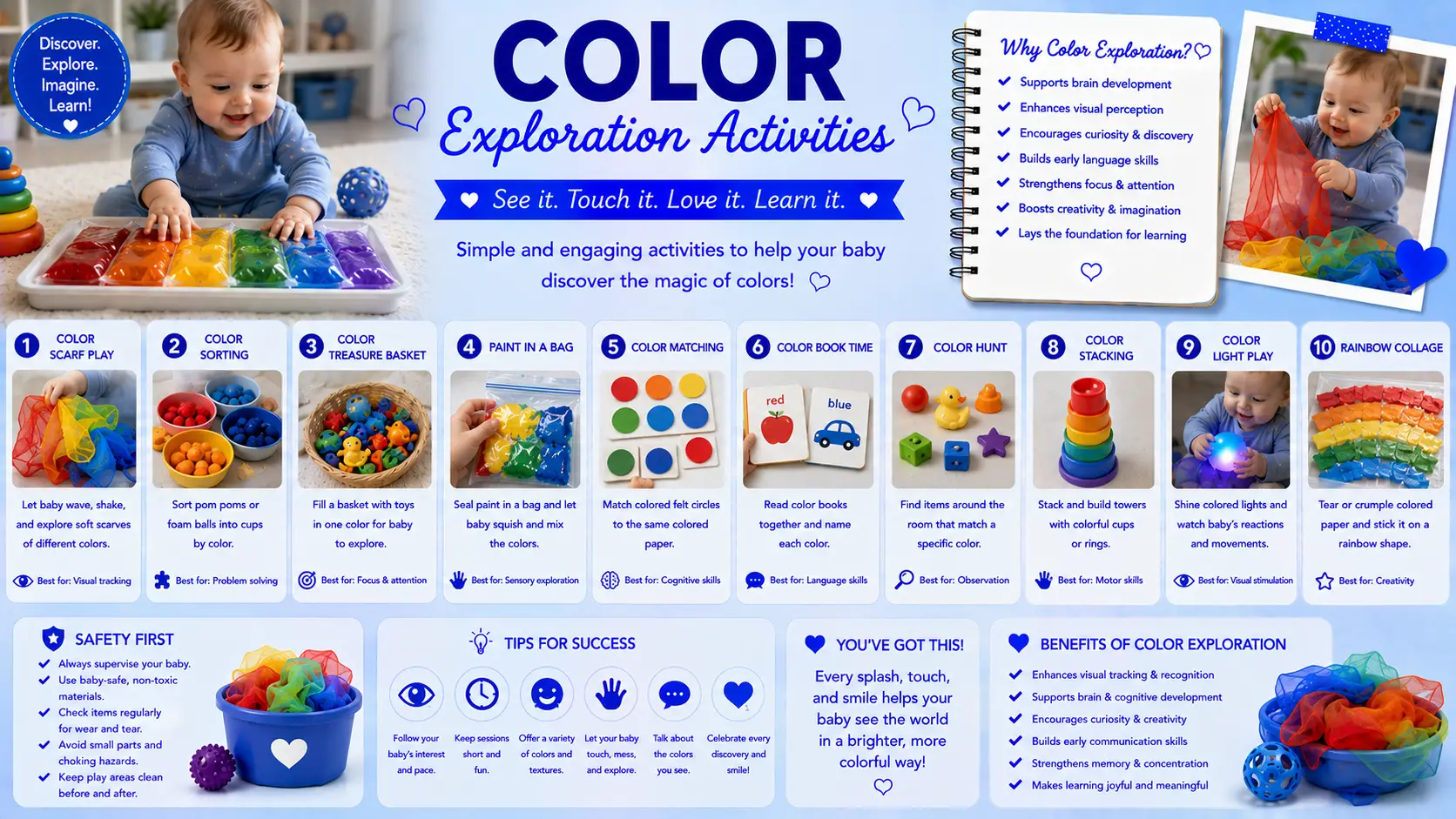
Color Sorting Stations Gather pom-poms, buttons, stickers, building blocks, or toys in a few primary colors. Provide matching cups, trays, or a muffin tin. Toddlers can sort by dropping items into the correct container; preschoolers can use tongs or clothespins for fine-motor practice. Start with two or three colors and add more as confidence grows. This classic activity answers the popular search for “color sorting activities for toddlers” while building concentration and hand strength.
Color Mixing Experiments Nothing feels more magical than watching primary colors create secondary ones. Set up cups of red, yellow, and blue water (or washable paint) with eyedroppers, turkey basters, or small spoons. Kids transfer and combine colors on paper, in ice cube trays, or in clear jars. Try colored ice cubes melting in warm water, or mix playdough of different hues. These simple setups deliver the “color mixing activities for preschoolers” experience families look for and introduce basic cause-and-effect science.
Color Scavenger Hunts Take learning outdoors or around the house. Give kids a list or paint chips and ask them to find objects that match each color. Nature walks work especially well—look for green leaves, yellow flowers, brown bark, or blue sky reflections. Indoors, hunt for items in a single color or create a rainbow collection. Color scavenger hunts get kids moving, observing, and talking about what they see.
Sensory Color Play Fill a bin with dyed rice, pasta, or water in one or more colors. Add scoops, cups, and small toys for pouring and exploring. A “color bath” using a few drops of food coloring in the tub (or a large bin) lets children notice shades and how colors look in water. Sensory bags with colored gel or paint sealed inside offer mess-free squishing and mixing. These options keep exploration tactile and contained.
Sticker and Dot Matching Dot stickers or colored paper circles turn into quick matching games. Stick them on paper tubes, boxes, or a large sheet and have children match or sort. Older toddlers enjoy creating patterns or filling in color-by-number style pictures. This low-prep activity travels well and reinforces color recognition through repetition.
Art and Nature Color Exploration Paint with one or two colors at a time so kids notice how they blend. Use natural materials—leaves, flowers, or rocks—to create color collages. Walk outside and collect items for a rainbow nature board. Books about color mixing (such as Mouse Paint) pair perfectly with follow-up art, giving stories and hands-on practice together.
Active Color Games Get bodies moving with color hop (jump to colored paper on the floor), color tag, or “I spy” color versions. Call out a color and have children run, crawl, or skip to touch something that matches. These gross-motor games make color learning energetic and memorable.
Tips for Successful Color Exploration
Follow the child’s lead. Narrate what they notice rather than drilling names.
Use real objects first, then move to abstract matching.
Limit choices for younger toddlers (two or three colors) and expand gradually.
Keep materials washable and setups simple so play happens more often.
Talk about shades—“This blue is lighter than that one”—to deepen understanding.
Rotate activities to maintain interest without needing constant new supplies.
These ideas cover the most-searched needs: teaching colors to toddlers through play, preschool color mixing, scavenger hunts, and everyday sorting. They require little prep yet deliver rich learning.
FAQ
How do you teach colors to toddlers effectively?
Use everyday language and hands-on play. Point out colors during walks, meals, and playtime (“You’re holding the red block”). Pair this with sorting, matching, and simple mixing activities rather than formal lessons. Exposure and repetition through fun experiences work best.
What are the best color mixing activities for preschoolers?
Water or paint transfer with primary colors using droppers, melting colored ice, mixing playdough, and sealed sensory bags rank among the favorites. These let children discover secondary colors themselves while practicing fine motor skills.
At what age should kids start color exploration activities?
Babies and young toddlers benefit from simple exposure through conversation and high-contrast toys. Intentional sorting and matching usually click between 18 months and 3 years, while color mixing becomes exciting for most preschoolers.
How can I do color activities with minimal mess?
Choose sealed sensory bags, sticker sorting, dry pom-pom or block sorting, color scavenger hunts, and washable markers or paint sticks. Use trays or a plastic tablecloth to contain any wet experiments.
What supplies do I need for basic color exploration?
Start with what you have: colored toys, paper, stickers, food coloring or washable paint, cups, and household items. Pom-poms, construction paper, and clear containers expand options without a big investment.