

If you’ve been trying to conceive — or even if you haven’t — you might find yourself wondering, “Am I pregnant?” long before your period is due. Even before you miss a period, you might suspect — or hope — that you’re pregnant. The good news is that your body may start sending subtle signals days or even weeks before a missed period. In this comprehensive guide from DidYouSearch.com, we’ll walk you through every early sign of pregnancy you might experience before your period is late, when they typically appear, and what to do next.
How Early Can Pregnancy Symptoms Start?
Many women notice subtle changes in their bodies days — or even weeks — before a missed period. These early pregnancy symptoms can show up around the time of implantation, usually 6–12 days after ovulation. A predictable timeline includes: implantation spotting and mild cramping around 6–12 days after conception, a missed period around week 4, breast tenderness and fatigue around weeks 5–6, and nausea peaking around weeks 6–9.
However, early pregnancy symptoms vary widely from person to person. Some may feel something is different within a few days after conception, while others may not even know they are pregnant until they’ve missed their period and gotten a positive pregnancy test.
12 Early Signs of Pregnancy Before a Missed Period
1. Implantation Bleeding & Spotting
One possible pregnancy symptom is light bleeding or spotting. It can occur as early as one to two weeks after conception. When a fertilized egg attaches to the lining of the uterus, which happens five to 14 days after fertilization, that implantation can cause light bleeding. Although it tends to happen when you’d usually expect your period, it is likely to be shorter in duration and lighter in color, and you may or may not experience light cramping.
How to tell it apart from your period: Implantation bleeding is typically pink or brown (not bright red), lasts only 1–2 days, and is much lighter than a regular menstrual flow.
2. Implantation Cramps
You might feel light cramping or a gentle tugging in your lower abdomen. Unlike period cramps, implantation cramps are usually milder and shorter. Cramps in early pregnancy happen when a fertilized egg sticks to the wall of the uterus — a process called implantation. These cramps can last one to three days.
3. Breast Tenderness & Swelling
Tender, swollen breasts are a common early sign. Early in pregnancy, hormonal changes might make your breasts sensitive and sore. If your breasts start to feel extra sore, more swollen, tingly, or heavy about one to two weeks after intercourse, this can be an early sign of pregnancy.
4. Extreme Fatigue
Fatigue can develop anytime during pregnancy and is common in early pregnancy. Rising progesterone levels can make you feel sleepy, and the early weeks of pregnancy can make you feel exhausted. If you’re pregnant, you might feel very sleepy, even during the day, because the body is making new hormones and more blood to help the baby grow.
5. Nausea (Morning Sickness)
Morning sickness can start surprisingly early. Some women feel waves of nausea as early as a week after conception, long before a missed period. Although commonly known as “morning sickness,” vomiting and nausea can happen at any time of the day or night. Morning sickness affects up to 80% of pregnant people, but its severity and timing vary widely.
6. Heightened Sense of Smell
The hormonal changes that happen after implantation but before a missed period very often cause an olfactory super sensitivity. Smells that were mildly unpleasant before may become deeply nauseating, or odors that were previously pleasant could suddenly become smells that you wish to avoid.
7. Bloating & Gas
Progesterone slows digestion, which can lead to bloating, gas, or a sense of fullness. There is some overlap between PMS and early pregnancy symptoms, like mood swings, bloating, fatigue, and cravings.
8. Frequent Urination
Early pregnancy increases blood flow to the kidneys, leading to more trips to the bathroom. This can start even before your missed period and is one of the lesser-known but very common early signs.
9. Mood Swings
Hormonal changes can trigger emotional ups and downs, even more pronounced than usual PMS. You may feel unusually tearful, irritable, or emotional without a clear reason.
10. Food Cravings & Aversions
Pregnancy can cause sudden cravings or aversions to foods you normally enjoy. If you suddenly can’t stand the thought of your favorite meal, or you’re craving something you normally wouldn’t eat, early pregnancy hormones could be at play.
11. Metallic Taste in Mouth
Some women report a strange metallic or “coin-like” taste in the first weeks of pregnancy. This unusual symptom, known as *dysgeusia*, is caused by hormonal fluctuations and can appear very early.
12. Dizziness & Lightheadedness
Changes in blood pressure or blood sugar during early pregnancy may make you feel faint or dizzy. If you’re feeling lightheaded more than usual, especially alongside other symptoms on this list, it may be an early sign.
Early Pregnancy Signs vs. PMS: How to Tell the Difference
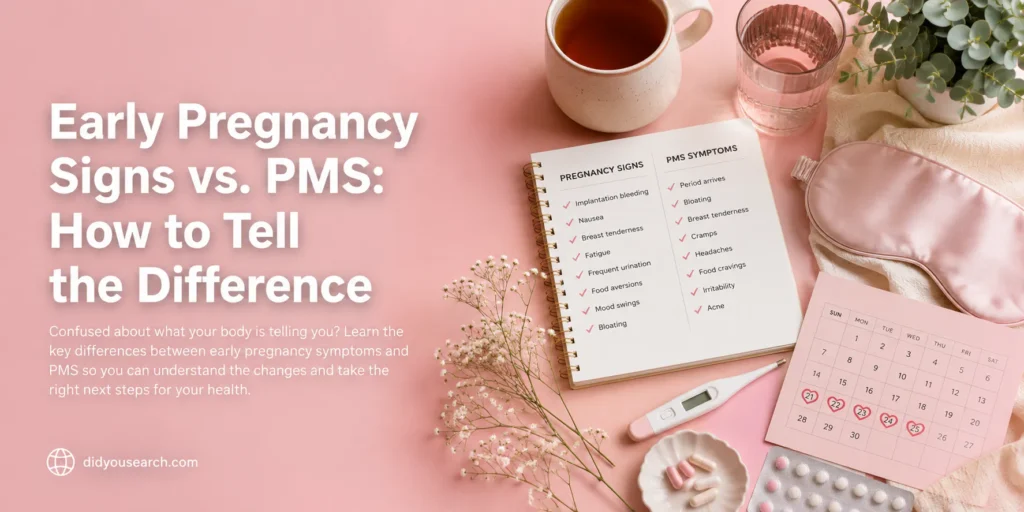
One of the trickiest parts about early pregnancy symptoms is that they closely mimic PMS. Some of the signs of early pregnancy, even before a missed period, are like the symptoms of PMS, and so for some women it can be difficult to tell the difference.
Here’s a quick comparison:
| Symptom | PMS | Early Pregnancy |
|---|---|---|
| Cramps | Stronger, intensify before period | Milder, brief (implantation) |
| Breast Pain | Eases when period starts | Persists and intensifies |
| Fatigue | Mild tiredness | Deep exhaustion |
| Nausea | Rare | Common (morning sickness) |
| Bleeding | Normal flow | Light spotting (pink/brown) |
| Food Cravings | Occasional | Sudden and intense |
| Mood Swings | Common | More intense |
When Should You Take a Pregnancy Test?
At-home tests generally detect pregnancy about one week after the first missed period. However, if you haven’t missed a period yet, you can take an early pregnancy test up to 6 days before your missed period (5 days before your expected period). Pregnancy tests detect human chorionic gonadotropin (HCG), which your body starts producing more of soon after conception.
For the most accurate results:
- ✅ Test with your first morning urine (highest HCG concentration)
- ✅ Wait until at least 1 day after your missed period for the most reliable result
- ✅ If negative but still no period, retest in 2–3 days
- ✅ To confirm pregnancy for sure, see your doctor for a blood test that checks for the beta-HCG hormone. HCG levels will be higher in pregnancy.
What to Do If You Think You’re Pregnant
- Take a home pregnancy test — Take an at-home pregnancy test if you think you might be pregnant. They’re available at most grocery stores and pharmacies, and are highly accurate when used correctly.
- Contact your healthcare provider — Call a healthcare provider if you get a positive result. Early prenatal care is important for keeping you and your baby healthy.
- Start taking prenatal vitamins — If you are trying to conceive or if you have learned that you are pregnant, begin taking a prenatal vitamin to support a healthy pregnancy.
- Track your symptoms — Keeping a journal of your symptoms and their timing can help your doctor understand your pregnancy timeline.
Frequently Asked Questions (FAQs)
Can you feel pregnant after 2 days?
- Technically, you’re not even considered pregnant for the first two weeks of pregnancy because doctors count the first day of your last menstrual period as the beginning of pregnancy. While some people report feeling “different” very early, medically detectable symptoms don’t usually begin until implantation occurs (6–12 days after ovulation).
Can you be pregnant and have no symptoms at all?
- Yes! People can be pregnant without experiencing any of these symptoms. Not having symptoms early in pregnancy is common and usually normal. Some women don’t feel any noticeable changes until later in the first trimester.
What is the earliest pregnancy symptom?
- The earliest signs of pregnancy before a positive test often include fatigue, mild cramping, light pink or brown spotting, breast tenderness, bloating, early nausea or food aversions, and mood changes.
Are early pregnancy symptoms different from PMS?
- Early signs of pregnancy can feel like premenstrual syndrome (PMS) symptoms, so you may not immediately realize you’re pregnant. The key differences are that pregnancy symptoms tend to persist and intensify rather than resolve when your period would normally begin.