
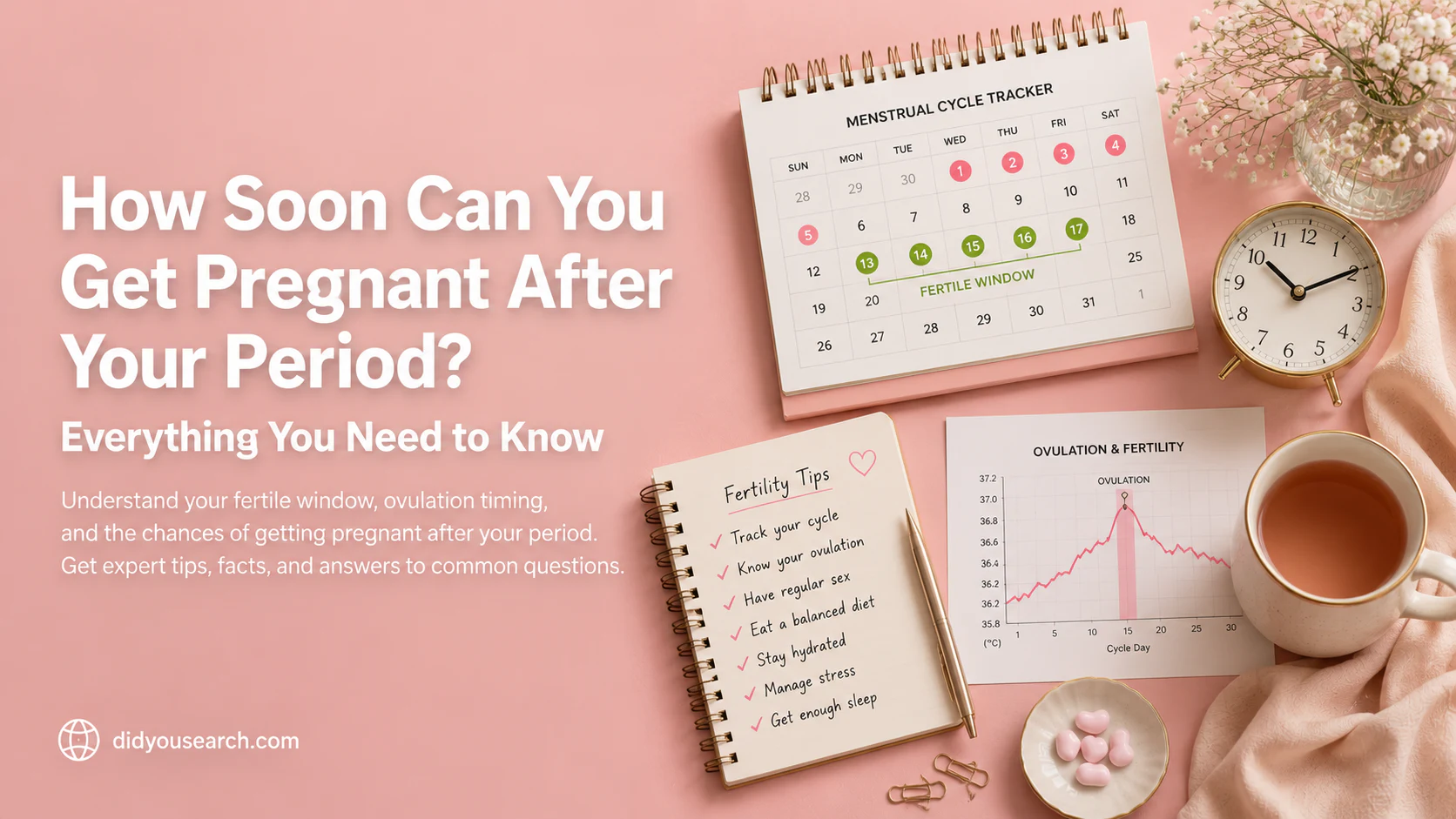

Wondering how soon you can get pregnant after your period? Learn when you’re most fertile, how ovulation affects pregnancy chances, and common myths explained. explore DidYouSearch!
Many people assume that pregnancy is impossible immediately after a period. However, that’s not always true. Depending on your menstrual cycle, ovulation timing, and sperm survival, it is possible to get pregnant just a few days after your period ends.
Understanding your fertile window can help whether you’re trying to conceive or avoid pregnancy. In this guide, we’ll explain when pregnancy is most likely, what factors affect fertility, and answer common questions about getting pregnant after your period.
Can You Get Pregnant Right After Your Period?
Yes, you can get pregnant shortly after your period, although the likelihood depends on your menstrual cycle length and when you ovulate.
For someone with a typical 28-day cycle, ovulation usually occurs around day 14. Since sperm can survive in the reproductive tract for up to five days, having unprotected sex soon after your period may result in pregnancy if ovulation occurs earlier than expected.
Women with shorter menstrual cycles (21–24 days) are more likely to ovulate earlier, making pregnancy after a period more likely.
How Soon After Your Period Can Pregnancy Happen?
Pregnancy can happen as early as a few days after your period ends.
For example:
| Cycle Length | Estimated Ovulation | Pregnancy Risk After Period |
|---|---|---|
| 21 days | Around Day 7 | High |
| 24 days | Around Day 10 | Moderate to High |
| 28 days | Around Day 14 | Moderate |
| 35 days | Around Day 21 | Lower immediately after period |
Remember that these are estimates. Stress, illness, travel, hormonal changes, and medical conditions can all shift ovulation.
Why Pregnancy Is Possible After Your Period
There are two important reasons:
1. Sperm Can Live for Several Days
Healthy sperm can survive inside the female reproductive tract for up to five days, and sometimes slightly longer under ideal conditions.
2. Ovulation Doesn’t Always Happen on Day 14
Although many people ovulate about 14 days before their next period, cycles vary widely. Early ovulation increases the chance that sperm are still alive when the egg is released.
Factors That Affect Your Chances of Pregnancy
Your likelihood of becoming pregnant after your period depends on several factors:
- Length of your menstrual cycle
- Ovulation timing
- Cycle regularity
- Sperm survival
- Age and overall fertility
- Hormonal conditions such as PCOS
- Lifestyle factors including stress and illness
When Are You Most Fertile?
The highest chance of pregnancy occurs during your fertile window, which includes:
- The five days before ovulation
- The day of ovulation
- Up to one day after ovulation
Experts recommend having intercourse every one to two days during this period when trying to conceive.
Signs You’re Approaching Ovulation
You may notice:
- Clear, stretchy cervical mucus (similar to egg whites)
- Mild pelvic pain on one side
- Increased sex drive
- Slight rise in basal body temperature after ovulation
- Positive ovulation predictor kit (LH surge)
Tracking these signs can help identify your most fertile days.
Can You Get Pregnant During Your Period?
Although it’s less common, yes, pregnancy during your period is possible.
This can happen if:
- You have a short menstrual cycle.
- Your period lasts several days.
- You ovulate earlier than expected.
- Sperm survive until ovulation.
For this reason, unprotected sex during any part of your cycle can potentially result in pregnancy.
Tips If You’re Trying to Get Pregnant
To improve your chances:
- Track your menstrual cycle.
- Use ovulation predictor kits.
- Have intercourse every one to two days during your fertile window.
- Maintain a healthy weight.
- Eat a balanced diet.
- Take a prenatal vitamin containing folic acid.
- Avoid smoking and excessive alcohol.
When Should You Take a Pregnancy Test?
For the most accurate result:
- Wait until the first day of your missed period.
- If testing earlier, use a sensitive early-detection pregnancy test.
- If the first test is negative but your period doesn’t start, test again in 48 hours.
Key Takeaways
While many people think pregnancy isn’t possible immediately after a period, it absolutely can happen. Your fertility depends on when you ovulate, the length of your menstrual cycle, and how long sperm survive. If you’re trying to conceive—or trying to avoid pregnancy—understanding your fertile window is one of the most effective ways to manage your reproductive health.
FAQ
Can I get pregnant 2 days after my period?
Yes. If you have a short menstrual cycle or ovulate early, sperm from intercourse can survive long enough to fertilize an egg.
What are the chances of getting pregnant right after a period?
The chances vary depending on your cycle length and ovulation timing. The risk is generally higher for people with shorter or irregular cycles.
Can I get pregnant if my period just ended?
Yes. Pregnancy is possible if ovulation occurs within the next few days and sperm remain viable.
Is pregnancy possible after a 5-day period?
Yes. For people with shorter cycles, ovulation may occur only a few days after a five-day period ends.
How many days after my period am I most fertile?
Most people become most fertile during the five days leading up to ovulation and the day of ovulation. For a 28-day cycle, this is often around days 10–15, but it varies from person to person.