
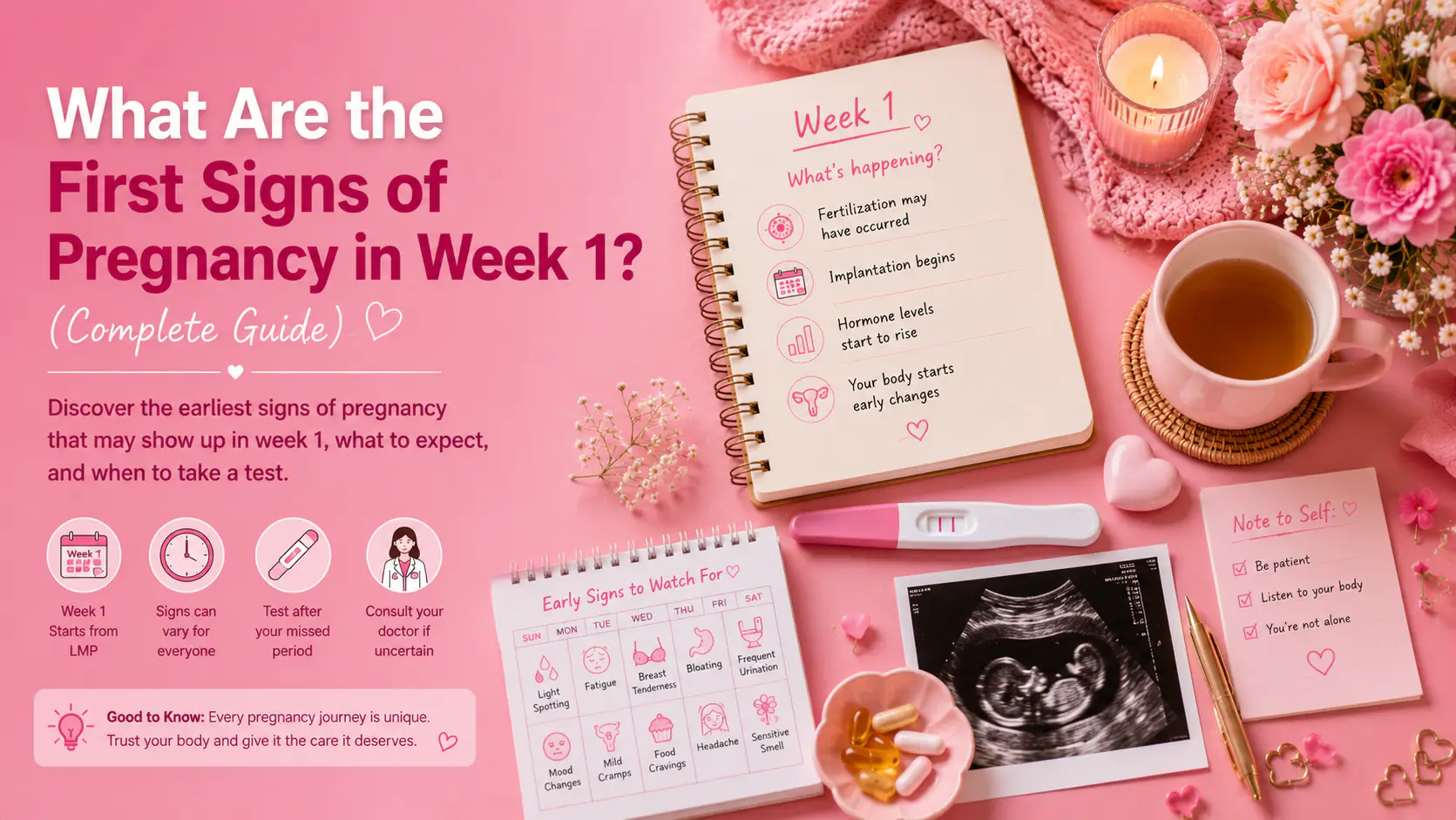

Many women wonder if they can notice pregnancy symptoms just days after conception. The truth is that week 1 of pregnancy can be confusing, because healthcare providers count pregnancy from the first day of your last menstrual period (LMP). This means that during the official first week of pregnancy, you usually are not actually pregnant yet.
However, if you’re referring to the first week after conception, some women may begin noticing subtle changes as hormone levels start to rise. These symptoms vary widely, and many women experience no symptoms at all during this stage.
This guide explains what really happens during week 1, the earliest possible pregnancy signs, and when you should take a pregnancy test. explore DidYouSearch!
Can You Have Pregnancy Symptoms in Week 1?
In most cases, no obvious pregnancy symptoms appear during the first week.
After fertilization, it takes several days for the fertilized egg to travel to the uterus and implant into the uterine lining. Only after implantation does the body begin producing significant amounts of human chorionic gonadotropin (hCG), the hormone responsible for many pregnancy symptoms and positive pregnancy tests.
Possible First Signs of Pregnancy in Week 1
Although symptoms differ from person to person, some early signs may include:
1. Mild Cramping
Some women experience light cramping as the embryo attaches to the uterus.
These cramps are usually:
- Mild
- Short-lasting
- Different from menstrual cramps
- Not severe
If pain becomes intense or is accompanied by heavy bleeding, seek medical attention immediately.
2. Implantation Spotting
One of the earliest possible pregnancy signs is implantation bleeding.
Characteristics include:
- Light pink or brown spotting
- Lasts a few hours to two days
- Much lighter than a normal period
- Usually occurs 6–12 days after ovulation
Not everyone experiences implantation bleeding.
3. Breast Tenderness
Hormonal changes can make your breasts feel:
- Swollen
- Heavy
- Sensitive
- Painful to touch
Some women also notice darker nipples or more visible veins.
Breast tenderness is among the earliest pregnancy symptoms.
4. Fatigue
Feeling unusually tired is another common early sign.
Rising progesterone levels can cause:
- Low energy
- Sleepiness
- Difficulty concentrating
Many women report fatigue before realizing they are pregnant.
5. Bloating
Hormonal changes may slow digestion, leading to:
- Bloating
- Gas
- Mild abdominal discomfort
- Feeling full quickly
These symptoms can resemble premenstrual syndrome (PMS).
6. Increased Basal Body Temperature
If you track your basal body temperature (BBT), you may notice it stays elevated after ovulation.
A consistently high BBT for more than two weeks may suggest pregnancy, though it is not a definitive sign.
7. Mood Changes
Hormonal fluctuations may trigger:
- Mood swings
- Emotional sensitivity
- Irritability
- Anxiety
These changes are common in both early pregnancy and PMS.
8. Increased Sense of Smell
Some women become unusually sensitive to odors.
Foods, perfumes, or cooking smells may suddenly seem much stronger than usual.
9. Food Cravings or Aversions
Very early hormonal changes may alter taste preferences.
You might notice:
- Metallic taste
- Strong food aversions
- New cravings
- Reduced appetite
10. Frequent Urination
Although more common later in pregnancy, some women begin urinating more frequently because hormonal changes increase blood flow to the kidneys.
Symptoms That Usually Do NOT Appear in Week 1
Many people expect these symptoms immediately, but they usually develop several weeks later:
- Morning sickness
- Noticeable weight gain
- Baby bump
- Strong fetal movement
- Significant abdominal enlargement
Morning sickness commonly begins around weeks 4–6 of pregnancy.
Week 1 Pregnancy vs PMS
Many early pregnancy symptoms are nearly identical to PMS.
| PMS | Early Pregnancy |
|---|---|
| Breast tenderness | ✓ |
| Mild cramping | ✓ |
| Bloating | ✓ |
| Mood swings | ✓ |
| Fatigue | ✓ |
| Missed period | Usually No |
| Implantation spotting | No |
| Positive pregnancy test | No |
Because symptoms overlap so much, a pregnancy test is the only reliable way to confirm pregnancy.
What’s Happening Inside Your Body?
If you’re using the medical definition of pregnancy:
- Your menstrual cycle has just begun.
- The uterine lining is shedding.
- Your body is preparing a new egg for ovulation.
- Fertilization has not yet occurred.
If you’re referring to the first week after conception:
- Fertilization has happened.
- The embryo is traveling through the fallopian tube.
- Implantation may occur near the end of the week.
- hCG production begins after implantation.
When Should You Take a Pregnancy Test?
For the most accurate result:
- Wait until the first day of your missed period.
- Test with your first morning urine.
- If the result is negative but your period still doesn’t start, repeat the test after 48–72 hours.
Early-result tests may detect pregnancy a few days before a missed period, but accuracy is lower.
When to Contact a Healthcare Provider
Seek medical advice if you experience:
- Severe abdominal pain
- Heavy vaginal bleeding
- Fainting
- Persistent one-sided pelvic pain
- Positive pregnancy test with concerning symptoms
These symptoms could indicate complications that require prompt evaluation.
Tips During the First Week of Pregnancy
If you’re trying to conceive or think you may be pregnant:
- Begin taking a prenatal vitamin containing 400 mcg of folic acid.
- Avoid smoking, alcohol, and recreational drugs.
- Eat a balanced diet rich in fruits, vegetables, whole grains, and lean protein.
- Stay hydrated.
- Limit caffeine to recommended amounts.
- Discuss any medications with your healthcare provider before continuing them.
Frequently Asked Questions (FAQ)
Can you feel pregnant after one week?
Usually not. Some women notice mild symptoms such as fatigue or breast tenderness, while many feel no changes at all.
What is the very first sign of pregnancy?
For many people, the earliest noticeable sign is a missed period. Others may experience breast tenderness, fatigue, or light implantation spotting beforehand.
Is cramping normal in week 1 of pregnancy?
Yes. Mild cramping can occur around implantation, but severe or persistent pain should be evaluated by a healthcare provider.
Can I get a positive pregnancy test in week 1?
Usually not. Most pregnancy tests become accurate on or after the first day of a missed period because hCG levels need time to rise.
Is implantation bleeding common?
Some women experience light spotting during implantation, but many do not. Both experiences can be normal.
Can pregnancy symptoms feel like PMS?
Yes. Breast tenderness, bloating, fatigue, and mood swings are common in both PMS and early pregnancy, making a pregnancy test essential for confirmation.