
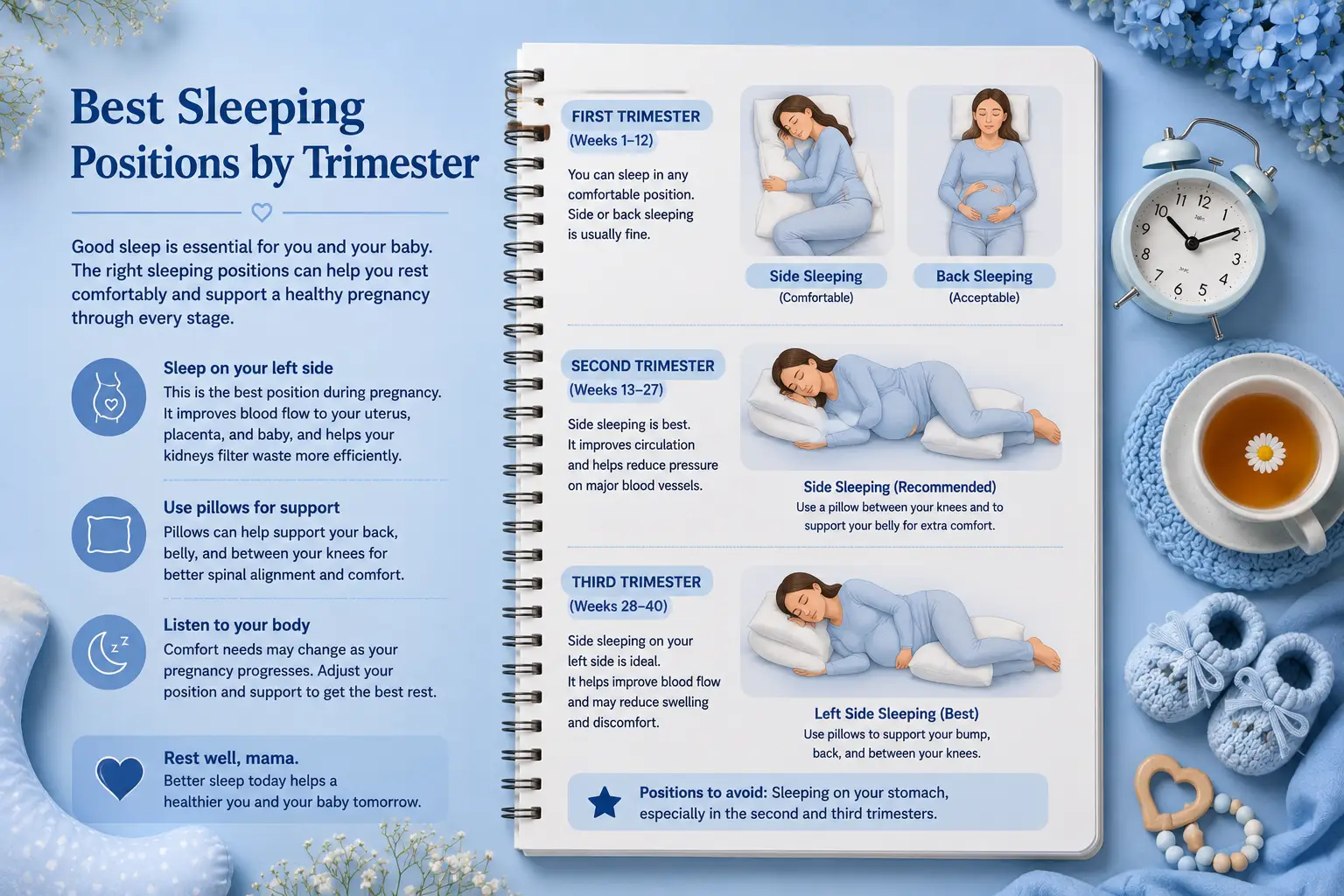

Finding a comfortable way to sleep is one of the biggest challenges of pregnancy. Your body changes rapidly, and the positions that once felt natural may start causing aches, heartburn, or circulation issues. The good news is that the “best” sleeping position evolves with each trimester. Understanding what works—and what to avoid—at each stage can improve both your rest and your baby’s well-being.
First Trimester: Comfort Comes First
In the early weeks, almost any position is generally safe. Your uterus is still small and sits low in the pelvis, so it doesn’t put significant pressure on major blood vessels or organs.
Many people continue sleeping on their back, side, or even stomach without problems. Stomach sleeping may become uncomfortable as breasts become more tender, but it won’t harm the baby—the uterus and amniotic fluid provide protection. Back sleeping is also fine at this stage.
Tips for better rest now:
Use extra pillows for support if nausea or breast tenderness bothers you.
Elevate your head slightly if heartburn begins (it can start early for some).
Focus on consistent sleep routines, as fatigue from rising progesterone is common.
If you’re already a side sleeper, this is a great time to practice left-side sleeping so the transition later feels easier.
Second Trimester: Transition to Side Sleeping
Around weeks 13–27, your belly starts to expand more noticeably. This is when most experts recommend shifting away from prolonged back and stomach sleeping.
Sleeping flat on your back can begin to compress the inferior vena cava (the large vein that returns blood from your lower body to your heart). This may reduce blood flow to the uterus and placenta and can leave you feeling dizzy or short of breath. Stomach sleeping usually becomes impractical as the bump grows.
Best position now: Side sleeping with knees slightly bent (the “SOS”—sleep on side—position). The left side is often preferred because it optimizes blood flow to the placenta, supports kidney function, and can help reduce swelling in the legs and ankles. The right side is also considered safe if it feels more comfortable.
Helpful pillow setup:
Place a pillow between your knees to keep hips aligned and ease lower-back strain.
Tuck a small pillow or folded towel under your belly for support.
Put a pillow behind your back to discourage rolling onto your back during the night.
A full-body or C-shaped pregnancy pillow can make this stage much more comfortable and help you stay on your side.
Third Trimester: Side Sleeping Is Key
From about 28 weeks onward, side sleeping becomes especially important. Multiple studies have linked going to sleep on the back in the third trimester with a higher risk of stillbirth and smaller-for-gestational-age babies. The growing uterus puts more pressure on major blood vessels when you’re supine.
Recommended approach: Go to sleep on your side—left preferred, right acceptable. Keep knees bent and use plenty of support. Many people find a U-shaped or full-body pregnancy pillow ideal because it supports the bump, back, and legs at once and makes it easier to switch sides without fully waking.
If you wake up on your back, don’t panic. Short periods are generally not harmful. Simply roll back onto your side and settle again. The advice focuses on the position you start the night (and naps) in.
Extra comfort strategies for late pregnancy:
Elevate your upper body slightly with pillows or a wedge to reduce heartburn and shortness of breath.
Keep a pillow between your knees and another under the belly.
Consider a wedge pillow behind your back if you tend to roll onto it.
Sleep on the left side of the bed if that naturally encourages left-side resting.
Practical Tips That Work Across Trimesters
Pregnancy pillows (C-shaped, U-shaped, or simple body pillows) are worth investing in. They help maintain alignment, reduce pressure points, and make side sleeping sustainable. Regular pillows work too—experiment until you find a setup that feels supportive.
Other habits that improve sleep quality:
Keep a consistent bedtime and wake time.
Limit caffeine after midday and large meals close to bedtime.
Stay active during the day (gentle walks or prenatal yoga can ease aches).
Make the bedroom cool, dark, and quiet.
Address restless legs by checking iron levels with your provider if needed.
When to Check with Your Provider
Talk to your doctor or midwife if you experience persistent insomnia, loud snoring, gasping during sleep, or significant swelling. These can signal issues like sleep apnea or other conditions that benefit from evaluation. They can also offer personalized advice if you have a high-risk pregnancy.
Sleeping well during pregnancy isn’t always easy, but choosing positions that support circulation and comfort makes a real difference. Start practicing side sleeping early, lean on pillows for support, and adjust as your body changes. Your rest matters—for both you and your baby.
FAQ
Can I sleep on my back while pregnant?
Yes in the first trimester. In the second trimester, limit prolonged back sleeping. In the third trimester (especially after 28 weeks), experts strongly recommend going to sleep on your side because back sleeping has been linked to higher stillbirth risk. Waking on your back briefly is usually fine—just roll over.
Is the left side really better than the right?
The left side is often preferred because it maximizes blood flow to the placenta and kidneys and may reduce leg swelling. However, research shows the right side is also safe. Choose whichever side lets you rest more comfortably, and alternate if needed.
When should I stop sleeping on my stomach?
Most people naturally stop once the bump makes it uncomfortable, usually in the second trimester. It’s safe early on but becomes impractical and less supportive later.
Do I need a special pregnancy pillow?
Not required, but many find them extremely helpful. They support the belly, back, and legs, making side sleeping easier and more sustainable through the third trimester. Regular pillows arranged strategically can work well too.
What if I keep waking up on my back?
It’s common and not usually a cause for worry. Simply shift back to your side. Using a pillow or rolled blanket behind your back can help prevent rolling. Focus on starting each night (and nap) on your side.