
Yes, headaches are a common pregnancy symptom, especially in the first trimester, and most of the time they’re harmless. That said, headaches during pregnancy sit in an interesting category: usually just an ordinary discomfort, but occasionally a warning sign worth taking seriously. Here’s what typically causes them, how they shift across trimesters, and how to tell an everyday headache from one that needs medical attention.
Why Headaches Happen in Early Pregnancy
The first trimester is a particularly common time for headaches, driven largely by the rapid hormonal changes taking place as your body adjusts to rising hCG, estrogen, and progesterone. On top of hormones, several other common early-pregnancy factors tend to contribute:
Increased blood volume and changes in circulation
Fatigue and disrupted sleep
Low blood sugar, especially if nausea is making it harder to eat regularly
Dehydration, which can be worsened by morning sickness
Caffeine withdrawal, if you’ve cut back or stopped caffeine after finding out you’re pregnant
Stress, understandably common in early pregnancy as you adjust to the news
How Headaches Change Through Pregnancy
Headache patterns tend to shift as pregnancy progresses:
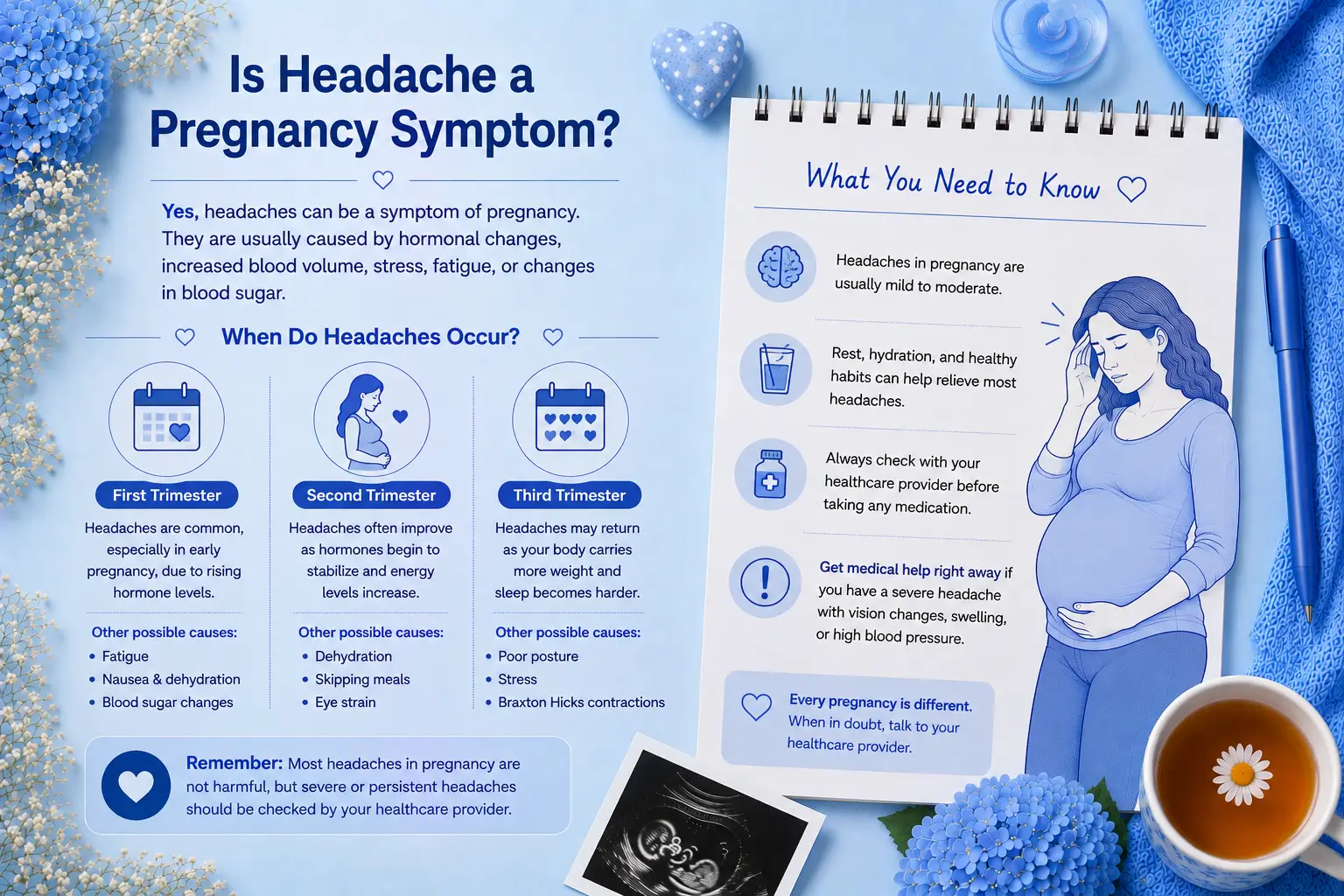
First trimester: Headaches are especially common here, largely tied to the sharp hormonal shifts and lifestyle changes (less caffeine, more fatigue, possible nausea) that come with early pregnancy.
Second trimester: Many people find headaches ease up somewhat as hormone levels stabilize and the body adjusts, though they can still occur.
Third trimester: Headaches often return, this time more related to the physical strain of carrying extra weight, postural changes, and tension in the neck, shoulders, and upper back.
Postpartum: Headaches paired with neck and shoulder tension are common after delivery too, related to the physical demands of childbirth and the sleep disruption that comes with a new baby.
Common Triggers Throughout Pregnancy
Beyond the trimester-specific patterns, a number of everyday triggers can bring on headaches at any point:
Certain foods, including chocolate, aged cheeses, and processed meats
Sinus congestion, which is more common during pregnancy due to increased blood flow to mucous membranes
Poor posture or muscle tension in the neck and shoulders
Weather changes
Skipping meals or going too long without eating
Poor sleep quality
Managing Ordinary Pregnancy Headaches
Most pregnancy headaches respond well to simple, non-medication strategies:
Stay well hydrated throughout the day
Eat regular, balanced meals to avoid blood sugar dips
Prioritize rest and consistent sleep where possible
Practice stress-reduction techniques, like gentle stretching, deep breathing, or short walks
Apply a cold or warm compress to your head or neck
Maintain good posture, especially as your body’s center of gravity shifts later in pregnancy
Limit but don’t necessarily eliminate caffeine, since a small amount (generally under 200mg daily, as approved by your provider) may help if withdrawal is a trigger
If you took medication for headaches or migraines before pregnancy, talk to your provider about whether it’s still appropriate, since some medications aren’t recommended during pregnancy. Acetaminophen is generally considered an option for headache pain when approved by your doctor.
When a Headache Signals Something More Serious
This is the part worth paying close attention to. According to the American College of Obstetricians and Gynecologists (ACOG), headache is one of the most common symptoms of preeclampsia, a serious high blood pressure disorder that typically develops after 20 weeks of pregnancy (though it can occur earlier or postpartum) and affects roughly 5 to 10% of pregnancies.
Preeclampsia headaches tend to be different from your usual pregnancy headache: often described as severe, persistent, throbbing, or migraine-like, and they don’t resolve with typical measures like rest or hydration.
Contact your healthcare provider promptly, or seek emergency care, if a headache is accompanied by any of the following:
Blurred vision, seeing spots, or other visual disturbances
Sudden or significant swelling, particularly in the face and hands
Pain in the upper right abdomen
Sudden weight gain, such as more than a pound in a single day
Nausea, vomiting, or confusion alongside the headache
A headache that feels distinctly different from any you’ve had before, especially after 20 weeks
A sudden, severe “thunderclap” headache, one that hits its peak intensity within seconds to minutes, along with confusion, vision loss, weakness, or trouble speaking, is a medical emergency and warrants going to an emergency room immediately.
The Bottom Line
Yes, headaches are a normal and common part of pregnancy, particularly in the first and third trimesters, usually caused by hormones, dehydration, fatigue, or everyday triggers. The vast majority of pregnancy headaches are nothing to worry about and respond well to rest, hydration, and simple lifestyle adjustments. Still, because headache is also a hallmark symptom of preeclampsia, it’s worth knowing the warning signs and never hesitating to call your provider if something feels different or more severe than usual.
FAQ
Is it normal to have headaches in early pregnancy?
Yes, headaches are especially common in the first trimester, largely due to rapid hormonal changes, along with fatigue, dehydration, and possibly reduced caffeine intake.
What causes headaches in the third trimester?
Later pregnancy headaches are often related to physical strain, poor posture, and tension in the neck and shoulders as extra weight shifts your center of gravity.
Can headaches be a sign of preeclampsia?
Yes, a severe, persistent headache, especially one occurring after 20 weeks and accompanied by vision changes, swelling, or upper abdominal pain, can be a warning sign of preeclampsia and should be evaluated promptly.
Is it safe to take medication for headaches during pregnancy?
Acetaminophen is generally considered an option when approved by your doctor, but you should always confirm with your provider before taking any medication, especially if you had migraines or used specific treatments before pregnancy.
When should I call my doctor about a pregnancy headache?
Call promptly if a headache is severe, doesn’t improve with rest or hydration, or comes with vision changes, swelling, sudden weight gain, or abdominal pain, particularly in the second half of pregnancy.