
Back pain is one of the most common complaints of pregnancy, affecting somewhere between 40% and three-quarters of pregnant people at some point along the way. It can show up as early as the first trimester and often becomes more pronounced as pregnancy progresses, ranging from a mild, nagging ache to pain intense enough to interfere with daily life. Here’s what’s actually behind it, how the causes shift trimester by trimester, and what helps.
First Trimester: Hormones Get Things Started
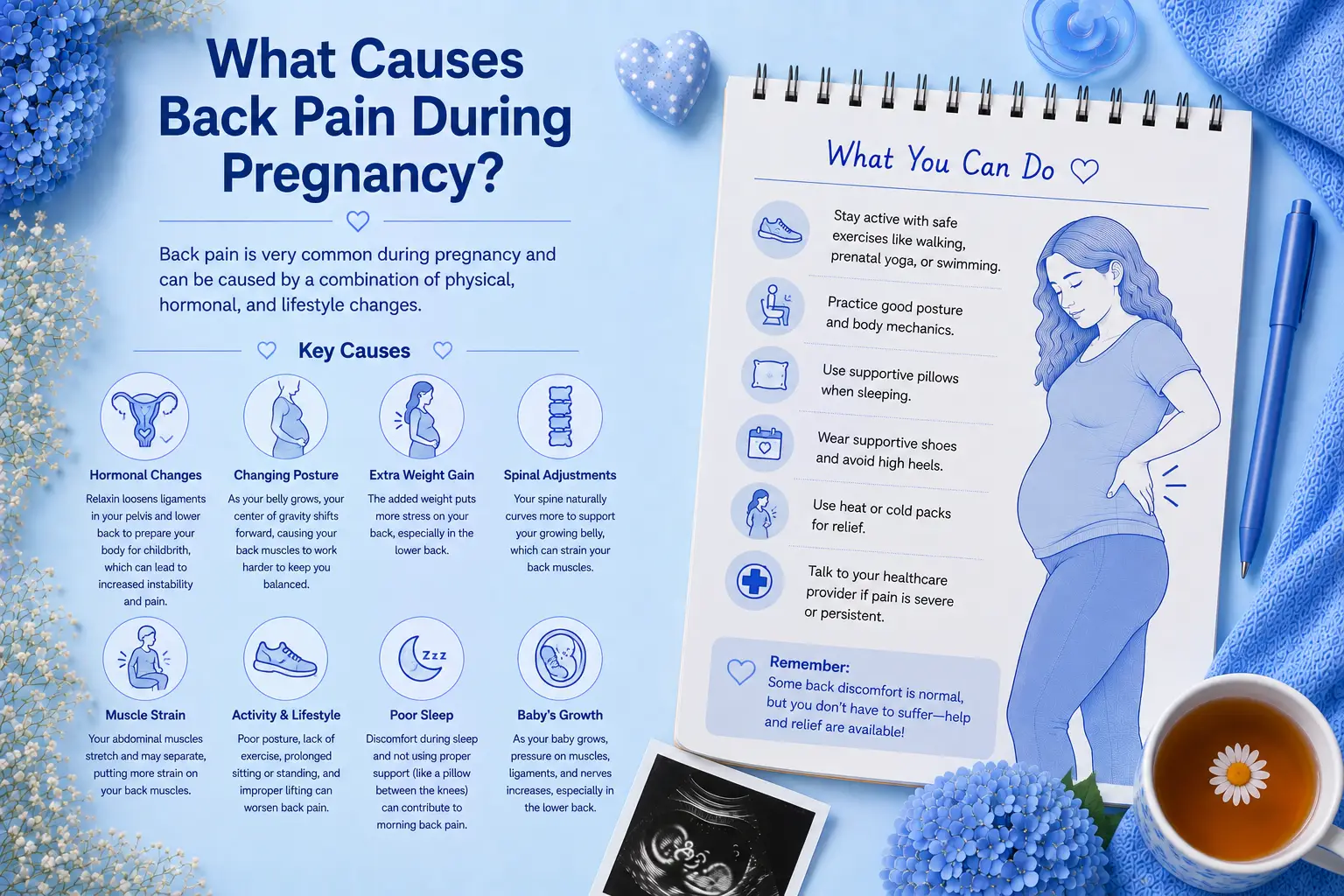
It might surprise you that back pain can begin before you’re showing at all. Early in pregnancy, your body starts releasing relaxin and other hormones that soften and loosen the ligaments and joints in your pelvis, preparing your body for delivery months down the road. These hormones don’t stay confined to your pelvis, though, they circulate throughout your body and affect joints and connective tissue everywhere, including your back. That loosening can translate into aches and general instability in the lower back well before any noticeable weight gain.
Stress can compound this early on too. Anxiety about a new pregnancy, whether planned or not, tends to increase muscle tension, and when your joints and ligaments are already being affected by hormonal shifts, added tension can make back discomfort worse.
Second and Third Trimester: Physical Changes Take Over
As pregnancy progresses, the causes shift from mostly hormonal to increasingly mechanical:
Extra weight. The additional weight you carry, mostly concentrated in your abdomen, adds direct strain to your spine and forces your lower back muscles to work harder to support it.
A shifting center of gravity. As your belly grows, your center of gravity moves forward, which naturally increases the curve in your lower spine. That added curvature puts more strain on the muscles trying to keep you upright and balanced.
Posture changes. Your abdominal muscles stretch and weaken as your uterus expands, and since they normally help support your spine, your back muscles end up compensating, leading to more strain and often poor posture.
Rising relaxin levels. Relaxin continues to increase through the third trimester, further loosening pelvic joints and ligaments in preparation for childbirth, but also reducing the structural support your back normally relies on.
Everyday movements. Standing for long periods, bending over frequently, or generally being on your feet a lot can all trigger or worsen back pain, especially as your body carries more weight than it’s used to.
Why It’s Most Common in the Third Trimester
Lower back pain tends to peak in the final trimester, when the combination of maximum fetal weight, the most pronounced shift in center of gravity, and the highest relaxin levels all converge at once. Many people describe this stage as when back pain becomes a near-constant companion rather than an occasional annoyance.
Less Common but Important Causes
While most pregnancy back pain is a normal result of hormonal and physical changes, sudden or severe back pain occasionally signals something else worth investigating:
Urinary tract infections (UTIs), which can cause sudden back pain, particularly in the mid or upper back near the kidneys
Preterm labor, where rhythmic or worsening back pain can be an early warning sign
Less common conditions like pregnancy-associated osteoporosis or joint-related issues
If back pain comes on suddenly, feels different from your usual aches, or is accompanied by other symptoms like fever, painful urination, or contractions, it’s worth contacting your provider promptly rather than assuming it’s routine.
Finding Relief
While it’s difficult to prevent pregnancy back pain entirely, a number of strategies can meaningfully ease discomfort:
Sleep on your side, ideally the left, with a pillow between your knees and another supporting your belly to help keep your spine aligned
Wear supportive, low-heeled shoes rather than flats with no arch support or high heels
Avoid standing or sitting in one position for long stretches, and change positions regularly
Practice good posture, being mindful not to lean back excessively to counterbalance your belly
Try gentle exercise, like walking or swimming, which can strengthen supporting muscles and improve flexibility (check with your provider first)
Use a heating pad or cold pack on your lower back for short periods to ease tight muscles
Consider a prenatal massage from a therapist trained in prenatal care
Avoid heavy lifting, and bend at the knees rather than the waist when you do need to lift something
Try a pregnancy support belt or pillow, which many people find helps redistribute weight and reduce strain
When to Contact Your Provider
Most pregnancy back pain is uncomfortable but not medically concerning. Still, let your provider know about it at a routine visit, since they may have additional suggestions specific to your situation. Reach out sooner if back pain:
Comes on suddenly or feels significantly different from your usual discomfort
Is rhythmic or comes in waves, which could indicate contractions or preterm labor
Is accompanied by fever, burning with urination, or vaginal bleeding
Is severe enough to significantly limit your daily activities
The Bottom Line
Pregnancy back pain has multiple overlapping causes: early on, hormones like relaxin loosen your joints and ligaments; later, weight gain, a shifting center of gravity, and posture changes add mechanical strain on top. For most people it’s a manageable, if unwelcome, part of pregnancy that responds well to posture adjustments, supportive sleep positions, and gentle movement, and it typically improves within the months following delivery.
FAQ
Can back pain be an early sign of pregnancy?
Yes, for some people, hormone-driven loosening of pelvic ligaments can cause back discomfort even in the first trimester, before any noticeable weight gain.
Why is back pain worse in the third trimester?
It’s when fetal weight, the shift in your center of gravity, and relaxin levels are all at their peak, combining hormonal and mechanical strain at the same time.
Is it normal to have back pain throughout pregnancy?
Yes, back pain affects a large share of pregnant people and can occur at any point, though it’s most common and often most intense in the second and third trimesters.
When should I be concerned about back pain during pregnancy?
Sudden, severe, or rhythmic back pain, or pain accompanied by fever, painful urination, or bleeding, should be evaluated promptly, since it can occasionally signal a UTI or preterm labor.
Does pregnancy back pain go away after birth?
For most people, yes, though it can take some time. Research suggests a notable portion of people still experience some back pain in the first few months postpartum, especially if they had back issues before pregnancy.