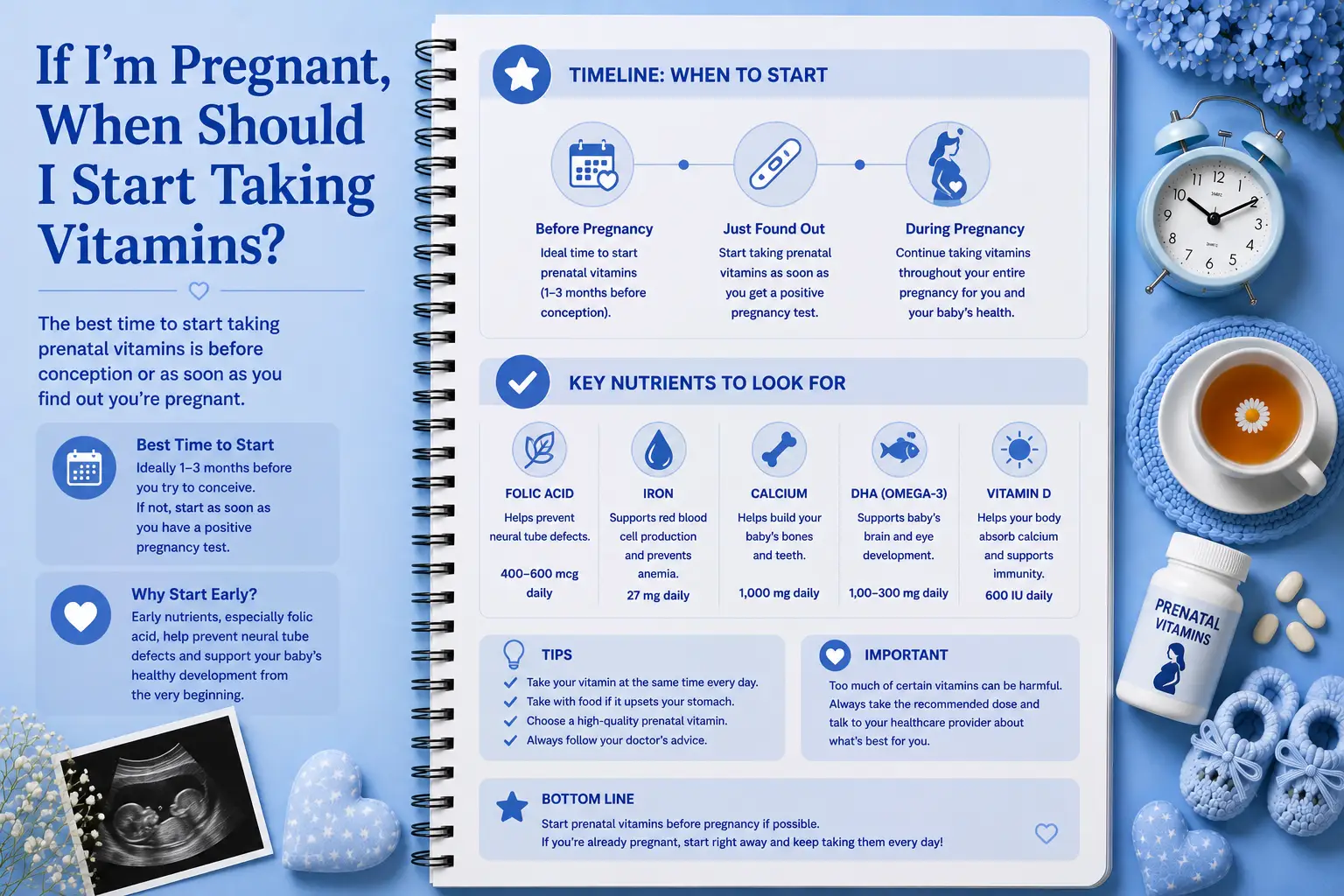

If you’re already pregnant, start taking prenatal vitamins as soon as you find out—ideally right after a positive test. The best time is actually before conception (one to three months ahead), but beginning now still provides meaningful benefits for you and your baby.
Why Timing Matters So Much
The neural tube (which becomes the brain and spinal cord) forms in the first 28 days of pregnancy—often before many women realize they are expecting. Folic acid (or folate) is critical during this window because it significantly lowers the risk of neural tube defects such as spina bifida. That’s why experts recommend starting prenatal vitamins at least one month before trying to conceive, with three months being ideal for building nutrient stores.
If you didn’t start early, don’t panic. Beginning as soon as you confirm pregnancy still helps fill nutritional gaps during the rest of the first trimester and beyond. Your body needs higher amounts of certain nutrients throughout pregnancy to support the growing placenta, increased blood volume, and fetal development. A prenatal vitamin acts as insurance alongside a balanced diet.
Healthcare providers generally advise any woman of reproductive age who could become pregnant to consider a prenatal multivitamin, precisely because early pregnancy can go undetected.
Key Nutrients in Prenatal Vitamins
Look for a prenatal that includes these essentials (amounts can vary by brand; check the label and talk with your provider):
Folic acid: 400–600 mcg daily (higher doses, such as 4,000 mcg, may be recommended if you’ve had a previous neural tube defect pregnancy).
Iron: About 27 mg to support extra blood production and prevent anemia.
Calcium and vitamin D: For strong bones and teeth (your baby draws from your stores).
DHA (an omega-3 fatty acid): Supports brain and eye development; not all prenatals contain it, so an extra supplement may be needed if you don’t eat much fish.
Iodine: Important for thyroid function and brain development.
Other helpful nutrients often included: vitamin C, B vitamins, zinc, and choline.
Avoid high doses of vitamin A (retinol forms), as excess can be harmful. Stick to the recommended daily amount on a quality prenatal.
Over-the-counter prenatals are widely available, or your provider may prescribe one. Choose one that fits your needs—some are formulated for sensitive stomachs, others include extra DHA, and gummy or liquid versions exist if pills are hard to take.
Practical Tips for Taking Prenatal Vitamins
Take them daily, ideally at the same time. Many women find taking them with a meal or at night reduces nausea. If constipation occurs (common with iron), increase fiber and water intake, stay active if your provider approves, or ask about a stool softener. Switching brands can also help if one causes stomach upset.
Continue prenatals throughout pregnancy and usually while breastfeeding, as nutrient needs remain elevated. They are not a substitute for healthy eating—focus on fruits, vegetables, whole grains, lean proteins, and dairy or fortified alternatives—but they help cover shortfalls that are common even with good diets.
Always discuss with your healthcare provider before starting or changing supplements, especially if you have conditions like anemia, thyroid issues, or a history of pregnancy complications. They can order bloodwork if needed and personalize recommendations.
Common Questions About Starting Prenatals When Pregnant
Many people search for answers around “when should I start taking prenatal vitamins if already pregnant,” “is it too late to start prenatal vitamins,” and “what vitamins should I take during pregnancy.” The consensus from major medical sources is clear: start now if you haven’t already.
FAQ
Is it too late to start prenatal vitamins if I’m already several weeks pregnant?
No. While earlier is better for folic acid’s protective effect, starting at any point in pregnancy still supplies iron, calcium, and other nutrients your body and baby need. Begin as soon as possible.
Can I just take a regular multivitamin instead of a prenatal?
Prenatals are formulated with higher amounts of folic acid and iron specifically for pregnancy. Regular multivitamins often fall short in these areas and may contain too much vitamin A. Switch to a prenatal.
What if prenatal vitamins make me nauseous or constipated?
Try taking them with food, at bedtime, or switch to a different brand or form (chewable, gummy, or liquid). Stay hydrated and increase fiber for constipation. Your provider can suggest alternatives.
Do I need extra supplements beyond a prenatal vitamin?
Many people get enough from a good prenatal plus diet. Some benefit from added DHA, vitamin D, or iron if levels are low. Blood tests and your provider’s guidance determine this—don’t self-dose high amounts.
Should I keep taking prenatal vitamins after the baby is born?
Yes, most providers recommend continuing through breastfeeding because nutrient demands remain high for milk production and your recovery. Once breastfeeding ends, you can usually switch to a regular multivitamin if desired.