
During pregnancy, you need more folic acid and iron than at any other time in your adult life. These two nutrients play outsized roles in protecting your baby’s early development and supporting the dramatic changes happening in your own body. Understanding why the requirements rise—and how to meet them—helps you make practical choices every day.
Why Folic Acid Needs Jump
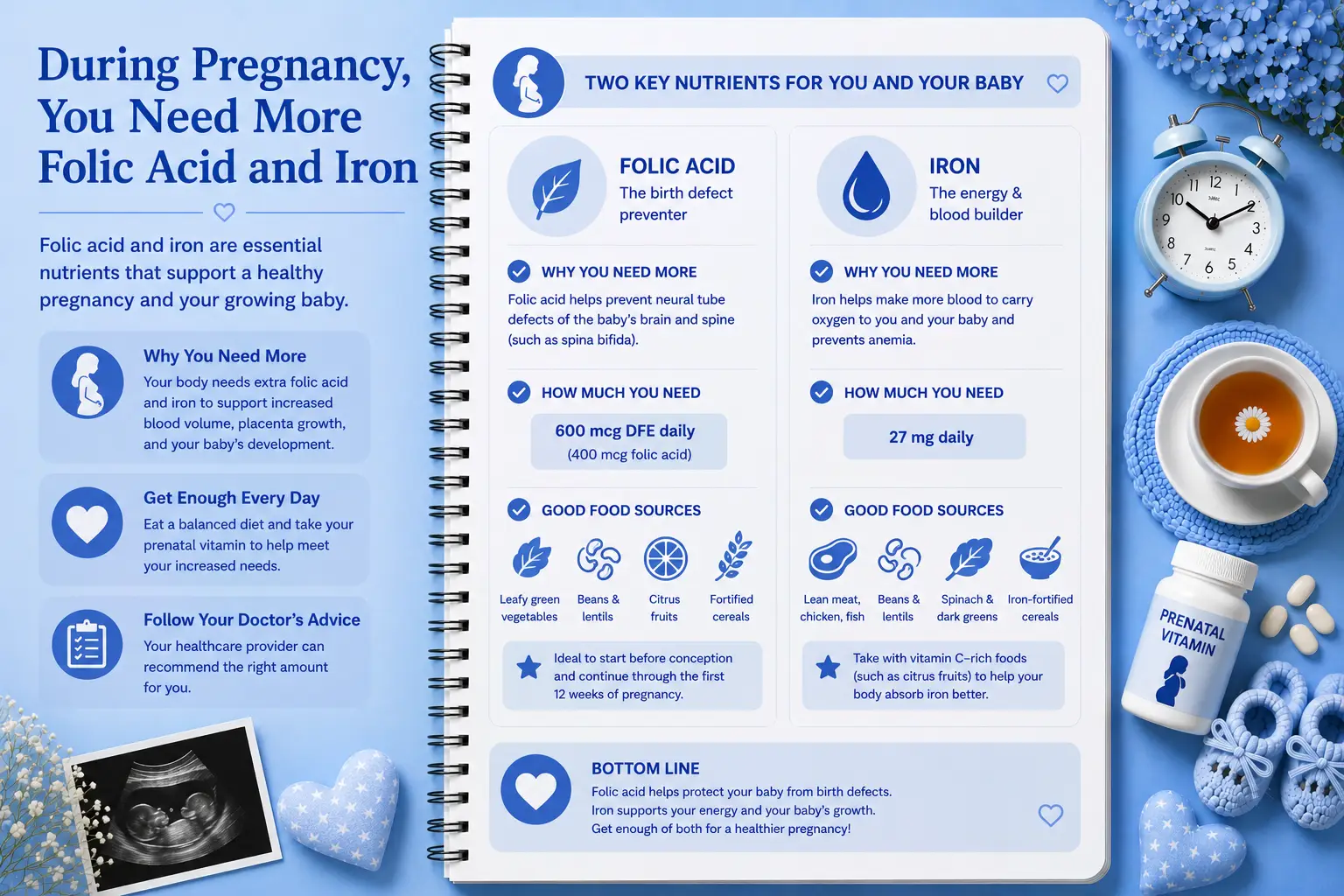
Folic acid (the synthetic form of folate, a B vitamin) is essential for cell division and DNA synthesis. In the first 28 days after conception—often before many women know they are pregnant—the neural tube closes to form the brain and spinal cord. Adequate folic acid sharply reduces the risk of neural tube defects such as spina bifida and anencephaly.
Before pregnancy the recommended amount is 400 mcg daily. Once you are pregnant the target rises to 600 mcg per day from food and supplements combined. It is difficult to reach that level through diet alone, which is why prenatal vitamins almost always include folic acid. Women with a previous neural-tube-defect pregnancy, certain genetic variations, or specific medical conditions may be advised to take higher doses (sometimes 4,000 mcg) under medical supervision.
Food sources that help include dark leafy greens (spinach, kale), legumes (lentils, black beans), asparagus, broccoli, citrus fruits, avocado, and fortified cereals, breads, and pastas. Pairing these foods with a daily prenatal vitamin is the most reliable way to hit the target.
Why Iron Requirements Increase Dramatically
During pregnancy your blood volume expands by nearly 50 percent to deliver oxygen and nutrients to the placenta and growing baby. Iron is the core component of hemoglobin, the protein that carries that oxygen. Without enough iron you risk iron-deficiency anemia, which can leave you fatigued, increase the chance of preterm birth or low birth weight, and affect the baby’s iron stores at birth.
The recommended dietary allowance jumps from 18 mg for non-pregnant women to 27 mg during pregnancy. Many women start pregnancy with low iron stores, so the combination of higher demand and possible nausea that limits food intake makes supplementation especially important. Most prenatal vitamins supply a substantial portion of the 27 mg; some providers prescribe additional iron if blood tests show deficiency.
Heme iron from animal sources (lean red meat, poultry, fish) is absorbed more easily than non-heme iron from plants. Good plant sources include beans, lentils, spinach, fortified cereals, and tofu. Pairing iron-rich foods with vitamin C (citrus, strawberries, bell peppers) boosts absorption. Avoid taking iron with calcium-rich foods or coffee/tea at the same meal, as these can interfere.
How Prenatal Vitamins and Diet Work Together
A balanced plate remains the foundation, but most experts agree that food alone rarely covers the elevated needs for folic acid and iron. A standard prenatal vitamin bridges the gap. Look for one that provides at least 400–600 mcg of folic acid and a meaningful amount of iron (often 18–27 mg). Your provider may recommend a specific brand or additional single-nutrient supplements based on your bloodwork.
Side effects from the iron in prenatals—mainly constipation or mild stomach upset—are common. Drinking plenty of water, eating fiber-rich foods, staying active (with your provider’s okay), and taking the vitamin with food or at bedtime often help. If problems persist, ask about a different formulation or a stool softener.
Practical Daily Strategies
Take your prenatal vitamin at the same time every day.
Build meals around folate- and iron-rich foods: a spinach-and-lentil salad with citrus dressing, fortified oatmeal topped with berries, or lean beef with broccoli.
Continue the higher intake of both nutrients through breastfeeding if you nurse, because demands remain elevated.
Get routine blood tests so your provider can adjust iron supplementation if anemia develops.
High-search questions such as “how much folic acid during pregnancy,” “iron requirements pregnancy,” “best food sources of folate and iron while pregnant,” and “why do I need more iron when pregnant” all point back to the same core message: the body’s needs change, and meeting them protects both mother and baby.
FAQ
How much folic acid and iron do I actually need each day while pregnant?
Aim for 600 mcg of folic acid and 27 mg of iron daily from a combination of food and supplements. Most prenatal vitamins are designed to help you reach these targets.
Can I get enough folic acid and iron from food alone?
It is possible but difficult, especially for folic acid in early pregnancy and iron throughout. Most women benefit from a prenatal vitamin in addition to a nutrient-dense diet.
What are the best food sources of folic acid and iron during pregnancy?
Folic acid/folate: leafy greens, lentils, fortified cereals, asparagus, citrus. Iron: lean red meat, poultry, beans, spinach, fortified grains. Pair plant iron with vitamin C for better absorption.
What happens if I don’t get enough folic acid or iron?
Low folic acid early in pregnancy raises the risk of neural tube defects. Inadequate iron can lead to maternal anemia, fatigue, and higher chances of preterm delivery or low birth weight.
Should I take extra iron or folic acid beyond my prenatal vitamin?
Only if your healthcare provider recommends it after reviewing blood tests or your medical history. High doses of either nutrient without guidance are not advised.