Skip to content
DidYouSearch DidYouSearch
  • did you search?
  • Baby Plus+
    • Baby Activities
      • Arts & Crafts
      • Indoor Activities
      • Montessori
      • Music
      • Outdoor Activities
      • Reading
      • Sensory Play
      • Tummy Time
    • Baby Development
      • Brain Development
      • Cognitive Development
      • Emotional Development
      • Fine Motor Skills
      • Growth Milestones
      • Monthly Milestones
      • Motor Skills
      • Physical Development
      • Social Development
      • Speech Development
    • Baby Feeding
      • Allergies
      • Baby Led Weaning
      • Bottle Feeding
      • Breast feeding
        • Breastfeeding Diet
        • Breastfeeding Positions
        • Latch Problems
        • Low Milk Supply
        • Mastitis
        • Pumping Schedule
        • Weaning
      • Burping
      • Cluster Feeding
      • Feeding Schedule
      • Formula Feeding
        • Formula Amount
        • Formula Brands
        • Formula Comparison
        • Formula Preparation
        • Formula Storage
      • Hydration
      • Pumping
      • Solid Foods
    • Baby Gear Reviews
      • Best Baby Carrier
      • Best Baby Monitor
      • Best Baby Strollers
      • Best Bottles
      • Best Breast Pump
      • Best Car Seat
      • Best Cribs
      • Best Diapers
      • Best Formula
      • Best Toys
    • Baby Growth
      • Growth Spurts
      • Height Charts
      • Monthly Growth
      • Percentiles
      • Weight Charts
    • Baby Health
      • Allergies
      • Cold
      • Constipation
      • Cough
      • Diarrhea
      • Ear Infection
      • Fever
      • Flu
      • Pediatric Visits
      • Rashes
      • Teething
      • Vaccines
      • Vomiting
    • Baby Nutrition
      • Dairy
      • Drinks
      • Eggs
      • Fish
      • Fruits
      • Healthy Recipes
      • Meat
      • Snacks
      • Vegetables
      • Vitamins
    • Baby Products
      • Baby Carriers
      • Bassinets
      • Bottles
      • Breast Pumps
      • Car Seats
      • Cribs
      • Diaper Bags
      • High Chairs
      • Monitors
      • Strollers
      • Swings
      • Toys
      • Walkers
    • Baby Recipes
      • BLW Recipes
      • Breakfast
      • Dinner
      • Finger Foods
      • Lunch
      • Purees
      • Snacks
    • Baby Safety
      • Baby Proofing
      • Car Seats
      • Choking Hazards
      • CPR
      • Home Safety
      • Poison Prevention
      • Safe Sleep
      • Sun Protection
      • Water Safety
  • Baby Names
    • Boy Names
    • Girl Names
    • American baby boy names
    • American baby girl names
    • Biblical Names
    • Middle Names
    • Modern Names
    • Short Names
    • Unique Names
    • Unisex Names
  • Recommended
    • Baby Shopping
      • Baby Registry
      • Budget Baby Shopping
      • Hospital Bag
      • Must Have Products
      • Newborn Checklist
      • Nursery Ideas
    • Baby Sleep
      • Bedtime Routine
      • Co Sleeping
      • Crib Safety
      • Nap Schedules
      • Night Wakings
      • Sleep Environment
      • Sleep Products
      • Sleep Regression
      • Sleep Training
      • Wake Windows
      • White Noise
    • Childcare
      • Daycare
      • Babysitters
      • Kindergarten
      • Nannies
      • Preschool
    • Newborn Care
      • Nail Care
      • Baby Hygiene
      • Bathing
      • Crying
      • Diapering
      • Ear Care
      • Eye Care
      • Skin Care
      • Soothing Techniques
      • Temperature
      • Umbilical Cord
    • Special Needs
      • Premature Babies
      • Autism Signs
      • Developmental Delays
      • Down Syndrome
      • NICU
      • Twins
    • Seasonal Baby Care
      • Spring
      • Summer
      • Travel
      • Fall
      • Holidays
      • Winter
  • Parenting
    • Bonding
    • Discipline
    • Emotional Intelligence
    • First Time Parents
    • Gentle Parenting
    • Positive Parenting
    • Routines
    • Single Parents
    • Working Parents
  • Pregnancy
    • Pregnancy Complications
    • Labor & Delivery
    • Postpartum Recovery
    • Pregnancy Exercises
    • Pregnancy Medications
    • Pregnancy Nutrition
    • Pregnancy Sleep
    • Pregnancy Symptoms
    • Pregnancy Tests
    • Pregnancy Vitamins
    • Pregnancy Weeks
  • Toddler
    • Preschool
    • Speech
    • Tantrums
    • Toddler Food
    • Toddler Sleep
    • Behavior
    • Independence
    • Learning
    • Potty Training
  • Traveling with Baby
    • Road Trips
    • Beach
    • Camping
    • Flying
    • Hotels
    • Packing Lists
  • did you search?
  • Baby Plus+
    • Baby Activities
      • Arts & Crafts
      • Indoor Activities
      • Montessori
      • Music
      • Outdoor Activities
      • Reading
      • Sensory Play
      • Tummy Time
    • Baby Development
      • Brain Development
      • Cognitive Development
      • Emotional Development
      • Fine Motor Skills
      • Growth Milestones
      • Monthly Milestones
      • Motor Skills
      • Physical Development
      • Social Development
      • Speech Development
    • Baby Feeding
      • Allergies
      • Baby Led Weaning
      • Bottle Feeding
      • Breast feeding
        • Breastfeeding Diet
        • Breastfeeding Positions
        • Latch Problems
        • Low Milk Supply
        • Mastitis
        • Pumping Schedule
        • Weaning
      • Burping
      • Cluster Feeding
      • Feeding Schedule
      • Formula Feeding
        • Formula Amount
        • Formula Brands
        • Formula Comparison
        • Formula Preparation
        • Formula Storage
      • Hydration
      • Pumping
      • Solid Foods
    • Baby Gear Reviews
      • Best Baby Carrier
      • Best Baby Monitor
      • Best Baby Strollers
      • Best Bottles
      • Best Breast Pump
      • Best Car Seat
      • Best Cribs
      • Best Diapers
      • Best Formula
      • Best Toys
    • Baby Growth
      • Growth Spurts
      • Height Charts
      • Monthly Growth
      • Percentiles
      • Weight Charts
    • Baby Health
      • Allergies
      • Cold
      • Constipation
      • Cough
      • Diarrhea
      • Ear Infection
      • Fever
      • Flu
      • Pediatric Visits
      • Rashes
      • Teething
      • Vaccines
      • Vomiting
    • Baby Nutrition
      • Dairy
      • Drinks
      • Eggs
      • Fish
      • Fruits
      • Healthy Recipes
      • Meat
      • Snacks
      • Vegetables
      • Vitamins
    • Baby Products
      • Baby Carriers
      • Bassinets
      • Bottles
      • Breast Pumps
      • Car Seats
      • Cribs
      • Diaper Bags
      • High Chairs
      • Monitors
      • Strollers
      • Swings
      • Toys
      • Walkers
    • Baby Recipes
      • BLW Recipes
      • Breakfast
      • Dinner
      • Finger Foods
      • Lunch
      • Purees
      • Snacks
    • Baby Safety
      • Baby Proofing
      • Car Seats
      • Choking Hazards
      • CPR
      • Home Safety
      • Poison Prevention
      • Safe Sleep
      • Sun Protection
      • Water Safety
  • Baby Names
    • Boy Names
    • Girl Names
    • American baby boy names
    • American baby girl names
    • Biblical Names
    • Middle Names
    • Modern Names
    • Short Names
    • Unique Names
    • Unisex Names
  • Recommended
    • Baby Shopping
      • Baby Registry
      • Budget Baby Shopping
      • Hospital Bag
      • Must Have Products
      • Newborn Checklist
      • Nursery Ideas
    • Baby Sleep
      • Bedtime Routine
      • Co Sleeping
      • Crib Safety
      • Nap Schedules
      • Night Wakings
      • Sleep Environment
      • Sleep Products
      • Sleep Regression
      • Sleep Training
      • Wake Windows
      • White Noise
    • Childcare
      • Daycare
      • Babysitters
      • Kindergarten
      • Nannies
      • Preschool
    • Newborn Care
      • Nail Care
      • Baby Hygiene
      • Bathing
      • Crying
      • Diapering
      • Ear Care
      • Eye Care
      • Skin Care
      • Soothing Techniques
      • Temperature
      • Umbilical Cord
    • Special Needs
      • Premature Babies
      • Autism Signs
      • Developmental Delays
      • Down Syndrome
      • NICU
      • Twins
    • Seasonal Baby Care
      • Spring
      • Summer
      • Travel
      • Fall
      • Holidays
      • Winter
  • Parenting
    • Bonding
    • Discipline
    • Emotional Intelligence
    • First Time Parents
    • Gentle Parenting
    • Positive Parenting
    • Routines
    • Single Parents
    • Working Parents
  • Pregnancy
    • Pregnancy Complications
    • Labor & Delivery
    • Postpartum Recovery
    • Pregnancy Exercises
    • Pregnancy Medications
    • Pregnancy Nutrition
    • Pregnancy Sleep
    • Pregnancy Symptoms
    • Pregnancy Tests
    • Pregnancy Vitamins
    • Pregnancy Weeks
  • Toddler
    • Preschool
    • Speech
    • Tantrums
    • Toddler Food
    • Toddler Sleep
    • Behavior
    • Independence
    • Learning
    • Potty Training
  • Traveling with Baby
    • Road Trips
    • Beach
    • Camping
    • Flying
    • Hotels
    • Packing Lists
Close

Search

Home/Pregnancy/Pregnancy Vitamins/During pregnancy, you need more folic acid and iron
Pregnancy Vitamins

During pregnancy, you need more folic acid and iron

By DrAdam
August 7, 2026 4 Min Read
0

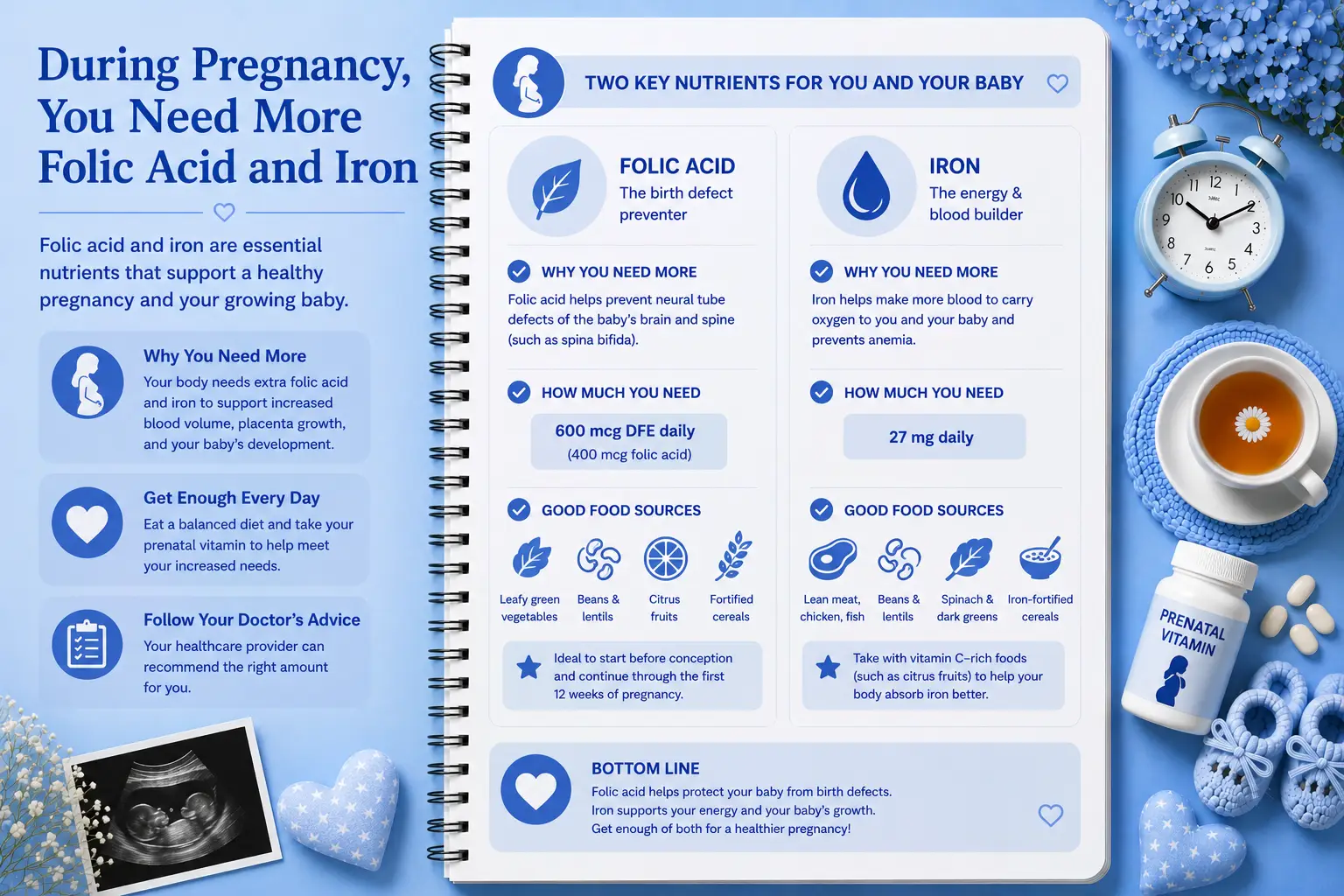
During pregnancy, you need more folic acid and iron than at any other time in your adult life. These two nutrients play outsized roles in protecting your baby’s early development and supporting the dramatic changes happening in your own body. Understanding why the requirements rise—and how to meet them—helps you make practical choices every day.

Why Folic Acid Needs Jump

Contents hide
1 Why Folic Acid Needs Jump
2 Why Iron Requirements Increase Dramatically
3 How Prenatal Vitamins and Diet Work Together
4 Practical Daily Strategies
5 FAQ
5.1 How much folic acid and iron do I actually need each day while pregnant?
5.2 Can I get enough folic acid and iron from food alone?
5.3 What are the best food sources of folic acid and iron during pregnancy?
5.4 What happens if I don’t get enough folic acid or iron?
5.5 Should I take extra iron or folic acid beyond my prenatal vitamin?

Folic acid (the synthetic form of folate, a B vitamin) is essential for cell division and DNA synthesis. In the first 28 days after conception—often before many women know they are pregnant—the neural tube closes to form the brain and spinal cord. Adequate folic acid sharply reduces the risk of neural tube defects such as spina bifida and anencephaly.

Before pregnancy the recommended amount is 400 mcg daily. Once you are pregnant the target rises to 600 mcg per day from food and supplements combined. It is difficult to reach that level through diet alone, which is why prenatal vitamins almost always include folic acid. Women with a previous neural-tube-defect pregnancy, certain genetic variations, or specific medical conditions may be advised to take higher doses (sometimes 4,000 mcg) under medical supervision.

Food sources that help include dark leafy greens (spinach, kale), legumes (lentils, black beans), asparagus, broccoli, citrus fruits, avocado, and fortified cereals, breads, and pastas. Pairing these foods with a daily prenatal vitamin is the most reliable way to hit the target.

Why Iron Requirements Increase Dramatically

During pregnancy your blood volume expands by nearly 50 percent to deliver oxygen and nutrients to the placenta and growing baby. Iron is the core component of hemoglobin, the protein that carries that oxygen. Without enough iron you risk iron-deficiency anemia, which can leave you fatigued, increase the chance of preterm birth or low birth weight, and affect the baby’s iron stores at birth.

The recommended dietary allowance jumps from 18 mg for non-pregnant women to 27 mg during pregnancy. Many women start pregnancy with low iron stores, so the combination of higher demand and possible nausea that limits food intake makes supplementation especially important. Most prenatal vitamins supply a substantial portion of the 27 mg; some providers prescribe additional iron if blood tests show deficiency.

Heme iron from animal sources (lean red meat, poultry, fish) is absorbed more easily than non-heme iron from plants. Good plant sources include beans, lentils, spinach, fortified cereals, and tofu. Pairing iron-rich foods with vitamin C (citrus, strawberries, bell peppers) boosts absorption. Avoid taking iron with calcium-rich foods or coffee/tea at the same meal, as these can interfere.

How Prenatal Vitamins and Diet Work Together

A balanced plate remains the foundation, but most experts agree that food alone rarely covers the elevated needs for folic acid and iron. A standard prenatal vitamin bridges the gap. Look for one that provides at least 400–600 mcg of folic acid and a meaningful amount of iron (often 18–27 mg). Your provider may recommend a specific brand or additional single-nutrient supplements based on your bloodwork.

Side effects from the iron in prenatals—mainly constipation or mild stomach upset—are common. Drinking plenty of water, eating fiber-rich foods, staying active (with your provider’s okay), and taking the vitamin with food or at bedtime often help. If problems persist, ask about a different formulation or a stool softener.

Practical Daily Strategies

Take your prenatal vitamin at the same time every day.

Build meals around folate- and iron-rich foods: a spinach-and-lentil salad with citrus dressing, fortified oatmeal topped with berries, or lean beef with broccoli.

Continue the higher intake of both nutrients through breastfeeding if you nurse, because demands remain elevated.

Get routine blood tests so your provider can adjust iron supplementation if anemia develops.

High-search questions such as “how much folic acid during pregnancy,” “iron requirements pregnancy,” “best food sources of folate and iron while pregnant,” and “why do I need more iron when pregnant” all point back to the same core message: the body’s needs change, and meeting them protects both mother and baby.

FAQ

How much folic acid and iron do I actually need each day while pregnant?

Aim for 600 mcg of folic acid and 27 mg of iron daily from a combination of food and supplements. Most prenatal vitamins are designed to help you reach these targets.

Can I get enough folic acid and iron from food alone?

It is possible but difficult, especially for folic acid in early pregnancy and iron throughout. Most women benefit from a prenatal vitamin in addition to a nutrient-dense diet.

What are the best food sources of folic acid and iron during pregnancy?

Folic acid/folate: leafy greens, lentils, fortified cereals, asparagus, citrus. Iron: lean red meat, poultry, beans, spinach, fortified grains. Pair plant iron with vitamin C for better absorption.

What happens if I don’t get enough folic acid or iron?

Low folic acid early in pregnancy raises the risk of neural tube defects. Inadequate iron can lead to maternal anemia, fatigue, and higher chances of preterm delivery or low birth weight.

Should I take extra iron or folic acid beyond my prenatal vitamin?

Only if your healthcare provider recommends it after reviewing blood tests or your medical history. High doses of either nutrient without guidance are not advised.

Author

DrAdam

Dr. Adam. Obstetrician and Gynecologist

Follow Me
Other Articles
Previous

If I’m pregnant when should I start taking vitamins?

Next

What are the best prenatal vitamins?

No Comment! Be the first one.

Leave a Reply Cancel reply

Your email address will not be published. Required fields are marked *

What is Did You Search?

The “Did You Search” website was created for all mothers and families. Just search to find all your needs about your children.

Links

  • about
  • contact
  • privacy policy
  • medical disclaimer
  • sitemap
Copyright 2026 — DidYouSearch. All rights reserved.