
Skip to content
DidYouSearch DidYouSearch
  • did you search?
  • Baby Plus+
    • Baby Activities
      • Arts & Crafts
      • Indoor Activities
      • Montessori
      • Music
      • Outdoor Activities
      • Reading
      • Sensory Play
      • Tummy Time
    • Baby Development
      • Brain Development
      • Cognitive Development
      • Emotional Development
      • Fine Motor Skills
      • Growth Milestones
      • Monthly Milestones
      • Motor Skills
      • Physical Development
      • Social Development
      • Speech Development
    • Baby Feeding
      • Allergies
      • Baby Led Weaning
      • Bottle Feeding
      • Breast feeding
        • Breastfeeding Diet
        • Breastfeeding Positions
        • Latch Problems
        • Low Milk Supply
        • Mastitis
        • Pumping Schedule
        • Weaning
      • Burping
      • Cluster Feeding
      • Feeding Schedule
      • Formula Feeding
        • Formula Amount
        • Formula Brands
        • Formula Comparison
        • Formula Preparation
        • Formula Storage
      • Hydration
      • Pumping
      • Solid Foods
    • Baby Gear Reviews
      • Best Baby Carrier
      • Best Baby Monitor
      • Best Baby Strollers
      • Best Bottles
      • Best Breast Pump
      • Best Car Seat
      • Best Cribs
      • Best Diapers
      • Best Formula
      • Best Toys
    • Baby Growth
      • Growth Spurts
      • Height Charts
      • Monthly Growth
      • Percentiles
      • Weight Charts
    • Baby Health
      • Allergies
      • Cold
      • Constipation
      • Cough
      • Diarrhea
      • Ear Infection
      • Fever
      • Flu
      • Pediatric Visits
      • Rashes
      • Teething
      • Vaccines
      • Vomiting
    • Baby Nutrition
      • Dairy
      • Drinks
      • Eggs
      • Fish
      • Fruits
      • Healthy Recipes
      • Meat
      • Snacks
      • Vegetables
      • Vitamins
    • Baby Products
      • Baby Carriers
      • Bassinets
      • Bottles
      • Breast Pumps
      • Car Seats
      • Cribs
      • Diaper Bags
      • High Chairs
      • Monitors
      • Strollers
      • Swings
      • Toys
      • Walkers
    • Baby Recipes
      • BLW Recipes
      • Breakfast
      • Dinner
      • Finger Foods
      • Lunch
      • Purees
      • Snacks
    • Baby Safety
      • Baby Proofing
      • Car Seats
      • Choking Hazards
      • CPR
      • Home Safety
      • Poison Prevention
      • Safe Sleep
      • Sun Protection
      • Water Safety
  • Baby Names
    • Boy Names
    • Girl Names
    • American baby boy names
    • American baby girl names
    • Biblical Names
    • Middle Names
    • Modern Names
    • Short Names
    • Unique Names
    • Unisex Names
  • Recommended
    • Baby Shopping
      • Baby Registry
      • Budget Baby Shopping
      • Hospital Bag
      • Must Have Products
      • Newborn Checklist
      • Nursery Ideas
    • Baby Sleep
      • Bedtime Routine
      • Co Sleeping
      • Crib Safety
      • Nap Schedules
      • Night Wakings
      • Sleep Environment
      • Sleep Products
      • Sleep Regression
      • Sleep Training
      • Wake Windows
      • White Noise
    • Childcare
      • Daycare
      • Babysitters
      • Kindergarten
      • Nannies
      • Preschool
    • Newborn Care
      • Nail Care
      • Baby Hygiene
      • Bathing
      • Crying
      • Diapering
      • Ear Care
      • Eye Care
      • Skin Care
      • Soothing Techniques
      • Temperature
      • Umbilical Cord
    • Special Needs
      • Premature Babies
      • Autism Signs
      • Developmental Delays
      • Down Syndrome
      • NICU
      • Twins
    • Seasonal Baby Care
      • Spring
      • Summer
      • Travel
      • Fall
      • Holidays
      • Winter
  • Parenting
    • Bonding
    • Discipline
    • Emotional Intelligence
    • First Time Parents
    • Gentle Parenting
    • Positive Parenting
    • Routines
    • Single Parents
    • Working Parents
  • Pregnancy
    • Pregnancy Complications
    • Labor & Delivery
    • Postpartum Recovery
    • Pregnancy Exercises
    • Pregnancy Medications
    • Pregnancy Nutrition
    • Pregnancy Sleep
    • Pregnancy Symptoms
    • Pregnancy Tests
    • Pregnancy Vitamins
    • Pregnancy Weeks
  • Toddler
    • Preschool
    • Speech
    • Tantrums
    • Toddler Food
    • Toddler Sleep
    • Behavior
    • Independence
    • Learning
    • Potty Training
  • Traveling with Baby
    • Road Trips
    • Beach
    • Camping
    • Flying
    • Hotels
    • Packing Lists
  • did you search?
  • Baby Plus+
    • Baby Activities
      • Arts & Crafts
      • Indoor Activities
      • Montessori
      • Music
      • Outdoor Activities
      • Reading
      • Sensory Play
      • Tummy Time
    • Baby Development
      • Brain Development
      • Cognitive Development
      • Emotional Development
      • Fine Motor Skills
      • Growth Milestones
      • Monthly Milestones
      • Motor Skills
      • Physical Development
      • Social Development
      • Speech Development
    • Baby Feeding
      • Allergies
      • Baby Led Weaning
      • Bottle Feeding
      • Breast feeding
        • Breastfeeding Diet
        • Breastfeeding Positions
        • Latch Problems
        • Low Milk Supply
        • Mastitis
        • Pumping Schedule
        • Weaning
      • Burping
      • Cluster Feeding
      • Feeding Schedule
      • Formula Feeding
        • Formula Amount
        • Formula Brands
        • Formula Comparison
        • Formula Preparation
        • Formula Storage
      • Hydration
      • Pumping
      • Solid Foods
    • Baby Gear Reviews
      • Best Baby Carrier
      • Best Baby Monitor
      • Best Baby Strollers
      • Best Bottles
      • Best Breast Pump
      • Best Car Seat
      • Best Cribs
      • Best Diapers
      • Best Formula
      • Best Toys
    • Baby Growth
      • Growth Spurts
      • Height Charts
      • Monthly Growth
      • Percentiles
      • Weight Charts
    • Baby Health
      • Allergies
      • Cold
      • Constipation
      • Cough
      • Diarrhea
      • Ear Infection
      • Fever
      • Flu
      • Pediatric Visits
      • Rashes
      • Teething
      • Vaccines
      • Vomiting
    • Baby Nutrition
      • Dairy
      • Drinks
      • Eggs
      • Fish
      • Fruits
      • Healthy Recipes
      • Meat
      • Snacks
      • Vegetables
      • Vitamins
    • Baby Products
      • Baby Carriers
      • Bassinets
      • Bottles
      • Breast Pumps
      • Car Seats
      • Cribs
      • Diaper Bags
      • High Chairs
      • Monitors
      • Strollers
      • Swings
      • Toys
      • Walkers
    • Baby Recipes
      • BLW Recipes
      • Breakfast
      • Dinner
      • Finger Foods
      • Lunch
      • Purees
      • Snacks
    • Baby Safety
      • Baby Proofing
      • Car Seats
      • Choking Hazards
      • CPR
      • Home Safety
      • Poison Prevention
      • Safe Sleep
      • Sun Protection
      • Water Safety
  • Baby Names
    • Boy Names
    • Girl Names
    • American baby boy names
    • American baby girl names
    • Biblical Names
    • Middle Names
    • Modern Names
    • Short Names
    • Unique Names
    • Unisex Names
  • Recommended
    • Baby Shopping
      • Baby Registry
      • Budget Baby Shopping
      • Hospital Bag
      • Must Have Products
      • Newborn Checklist
      • Nursery Ideas
    • Baby Sleep
      • Bedtime Routine
      • Co Sleeping
      • Crib Safety
      • Nap Schedules
      • Night Wakings
      • Sleep Environment
      • Sleep Products
      • Sleep Regression
      • Sleep Training
      • Wake Windows
      • White Noise
    • Childcare
      • Daycare
      • Babysitters
      • Kindergarten
      • Nannies
      • Preschool
    • Newborn Care
      • Nail Care
      • Baby Hygiene
      • Bathing
      • Crying
      • Diapering
      • Ear Care
      • Eye Care
      • Skin Care
      • Soothing Techniques
      • Temperature
      • Umbilical Cord
    • Special Needs
      • Premature Babies
      • Autism Signs
      • Developmental Delays
      • Down Syndrome
      • NICU
      • Twins
    • Seasonal Baby Care
      • Spring
      • Summer
      • Travel
      • Fall
      • Holidays
      • Winter
  • Parenting
    • Bonding
    • Discipline
    • Emotional Intelligence
    • First Time Parents
    • Gentle Parenting
    • Positive Parenting
    • Routines
    • Single Parents
    • Working Parents
  • Pregnancy
    • Pregnancy Complications
    • Labor & Delivery
    • Postpartum Recovery
    • Pregnancy Exercises
    • Pregnancy Medications
    • Pregnancy Nutrition
    • Pregnancy Sleep
    • Pregnancy Symptoms
    • Pregnancy Tests
    • Pregnancy Vitamins
    • Pregnancy Weeks
  • Toddler
    • Preschool
    • Speech
    • Tantrums
    • Toddler Food
    • Toddler Sleep
    • Behavior
    • Independence
    • Learning
    • Potty Training
  • Traveling with Baby
    • Road Trips
    • Beach
    • Camping
    • Flying
    • Hotels
    • Packing Lists
Close

Search

Home/Pregnancy/Pregnancy Vitamins/What are the best prenatal vitamins?
Pregnancy Vitamins

What are the best prenatal vitamins?

By DrAdam
August 7, 2026 4 Min Read
0

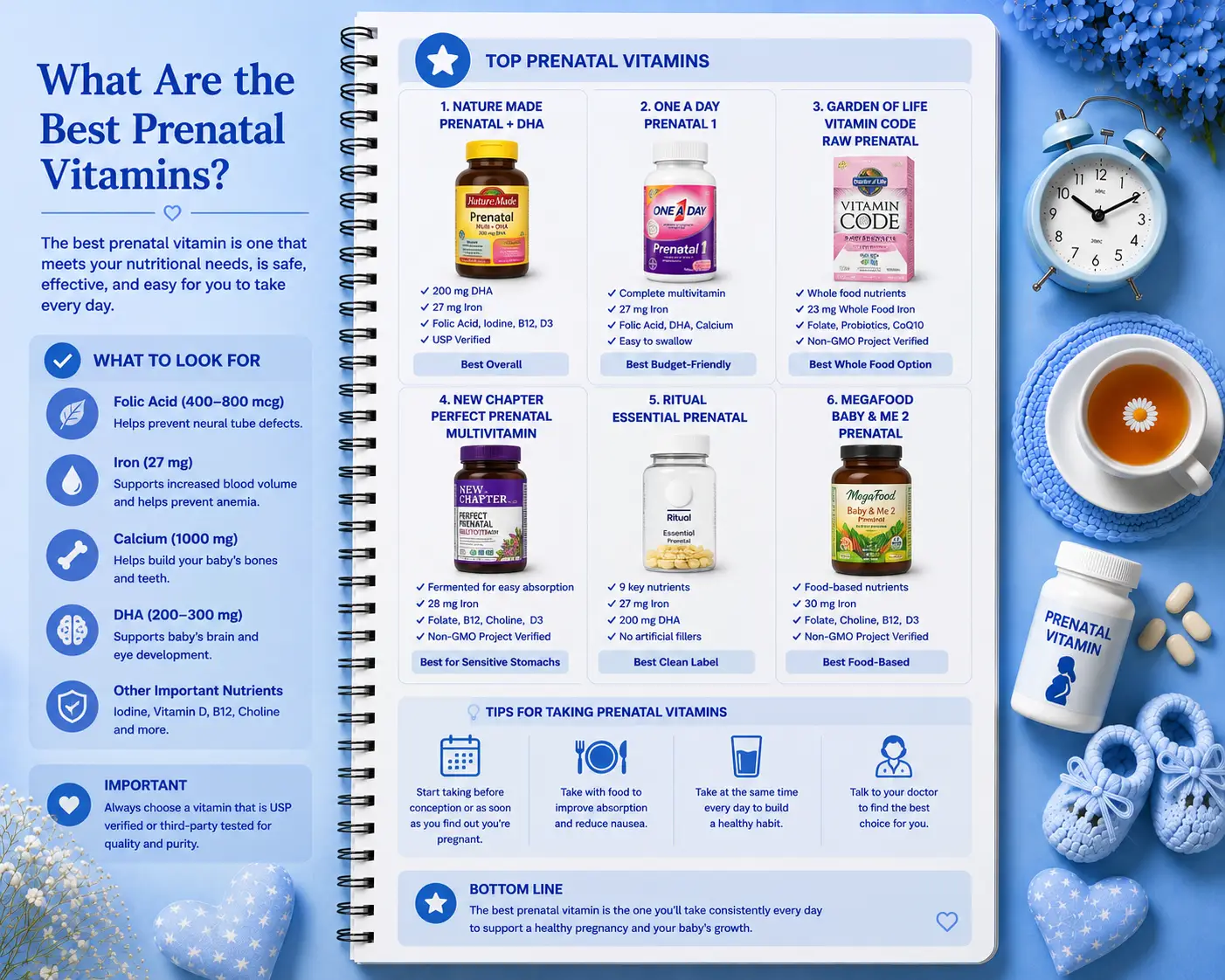
The short answer is that there isn’t one universal winner—the best prenatal vitamin is the one that reliably covers key nutrients, fits your body’s needs and tolerance, and that you’ll actually take every day. A healthy diet remains the foundation, but prenatal vitamins fill critical gaps that support fetal development and maternal health.

Why Prenatal Vitamins Matter

Contents hide
1 Why Prenatal Vitamins Matter
2 Key Nutrients to Look For
3 Popular and Well-Reviewed Options
4 How to Choose and Use Them Successfully
5 Practical Tips for Everyday Use
6 FAQ
6.1 When should I start taking prenatal vitamins?
6.2 Do prenatal vitamins cause side effects?
6.3 What’s the difference between folic acid and folate in prenatal vitamins?
6.4 Can I just take a regular multivitamin instead of a prenatal?
6.5 Do I need extra DHA or choline if my prenatal doesn’t have enough?

Pregnancy increases demand for several nutrients. Folic acid (or folate) is essential to help prevent neural tube defects, which form very early—often before many people know they’re pregnant. Iron supports the higher blood volume needed to deliver oxygen to the baby and helps prevent anemia. Calcium and vitamin D aid bone and teeth development. DHA (an omega-3) contributes to brain and eye development. Iodine supports thyroid function and neurological development, while choline is increasingly recognized for brain development.

Experts generally recommend starting a prenatal vitamin at least one to three months before trying to conceive and continuing through pregnancy and often breastfeeding. Women of reproductive age can benefit from taking one routinely for this reason.

Key Nutrients to Look For

When comparing options, check labels against these common targets (exact needs can vary; discuss with your provider):

Folic acid/folate: 400–800 mcg (some prefer methylfolate/5-MTHF for better absorption in people with certain genetic variations).

Iron: Around 27 mg (look for gentler forms if constipation is an issue).

Calcium: Often 200–300 mg in the vitamin itself (diet usually supplies more; total target is about 1,000 mg).

Vitamin D: At least 600 IU (many aim higher if levels are low).

DHA: 200–300 mg (sometimes in a separate softgel).

Iodine: About 150–220 mcg.

Choline: Ideally closer to 450 mg (many standard prenatals fall short here).

Additional supportive nutrients: B vitamins, zinc, vitamin C, and sometimes magnesium.

Third-party testing (USP, NSF, or similar) for purity and potency is a strong plus. Avoid megadoses of vitamin A (retinol forms), as excess can be harmful.

Popular and Well-Reviewed Options

Reviews from dietitians, pharmacists, and parents frequently highlight several approaches rather than a single “best”:

Affordable, widely available options like Nature Made Prenatal with DHA often rank highly for solid coverage of folic acid, iron, and DHA in a convenient softgel, with good third-party verification.

Ritual Essential Prenatal is popular for its clean, traceable ingredients, delayed-release design that many find gentle, methylated folate, and vegan DHA from algae. It’s frequently recommended for those trying to conceive or seeking a simpler formula.

Thorne Basic Prenatal earns praise for methylated B vitamins, good iron form, and overall formulation quality.

Trimester-specific packs (such as Perelel) or more comprehensive formulas (TheraNatal, FullWell, Needed, or Seeking Health) appeal to those wanting higher choline or tailored nutrients, though they may involve more pills or higher cost.

Gummies (SmartyPants or Olly) or whole-food-based options (Garden of Life, New Chapter, MegaFood) suit people who struggle with traditional tablets, though gummies sometimes contain less iron or other minerals.

Pharmacist rankings and consumer testing often place Nature Made and One A Day near the top for accessibility and balance. Premium or specialty brands shine for bioavailability and completeness (especially choline). The “best” ultimately depends on factors like morning sickness tolerance, dietary preferences (vegan, gluten-free), budget, and lab results for deficiencies.

How to Choose and Use Them Successfully

Consider form (softgel, tablet, gummy, powder), pill burden, and any history of nausea or constipation. Take with food if iron bothers your stomach, and stay hydrated with fiber-rich foods to ease constipation. Pair with a varied diet rich in leafy greens, lean proteins, dairy or fortified alternatives, fatty fish (low-mercury), eggs, and nuts. Some people need extra iron, vitamin D, or choline supplements on top of a standard prenatal—your provider can guide this based on bloodwork.

Consistency matters more than perfection. If one brand causes issues, switch; many people try a couple before finding their match. Always check with your healthcare provider before starting or changing supplements, especially if you have conditions like anemia, thyroid issues, or a history of neural tube defects (higher folic acid doses may be advised).

Practical Tips for Everyday Use

Start early. Store vitamins properly and set a daily reminder. If swallowing large pills is hard, look for smaller capsules or alternatives. Track how you feel—energy, digestion, and any unusual symptoms—and report them. Prenatal vitamins complement, rather than replace, good nutrition and prenatal care.

In short, prioritize formulas with adequate folate/folic acid, iron, vitamin D, iodine, and ideally DHA and choline, backed by quality testing. Popular, evidence-informed choices like Nature Made, Ritual, Thorne, and others consistently perform well across expert and parent reviews, but personalization with your doctor yields the best results.

FAQ

When should I start taking prenatal vitamins?

Ideally at least one to three months before conception so folate levels are high during the critical early window of neural tube development. Continue throughout pregnancy and often while breastfeeding. Many experts suggest women of childbearing age take them routinely.

Do prenatal vitamins cause side effects?

Some people experience constipation (often from iron), nausea, or mild stomach upset. Taking them with food, choosing gentler iron forms, staying hydrated, and adding fiber usually helps. Switching brands or forms can also resolve issues. Severe or persistent symptoms warrant a call to your provider.

What’s the difference between folic acid and folate in prenatal vitamins?

Folic acid is the synthetic form commonly used and proven effective for preventing neural tube defects. Folate (including methylfolate) is the natural form; some prefer methylated versions for better utilization, particularly with MTHFR gene variants. Both can work—check the dose and discuss with your doctor.

Can I just take a regular multivitamin instead of a prenatal?

Standard multivitamins usually lack sufficient folic acid, iron, and sometimes other pregnancy-specific nutrients like DHA or higher iodine. Prenatals are formulated for the increased demands of pregnancy, so they’re preferred.

Do I need extra DHA or choline if my prenatal doesn’t have enough?

Many do. If your prenatal is low in DHA (aim for ~200–300 mg) or choline (closer to 450 mg), your provider may recommend adding a separate supplement, especially if your diet is low in fatty fish, eggs, or other sources. Bloodwork and dietary review help determine need.

Author

DrAdam

Dr. Adam. Obstetrician and Gynecologist

Follow Me
Other Articles
Previous

During pregnancy, you need more folic acid and iron

Next

Is it safe to take omega-3 while pregnant?

No Comment! Be the first one.

Leave a Reply Cancel reply

Your email address will not be published. Required fields are marked *

What is Did You Search?

The “Did You Search” website was created for all mothers and families. Just search to find all your needs about your children.

Links

  • about
  • contact
  • privacy policy
  • medical disclaimer
  • sitemap
Copyright 2026 — DidYouSearch. All rights reserved.