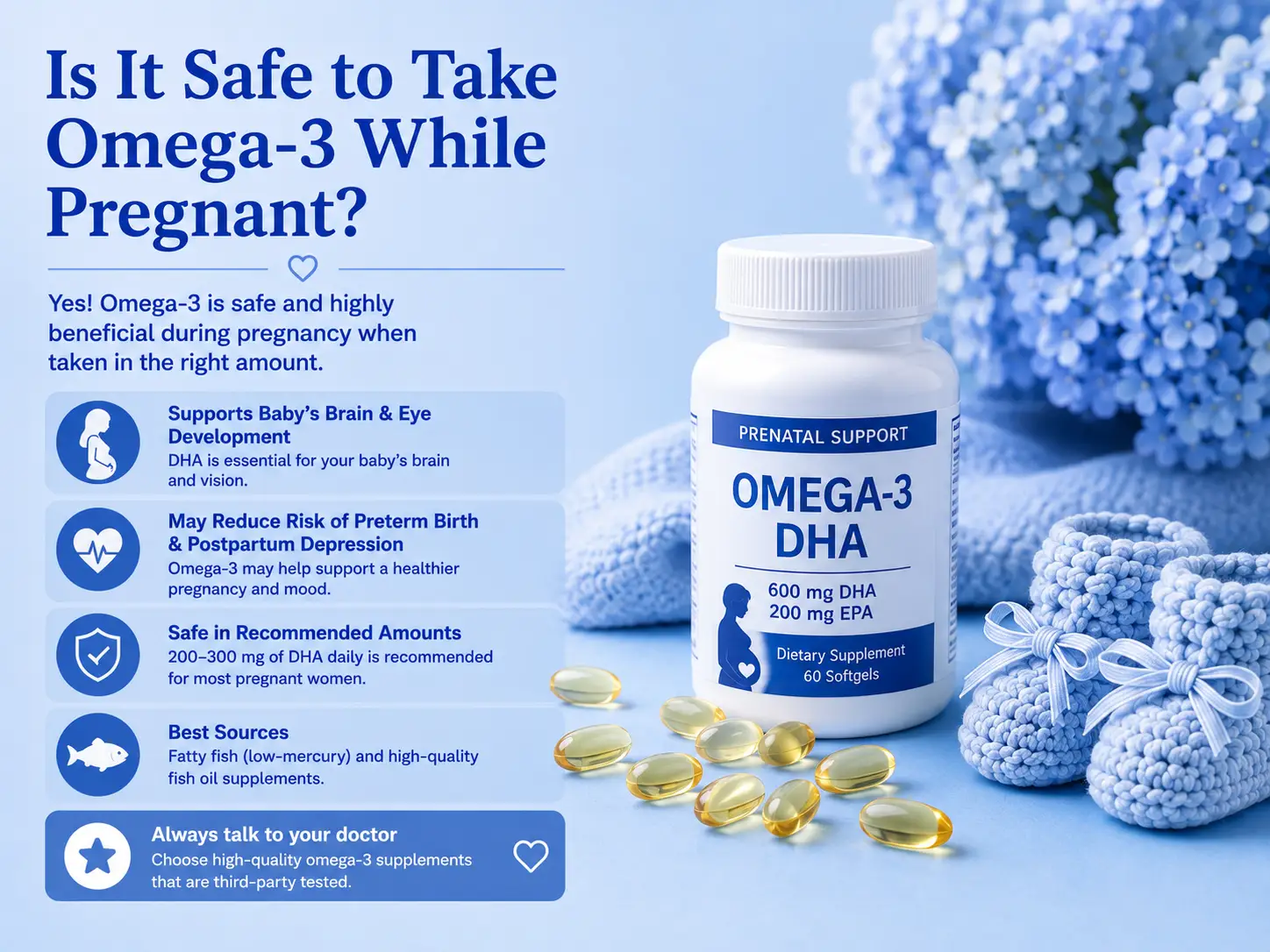

it is generally safe to take omega-3 supplements while pregnant—provided you choose the right type and dose. High-quality fish oil (from the body of the fish) or algal oil supplements that provide DHA and EPA are widely regarded as safe and are often recommended when dietary intake falls short.
Omega-3 fatty acids, particularly DHA (docosahexaenoic acid) and EPA (eicosapentaenoic acid), are essential fats the body cannot make in sufficient amounts. They play key roles in fetal brain and eye development and may support healthier pregnancy outcomes.
Why Omega-3s Matter During Pregnancy
DHA is a major structural component of the brain and retina. Adequate intake during pregnancy is linked to better visual and cognitive development in the baby. Research also shows that omega-3s, especially for women with low baseline levels, can help reduce the risk of preterm birth (before 37 weeks) and early preterm birth (before 34 weeks). Some studies suggest additional potential benefits, such as lower risk of preeclampsia, improved birth weight, and support for maternal mood during and after pregnancy.
Because many people—especially those who eat little seafood—do not get enough from food alone, supplements are a practical way to close the gap. Prenatal vitamins sometimes include a modest amount of DHA (often around 200 mg), but many do not, so a separate omega-3 product is commonly added.
How Much Omega-3 Do You Need?
Most experts recommend aiming for at least 200–300 mg of DHA daily during pregnancy and breastfeeding. Broader guidance often includes a baseline of about 250 mg combined EPA + DHA for women of childbearing age, with an extra 100–200 mg of DHA while pregnant. Women at higher risk of preterm birth or with confirmed low levels may benefit from higher intakes (around 500–1,000 mg DHA + EPA), according to some consensus statements.
Your healthcare provider can help tailor the amount based on your diet, bloodwork if available, and overall health.
Safe Sources of Omega-3 During Pregnancy
The preferred food sources are low-mercury fish and seafood. Aim for 2–3 servings (8–12 ounces total) per week of options like salmon, sardines, anchovies, herring, trout, or light canned tuna. These provide natural EPA and DHA along with other nutrients.
When food intake is limited (due to preferences, aversions, or mercury concerns), purified supplements are a reliable alternative:
Fish oil from the body of the fish (not the liver) is the most common and effective source.
Algal oil is an excellent plant-based, vegan option that supplies DHA (and sometimes EPA).
Avoid cod liver oil and other fish liver oils. They often contain high levels of vitamin A (retinol), which in excess can be harmful to the developing baby.
Look for supplements that are third-party tested (USP, NSF, or similar) for purity and potency. Quality manufacturing removes nearly all mercury, PCBs, and other contaminants, making purified fish oil far safer than eating large amounts of potentially contaminated fish.
Safety Considerations and Possible Side Effects
At typical prenatal doses, omega-3 supplements are considered safe. Very high intakes (generally above 3 grams of combined EPA + DHA per day) have a theoretical risk of increasing bleeding tendency, but standard recommended amounts stay well below this threshold.
Common mild side effects include a fishy aftertaste or burps, mild gastrointestinal upset, or loose stools. Taking the supplement with food, choosing enteric-coated or flavored versions, or switching to algal oil often helps. Store products properly and check expiration dates.
Always discuss any new supplement with your obstetrician or midwife, especially if you take blood thinners, have a bleeding disorder, or have other medical conditions. Omega-3s can usually be taken alongside your prenatal vitamin.
Practical Tips for Getting Enough
Read labels carefully—focus on the actual milligrams of DHA and EPA, not just “fish oil” or “omega-3.”
If your prenatal already contains DHA, calculate the total so you do not unnecessarily overdo it.
Consistency matters more than perfection. Starting in the second trimester is common if you missed earlier months, though beginning before or early in pregnancy is ideal.
Pair supplements with a balanced diet rich in other healthy fats, fruits, vegetables, and whole grains.
In summary, taking a high-quality omega-3 supplement that emphasizes DHA is safe for most pregnant people and can help meet important nutritional needs when diet alone falls short. Focus on purified sources, appropriate dosing, and professional guidance for the best results.
FAQ
Is it safe to take fish oil supplements while pregnant?
Yes. Purified fish oil made from the body of the fish is generally safe. Avoid cod liver oil because of its high vitamin A content. Choose third-party tested products to ensure low contaminant levels.
How much DHA should I take during pregnancy?
Most recommendations target at least 200–300 mg of DHA daily. Some guidelines suggest higher combined EPA + DHA amounts (500 mg or more) for women with low intake or elevated preterm-birth risk. Check with your provider for personalized advice.
Can I take omega-3 with my prenatal vitamins?
Yes. Many people do exactly that. Just add up the total DHA from both sources so you stay within recommended ranges, and confirm with your healthcare provider.
Are plant-based omega-3s (like flaxseed) enough during pregnancy?
Flaxseed, chia, and walnuts provide ALA, which the body converts only poorly into the DHA and EPA needed for fetal development. Algal oil is a much better plant-based source of preformed DHA.
Do omega-3 supplements help prevent preterm birth?
Evidence shows that omega-3 supplementation, particularly in women with low baseline DHA status, can reduce the risk of preterm and early preterm birth. Benefits are clearest when intake is increased from a deficient starting point.