
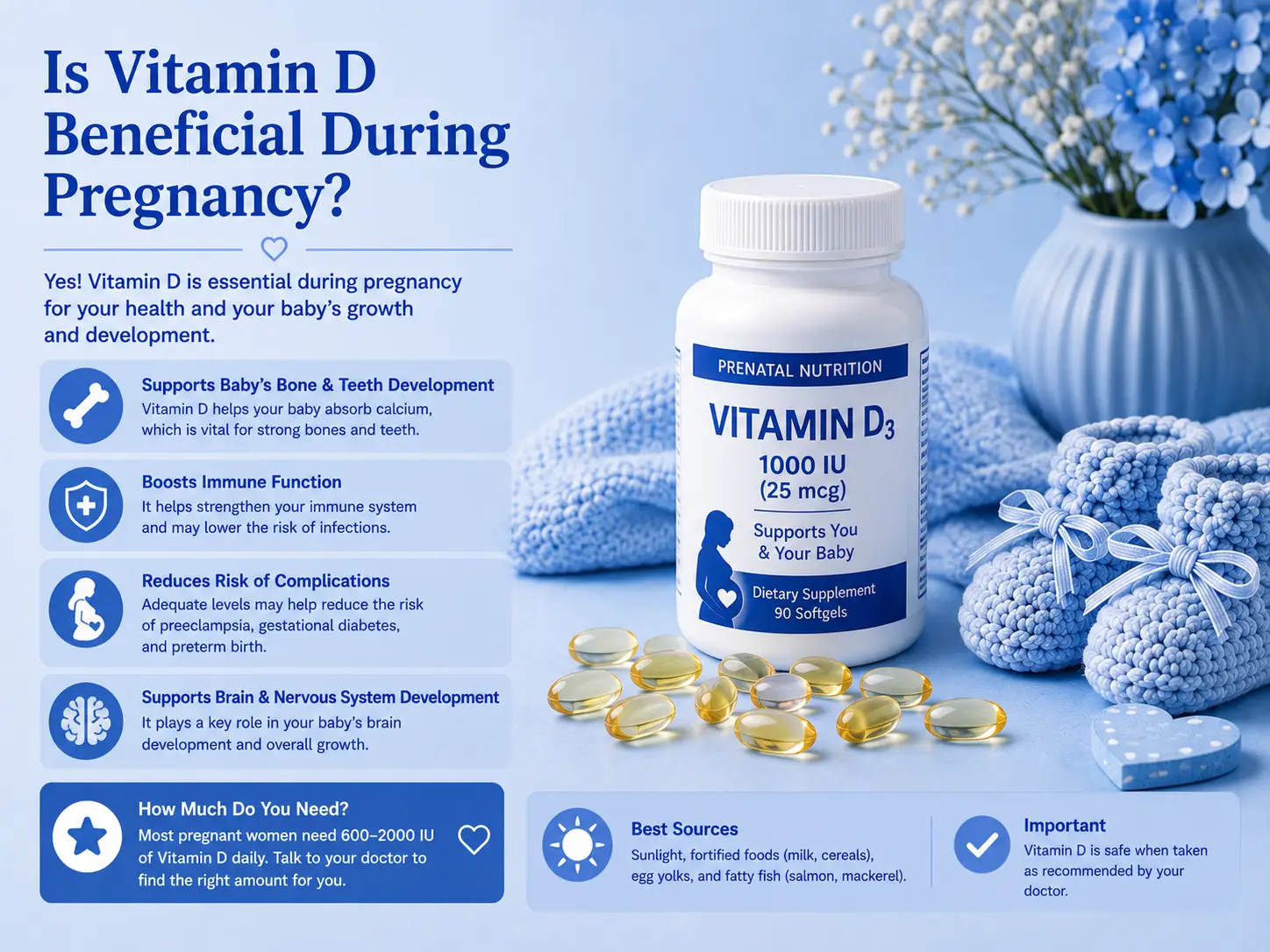

vitamin D is beneficial during pregnancy—especially for supporting your baby’s bone and teeth development and potentially lowering certain risks for both you and your child. Many pregnant women have low levels, so understanding the benefits, recommended amounts, and how to get enough can make a real difference.
Why Vitamin D Matters in Pregnancy
Vitamin D helps your body absorb calcium and phosphorus, which are essential for building strong bones and teeth. During pregnancy, your baby relies on your stores for skeletal development, as well as for the healthy growth of kidneys, heart, and nervous system.
Beyond bones, research points to broader benefits. Adequate vitamin D may reduce the risk of preeclampsia (a serious blood pressure condition), preterm birth, and low birth weight. Some studies and reviews link supplementation to fewer cases of gestational diabetes and improved overall pregnancy outcomes. A Cochrane review notes that vitamin D supplementation may help improve maternal and neonatal health, including fewer preterm and low-birthweight babies. Observational data also associate better vitamin D status with lower chances of certain complications.
Low vitamin D in early pregnancy has been tied to higher rates of preterm birth and shorter fetal length in some research, underscoring why levels matter from the start.
Risks of Vitamin D Deficiency During Pregnancy
Vitamin D deficiency is common among pregnant and lactating women—estimates suggest more than 25% may have lower-than-recommended levels. Factors that raise risk include limited sun exposure, darker skin, living in northern latitudes, covering up outdoors, vegetarian or vegan diets, and obesity.
Deficiency has been associated with higher chances of preeclampsia, gestational diabetes, preterm birth, low birth weight or small-for-gestational-age babies, and, in severe cases, soft bones or rickets in the infant. Maternal symptoms can be subtle: muscle aches, weakness, bone pain, fatigue, or low mood. Because many of these overlap with normal pregnancy changes, testing is the clearest way to know your status.
How Much Vitamin D Should You Take During Pregnancy?
Official recommendations vary slightly by country and organization, but they converge on modest daily amounts for most women, with higher doses used when deficiency is confirmed.
In the UK (NHS), the advice is 10 micrograms (400 IU) of vitamin D daily, especially from early October to late March when sunlight is limited. Some women may need it year-round.
In the US, the Recommended Dietary Allowance (RDA) is 15 micrograms (600 IU) per day for pregnant women. The upper safe limit is generally 100 micrograms (4,000 IU) daily.
Most prenatal vitamins contain around 400 IU—often not enough on their own if you start out low or have limited sun exposure. Some research suggests higher daily intakes (1,000–2,000 IU, or in certain studies up to 4,000 IU) more effectively raise blood levels and may offer greater benefits for preventing preterm labor or infections, and these doses appear safe when supervised.
Always check with your healthcare provider before increasing your dose. Blood testing (25-hydroxyvitamin D) can guide whether you need extra supplementation beyond your prenatal. Do not exceed 4,000 IU daily without medical advice, as very high amounts could be harmful.
Getting Enough: Food, Sun, and Supplements
Your body makes vitamin D when skin is exposed to summer sunlight, but this is unreliable in winter, for people with darker skin, or for those who use sunscreen or stay indoors. Food sources include fatty fish (salmon, mackerel, sardines), egg yolks, and fortified milk, plant milks, or cereals. Cod liver oil and liver contain vitamin D but also high vitamin A, which is not recommended in large amounts during pregnancy.
For most pregnant women, a daily supplement is the practical route. Vitamin D3 (cholecalciferol) is generally preferred for raising levels effectively. Continue supplementation while breastfeeding if advised, as breast milk alone may not fully meet a baby’s needs.
Safety of Vitamin D in Pregnancy
Vitamin D is considered safe at recommended doses. The evidence does not show harm from standard supplementation, and many guidelines explicitly recommend it for all pregnant women or those at risk of deficiency. Excessively high intakes over long periods can cause problems (hypercalcemia), which is why the upper limit exists and why personalized advice from a doctor or midwife is important.
Organizations such as the WHO do not recommend routine high-dose supplementation for all pregnant women solely to improve outcomes, but they acknowledge the commonality of deficiency and associated risks. Individual assessment remains key.
Bottom Line
Vitamin D supports your baby’s developing bones and may help lower risks of several pregnancy complications. Because deficiency is widespread and prenatal vitamins often fall short, many women benefit from a simple daily supplement of at least 400–600 IU, with higher amounts if testing shows low levels. Talk to your prenatal care provider about your risk factors, whether testing is useful, and the right dose for you. A short conversation and, if needed, a blood test can help ensure both you and your baby get this important nutrient.
FAQ
Does my prenatal vitamin have enough vitamin D?
Many prenatals contain only 400 IU. This meets basic recommendations for some women but may be insufficient if you are deficient, have limited sun exposure, or darker skin. Additional supplementation is often needed—discuss testing and dosing with your provider.
Can vitamin D help prevent preeclampsia or preterm birth?
Evidence suggests supplementation may reduce the risk of preeclampsia (some analyses show substantial relative reductions) and preterm birth. Results are promising but not uniform across all studies, so it is one supportive factor rather than a guaranteed preventive.
Is it safe to take higher doses of vitamin D while pregnant?
Doses up to 4,000 IU daily are generally considered the upper safe limit for most pregnant women. Higher therapeutic doses for confirmed deficiency are used under medical supervision and have been studied without major safety signals at those levels. Never self-prescribe large amounts.
What are the signs of vitamin D deficiency in pregnancy?
Symptoms can include muscle aches, weakness, bone or joint pain, fatigue, and sometimes low mood. Many women have no obvious symptoms, which is why blood testing is more reliable than relying on how you feel.
Should I take vitamin D year-round or only in winter?
In higher latitudes, winter supplementation is standard because sunlight is insufficient. If you have risk factors (indoor lifestyle, darker skin, limited outdoor time, or known low levels), year-round use is often recommended. Follow local guidelines or your clinician’s advice.