
Iron doesn’t always get the same spotlight as folic acid, but it’s just as central to a healthy pregnancy. Your body is working overtime to build extra blood volume for you and your baby, and that process runs almost entirely on iron. So how much do you actually need, and when should you start taking it? Here’s what the research and major health guidelines say.
Why Iron Matters So Much in Pregnancy
During pregnancy, your total blood volume increases dramatically — nearly doubling by the time you deliver. Iron is the raw material your body uses to make more hemoglobin, the protein in red blood cells that carries oxygen from your lungs to the rest of your body and to your baby. Roughly half of the iron you take in during pregnancy goes directly toward supporting the developing fetus and placenta.
Without enough iron, you’re at risk of iron-deficiency anemia, which can leave you feeling exhausted, dizzy, or short of breath. More seriously, untreated anemia during pregnancy has been linked to a higher risk of preterm birth and low birth weight.
When Should You Start Taking Iron?
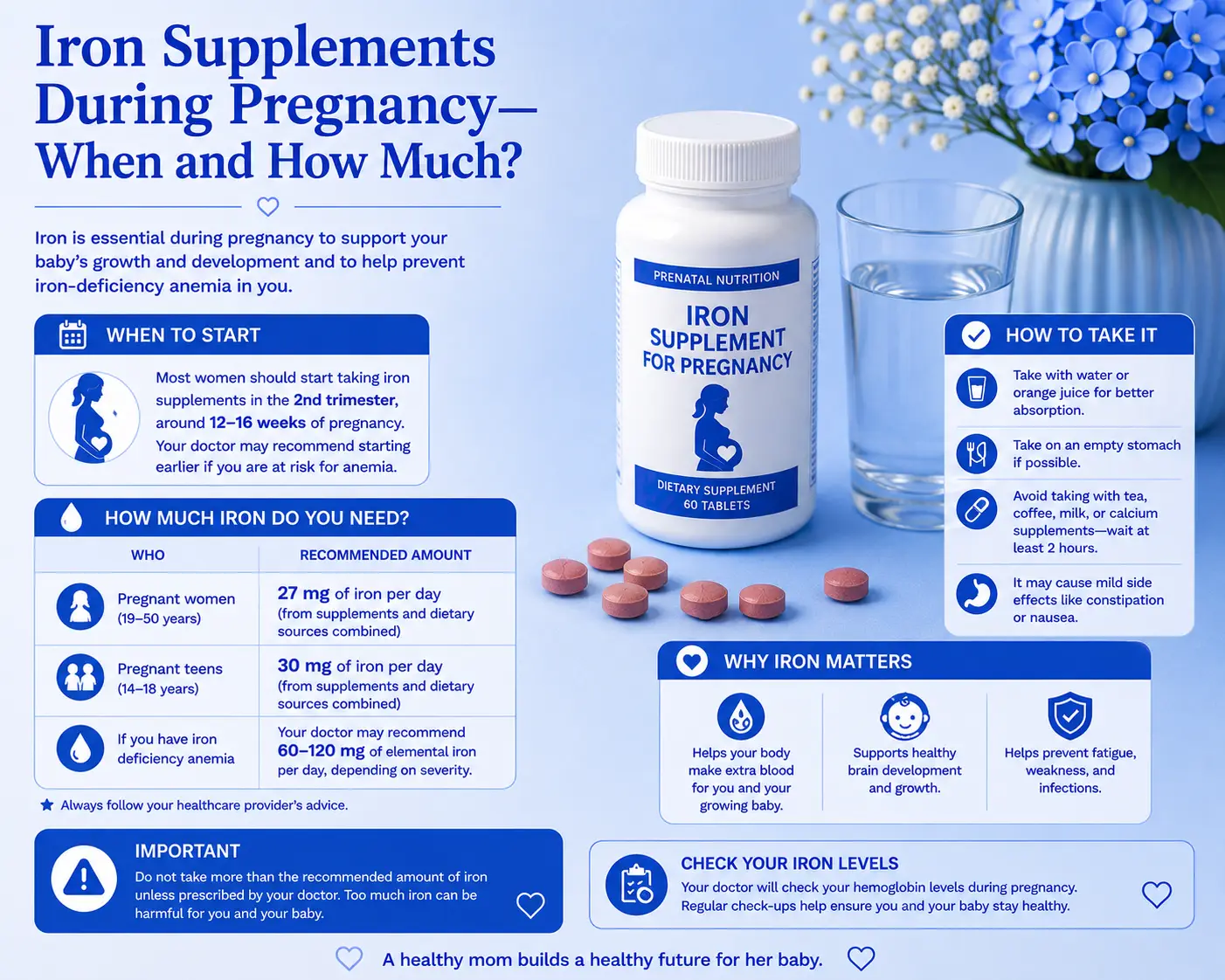
The general guidance is to start a low-dose iron supplement at your first prenatal appointment, which is typically covered by the iron already included in a standard prenatal vitamin. There’s no need to wait until a specific trimester — routine iron intake is recommended from early pregnancy onward, since your iron needs climb steadily as pregnancy progresses, with the biggest jump happening in the second and third trimesters.
If you’re already anemic or have a known iron deficiency going into pregnancy, your provider may recommend starting a higher dose sooner and monitoring your levels more closely with bloodwork.
How Much Iron Do You Actually Need?
This is where things get a little more nuanced, because different health organizations frame the recommendation slightly differently:
General daily requirement: At least 27 mg of elemental iron per day during pregnancy is the standard baseline figure.
World Health Organization (WHO): Recommends 30–60 mg of daily iron supplementation, with the higher end used in areas where anemia is more common.
Most prenatal vitamins: Typically contain 30–48 mg of elemental iron, which is generally considered adequate for routine prevention in most pregnancies.
Upper limit: Most guidance suggests staying under 45 mg per day unless your provider has specifically recommended more.
If bloodwork shows you’re already anemic, your doctor may prescribe a higher therapeutic dose — sometimes in the 60–100 mg range — taken in addition to or instead of what’s in your prenatal vitamin, with follow-up labs to confirm your hemoglobin is responding.
The takeaway: for most healthy pregnancies, the iron in a standard prenatal vitamin is enough. Extra supplementation is really a conversation to have with your provider based on your actual lab results, not something to add on your own.
Managing Iron’s Common Side Effects
If you’ve heard people complain about prenatal vitamins causing constipation or nausea, iron is usually the culprit. A few things can help:
Take it with food if it’s upsetting your stomach, though avoid pairing it with dairy, coffee, or tea, since these can block iron absorption.
Pair it with vitamin C, like a glass of orange juice, which actually helps your body absorb iron more efficiently.
Stay hydrated and add fiber — foods like beans, leafy greens, and fortified whole grains can help offset constipation while also contributing dietary iron.
Split the dose — taking iron twice a day in smaller amounts, rather than one large dose, can sometimes ease digestive discomfort.
Time it around morning sickness — if iron is making first-trimester nausea worse, it’s reasonable to pause and let your provider guide when to restart, since there’s typically plenty of time for iron to do its job in the second and third trimesters.
Do You Need a Separate Iron Supplement, or Is Your Prenatal Enough?
For most pregnant women without a diagnosed deficiency, the iron built into a standard prenatal vitamin covers the recommended amount. A separate iron supplement usually only becomes necessary if:
Bloodwork shows you’re anemic or borderline
You’re vegetarian or vegan, since plant-based iron (non-heme iron) is absorbed less efficiently than iron from animal sources
You have a history of heavy periods or low iron before pregnancy
You’re carrying multiples, which increases overall iron demand
If any of these apply to you, it’s worth asking your provider whether your current prenatal dose is sufficient or if an additional supplement makes sense.
The Bottom Line
Iron needs rise steadily throughout pregnancy, and most people can meet those needs simply by taking a standard prenatal vitamin starting from their first prenatal visit. The recommended range sits between 27 and 60 mg daily depending on the source, with most prenatals already landing in that window. If you have anemia or risk factors for it, your provider can guide you toward a higher, monitored dose rather than guessing on your own.
FAQ
When should I start taking iron supplements during pregnancy?
Most guidelines recommend starting at your first prenatal appointment, generally around 30 mg of iron daily, which is often already included in your prenatal vitamin.
How much iron do I need per day during pregnancy?
The general recommendation is at least 27 mg daily, with health organizations like the WHO suggesting a range of 30–60 mg. Most prenatal vitamins contain 30–48 mg, which is enough for most pregnancies.
Can too much iron be harmful during pregnancy?
Taking excessive iron beyond what’s recommended is generally not dangerous, but it can worsen side effects like constipation and nausea. Most guidance suggests staying under 45 mg daily unless a provider recommends more based on bloodwork.
Why does iron make me nauseous or constipated during pregnancy?
Iron supplements are one of the most common triggers for digestive side effects in pregnancy. Taking it with food, pairing it with vitamin C, adding fiber, or splitting the dose can help ease these symptoms.
Do I need a separate iron supplement in addition to my prenatal vitamin?
Usually not, unless you have diagnosed anemia, follow a vegetarian or vegan diet, are carrying multiples, or had low iron before pregnancy. Your provider can confirm based on your bloodwork whether extra iron is needed.