
If you’ve scanned the label on your prenatal vitamin and noticed DHA isn’t on the ingredient list, you’re not imagining things. It’s one of the most commonly overlooked nutrients in prenatal care — and yet it’s one that doctors and researchers consistently point to as essential during pregnancy. So do you actually need a prenatal with DHA, or can you get by without one? Here’s what the evidence says.
What Is DHA, and Why Does Pregnancy Need It?
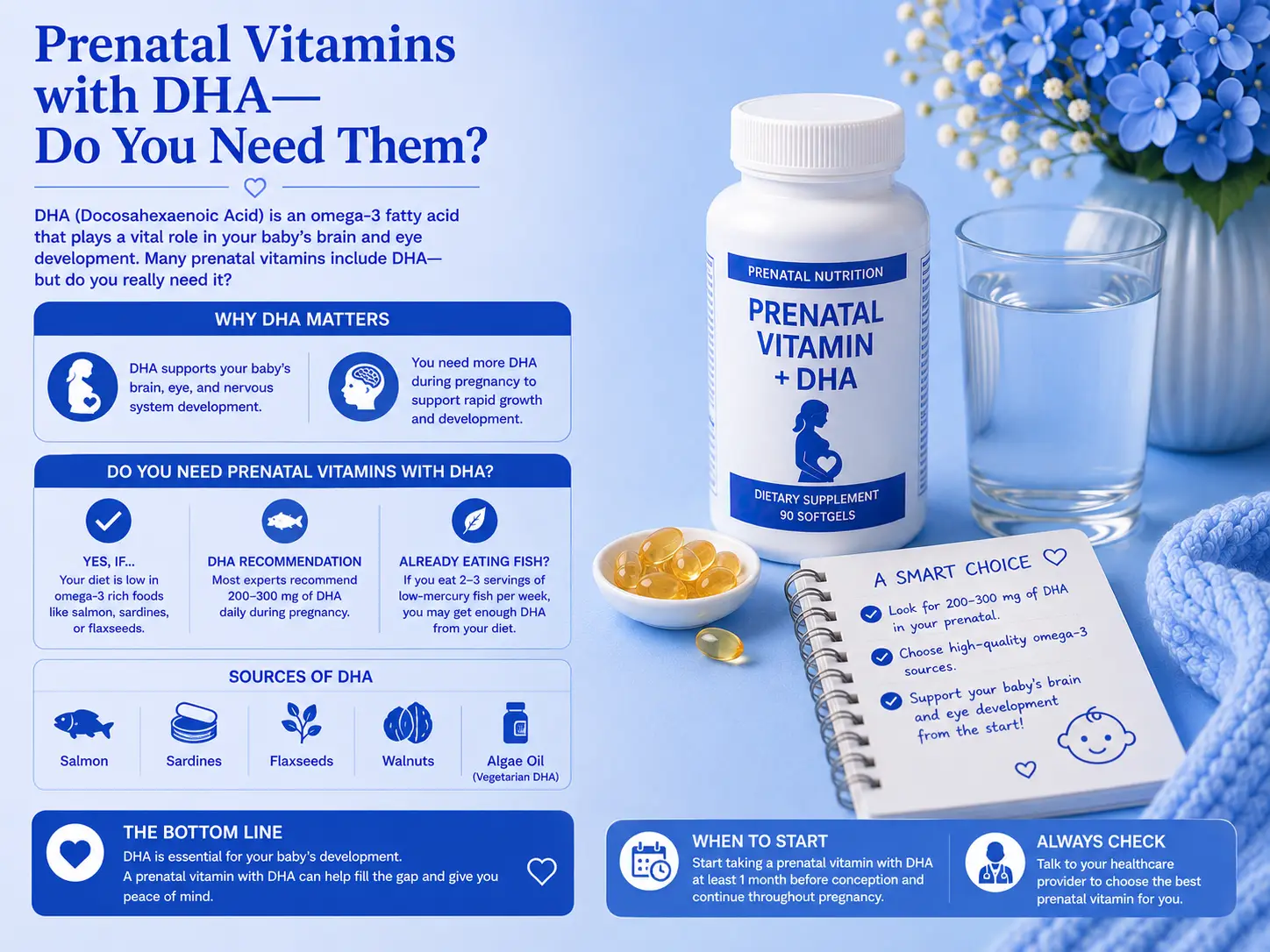
DHA (docosahexaenoic acid) is a type of omega-3 fatty acid — the same broad category of “healthy fat” you hear about in conversations around fish and heart health. During pregnancy, DHA plays a much more specific role: it’s a key building block for your baby’s brain, eyes, and nervous system. Because your baby can’t produce meaningful amounts of it on their own, they rely almost entirely on what you supply through your bloodstream.
If your own DHA levels are already low, your baby’s development draws from your reserves anyway, which can leave you at higher risk of deficiency during and after pregnancy.
Do You Actually Need to Supplement It?
Short answer: yes, in most cases. While your body absolutely needs DHA during pregnancy, the tricky part is that not every prenatal vitamin contains it. Many standard drugstore prenatals skip DHA entirely, largely because its gel-based form doesn’t mix easily into a dry multivitamin tablet. That means checking your label matters — taking “a prenatal vitamin” doesn’t automatically mean you’re covered.
Health organizations are fairly aligned on the recommendation: pregnant women are generally advised to get somewhere between 200 and 300 mg of DHA per day, either through diet, supplementation, or a combination of both.
How to Get Enough DHA
There are really two paths to hitting your daily DHA target:
Through food. Fatty, low-mercury fish like salmon, trout, herring, and anchovies are among the best natural sources. Guidelines commonly suggest eating 8–12 ounces of low-mercury seafood per week during pregnancy to help meet omega-3 needs. Eggs and DHA-fortified products like certain milks and orange juices can also help.
Through supplementation. If fish isn’t a regular part of your diet, or you’d rather not rely on food alone, a DHA supplement — either built into your prenatal or taken separately — is the more consistent option. Algae-based DHA supplements are a popular choice, especially for vegetarians and vegans, since they deliver the omega-3 without relying on fish oil.
If you go the fish-oil route instead, it’s worth noting that quality varies significantly between brands, and low-quality fish oil can carry unwanted contaminants. Look for products that are third-party tested for purity.
What Happens If You Don’t Get Enough?
There’s no single dramatic outcome tied to skipping DHA, but research has linked adequate DHA intake to healthy fetal brain and eye development, and some studies suggest it may help reduce the risk of preterm birth and low birth weight. On the flip side, evidence on the specific risks of insufficient DHA is still developing, so most guidance leans toward “get enough” rather than issuing hard warnings about deficiency.
If you’re unsure whether your current prenatal has enough, the easiest fix is simply checking the Supplement Facts panel — DHA amounts are typically listed in milligrams, and you can compare that number against the 200–300 mg daily target.
Is DHA Safe to Take During Pregnancy?
Yes. DHA is widely considered safe throughout pregnancy and is often recommended for anyone trying to conceive as well, since it also plays a role in egg and sperm health. As with most supplements, mild side effects like an upset stomach or fishy aftertaste are possible, especially with fish-oil-based capsules — something algae-based alternatives tend to avoid. Taking your DHA supplement with food, or splitting the dose across the day, can also help with tolerance.
As always, mention any new supplement to your OB/GYN, especially if you’re combining a DHA-containing prenatal with a separate omega-3 supplement, since duplicating doses is easy to do without realizing it.
The Bottom Line
Most pregnant women do need to actively make sure they’re getting enough DHA — whether that’s from a prenatal vitamin that includes it, a separate DHA or fish oil supplement, or a diet rich in low-mercury fish. Because so many standard prenatals leave DHA out, it’s worth double-checking your label rather than assuming it’s already covered. If you’re not sure where you stand, your OB/GYN or midwife can help you figure out the right combination for your diet and needs.
FAQ
How much DHA do I need per day during pregnancy?
Most guidance recommends at least 200 mg of DHA daily during pregnancy, with some sources suggesting up to 300 mg. Your provider can help you land on the right number based on your diet.
Do all prenatal vitamins contain DHA?
No. Many standard prenatal vitamins, especially basic drugstore versions, don’t include DHA because it’s harder to combine with dry tablet ingredients. Check the label or ask your pharmacist to confirm.
Can I get enough DHA from food instead of a supplement?
Yes, if you regularly eat low-mercury fatty fish like salmon or trout, roughly 8–12 ounces per week, along with DHA-fortified foods. If seafood isn’t a regular part of your diet, a supplement is the more reliable option.
Is algae-based DHA better than fish oil for pregnancy?
Both can meet your DHA needs. Algae-based DHA is a popular alternative for vegetarians, vegans, or anyone concerned about fish oil quality or contaminants, since it’s derived directly from algae rather than fish.
What happens if I don’t get enough DHA while pregnant?
There’s no single defined “deficiency symptom,” but adequate DHA is linked to healthy fetal brain and eye development. Research suggests it may also support reducing the risk of preterm birth and low birth weight, so most experts recommend meeting the daily target rather than risking a shortfall.