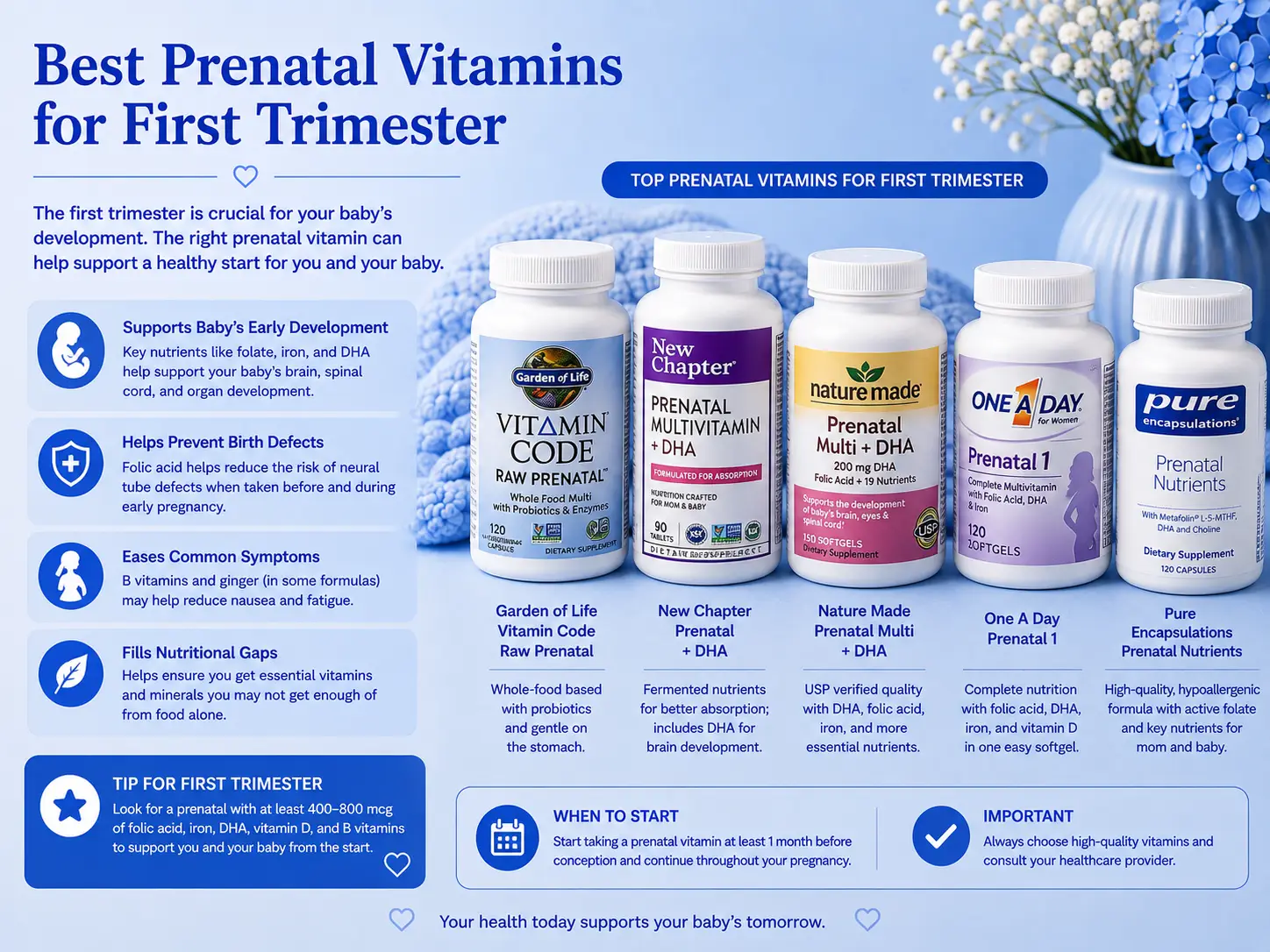

The first trimester is when your body has the highest nutritional demands relative to how you’re actually feeling — nausea, food aversions, and exhaustion often hit right as folate, iodine, and B6 needs are peaking. That combination makes choosing the right prenatal vitamin for these first 12 weeks more important than picking just any multivitamin off the shelf.
Here’s what actually matters when you’re looking for the best prenatal vitamin for first trimester, based on what OB/GYNs, dietitians, and real reviews consistently point to.
What Makes a Prenatal “Best” for the First Trimester Specifically
Not every good prenatal vitamin is automatically a great first-trimester one. The first 12 weeks come with two challenges that later trimesters don’t have as intensely: nausea and neural tube development. That means the ideal first-trimester formula typically checks a few extra boxes beyond the basics.
At Least 400 mcg of Folate or Folic Acid
This is non-negotiable in any trimester, but it matters most right now. The neural tube — which becomes your baby’s brain and spinal cord — closes within the first month of pregnancy, so folate needs are at their highest during this exact window. Some formulas add extra methylfolate capsules specifically for the first trimester to cover this increased demand.
Vitamin B6 (and Sometimes Ginger)
If you’re searching for “prenatal vitamins for nausea” or “best prenatal for morning sickness,” B6 is the ingredient to look for. ACOG recommends vitamin B6 as a first-line, non-medication option for pregnancy nausea, often in doses of 10–25 mg. Many first-trimester-specific prenatal packs pair B6 with ginger root, another well-known natural nausea reliever.
A Gentle Form of Iron
Standard iron sulfate is cheap and common, but it’s also notorious for triggering constipation and nausea — the last thing you need in week 8. Prenatals that use chelated iron (like ferrous bisglycinate) tend to be easier on a sensitive first-trimester stomach while still delivering the iron your growing blood volume needs.
Iodine
Iodine needs jump by more than 50% during pregnancy, and it’s an easy nutrient to fall short on if you’re not eating a varied diet. Look for around 150 mcg, which aligns with guidance from the American Thyroid Association.
DHA/Omega-3s
Brain and eye development are already underway in the first trimester. Prenatals that include DHA (ideally paired with EPA) support this, though if swallowing extra capsules feels like too much right now, a separate DHA supplement or DHA-rich foods can fill the gap.
Choosing a Format You Can Actually Keep Down
For many people, the “best” prenatal isn’t about a fancier ingredient list — it’s about which one you can actually take consistently without it coming back up. This is why format matters just as much as formulation during the first trimester:
Capsules or softgels are generally easier to digest than large, compressed tablets.
Gummies are gentler for some, though they often lack iron and may not contain a full nutrient profile — check the label.
Powders and liquids are worth considering if pills themselves trigger a gag reflex, which is common in early pregnancy.
If your current prenatal is making nausea worse, that’s a completely normal thing to bring up with your doctor — switching formulas or forms of iron and folate often solves the problem without giving up on supplementation altogether.
What to Avoid or Double-Check
High-dose vitamin A (retinol) — Look for beta-carotene instead, since excess preformed vitamin A has been linked to birth defects.
Unnecessary mega-doses — More isn’t better; taking a prenatal on top of separate multivitamins can push certain nutrients too high.
Third-party testing — Since supplements aren’t FDA-regulated the same way medications are, look for brands that use independent testing (like USP or NSF verification) for quality assurance.
The Bottom Line
The best prenatal vitamin for the first trimester is one that covers folate, iodine, and DHA at recommended levels, includes a gentle, absorbable form of iron, ideally pairs B6 with ginger for nausea support, and — most importantly — one you’re actually able to take every day without it making you feel worse. If you’re between a few options, bring the labels to your next OB appointment; your provider can help you weigh what fits your specific needs, diet, and any nausea you’re experiencing.
FAQ
What is the best prenatal vitamin to take for morning sickness in the first trimester?
Look for a formula that includes vitamin B6 (10–25 mg), often paired with ginger, along with a gentle, chelated form of iron. These combinations are commonly recommended to ease nausea without sacrificing nutrient coverage.
Do I need a different prenatal vitamin for each trimester?
Not necessarily, but some brands offer trimester-specific formulas because nutrient needs shift — for example, extra folate and nausea support in the first trimester versus more iron or DHA later on. A single well-formulated prenatal covering ACOG’s core nutrients works fine for most people throughout pregnancy.
Is it better to take gummy or capsule prenatal vitamins in the first trimester?
It depends on what you can tolerate. Gummies are often gentler on nausea but frequently lack iron and a complete nutrient profile, so you may need a separate iron supplement. Capsules with chelated iron typically offer more complete nutrition with less digestive upset than standard tablets.
What ingredients should I avoid in a first-trimester prenatal vitamin?
Be cautious of high-dose preformed vitamin A (retinol) — beta-carotene is the safer alternative. Also avoid stacking multiple supplements that duplicate the same nutrients, which can push you toward excessive intake.
Can I switch prenatal vitamins if my current one makes me nauseous?
Yes. Switching to a formula with gentler iron, methylfolate instead of folic acid, or added B6 and ginger often resolves nausea issues. It’s a good idea to mention the switch to your OB/GYN, especially if you’re also adjusting dosages.