
Finding out you’re pregnant kicks off one of the biggest questions of the next nine months: what happens now? Pregnancy is typically measured in 40 weeks, split into three trimesters, and each stretch brings its own changes for you and your growing baby. Here’s a trimester-by-trimester breakdown of what’s actually going on, week by week.
How Pregnancy Weeks Are Counted
Doctors count pregnancy from the first day of your last menstrual period (LMP), not the date you conceived. That means by the time you get a positive pregnancy test around week 4 or 5, you’re technically already a month “pregnant” even though conception happened only about two weeks earlier. If your due date is uncertain, an early ultrasound is the most accurate way to confirm it.
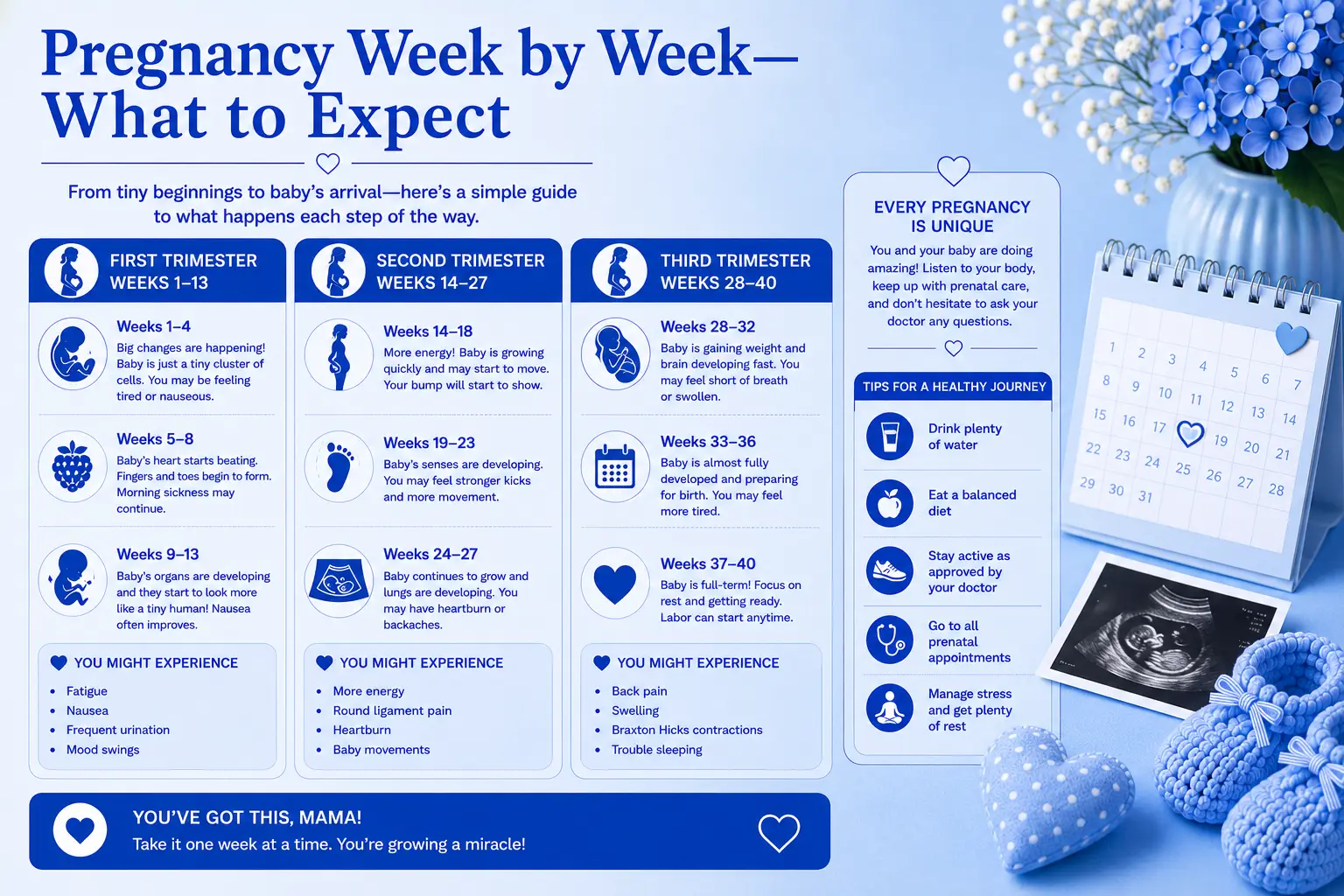
First Trimester (Weeks 1–13)
The first trimester covers the biggest developmental leaps, even though there’s not much to see on the outside yet.
Weeks 1–4: Ovulation, conception, and implantation happen in this window. By the end of week 4, a home pregnancy test can usually detect the pregnancy hormone hCG.
Weeks 5–8: This is when early pregnancy symptoms tend to show up — a missed period, sore or swollen breasts, fatigue, nausea (often called morning sickness, though it can strike any time of day), and more frequent trips to the bathroom. The embryo’s heart begins to beat, and by week 8 it’s officially referred to as a fetus.
Weeks 9–13: Your first prenatal appointment usually happens around now, often including a dating ultrasound. By week 12, the baby is fully formed — organs, muscles, limbs, and bones are all in place, roughly the size of a plum. Week 13 marks the finish line of the first trimester.
Miscarriage risk is highest in these early weeks, which is part of why many people wait until the 12-week mark to share the news.
Second Trimester (Weeks 14–27)
Often called the “golden period,” the second trimester is when energy tends to return and morning sickness usually fades.
Weeks 14–17: The baby’s face becomes more defined, and you may start feeling more like yourself again.
Weeks 18–20: This is typically when the anatomy scan happens — the detailed ultrasound that checks the baby’s development and, if you want to know, reveals the sex. Many people start feeling the first flutters of movement (quickening) around this time.
Weeks 21–27: Your bump becomes noticeably visible, the baby’s movements grow stronger, and you’ll likely be screened for gestational diabetes near the end of this trimester. Week 27 closes out the second trimester.
Third Trimester (Weeks 28–40)
The home stretch is about growth, preparation, and increasingly frequent checkups.
Weeks 28–31: Prenatal visits typically shift to every two weeks. The baby’s brain, lungs, and other organs continue maturing rapidly.
Weeks 32–36: Visits often move to weekly. Braxton Hicks contractions (practice contractions) may become more noticeable, and the baby settles into a head-down position in preparation for birth.
Weeks 37–40: A pregnancy is considered full-term at 39 weeks. The baby continues gaining weight right up until delivery. Only a small percentage of babies actually arrive on their exact due date — most births happen within about two weeks of it, before or after.
Common Pregnancy Symptoms by Stage
While every pregnancy is different, some symptoms tend to cluster by trimester:
Early on: nausea, fatigue, breast tenderness, mood swings, frequent urination
Mid-pregnancy: increased energy, visible bump, round ligament pain, skin changes
Late pregnancy: back pain, swelling, shortness of breath, Braxton Hicks contractions, trouble sleeping
When to Call Your Doctor
Certain symptoms warrant a call regardless of what week you’re in: heavy vaginal bleeding, severe abdominal pain, a sudden drop in the baby’s movement, severe headaches with vision changes, or a fever over 102°F. When in doubt, it’s always worth checking in with your provider.
FAQ
How many weeks is a full-term pregnancy?
A pregnancy is considered full-term at 39 weeks. Babies born between 37 and 42 weeks are generally considered within a healthy range, though the closer to 39–40 weeks, the more time major organs like the brain and lungs have had to mature.
When do most pregnancy symptoms start?
Most people notice the first symptoms — a missed period, sore breasts, fatigue, or nausea — around weeks 4 to 6, shortly after a positive pregnancy test.
When can you find out the baby’s sex?
The baby’s sex can often be seen on an ultrasound as early as 14–16 weeks, though the standard anatomy scan between 18–20 weeks is when it’s typically confirmed.
When do you start showing during pregnancy?
This varies a lot by body type and whether it’s a first pregnancy, but most people start showing a visible bump sometime between weeks 12 and 16, becoming more obvious by week 20.
How accurate is a due date?
A due date is an estimate, not a guarantee — fewer than 5% of babies are born on their exact due date. Most arrive within about two weeks before or after, which is why it’s more useful to think of it as a window rather than a fixed deadline.