
Six weeks is when pregnancy often starts to feel real. This is typically the week most people discover they’re expecting, and it’s also when symptoms tend to kick in with more force. Here’s what’s actually happening with your body and your baby at this stage.
Your Baby at 6 Weeks
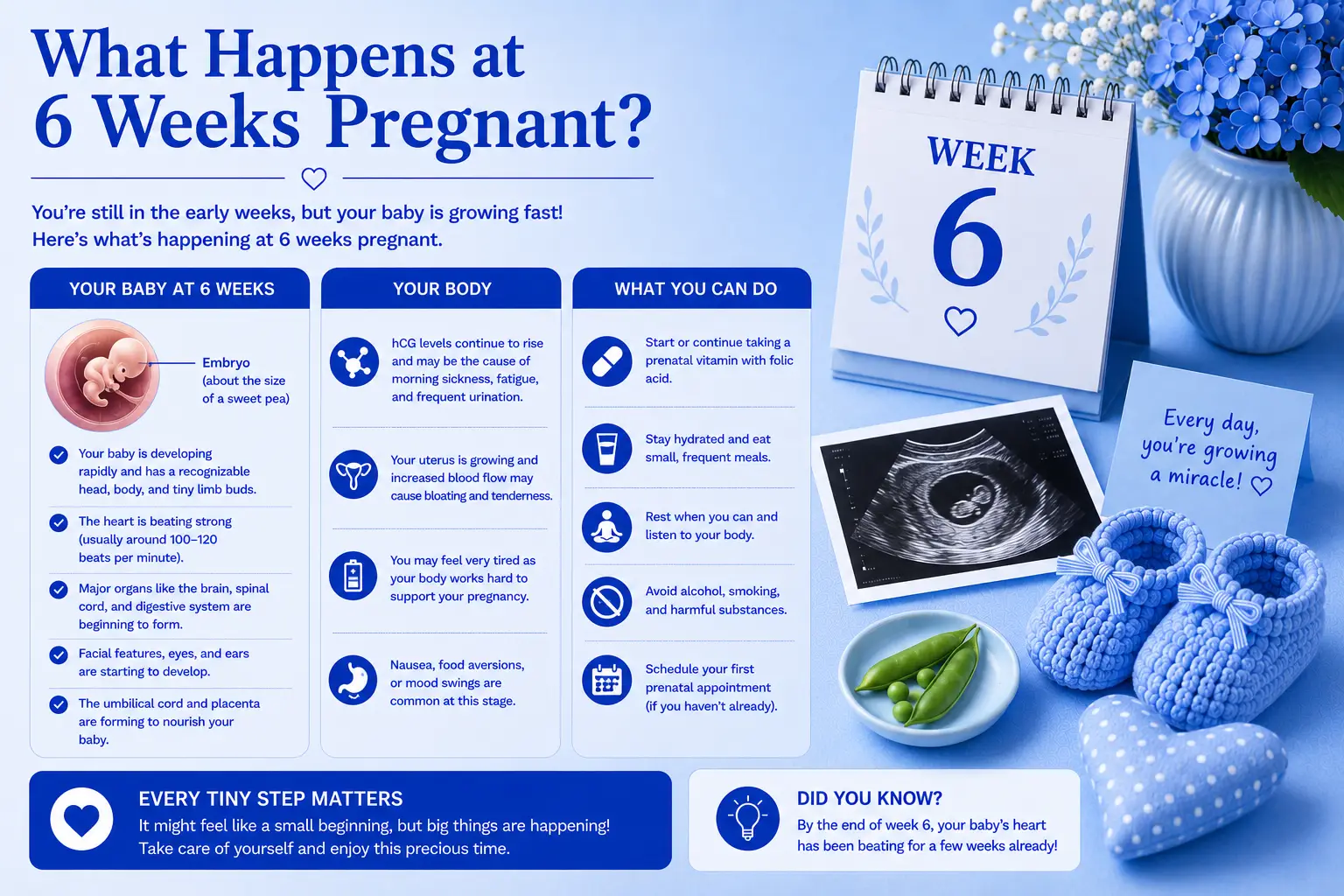
Your baby is still tiny — somewhere around 1/8 to 1/4 inch long, roughly the size of a pomegranate seed or a grain of rice, though some sources compare it to a sweet pea or apple seed. Despite the small size, this is a huge week for development. The neural tube, which will become the brain and spinal cord, is closing along the baby’s back. The heart has divided into four chambers and begins to beat around now — often visible as a flicker on a vaginal ultrasound, usually somewhere between 100 and 160 beats per minute, roughly twice as fast as your own heart.
Other milestones this week include:
Optic vesicles forming on the sides of the head — the earliest structures that will become the eyes
Passageways for the inner ear starting to form
Limb buds appearing, which will grow into arms and legs
The beginnings of the digestive and respiratory systems
At this stage the embryo still has a slight curve and a small tail, giving it a tadpole-like shape — completely normal and something that resolves over the coming weeks.
Common Symptoms at 6 Weeks Pregnant
If week 4 or 5 felt uneventful, week 6 is often when pregnancy symptoms show up in full force, thanks to rising hCG and progesterone. Common ones include:
Morning sickness — nausea and sometimes vomiting that can strike at any time of day, not just mornings
Breast tenderness — soreness, swelling, or heightened sensitivity
Fatigue
Frequent urination — your uterus is growing and pressing on the bladder, and increased blood flow to your kidneys adds to the effect
Mood swings
Food aversions or cravings
Bloating
Mild cramping or light spotting
Not everyone experiences all — or any — of these. Some people feel almost nothing at 6 weeks, and that’s entirely normal too. Every pregnancy is different.
Your Body at 6 Weeks Pregnant
You almost certainly won’t be showing yet, even if you feel bloated. It’ll still be a while before there’s a visible bump. Behind the scenes, though, your body is working hard: blood volume is increasing, hormone levels are climbing steadily, and your uterus is expanding to accommodate the growing embryo.
First Prenatal Appointment
Six weeks is a common time to schedule your first prenatal visit, if you haven’t already. This appointment usually includes:
Blood tests to check blood type, Rh factor, iron levels, and immunity to certain infections
Screening for sexually transmitted infections
A urine test to check for glucose levels or infection
A discussion of your medical history and any pregnancy symptoms so far
Guidance on what to avoid — including raw or undercooked meat, unpasteurized dairy, high-mercury fish, alcohol, and excessive caffeine (generally capped around 200mg a day, or about one 12-oz cup of coffee)
When to Call Your Doctor
Light spotting and mild cramping can be normal in early pregnancy, but you should contact your provider if you experience heavy bleeding, bleeding that lasts more than a couple of days, severe abdominal pain, or dizziness and fainting.
Tips for Week 6
Keep taking your prenatal vitamin with folic acid
Eat small, frequent meals if nausea is an issue — an empty stomach can make it worse
Stay hydrated
Rest when you can; fatigue at this stage is real and expected
Give yourself space for the emotional side of things too — excitement, anxiety, and everything in between are all normal reactions
FAQ
Can you see a heartbeat at 6 weeks pregnant?
Often, yes. A vaginal ultrasound can sometimes detect a flickering heartbeat around 6 weeks, though it isn’t guaranteed at every pregnancy — sometimes it takes until week 7 or 8 to see clearly.
How big is a baby at 6 weeks pregnant?
About 1/8 to 1/4 inch long, roughly comparable to a pomegranate seed, grain of rice, or sweet pea depending on the source.
Is it normal to have no symptoms at 6 weeks pregnant?
Yes. While many people notice nausea, fatigue, or breast tenderness by week 6, plenty of healthy pregnancies show few or no symptoms at this stage.
Why do I feel so tired at 6 weeks pregnant?
Fatigue at this stage is largely driven by a sharp rise in progesterone, along with your body’s increased workload as it builds the placenta and supports rapid fetal development.
When should I schedule my first prenatal appointment?
Many providers recommend booking your first visit around 6 to 8 weeks, though it’s fine to call as soon as you get a positive pregnancy test if you have questions or concerns sooner.