
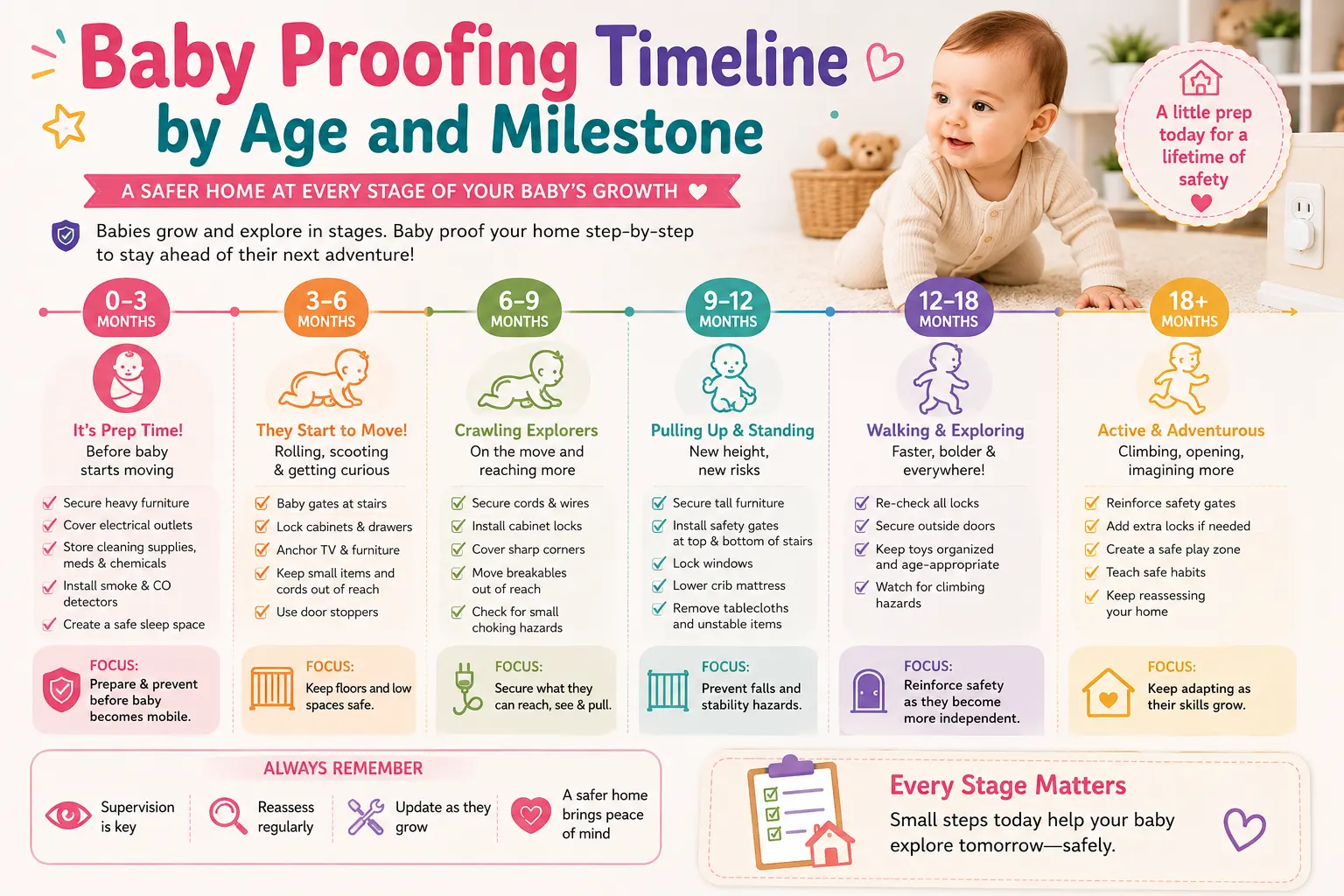

This is a working timeline, not an explainer — a schedule you can save and check off as your baby grows. Each stage lists exactly what to buy, install, or fix, organized by the age range where it typically becomes relevant. For the reasoning behind why timing matters this much, see our companion guide on when to start baby proofing.
Quick answer: Anchor furniture before birth, add outlet covers and cord management by 3–4 months, install stair gates and cabinet locks by 6 months, and re-check tip-over risk and window guards by 9–10 months.
Prenatal – Before Baby Arrives
- Anchor all tall furniture (bookcases, dressers, media consoles) to wall studs
- Secure or wall-mount the TV
- Set up crib per current safety standards (check for recalls)
- Install smoke detectors and carbon monoxide detectors on every level
- Set water heater to 120°F (49°C) or lower
- Choose a pediatrician and save emergency numbers, including Poison Control
0–3 Months
- Keep small items and choking hazards off surfaces near where baby is placed (bouncer, changing table)
- Begin using cordless or secured window coverings in the nursery
- Practice safe sleep — firm mattress, fitted sheet only, nothing else in the crib
Mobility is minimal, but this is the easiest window to finish furniture anchoring and detector installation without a mobile baby underfoot.
3–5 Months
- Install outlet covers in any room baby spends time in
- Secure cords from lamps, chargers, and baby monitors
- Clear low shelves and tabletops of small or breakable items
- Add corner guards to sharp furniture edges baby could reach if rolling
This is when reaching and grasping typically begin — treat anything within arm’s reach as accessible starting now.
6 Months
- Lock low cabinets and drawers in any room with floor time
- Lock the toilet lid
- Remove choking hazards from floor level throughout the house
- Begin high chair use with stove and cooking-area precautions in place (turn pot handles inward, use stove knob covers)
Sitting and early solids typically start here, and floor-level exploration increases.
6–8 Months
- Install gates at the top and bottom of all staircases (hardware-mounted at the top)
- Add door knob covers to off-limits rooms
- Double-check furniture anchoring — a rocking, hands-and-knees baby puts more force on furniture than a sitting one
- Store all chemicals, medications, and cleaning supplies in locked cabinets, not just high shelves
Crawling typically begins in this window (range: 6–12 months) — install stair gates before it’s confirmed, not after.
8–10 Months
- Re-check every piece of furniture your baby could pull up on for tip-over risk
- Install window guards or stops limiting openings to under 4 inches
- Add anti-tip straps to any furniture not yet anchored
- Secure fireplace, hearth, or any raised platform edges
Pulling to stand and cruising typically begin here — furniture stability becomes a direct weight-bearing risk, not just a reach risk.
10–14 Months
- Reassess cabinet and drawer locks — early walkers gain new leverage and persistence
- Check that all gates are still holding against a heavier, more mobile baby
- Add stove and oven door locks if not already in place
- Review backyard and garage access points now that walking may extend baby’s range outdoors
First independent steps typically happen in this window — full reassessment of anything at knee-to-hip height is worth doing now.
14–18 Months and Beyond
- Reassess climbing risk — a walking, confident toddler can often reach what a crawler couldn’t
- Check furniture anchors and gates every few months rather than assuming a one-time fix holds
- Extend baby proofing to any new spaces your toddler now has access to (yard, garage, upper floors)
This stage is less about new categories of hazard and more about reassessing existing fixes against a stronger, more determined toddler.
How to Use This Timeline
- Work a stage ahead of where your baby currently is, not behind — install a stage’s items when you see the signs of the next milestone, not after it’s fully arrived
- Re-check earlier stages periodically; a furniture anchor installed at 3 months should still be checked at 9 months once your baby is pulling on it with real force
- If you’re starting later than this timeline suggests, prioritize stairs, furniture anchoring, and cabinet locks first, then work through the rest in order
Continue exploring: browse the full Baby Safety hub.
Frequently Asked
Common Questions