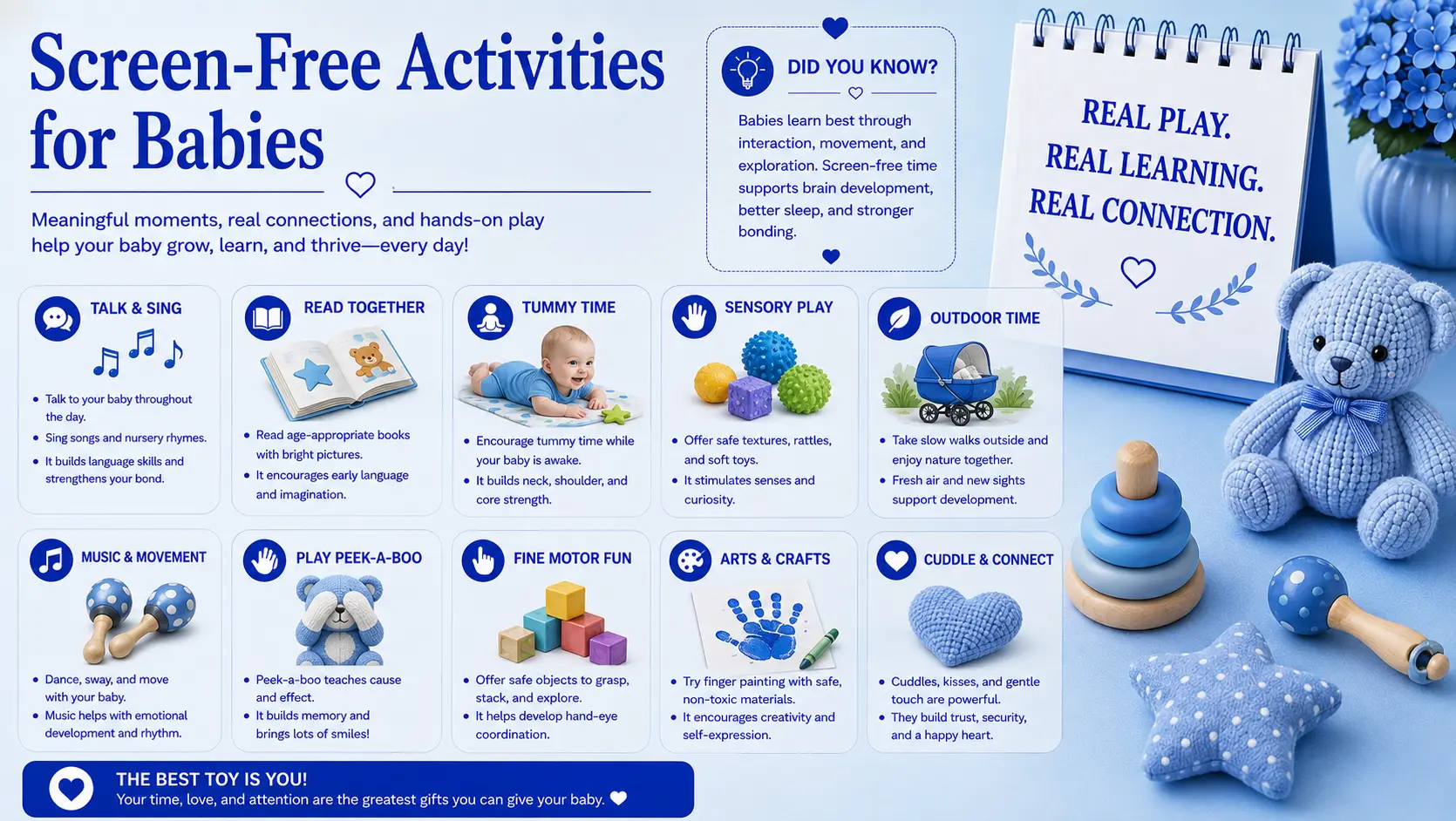

It’s easier than ever for a phone or tablet to end up in a baby’s hands — whether it’s a video call with grandparents, a few minutes of quiet during a tough moment, or background noise from the TV. But pediatric experts are consistent on this point: babies under 18 months learn best through real-world, hands-on interaction, not screens. The American Academy of Pediatrics (AAP) recommends minimizing or avoiding screen time for babies under 18 months, with the main exception being video chatting with family, since that still counts as genuine social interaction.
The good news? Screen-free play isn’t just “the safer option” — it’s actually the better option for early brain development. Below is a practical, age-by-age guide to screen-free activities for babies, along with tips for building screen-free habits that stick.
Why Screen-Free Play Matters So Much in the First Year
Babies under 2 have a hard time transferring what they see on a screen to the real world — a concept researchers call the “video deficit.” That means screen time at this age doesn’t just fail to teach much; it can also displace the interactions that actually build the brain: talking, singing, back-and-forth play, and predictable daily routines. Some research links heavy early screen exposure to lower scores on later memory, language, and attention measures. The takeaway for parents isn’t guilt — it’s simply that unstructured, screen-free play is doing more heavy lifting than most people realize.
0–3 Months: Screen-Free Newborn Activities
Face-to-face talking and singing during every feed or diaper change
Daily tummy time on a mat or your chest
High-contrast black-and-white cards or books
Skin-to-skin contact and gentle infant massage
Narrated stroller walks, describing what you see and hear
Soft rattle or crinkle toy play
3–6 Months: Screen-Free Activities for Growing Babies
Reaching and grasping games with textured toys
Mirror play, naming facial features
Reading board books aloud, even briefly, several times a day
Music and gentle bouncing or dancing together
Bath-time water play with cups and toys
Rolling practice on a play mat
6–9 Months: Screen-Free Activities for Sitting & Crawling Babies
Sensory bins with rice, textured fabric, or safe household items
Peekaboo and object permanence games (hiding a toy under a cup)
Container play — filling and dumping objects into a bin
Supervised finger-food exploration and self-feeding
Crawling toward toys or through a simple obstacle course
Outdoor time on grass or a blanket, touching leaves and textures
9–12 Months: Screen-Free Activities for Cruising Babies
Stacking blocks or nesting cups
Simple knob puzzles or shape sorters
Push toys for early walking practice
Naming and pointing games during walks or errands
Busy boards with zippers, buttons, and latches
“Give and take” games, passing toys back and forth
Screen-Free Alternatives for Common Situations
Many parents don’t reach for a screen out of choice — it’s usually a solution to a specific moment. Here are screen-free swaps for the situations that come up most:
Needing a few minutes to cook or clean: a busy board, sensory bin, or a basket of safe kitchen containers on the floor nearby
Long car rides: high-contrast toys clipped to the car seat, music, or a soft crinkle book
Restaurant outings: a small bag of quiet toys (silicone teethers, board books, stacking cups) reserved just for outings
Calming a fussy baby: singing, gentle bouncing, or a change of scenery (like stepping outside)
Video calls with family: these are the one AAP-approved exception, since two-way interaction still counts as real engagement
Tips for Building Screen-Free Habits That Last
Create screen-free zones, like the nursery, dining area, and bedroom, so screens simply aren’t part of certain routines.
Model the behavior yourself. Babies pick up on caregiver phone use, even if they can’t articulate it — try to keep your own screen time minimal during dedicated play windows.
Keep a small rotation of screen-free toys within reach so options are always available without extra setup.
Don’t aim for perfection. An occasional video call or a few minutes of background TV isn’t going to undo the benefits of a mostly screen-free routine — consistency over time is what matters most.
FAQ
At what age can babies start having screen time?
The AAP recommends minimizing or avoiding screen time for babies under 18 months, with video chatting as the main exception. Between 18–24 months, limited, co-viewed high-quality content can be introduced gradually.
Why is screen time discouraged for babies under 18 months?
Babies under 2 struggle to apply what they see on a screen to real life, and screen time can displace the face-to-face interaction, talking, and hands-on play that drive early brain development.
What are good screen-free activities to calm a fussy baby?
Singing, gentle bouncing or rocking, a change of scenery (like going outside), and skin-to-skin contact are effective, screen-free ways to soothe a fussy baby without relying on a device.
Is video chatting considered screen time for babies?
Video chatting with family or friends is generally treated as an exception to screen time guidelines, since it involves real, reciprocal social interaction rather than passive viewing.
What screen-free toys are best for babies?
Simple, open-ended toys tend to work best: textured board books, stacking cups, busy boards, sensory bins, and rattles. These support hands-on exploration and don’t require batteries or a screen to be engaging.