Skip to content
DidYouSearch DidYouSearch
  • did you search?
  • Baby Plus+
    • Baby Activities
      • Arts & Crafts
      • Indoor Activities
      • Montessori
      • Music
      • Outdoor Activities
      • Reading
      • Sensory Play
      • Tummy Time
    • Baby Development
      • Brain Development
      • Cognitive Development
      • Emotional Development
      • Fine Motor Skills
      • Growth Milestones
      • Monthly Milestones
      • Motor Skills
      • Physical Development
      • Social Development
      • Speech Development
    • Baby Feeding
      • Allergies
      • Baby Led Weaning
      • Bottle Feeding
      • Breast feeding
        • Breastfeeding Diet
        • Breastfeeding Positions
        • Latch Problems
        • Low Milk Supply
        • Mastitis
        • Pumping Schedule
        • Weaning
      • Burping
      • Cluster Feeding
      • Feeding Schedule
      • Formula Feeding
        • Formula Amount
        • Formula Brands
        • Formula Comparison
        • Formula Preparation
        • Formula Storage
      • Hydration
      • Pumping
      • Solid Foods
    • Baby Gear Reviews
      • Best Baby Carrier
      • Best Baby Monitor
      • Best Baby Strollers
      • Best Bottles
      • Best Breast Pump
      • Best Car Seat
      • Best Cribs
      • Best Diapers
      • Best Formula
      • Best Toys
    • Baby Growth
      • Growth Spurts
      • Height Charts
      • Monthly Growth
      • Percentiles
      • Weight Charts
    • Baby Health
      • Allergies
      • Cold
      • Constipation
      • Cough
      • Diarrhea
      • Ear Infection
      • Fever
      • Flu
      • Pediatric Visits
      • Rashes
      • Teething
      • Vaccines
      • Vomiting
    • Baby Nutrition
      • Dairy
      • Drinks
      • Eggs
      • Fish
      • Fruits
      • Healthy Recipes
      • Meat
      • Snacks
      • Vegetables
      • Vitamins
    • Baby Products
      • Baby Carriers
      • Bassinets
      • Bottles
      • Breast Pumps
      • Car Seats
      • Cribs
      • Diaper Bags
      • High Chairs
      • Monitors
      • Strollers
      • Swings
      • Toys
      • Walkers
    • Baby Recipes
      • BLW Recipes
      • Breakfast
      • Dinner
      • Finger Foods
      • Lunch
      • Purees
      • Snacks
    • Baby Safety
      • Baby Proofing
      • Car Seats
      • Choking Hazards
      • CPR
      • Home Safety
      • Poison Prevention
      • Safe Sleep
      • Sun Protection
      • Water Safety
  • Baby Names
    • Boy Names
    • Girl Names
    • American baby boy names
    • American baby girl names
    • Biblical Names
    • Middle Names
    • Modern Names
    • Short Names
    • Unique Names
    • Unisex Names
  • Recommended
    • Baby Shopping
      • Baby Registry
      • Budget Baby Shopping
      • Hospital Bag
      • Must Have Products
      • Newborn Checklist
      • Nursery Ideas
    • Baby Sleep
      • Bedtime Routine
      • Co Sleeping
      • Crib Safety
      • Nap Schedules
      • Night Wakings
      • Sleep Environment
      • Sleep Products
      • Sleep Regression
      • Sleep Training
      • Wake Windows
      • White Noise
    • Childcare
      • Daycare
      • Babysitters
      • Kindergarten
      • Nannies
      • Preschool
    • Newborn Care
      • Nail Care
      • Baby Hygiene
      • Bathing
      • Crying
      • Diapering
      • Ear Care
      • Eye Care
      • Skin Care
      • Soothing Techniques
      • Temperature
      • Umbilical Cord
    • Special Needs
      • Premature Babies
      • Autism Signs
      • Developmental Delays
      • Down Syndrome
      • NICU
      • Twins
    • Seasonal Baby Care
      • Spring
      • Summer
      • Travel
      • Fall
      • Holidays
      • Winter
  • Parenting
    • Bonding
    • Discipline
    • Emotional Intelligence
    • First Time Parents
    • Gentle Parenting
    • Positive Parenting
    • Routines
    • Single Parents
    • Working Parents
  • Pregnancy
    • Pregnancy Complications
    • Labor & Delivery
    • Postpartum Recovery
    • Pregnancy Exercises
    • Pregnancy Medications
    • Pregnancy Nutrition
    • Pregnancy Sleep
    • Pregnancy Symptoms
    • Pregnancy Tests
    • Pregnancy Vitamins
    • Pregnancy Weeks
  • Toddler
    • Preschool
    • Speech
    • Tantrums
    • Toddler Food
    • Toddler Sleep
    • Behavior
    • Independence
    • Learning
    • Potty Training
  • Traveling with Baby
    • Road Trips
    • Beach
    • Camping
    • Flying
    • Hotels
    • Packing Lists
  • did you search?
  • Baby Plus+
    • Baby Activities
      • Arts & Crafts
      • Indoor Activities
      • Montessori
      • Music
      • Outdoor Activities
      • Reading
      • Sensory Play
      • Tummy Time
    • Baby Development
      • Brain Development
      • Cognitive Development
      • Emotional Development
      • Fine Motor Skills
      • Growth Milestones
      • Monthly Milestones
      • Motor Skills
      • Physical Development
      • Social Development
      • Speech Development
    • Baby Feeding
      • Allergies
      • Baby Led Weaning
      • Bottle Feeding
      • Breast feeding
        • Breastfeeding Diet
        • Breastfeeding Positions
        • Latch Problems
        • Low Milk Supply
        • Mastitis
        • Pumping Schedule
        • Weaning
      • Burping
      • Cluster Feeding
      • Feeding Schedule
      • Formula Feeding
        • Formula Amount
        • Formula Brands
        • Formula Comparison
        • Formula Preparation
        • Formula Storage
      • Hydration
      • Pumping
      • Solid Foods
    • Baby Gear Reviews
      • Best Baby Carrier
      • Best Baby Monitor
      • Best Baby Strollers
      • Best Bottles
      • Best Breast Pump
      • Best Car Seat
      • Best Cribs
      • Best Diapers
      • Best Formula
      • Best Toys
    • Baby Growth
      • Growth Spurts
      • Height Charts
      • Monthly Growth
      • Percentiles
      • Weight Charts
    • Baby Health
      • Allergies
      • Cold
      • Constipation
      • Cough
      • Diarrhea
      • Ear Infection
      • Fever
      • Flu
      • Pediatric Visits
      • Rashes
      • Teething
      • Vaccines
      • Vomiting
    • Baby Nutrition
      • Dairy
      • Drinks
      • Eggs
      • Fish
      • Fruits
      • Healthy Recipes
      • Meat
      • Snacks
      • Vegetables
      • Vitamins
    • Baby Products
      • Baby Carriers
      • Bassinets
      • Bottles
      • Breast Pumps
      • Car Seats
      • Cribs
      • Diaper Bags
      • High Chairs
      • Monitors
      • Strollers
      • Swings
      • Toys
      • Walkers
    • Baby Recipes
      • BLW Recipes
      • Breakfast
      • Dinner
      • Finger Foods
      • Lunch
      • Purees
      • Snacks
    • Baby Safety
      • Baby Proofing
      • Car Seats
      • Choking Hazards
      • CPR
      • Home Safety
      • Poison Prevention
      • Safe Sleep
      • Sun Protection
      • Water Safety
  • Baby Names
    • Boy Names
    • Girl Names
    • American baby boy names
    • American baby girl names
    • Biblical Names
    • Middle Names
    • Modern Names
    • Short Names
    • Unique Names
    • Unisex Names
  • Recommended
    • Baby Shopping
      • Baby Registry
      • Budget Baby Shopping
      • Hospital Bag
      • Must Have Products
      • Newborn Checklist
      • Nursery Ideas
    • Baby Sleep
      • Bedtime Routine
      • Co Sleeping
      • Crib Safety
      • Nap Schedules
      • Night Wakings
      • Sleep Environment
      • Sleep Products
      • Sleep Regression
      • Sleep Training
      • Wake Windows
      • White Noise
    • Childcare
      • Daycare
      • Babysitters
      • Kindergarten
      • Nannies
      • Preschool
    • Newborn Care
      • Nail Care
      • Baby Hygiene
      • Bathing
      • Crying
      • Diapering
      • Ear Care
      • Eye Care
      • Skin Care
      • Soothing Techniques
      • Temperature
      • Umbilical Cord
    • Special Needs
      • Premature Babies
      • Autism Signs
      • Developmental Delays
      • Down Syndrome
      • NICU
      • Twins
    • Seasonal Baby Care
      • Spring
      • Summer
      • Travel
      • Fall
      • Holidays
      • Winter
  • Parenting
    • Bonding
    • Discipline
    • Emotional Intelligence
    • First Time Parents
    • Gentle Parenting
    • Positive Parenting
    • Routines
    • Single Parents
    • Working Parents
  • Pregnancy
    • Pregnancy Complications
    • Labor & Delivery
    • Postpartum Recovery
    • Pregnancy Exercises
    • Pregnancy Medications
    • Pregnancy Nutrition
    • Pregnancy Sleep
    • Pregnancy Symptoms
    • Pregnancy Tests
    • Pregnancy Vitamins
    • Pregnancy Weeks
  • Toddler
    • Preschool
    • Speech
    • Tantrums
    • Toddler Food
    • Toddler Sleep
    • Behavior
    • Independence
    • Learning
    • Potty Training
  • Traveling with Baby
    • Road Trips
    • Beach
    • Camping
    • Flying
    • Hotels
    • Packing Lists
Close

Search

Home/Baby Safety/Baby Proofing/Baby Proofing for Climbers (Toddler Stage)
Baby ProofingBaby Safety

Baby Proofing for Climbers (Toddler Stage)

By Ali
August 3, 2026 4 Min Read
0

Every previous stage of baby proofing relies on one basic assumption: things placed high enough are safe. Climbing breaks that assumption completely. Once a toddler can climb, “out of reach” stops being a real category — and worse, the furniture you used to create height (dressers, bookcases, chairs stacked near counters) becomes the hazard itself, not just the path to one.

Quick answer: Stop treating height as a safety strategy — assume a determined climber can reach anything a piece of furniture can get them to — and prioritize furniture anchoring above almost everything else at this stage, since tip-overs kill roughly one child in the U.S. every two weeks, and 77% of those deaths are children under six.

The Assumption That Just Broke: “High Enough”

Contents hide
1 The Assumption That Just Broke: “High Enough”
2 Why Dressers Specifically Are the Highest-Risk Item Now
3 The Furniture-as-Ladder Problem
4 Redirecting Climbing (Instead of Just Blocking It)
5 Reassessing Every Room for Climbing Access
6 What Still Works at This Stage
7 Frequently Asked
8 Common Questions

For every earlier stage — crawling, cruising, early walking — the default safety move was to put something out of reach, meaning up. A climber changes the math entirely: height is no longer a barrier, it’s an invitation. A remote on top of the TV stand, medication on a “high” shelf, a knife block moved to the back of the counter — all of these assume your toddler can’t get up there. A climber can, and will, often using furniture you didn’t think of as climbable at all.

This is the core mental shift this stage requires: stop asking “is this out of reach?” and start asking “what could my toddler stack, pull, or climb to reach this?”

Why Dressers Specifically Are the Highest-Risk Item Now

Furniture and TV tip-overs cause roughly one child death every two weeks in the U.S., and 77% of tip-over deaths between 2000 and 2019 involved children under six — squarely the climbing-stage window. Dressers deserve specific attention within that category:

  • Children commonly use an open dresser drawer as a literal step, climbing drawer by drawer to reach something on top
  • Opening a drawer shifts a dresser’s center of gravity forward, which means a dresser can become unstable even without a child climbing it, simply from a heavily loaded drawer being pulled out
  • Industry standards (ASTM) require dressers to withstand up to 50 pounds of forward force without tipping — but for many toddlers combined with a loaded drawer, that may not be enough margin
  • A furniture anchor prevents tipping, but does not prevent climbing itself — anchoring and removing the temptation to climb are two separate, both-necessary layers

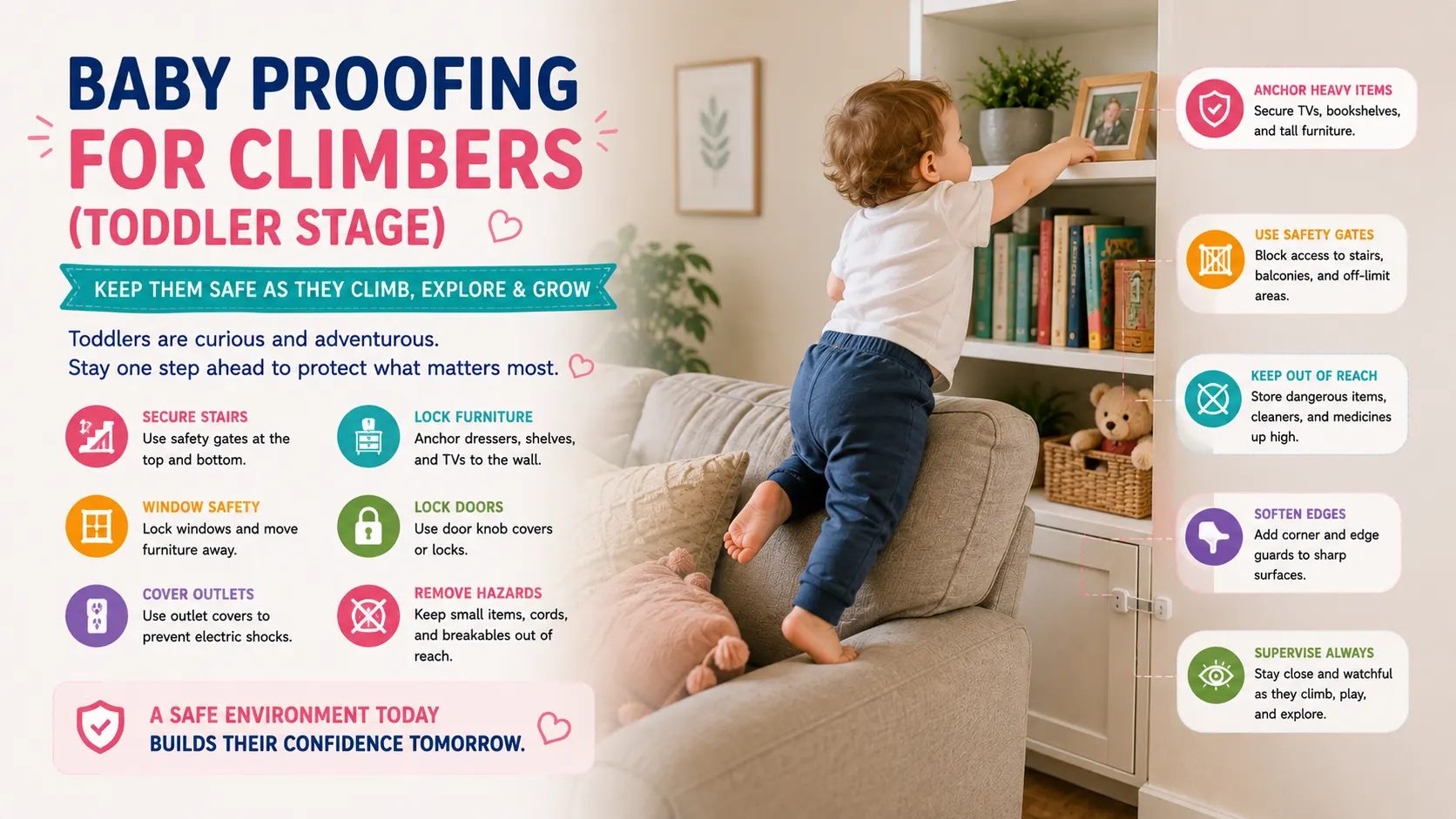
If you do nothing else in this guide, anchor every dresser, bookcase, and tall piece of furniture in every room your toddler accesses — not just the nursery.

The Furniture-as-Ladder Problem

Climbers don’t need a single tall piece of furniture — they’ll chain several together. A low chair pushed toward a counter, a toy box positioned under a windowsill, a stool dragged across the kitchen: all of these turn an otherwise “safe” height into an accessible one.

  • Periodically walk your home looking specifically for furniture combinations that create an accidental staircase — not just individual pieces
  • Move lightweight, easily-dragged furniture (step stools, small chairs, ottomans) away from counters, windows, and other elevated hazards
  • Reassess this regularly, since toddlers actively experiment with new combinations as they grow more capable — what wasn’t climbable last month may be this month

Redirecting Climbing (Instead of Just Blocking It)

Climbing itself is a normal, healthy part of gross motor development at this stage — the goal isn’t to eliminate the urge, it’s to give it a safe outlet so your toddler isn’t only climbing on things that are actually dangerous.

  • A dedicated indoor climbing structure, soft play set, or even a supervised low climbing wall gives a toddler a legitimate, safe place to satisfy the same drive that’s pulling them toward the bookshelf
  • Outdoor climbing equipment appropriate for their age serves the same purpose
  • This doesn’t replace furniture anchoring or the other fixes in this guide — it works alongside them, reducing how often you’re purely in “block and redirect” mode

Reassessing Every Room for Climbing Access

Go room by room with the climbing-specific lens, separate from the reach-based checks done at earlier stages:

  • Kitchen: Stove climbing is a real risk now, not just knob-turning — keep step stools and chairs away from the stove area specifically, and never leave one positioned nearby “just for a minute”
  • Bathroom: A climber can reach the sink, medicine cabinet, and potentially the tub edge unassisted — recheck that medicine storage assumes climbing access, not just standing reach
  • Bedroom/nursery: Any furniture near the crib becomes a climbing-out risk once your toddler can use it as a step — this is often the trigger point for transitioning out of a crib entirely
  • Living room: Bookshelves and media consoles are prime climbing targets specifically because they have built-in “steps” (shelves) — anchoring matters even more here than in rooms with flatter furniture
  • Windows: A climber can reach windowsills using nearby furniture even if the window itself was previously unreachable — recheck furniture placement near every window, not just the ones you addressed at the cruising stage

What Still Works at This Stage

Not everything from earlier baby proofing becomes obsolete — some fixes matter even more now:

  • Furniture and TV anchoring — more important than ever, since climbing puts direct weight and force on furniture in a way earlier stages didn’t
  • Stair gates — still necessary, and worth checking that your toddler can’t climb over or around them now
  • Locked cabinets for chemicals and medication — still essential, though now paired with “assume climbing access” rather than relying on height alone
  • Window guards and stops — still needed, now combined with furniture placement checks specific to climbing

What changes isn’t which categories matter — it’s the assumption underneath them. Nothing on this list can rely on “they can’t reach it” as its only layer of protection anymore.

Continue exploring: browse the full Baby Safety hub.

Frequently Asked

Common Questions

Yes — climbing is a normal part of gross motor development at this stage. The goal of baby proofing here isn't to stop climbing entirely, it's to remove the most dangerous climbing targets and provide safer outlets for the same drive.
Dressers combine two risks at once: their drawers function as built-in steps for climbing, and pulling a drawer open shifts the furniture's center of gravity forward, making it more prone to tipping even independent of a child climbing on it.
No — an anchor prevents the furniture from tipping over, but doesn't prevent a toddler from climbing it. Both matter: anchor to prevent tip-over injury, and address climbing access separately (redirect, remove furniture from key locations) to reduce the climbing itself.
No — height stops being a reliable safety strategy at this stage. A determined climber can often reach anything a piece of furniture can get them to, so relocation should focus on removing climbing access, not just adding height.
Author

Ali

Digital Marketing enthusiast with a passion for SEO, web design, analytics, and creative problem-solving.

Follow Me
Other Articles
Previous

Baby Proofing for Cruisers and New Walkers

Next

Best Baby Gates for Stairs

No Comment! Be the first one.

Leave a Reply Cancel reply

Your email address will not be published. Required fields are marked *

What is Did You Search?

The “Did You Search” website was created for all mothers and families. Just search to find all your needs about your children.

Links

  • about
  • contact
  • privacy policy
  • medical disclaimer
  • sitemap
Copyright 2026 — DidYouSearch. All rights reserved.