Skip to content
DidYouSearch DidYouSearch
  • did you search?
  • Baby Plus+
    • Baby Activities
      • Arts & Crafts
      • Indoor Activities
      • Montessori
      • Music
      • Outdoor Activities
      • Reading
      • Sensory Play
      • Tummy Time
    • Baby Development
      • Brain Development
      • Cognitive Development
      • Emotional Development
      • Fine Motor Skills
      • Growth Milestones
      • Monthly Milestones
      • Motor Skills
      • Physical Development
      • Social Development
      • Speech Development
    • Baby Feeding
      • Allergies
      • Baby Led Weaning
      • Bottle Feeding
      • Breast feeding
        • Breastfeeding Diet
        • Breastfeeding Positions
        • Latch Problems
        • Low Milk Supply
        • Mastitis
        • Pumping Schedule
        • Weaning
      • Burping
      • Cluster Feeding
      • Feeding Schedule
      • Formula Feeding
        • Formula Amount
        • Formula Brands
        • Formula Comparison
        • Formula Preparation
        • Formula Storage
      • Hydration
      • Pumping
      • Solid Foods
    • Baby Gear Reviews
      • Best Baby Carrier
      • Best Baby Monitor
      • Best Baby Strollers
      • Best Bottles
      • Best Breast Pump
      • Best Car Seat
      • Best Cribs
      • Best Diapers
      • Best Formula
      • Best Toys
    • Baby Growth
      • Growth Spurts
      • Height Charts
      • Monthly Growth
      • Percentiles
      • Weight Charts
    • Baby Health
      • Allergies
      • Cold
      • Constipation
      • Cough
      • Diarrhea
      • Ear Infection
      • Fever
      • Flu
      • Pediatric Visits
      • Rashes
      • Teething
      • Vaccines
      • Vomiting
    • Baby Nutrition
      • Dairy
      • Drinks
      • Eggs
      • Fish
      • Fruits
      • Healthy Recipes
      • Meat
      • Snacks
      • Vegetables
      • Vitamins
    • Baby Products
      • Baby Carriers
      • Bassinets
      • Bottles
      • Breast Pumps
      • Car Seats
      • Cribs
      • Diaper Bags
      • High Chairs
      • Monitors
      • Strollers
      • Swings
      • Toys
      • Walkers
    • Baby Recipes
      • BLW Recipes
      • Breakfast
      • Dinner
      • Finger Foods
      • Lunch
      • Purees
      • Snacks
    • Baby Safety
      • Baby Proofing
      • Car Seats
      • Choking Hazards
      • CPR
      • Home Safety
      • Poison Prevention
      • Safe Sleep
      • Sun Protection
      • Water Safety
  • Baby Names
    • Boy Names
    • Girl Names
    • American baby boy names
    • American baby girl names
    • Biblical Names
    • Middle Names
    • Modern Names
    • Short Names
    • Unique Names
    • Unisex Names
  • Recommended
    • Baby Shopping
      • Baby Registry
      • Budget Baby Shopping
      • Hospital Bag
      • Must Have Products
      • Newborn Checklist
      • Nursery Ideas
    • Baby Sleep
      • Bedtime Routine
      • Co Sleeping
      • Crib Safety
      • Nap Schedules
      • Night Wakings
      • Sleep Environment
      • Sleep Products
      • Sleep Regression
      • Sleep Training
      • Wake Windows
      • White Noise
    • Childcare
      • Daycare
      • Babysitters
      • Kindergarten
      • Nannies
      • Preschool
    • Newborn Care
      • Nail Care
      • Baby Hygiene
      • Bathing
      • Crying
      • Diapering
      • Ear Care
      • Eye Care
      • Skin Care
      • Soothing Techniques
      • Temperature
      • Umbilical Cord
    • Special Needs
      • Premature Babies
      • Autism Signs
      • Developmental Delays
      • Down Syndrome
      • NICU
      • Twins
    • Seasonal Baby Care
      • Spring
      • Summer
      • Travel
      • Fall
      • Holidays
      • Winter
  • Parenting
    • Bonding
    • Discipline
    • Emotional Intelligence
    • First Time Parents
    • Gentle Parenting
    • Positive Parenting
    • Routines
    • Single Parents
    • Working Parents
  • Pregnancy
    • Pregnancy Complications
    • Labor & Delivery
    • Postpartum Recovery
    • Pregnancy Exercises
    • Pregnancy Medications
    • Pregnancy Nutrition
    • Pregnancy Sleep
    • Pregnancy Symptoms
    • Pregnancy Tests
    • Pregnancy Vitamins
    • Pregnancy Weeks
  • Toddler
    • Preschool
    • Speech
    • Tantrums
    • Toddler Food
    • Toddler Sleep
    • Behavior
    • Independence
    • Learning
    • Potty Training
  • Traveling with Baby
    • Road Trips
    • Beach
    • Camping
    • Flying
    • Hotels
    • Packing Lists
  • did you search?
  • Baby Plus+
    • Baby Activities
      • Arts & Crafts
      • Indoor Activities
      • Montessori
      • Music
      • Outdoor Activities
      • Reading
      • Sensory Play
      • Tummy Time
    • Baby Development
      • Brain Development
      • Cognitive Development
      • Emotional Development
      • Fine Motor Skills
      • Growth Milestones
      • Monthly Milestones
      • Motor Skills
      • Physical Development
      • Social Development
      • Speech Development
    • Baby Feeding
      • Allergies
      • Baby Led Weaning
      • Bottle Feeding
      • Breast feeding
        • Breastfeeding Diet
        • Breastfeeding Positions
        • Latch Problems
        • Low Milk Supply
        • Mastitis
        • Pumping Schedule
        • Weaning
      • Burping
      • Cluster Feeding
      • Feeding Schedule
      • Formula Feeding
        • Formula Amount
        • Formula Brands
        • Formula Comparison
        • Formula Preparation
        • Formula Storage
      • Hydration
      • Pumping
      • Solid Foods
    • Baby Gear Reviews
      • Best Baby Carrier
      • Best Baby Monitor
      • Best Baby Strollers
      • Best Bottles
      • Best Breast Pump
      • Best Car Seat
      • Best Cribs
      • Best Diapers
      • Best Formula
      • Best Toys
    • Baby Growth
      • Growth Spurts
      • Height Charts
      • Monthly Growth
      • Percentiles
      • Weight Charts
    • Baby Health
      • Allergies
      • Cold
      • Constipation
      • Cough
      • Diarrhea
      • Ear Infection
      • Fever
      • Flu
      • Pediatric Visits
      • Rashes
      • Teething
      • Vaccines
      • Vomiting
    • Baby Nutrition
      • Dairy
      • Drinks
      • Eggs
      • Fish
      • Fruits
      • Healthy Recipes
      • Meat
      • Snacks
      • Vegetables
      • Vitamins
    • Baby Products
      • Baby Carriers
      • Bassinets
      • Bottles
      • Breast Pumps
      • Car Seats
      • Cribs
      • Diaper Bags
      • High Chairs
      • Monitors
      • Strollers
      • Swings
      • Toys
      • Walkers
    • Baby Recipes
      • BLW Recipes
      • Breakfast
      • Dinner
      • Finger Foods
      • Lunch
      • Purees
      • Snacks
    • Baby Safety
      • Baby Proofing
      • Car Seats
      • Choking Hazards
      • CPR
      • Home Safety
      • Poison Prevention
      • Safe Sleep
      • Sun Protection
      • Water Safety
  • Baby Names
    • Boy Names
    • Girl Names
    • American baby boy names
    • American baby girl names
    • Biblical Names
    • Middle Names
    • Modern Names
    • Short Names
    • Unique Names
    • Unisex Names
  • Recommended
    • Baby Shopping
      • Baby Registry
      • Budget Baby Shopping
      • Hospital Bag
      • Must Have Products
      • Newborn Checklist
      • Nursery Ideas
    • Baby Sleep
      • Bedtime Routine
      • Co Sleeping
      • Crib Safety
      • Nap Schedules
      • Night Wakings
      • Sleep Environment
      • Sleep Products
      • Sleep Regression
      • Sleep Training
      • Wake Windows
      • White Noise
    • Childcare
      • Daycare
      • Babysitters
      • Kindergarten
      • Nannies
      • Preschool
    • Newborn Care
      • Nail Care
      • Baby Hygiene
      • Bathing
      • Crying
      • Diapering
      • Ear Care
      • Eye Care
      • Skin Care
      • Soothing Techniques
      • Temperature
      • Umbilical Cord
    • Special Needs
      • Premature Babies
      • Autism Signs
      • Developmental Delays
      • Down Syndrome
      • NICU
      • Twins
    • Seasonal Baby Care
      • Spring
      • Summer
      • Travel
      • Fall
      • Holidays
      • Winter
  • Parenting
    • Bonding
    • Discipline
    • Emotional Intelligence
    • First Time Parents
    • Gentle Parenting
    • Positive Parenting
    • Routines
    • Single Parents
    • Working Parents
  • Pregnancy
    • Pregnancy Complications
    • Labor & Delivery
    • Postpartum Recovery
    • Pregnancy Exercises
    • Pregnancy Medications
    • Pregnancy Nutrition
    • Pregnancy Sleep
    • Pregnancy Symptoms
    • Pregnancy Tests
    • Pregnancy Vitamins
    • Pregnancy Weeks
  • Toddler
    • Preschool
    • Speech
    • Tantrums
    • Toddler Food
    • Toddler Sleep
    • Behavior
    • Independence
    • Learning
    • Potty Training
  • Traveling with Baby
    • Road Trips
    • Beach
    • Camping
    • Flying
    • Hotels
    • Packing Lists
Close

Search

Home/Baby Safety/Baby Proofing/Choking Hazards Checklist for Babies at Home
Baby ProofingBaby Safety

Choking Hazards Checklist for Babies at Home

By Ali
August 3, 2026 6 Min Read
0

Babies explore the world by mouth, which means almost anything small enough ends up there sooner or later. <cite index=”22-2″>Babies and young children are at especially high risk of choking because their airways are roughly the diameter of a drinking straw and easily obstructed, they aren’t yet able to chew food thoroughly, and their gag reflex is still developing and may not reliably stop an object before it goes too far.</cite> This checklist covers household objects, food, and the hazards that hide in places most parents don’t think to check.

The Size Test: How to Tell If Something Is a Choking Hazard

Contents hide
1 The Size Test: How to Tell If Something Is a Choking Hazard
2 Household Object Checklist
3 Food Choking Hazard Checklist
4 Crib, Highchair, and Furniture Checklist
5 Where Choking Hazards Hide (Easy-to-Miss Spots)
6 Building a Weekly Floor-Check Habit
7 What to Do If a Baby Is Choking
8 The Bottom Line
9 Frequently Asked
10 Common Questions

Two rules of thumb are commonly used, and it helps to know both:

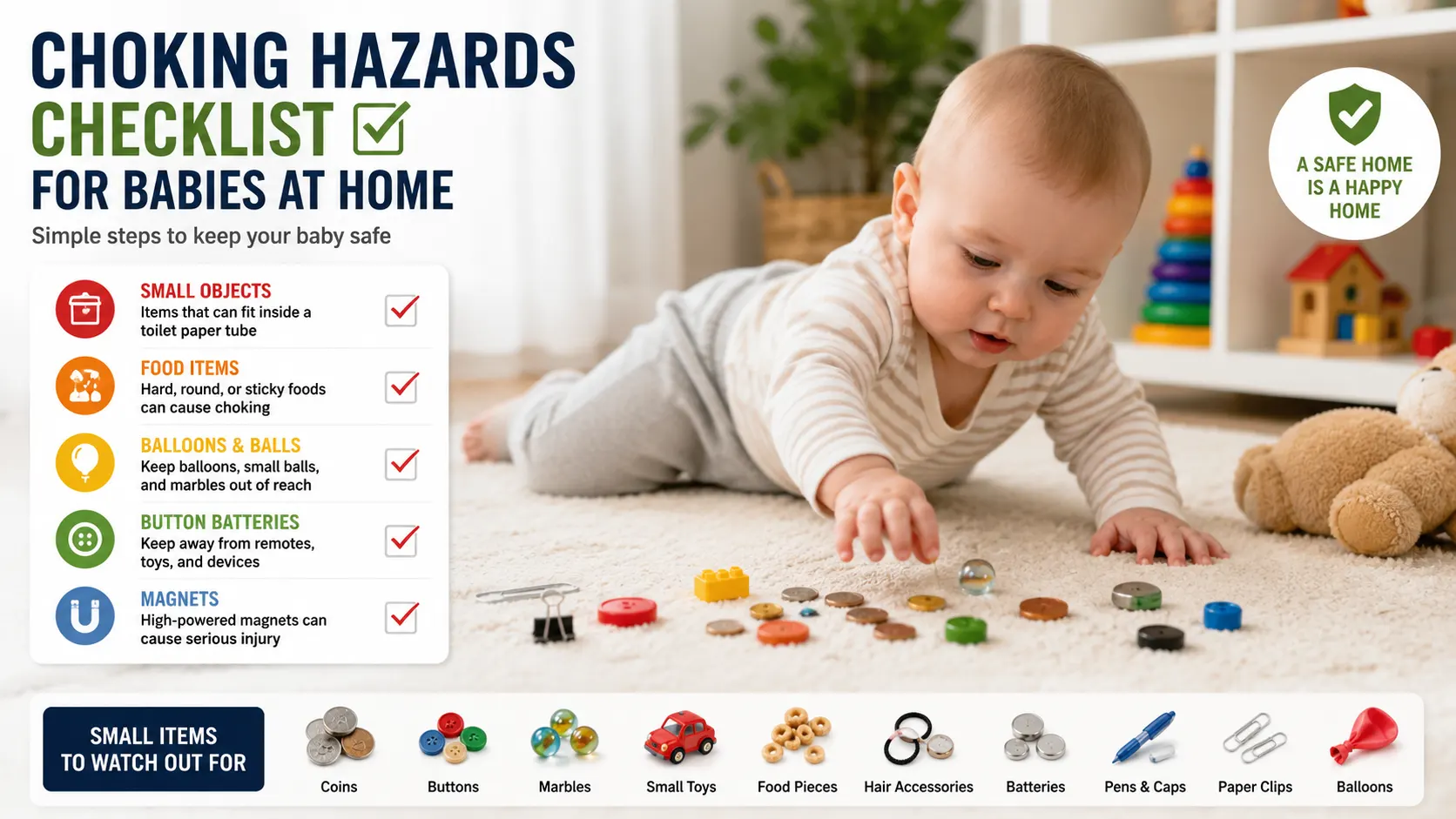
  • The toilet paper tube test: <cite index=”23-1″>if an object can fit inside a toilet paper tube, it’s too small for a baby or young child.</cite> This is the more standardized test, since a toilet paper tube’s diameter is roughly consistent (about 1.75 inches / 4.5 cm).
  • The pinky rule: if something is smaller than the width of your pinky finger, treat it as a hazard. This is a faster, use-anywhere check, but it’s slightly less reliable since pinky width varies from person to person — use the toilet paper tube test when you want a more precise answer.

Household Object Checklist

  • Button and coin batteries — <cite index=”22-3″>small, shiny batteries found in remote controls, key fobs, greeting cards, and some toys are extremely dangerous if swallowed, since they can lodge in the esophagus and cause severe chemical burns within as little as two hours.</cite> Keep battery compartments secured with screws where possible, and store spare batteries completely out of reach.
  • Small magnets — <cite index=”22-4″>small, powerful magnets, often found in desk toys or construction sets meant for older children, can cause serious internal injury</cite> if more than one is swallowed, since they can attract to each other through tissue and cause blockages or perforation.
  • Balloons — deflated or popped balloon pieces are especially dangerous, since latex conforms to the shape of the airway and is difficult to dislodge once inhaled; dispose of popped balloons immediately and keep uninflated ones stored well out of reach.
  • Bottle caps and container lids — <cite index=”22-1″>tops from water bottles, soda bottles, toothpaste, and art supplies are commonly left lying around and their cylindrical shape makes them a choking risk.</cite>
  • Small toy parts — <cite index=”22-2″>toys made for older children often contain small parts unsafe for babies, including building blocks, small doll accessories, game pieces, and marbles; always check age recommendations and inspect toys regularly for loose or broken pieces.</cite>
  • Coins — commonly found in junk drawers, couch cushions, and pockets; check these spots regularly.
  • Pen caps — <cite index=”27-1″>many pen caps have a small integrated hole specifically designed to allow some airflow if swallowed, but not all pen caps include this feature, so don’t assume any pen cap is automatically safer.</cite>
  • Jewelry and small hair accessories — earrings backs, small hair ties, and beads are easy to miss on floors or nightstands.
  • Cotton balls and makeup sponges — soft-looking but compress enough to block an airway; store with cosmetics out of baby’s reach, not in an open bathroom basket.
  • Pet food, treats, and toys — pet kibble and small pet toys are frequently at floor level and easy for a crawling baby to reach.

Food Choking Hazard Checklist

<cite index=”23-2″>Certain foods are not recommended for children under 4, including chunks of hard fruit or vegetables, grapes, hot dogs, sausages, popcorn, chunks of cheese or meat, round candies, and nuts</cite> — unless modified for safety (see prep tips below).

Foods with high-risk textures tend to share specific qualities: <cite index=”24-1″>firm, round, rubbery, slippery, small, springy, sticky, or tapered</cite>. Common examples include:

  • Whole grapes, cherry tomatoes, and similar round fruits
  • Hot dogs and sausages
  • Nuts and seeds
  • Popcorn
  • Hard candies and taffy
  • Large spoonfuls of peanut butter
  • Raw, hard vegetable chunks
  • String cheese and large cheese chunks

Safe prep modifications rather than full avoidance, once your baby is eating solids:

  • Quarter grapes and cherry tomatoes lengthwise, and consider removing grape skins for younger babies
  • Cut hot dogs lengthwise into thin strips rather than round coins
  • Cook vegetables until soft rather than serving them raw and firm
  • Spread nut butters thinly rather than in a thick glob, and avoid serving to a baby who hasn’t safely tried it before given allergy considerations
  • Cut cheese and meat into small, manageable pieces rather than large chunks or strips a baby might bite off more than they can handle

Crib, Highchair, and Furniture Checklist

  • Crib slats should be no more than <cite index=”23-3″>2-3/8 inches apart, with the mattress fitting closely against all sides.</cite>
  • Remove crib gyms and hanging toys <cite index=”23-1″>once your baby can get up on hands and knees</cite>, since these become a strangulation and reach-based choking risk at that stage.
  • Use a highchair with a secure locking tray and a belt with a crotch strap, and always stay near and watch your baby while they’re in it, since choking risk during feeding is highest when unsupervised.
  • Store toys in open baskets or boxes without lids rather than latched or heavy-lidded containers, which can also present their own hazard if a lid falls.

Where Choking Hazards Hide (Easy-to-Miss Spots)

  • Between and under couch cushions — check regularly, especially after guests visit
  • Under furniture and rugs
  • The bottom of bags, purses, and diaper bags — coins, medication, and small items collect here
  • The “junk drawer” — often full of pen caps, rubber bands, coins, and loose batteries
  • Older siblings’ toy bins and backpacks — toys intended for an older child’s age group are one of the most common sources of choking hazards in homes with multiple kids
  • The car — check car seats, cup holders, and floor mats regularly, not just the house
  • Holiday and party items — balloons, small decorations, and party favors are a seasonal spike in risk

Building a Weekly Floor-Check Habit

  • Do a quick floor-level scan of every room your baby has access to, ideally weekly and always after guests or older children have been over.
  • Check pockets before laundry, since coins and small items often end up in a pocket and then the wash, and can end up back on the floor when clothes are folded.
  • Do a “reset scan” after any activity involving small parts (older sibling’s craft project, a board game, jewelry-making) before your baby re-enters the room.
  • Keep a small checklist by the door for quick pre-visit scans of other homes (grandparents, playdates) where the same weekly habit isn’t already in place.

What to Do If a Baby Is Choking

This checklist is about prevention, but it’s worth knowing the basics of response as well:

  1. If your baby is coughing forcefully, let them keep coughing — this is often the airway working to clear itself.
  2. If your baby cannot cough, cry, or breathe, call emergency services immediately and begin infant-specific back blows and chest thrusts if you’re trained to do so.
  3. Take an infant CPR and choking response class before you need it — hands-on training is significantly more reliable in an emergency than reading steps for the first time under stress.
  4. <cite index=”23-4″>If you suspect a child has swallowed a battery, call the 24-hour National Battery Ingestion Hotline at 800-498-8666 immediately, or go to an emergency room right away</cite> — this applies specifically to battery ingestion, which needs faster and different action than a typical choking response.

If you’re concerned about choking risk in your specific situation, an infant CPR class through the Red Cross, a hospital, or a local community class is one of the most useful things a new parent can do.

The Bottom Line

Most choking hazards fall into a few predictable categories — small toys and toy parts, button batteries, balloons, bottle caps, and specific high-risk foods — but the ones that cause the most trouble are usually the ones hiding in a spot you don’t check regularly, like couch cushions, a junk drawer, or an older sibling’s toy bin. A weekly floor scan and the toilet paper tube test cover most of what this checklist addresses, and an infant CPR class is worth doing before you ever need it.

Continue exploring: browse the full Baby Safety hub.

Frequently Asked

Common Questions

Use the toilet paper tube test — if an object fits entirely inside a toilet paper tube, it's a choking risk for a baby. The "pinky rule" (smaller than your pinky finger) is a faster rough check, but less precise since pinky width varies.
Yes — button and coin batteries can lodge in the esophagus and cause severe chemical burns within a couple of hours if swallowed, which is a faster and more severe injury mechanism than most other choking hazards. If you suspect a battery has been swallowed, call the National Battery Ingestion Hotline or go to an emergency room immediately rather than waiting to see if symptoms appear.
These foods aren't recommended in their standard form for children under 4. They can often be introduced earlier if modified for safety — for example, grapes quartered lengthwise or hot dogs cut into thin strips rather than round coins.
A weekly floor-level scan is a reasonable baseline, with extra checks after guests visit, after older children's activities involving small parts, and any time your baby gains a new mobility skill that gives them access to a previously out-of-reach area.
Author

Ali

Digital Marketing enthusiast with a passion for SEO, web design, analytics, and creative problem-solving.

Follow Me
Other Articles
Previous

Baby Proofing Electrical Outlets and Cords

Next

Baby Proofing for Pets and Babies Together

No Comment! Be the first one.

Leave a Reply Cancel reply

Your email address will not be published. Required fields are marked *

What is Did You Search?

The “Did You Search” website was created for all mothers and families. Just search to find all your needs about your children.

Links

  • about
  • contact
  • privacy policy
  • medical disclaimer
  • sitemap
Copyright 2026 — DidYouSearch. All rights reserved.