
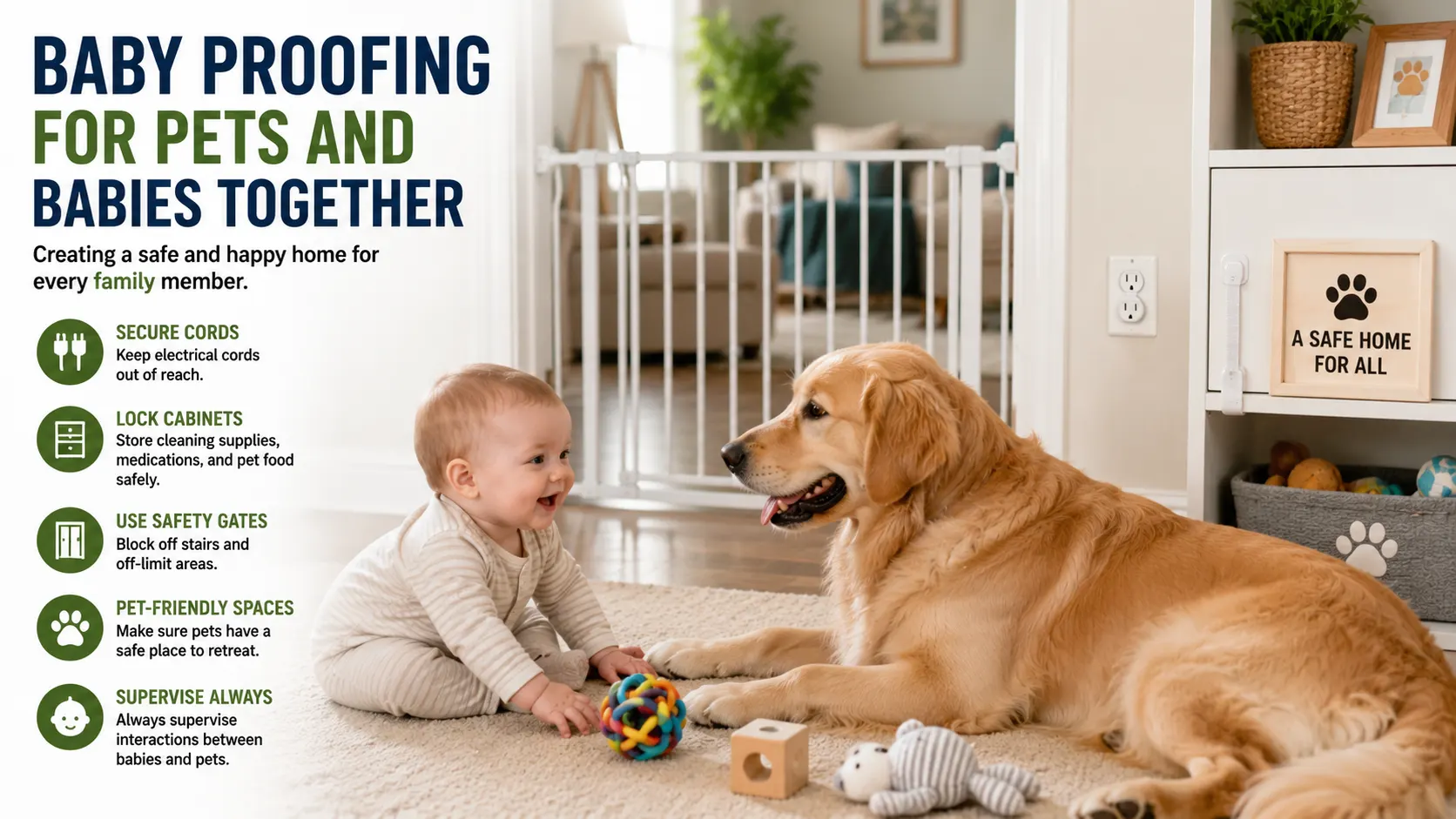

Most pet-and-baby guides cover one piece of this — either the physical safety checklist (gates, food bowls, litter boxes) or the introduction and bonding side — rarely both. This guide combines the physical safety setup, the introduction timeline, and something almost no guide covers clearly: the pet body language signals that tell you a interaction needs to end before anything happens.
The One Rule That Matters Most
Never leave a baby and a pet alone together unsupervised, regardless of how gentle or well-trained the pet is. This isn’t about distrust of your specific pet — even the calmest, most baby-experienced animal can react unpredictably to a sudden grab, a loud cry, or an unfamiliar movement, and a baby has no ability to read or respond to a pet’s warning signals. Every other tip in this guide supports that one rule; none of them replace it.
Before Baby Comes Home: The Introduction Timeline
- Start scent introductions early. Before baby arrives, bring home a blanket or piece of clothing with baby’s scent (from the hospital, if possible) and let your pet investigate it calmly, away from any pressure to interact further.
- Set realistic expectations for acceptance. Full acceptance of a new baby can take a couple of months for many pets, not a single introduction — patience matters more than a “successful” first meeting.
- Do the first in-person introduction on neutral ground if possible, especially for dogs — a park or outdoor space away from the pet’s home territory, before bringing baby inside, can reduce territorial reactivity.
- Keep the first indoor introduction calm and low-key — no crowd of excited visitors at the same time, and let your pet approach at their own pace rather than forcing proximity.
- Give your pet a dedicated “safe zone” they can retreat to that’s off-limits to baby, whether that’s a crate, a high perch for a cat, or a specific room — this gives them somewhere to go when they’ve had enough, which reduces stress-driven reactions.
Warning Signs a Pet Needs Space (What Most Guides Skip)
Learning to read stress signals — in dogs and cats — is one of the most protective things you can do, since most incidents are preceded by warning signs that go unnoticed.
In dogs:
- Stiff, frozen body posture
- Showing the whites of their eyes (“whale eye”)
- Lip licking or yawning outside of normal contexts
- Ears pinned back or excessive panting when not hot or active
- Turning their head away repeatedly, trying to move away
- Low growling — never punish this specifically, since it’s a warning signal; instead, immediately separate the dog and baby and give the dog space
In cats:
- Flattened ears or a swishing, thumping tail
- Hissing or a low growl
- Dilated pupils combined with a tense body
- Retreating to a high spot or hiding repeatedly when baby is nearby
- Sudden stillness followed by a fast movement away
If you see any of these signals, calmly separate the pet and baby immediately rather than waiting to see what happens next — these are early signals, not guarantees, but they’re the best early information you’ll get.
Physical Safety Checklist for Pet Items
- Pet food and water bowls — place in a spot inaccessible to a crawling baby, such as behind a low pet gate with a cutout, since spilled water is a slip hazard and dry kibble is a choking hazard for a baby who mouths things.
- Litter boxes — keep fully inaccessible behind a gate with a small pet-only opening, both for choking-hazard-sized litter and for hygiene, since cat litter can carry parasites harmful if ingested.
- Small pet toys and chews — rawhide pieces, small squeaky toys, and dental chews are frequently within a toilet-paper-tube-test size range and end up on the floor within a baby’s reach.
- Pet medications — store exactly like human medications, in a latched cabinet out of reach, not on a low shelf or counter.
- Pet beds and crates — position so a crawling baby can’t easily reach into a crate while a pet is resting inside, which is a common trigger for a startled, defensive reaction.
- Leashes, collars with tags, and small grooming tools — check for loose small parts (bells, tags) that could detach and become a choking hazard.
Setting Up Zones: Baby-Free and Pet-Free Spaces
- Use gates strategically, not just at stairs — a gate at a nursery doorway or a pet’s main resting area creates a physical boundary that doesn’t rely on active supervision alone.
- Consider a crate as a genuine safe space for a dog, not a punishment tool — a dog that’s comfortable and relaxed in a crate has somewhere reliable to decompress.
- Give cats vertical space — shelves, cat trees, or a high perch let a cat opt out of interaction entirely once baby becomes mobile, which reduces forced-proximity stress for both.
- Keep baby’s play area and a pet’s core territory (bed, food, litter box) physically separate, even in a smaller home, so neither has to compete for the same space.
Ongoing Safety as Baby Becomes Mobile
- Teach “gentle hands” early and consistently, even before baby fully understands — narrating “gentle” while guiding a pat helps build the habit over time.
- Never let baby pull ears, tails, or fur, and intervene immediately and calmly if it happens, rather than assuming the pet will simply tolerate it.
- Re-evaluate supervision needs at each new mobility milestone — a newly crawling or newly walking baby can suddenly reach a pet’s space (or vice versa) that wasn’t accessible before.
- Watch feeding time closely — many pets, even generally tolerant ones, are more reactive around food, so keep baby out of the immediate area during pet mealtimes.
A Practical Tool: Repurposing a Baby Monitor for Pets
If you’re using a video monitor for baby, a wifi-enabled model that supports multiple cameras can double as a way to check on a pet in another room — useful for watching a dog’s separation anxiety during the adjustment period, or simply confirming a cat has settled somewhere calm rather than lingering near baby’s space.
The Bottom Line
Keeping a pet and a baby safe together comes down to three things working at once: physical safety setup for pet-specific items, a patient introduction process rather than a single “meet the baby” moment, and learning to read your pet’s stress signals before anything escalates. None of these replace the core rule — supervised interaction only, every time, no exceptions for how gentle or trustworthy the pet seems.
Continue exploring: browse the full Baby Safety hub.
Frequently Asked
Common Questions