Skip to content
DidYouSearch DidYouSearch
  • did you search?
  • Baby Plus+
    • Baby Activities
      • Arts & Crafts
      • Indoor Activities
      • Montessori
      • Music
      • Outdoor Activities
      • Reading
      • Sensory Play
      • Tummy Time
    • Baby Development
      • Brain Development
      • Cognitive Development
      • Emotional Development
      • Fine Motor Skills
      • Growth Milestones
      • Monthly Milestones
      • Motor Skills
      • Physical Development
      • Social Development
      • Speech Development
    • Baby Feeding
      • Allergies
      • Baby Led Weaning
      • Bottle Feeding
      • Breast feeding
        • Breastfeeding Diet
        • Breastfeeding Positions
        • Latch Problems
        • Low Milk Supply
        • Mastitis
        • Pumping Schedule
        • Weaning
      • Burping
      • Cluster Feeding
      • Feeding Schedule
      • Formula Feeding
        • Formula Amount
        • Formula Brands
        • Formula Comparison
        • Formula Preparation
        • Formula Storage
      • Hydration
      • Pumping
      • Solid Foods
    • Baby Gear Reviews
      • Best Baby Carrier
      • Best Baby Monitor
      • Best Baby Strollers
      • Best Bottles
      • Best Breast Pump
      • Best Car Seat
      • Best Cribs
      • Best Diapers
      • Best Formula
      • Best Toys
    • Baby Growth
      • Growth Spurts
      • Height Charts
      • Monthly Growth
      • Percentiles
      • Weight Charts
    • Baby Health
      • Allergies
      • Cold
      • Constipation
      • Cough
      • Diarrhea
      • Ear Infection
      • Fever
      • Flu
      • Pediatric Visits
      • Rashes
      • Teething
      • Vaccines
      • Vomiting
    • Baby Nutrition
      • Dairy
      • Drinks
      • Eggs
      • Fish
      • Fruits
      • Healthy Recipes
      • Meat
      • Snacks
      • Vegetables
      • Vitamins
    • Baby Products
      • Baby Carriers
      • Bassinets
      • Bottles
      • Breast Pumps
      • Car Seats
      • Cribs
      • Diaper Bags
      • High Chairs
      • Monitors
      • Strollers
      • Swings
      • Toys
      • Walkers
    • Baby Recipes
      • BLW Recipes
      • Breakfast
      • Dinner
      • Finger Foods
      • Lunch
      • Purees
      • Snacks
    • Baby Safety
      • Baby Proofing
      • Car Seats
      • Choking Hazards
      • CPR
      • Home Safety
      • Poison Prevention
      • Safe Sleep
      • Sun Protection
      • Water Safety
  • Baby Names
    • Boy Names
    • Girl Names
    • American baby boy names
    • American baby girl names
    • Biblical Names
    • Middle Names
    • Modern Names
    • Short Names
    • Unique Names
    • Unisex Names
  • Recommended
    • Baby Shopping
      • Baby Registry
      • Budget Baby Shopping
      • Hospital Bag
      • Must Have Products
      • Newborn Checklist
      • Nursery Ideas
    • Baby Sleep
      • Bedtime Routine
      • Co Sleeping
      • Crib Safety
      • Nap Schedules
      • Night Wakings
      • Sleep Environment
      • Sleep Products
      • Sleep Regression
      • Sleep Training
      • Wake Windows
      • White Noise
    • Childcare
      • Daycare
      • Babysitters
      • Kindergarten
      • Nannies
      • Preschool
    • Newborn Care
      • Nail Care
      • Baby Hygiene
      • Bathing
      • Crying
      • Diapering
      • Ear Care
      • Eye Care
      • Skin Care
      • Soothing Techniques
      • Temperature
      • Umbilical Cord
    • Special Needs
      • Premature Babies
      • Autism Signs
      • Developmental Delays
      • Down Syndrome
      • NICU
      • Twins
    • Seasonal Baby Care
      • Spring
      • Summer
      • Travel
      • Fall
      • Holidays
      • Winter
  • Parenting
    • Bonding
    • Discipline
    • Emotional Intelligence
    • First Time Parents
    • Gentle Parenting
    • Positive Parenting
    • Routines
    • Single Parents
    • Working Parents
  • Pregnancy
    • Pregnancy Complications
    • Labor & Delivery
    • Postpartum Recovery
    • Pregnancy Exercises
    • Pregnancy Medications
    • Pregnancy Nutrition
    • Pregnancy Sleep
    • Pregnancy Symptoms
    • Pregnancy Tests
    • Pregnancy Vitamins
    • Pregnancy Weeks
  • Toddler
    • Preschool
    • Speech
    • Tantrums
    • Toddler Food
    • Toddler Sleep
    • Behavior
    • Independence
    • Learning
    • Potty Training
  • Traveling with Baby
    • Road Trips
    • Beach
    • Camping
    • Flying
    • Hotels
    • Packing Lists
  • did you search?
  • Baby Plus+
    • Baby Activities
      • Arts & Crafts
      • Indoor Activities
      • Montessori
      • Music
      • Outdoor Activities
      • Reading
      • Sensory Play
      • Tummy Time
    • Baby Development
      • Brain Development
      • Cognitive Development
      • Emotional Development
      • Fine Motor Skills
      • Growth Milestones
      • Monthly Milestones
      • Motor Skills
      • Physical Development
      • Social Development
      • Speech Development
    • Baby Feeding
      • Allergies
      • Baby Led Weaning
      • Bottle Feeding
      • Breast feeding
        • Breastfeeding Diet
        • Breastfeeding Positions
        • Latch Problems
        • Low Milk Supply
        • Mastitis
        • Pumping Schedule
        • Weaning
      • Burping
      • Cluster Feeding
      • Feeding Schedule
      • Formula Feeding
        • Formula Amount
        • Formula Brands
        • Formula Comparison
        • Formula Preparation
        • Formula Storage
      • Hydration
      • Pumping
      • Solid Foods
    • Baby Gear Reviews
      • Best Baby Carrier
      • Best Baby Monitor
      • Best Baby Strollers
      • Best Bottles
      • Best Breast Pump
      • Best Car Seat
      • Best Cribs
      • Best Diapers
      • Best Formula
      • Best Toys
    • Baby Growth
      • Growth Spurts
      • Height Charts
      • Monthly Growth
      • Percentiles
      • Weight Charts
    • Baby Health
      • Allergies
      • Cold
      • Constipation
      • Cough
      • Diarrhea
      • Ear Infection
      • Fever
      • Flu
      • Pediatric Visits
      • Rashes
      • Teething
      • Vaccines
      • Vomiting
    • Baby Nutrition
      • Dairy
      • Drinks
      • Eggs
      • Fish
      • Fruits
      • Healthy Recipes
      • Meat
      • Snacks
      • Vegetables
      • Vitamins
    • Baby Products
      • Baby Carriers
      • Bassinets
      • Bottles
      • Breast Pumps
      • Car Seats
      • Cribs
      • Diaper Bags
      • High Chairs
      • Monitors
      • Strollers
      • Swings
      • Toys
      • Walkers
    • Baby Recipes
      • BLW Recipes
      • Breakfast
      • Dinner
      • Finger Foods
      • Lunch
      • Purees
      • Snacks
    • Baby Safety
      • Baby Proofing
      • Car Seats
      • Choking Hazards
      • CPR
      • Home Safety
      • Poison Prevention
      • Safe Sleep
      • Sun Protection
      • Water Safety
  • Baby Names
    • Boy Names
    • Girl Names
    • American baby boy names
    • American baby girl names
    • Biblical Names
    • Middle Names
    • Modern Names
    • Short Names
    • Unique Names
    • Unisex Names
  • Recommended
    • Baby Shopping
      • Baby Registry
      • Budget Baby Shopping
      • Hospital Bag
      • Must Have Products
      • Newborn Checklist
      • Nursery Ideas
    • Baby Sleep
      • Bedtime Routine
      • Co Sleeping
      • Crib Safety
      • Nap Schedules
      • Night Wakings
      • Sleep Environment
      • Sleep Products
      • Sleep Regression
      • Sleep Training
      • Wake Windows
      • White Noise
    • Childcare
      • Daycare
      • Babysitters
      • Kindergarten
      • Nannies
      • Preschool
    • Newborn Care
      • Nail Care
      • Baby Hygiene
      • Bathing
      • Crying
      • Diapering
      • Ear Care
      • Eye Care
      • Skin Care
      • Soothing Techniques
      • Temperature
      • Umbilical Cord
    • Special Needs
      • Premature Babies
      • Autism Signs
      • Developmental Delays
      • Down Syndrome
      • NICU
      • Twins
    • Seasonal Baby Care
      • Spring
      • Summer
      • Travel
      • Fall
      • Holidays
      • Winter
  • Parenting
    • Bonding
    • Discipline
    • Emotional Intelligence
    • First Time Parents
    • Gentle Parenting
    • Positive Parenting
    • Routines
    • Single Parents
    • Working Parents
  • Pregnancy
    • Pregnancy Complications
    • Labor & Delivery
    • Postpartum Recovery
    • Pregnancy Exercises
    • Pregnancy Medications
    • Pregnancy Nutrition
    • Pregnancy Sleep
    • Pregnancy Symptoms
    • Pregnancy Tests
    • Pregnancy Vitamins
    • Pregnancy Weeks
  • Toddler
    • Preschool
    • Speech
    • Tantrums
    • Toddler Food
    • Toddler Sleep
    • Behavior
    • Independence
    • Learning
    • Potty Training
  • Traveling with Baby
    • Road Trips
    • Beach
    • Camping
    • Flying
    • Hotels
    • Packing Lists
Close

Search

Home/Baby Activities/Indoor Activities/Indoor Sensory Games
Indoor Activities

Indoor Sensory Games

By DrAdam
August 11, 2026 5 Min Read
0

Indoor sensory games turn everyday materials into powerful tools for learning and calm. Parents searching for “indoor sensory activities,” “easy sensory play ideas for toddlers,” or “sensory games at home” usually want something quick to set up, low-cost, and genuinely helpful for development. These activities stimulate touch, sight, sound, smell, and sometimes movement or balance—building brain connections while keeping kids happily occupied on rainy days or during long indoor stretches.

Sensory play is not just messy fun. It supports fine and gross motor skills, language development, problem-solving, emotional regulation, and independent play. Many families notice that regular short sessions of sensory games can improve mood and reduce anxiety for both children and adults.

Why Indoor Sensory Games Matter

Contents hide
1 Why Indoor Sensory Games Matter
2 Easy Indoor Sensory Games Using Household Items
3 Tips for Success and Managing the Mess
4 Making Sensory Play Part of Your Routine
5 FAQ
5.1 What are the best indoor sensory activities for toddlers?
5.2 How do I keep sensory play from getting too messy?
5.3 Are sensory games beneficial for babies?
5.4 What household items work well for sensory bins?
5.5 How often should we do indoor sensory games?

When children scoop rice, squeeze playdough, or explore different textures, they strengthen neural pathways that help them process the world. These experiences also teach cause and effect, build vocabulary (“squishy,” “crunchy,” “cold”), and offer a natural way to practice self-control. For sensory-seeking or sensory-sensitive kids, well-chosen indoor sensory games can provide the input they need in a safe, contained setting.

The best part? You rarely need specialty products. Most high-value activities use items already in your kitchen or laundry room.

Easy Indoor Sensory Games Using Household Items

Here are practical ideas that rank among the most popular and effective indoor sensory activities.

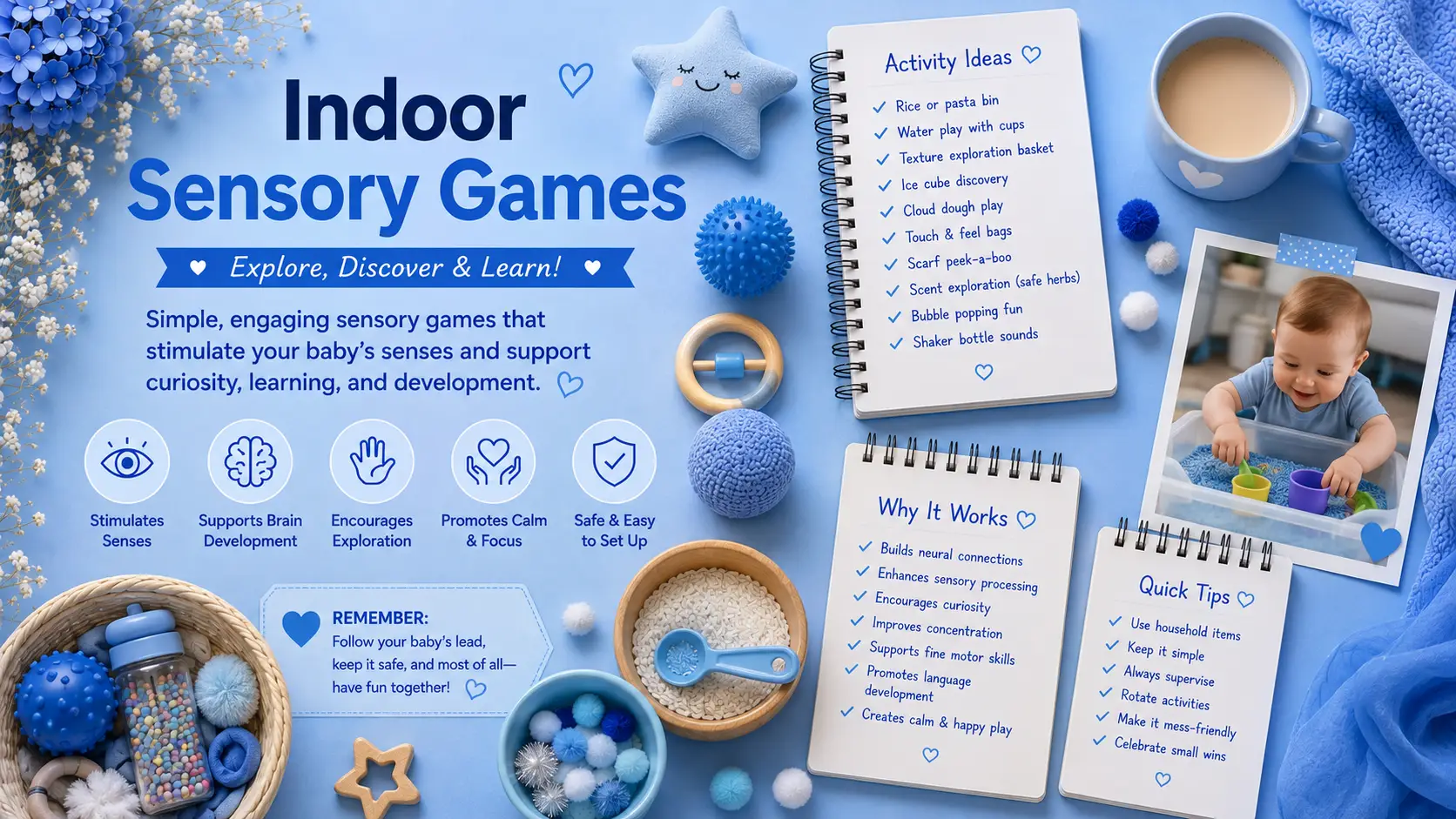
Sensory Bins A shallow plastic bin or large mixing bowl filled with dry materials is the classic starting point. Popular fillers include dry rice, dried beans, oats, cornmeal, or pasta. Add scoops, measuring cups, small toys, or cookie cutters. Toddlers love burying and discovering objects. For a lower-mess option, try a rice bin on a tray or towel. Water play works too—simply add a few drops of food coloring, floating toys, and cups for pouring practice. Always supervise closely, especially with younger children who may still mouth items.

Playdough and Cloud Dough Homemade or store-bought playdough offers excellent tactile resistance that strengthens hand muscles. Cloud dough (flour mixed with a little oil or conditioner) feels soft and moldable. Add natural scents like lavender or citrus for extra sensory interest. These materials encourage open-ended creativity and are easy to contain on a tray or mat.

Sensory Bags and Bottles For nearly mess-free options, fill clear zip-top bags with hair gel, water, or oil plus glitter, beads, or small toys, then seal tightly with tape. Kids can squish and press without spills. Sensory bottles—plastic bottles filled with water, glitter, oil, or small objects—provide visual tracking and calming focus. These are especially useful for younger babies or children who need regulated input.

Texture and Messy Play Shaving cream on a tray invites finger drawing and mixing colors. Bubble foam (dish soap whipped with a bit of water) creates mountains of soft bubbles. Oobleck (cornstarch and water) shifts between solid and liquid, sparking curiosity. For taste-safe versions with babies and young toddlers, try yogurt mixed with food coloring or cooked spaghetti dyed with natural colors.

Movement-Based Sensory Games Not all sensory play is seated. Build a pillow mountain for crashing and jumping (deep pressure input). Create a simple tunnel with chairs and a blanket. Animal walks, blanket swings (with careful adult support), or pushing a laundry basket filled with toys deliver proprioceptive feedback that many children crave. These activities pair well with quieter tactile play for a balanced sensory “diet.”

Tips for Success and Managing the Mess

Start small. A 10–15 minute session is often enough. Place activities on a washable mat, tray, or in the bathtub for easier cleanup. Set clear boundaries: “The rice stays in the bin.” Many children learn these rules quickly when they are consistent and calm.

Rotate materials to keep interest high. Store dry fillers in sealed containers so bins can be reused for months. Involve your child in setup and cleanup—this builds responsibility and extends the learning.

Always match the activity to your child’s age and stage. Babies benefit from supervised exploration of safe textures and sounds. Toddlers thrive with scooping and pouring. Preschoolers can handle more complex themes or multi-step games.

Making Sensory Play Part of Your Routine

Indoor sensory games work best when they become a regular, low-pressure part of the day rather than a special event. Keep a few materials accessible so you can offer them when energy is high or when everyone needs a reset. Participate sometimes—your calm presence models exploration and strengthens connection.

These activities adapt easily for different needs. Children who seek intense input may prefer crashing into pillows or heavy work. Those who are more sensitive often prefer controlled options like sealed sensory bags or quiet sound bottles.

With a handful of simple materials and a little creativity, indoor sensory games deliver meaningful developmental benefits while filling the day with curiosity and calm. They prove that rich learning does not require elaborate setups or expensive toys—just time, attention, and the willingness to explore alongside your child.

FAQ

What are the best indoor sensory activities for toddlers?

Sensory bins with rice or oats, playdough, water play with cups, and simple texture bags rank among the most popular and effective. They support fine motor skills, language, and independent play while remaining relatively easy to manage.

How do I keep sensory play from getting too messy?

Use trays, mats, or the bathtub as containment. Choose lower-mess options like sealed sensory bags or dry bins first. Teach clear rules about keeping materials in the designated space, and involve children in cleanup.

Are sensory games beneficial for babies?

Yes. Supervised activities such as exploring different safe textures, sensory bottles, or gentle water play on a tray help babies process sensory information and support early motor and cognitive development. Always prioritize safety and avoid small items that could be choking hazards.

What household items work well for sensory bins?

Dry rice, beans, pasta, oats, cornmeal, water, shaving cream, and cooked spaghetti are common and effective. Add scoops, cups, or small toys from around the house. Always supervise and choose age-appropriate materials.

How often should we do indoor sensory games?

Short sessions several times a week—or even daily—work well for most families. Follow your child’s interest and energy. Consistency matters more than long sessions. Many parents find that regular sensory play helps regulate emotions and improves overall daily flow.

Author

DrAdam

Dr. Adam. Obstetrician and Gynecologist

Follow Me
Other Articles
Previous

Indoor Baby Obstacle Course

Next

Baby Activities for Cold Weather

No Comment! Be the first one.

Leave a Reply Cancel reply

Your email address will not be published. Required fields are marked *

What is Did You Search?

The “Did You Search” website was created for all mothers and families. Just search to find all your needs about your children.

Links

  • about
  • contact
  • privacy policy
  • medical disclaimer
  • sitemap
Copyright 2026 — DidYouSearch. All rights reserved.