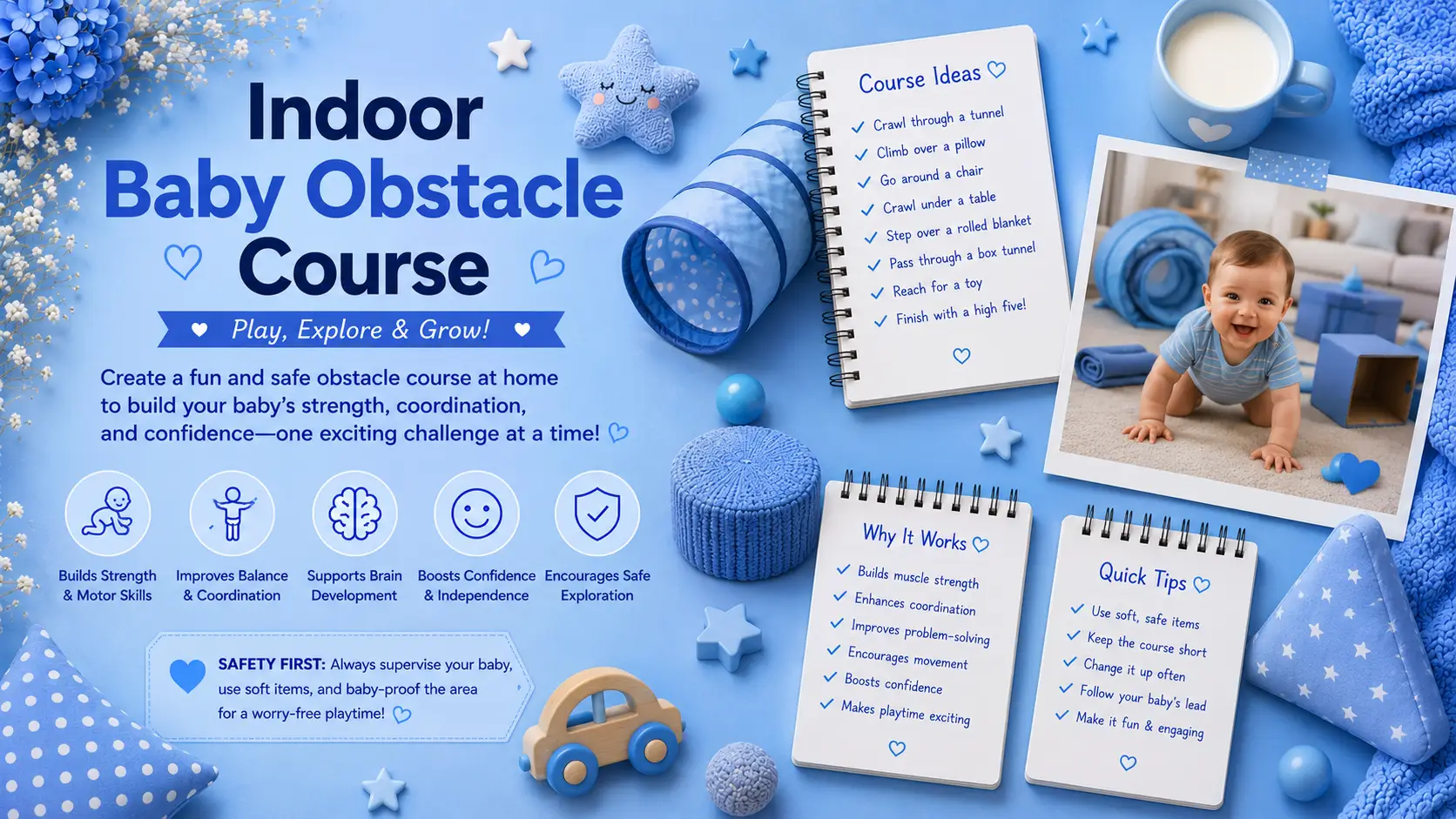

An indoor baby obstacle course turns everyday living-room items into an adventure that supports crawling, climbing, and exploring—all while keeping your baby engaged and active. Parents search for “indoor baby obstacle course,” “baby crawling obstacle course,” and “how to make a simple obstacle course for babies” because these setups are cheap, quick to assemble, and surprisingly effective for development. You don’t need fancy equipment. Soft cushions, pillows, a cardboard box, and a few toys are usually enough.
Why Create an Indoor Baby Obstacle Course?
Babies thrive on movement. A well-designed course helps build gross motor skills—strengthening the core, arms, and legs needed for crawling, pulling up, and eventually walking. It also adds sensory input through different textures and gentle challenges, encourages problem-solving as babies figure out how to get over or through obstacles, and burns energy on rainy or cold days when outdoor play isn’t possible.
Many parents notice that a simple course keeps a mobile baby occupied longer than free play alone. It can be especially useful when you need a few minutes to handle chores or work with older siblings. The key is keeping everything soft, low to the ground, and fully supervised.
Simple Materials You Already Have
Most successful setups rely on household items:
Couch cushions or firm pillows for “mountains” and ramps
Soft blankets or play mats for safe landings
An open cardboard box turned into a tunnel (add streamers at the entrance for extra fun)
Soft blocks or stuffed animals to crawl over or around
Small balls or favorite toys as motivation to keep moving
A rolled-up rug or yoga mat for a gentle balance path
Avoid anything hard, sharp, or unstable. Place the course in a clear space away from furniture edges, stairs, or electrical outlets.
How to Build a Basic Crawling Obstacle Course
Start small so your baby experiences success. A short sequence works better than an elaborate maze for younger crawlers.
Create a starting zone with a favorite toy or a soft mat.
Add a low “hill” made from one or two cushions that baby can climb over or slide down.
Follow with a tunnel: open both ends of a sturdy box and drape light streamers or scarves at the entrance.
Place a few soft blocks or a large stuffed animal to navigate around or over.
End with a rewarding activity—musical toys, a basket of balls, or simply you waiting with open arms and praise.
Sit nearby and cheer. Many babies need a little encouragement the first few times. Moving a toy just out of reach through the course often motivates them to keep going. Once they get the hang of it, they may repeat sections over and over, which is excellent for practice.
For a slightly more advanced version once your baby is pulling up or cruising, add a low balance path (painter’s tape on the floor or a rolled blanket) and encourage cruising along furniture placed safely nearby. Keep heights minimal and always stay within arm’s reach.
Tips for Different Ages and Stages
Early crawlers (around 6–9 months): Focus on very low obstacles and lots of encouragement. A single cushion to climb and a short tunnel is plenty.
Confident crawlers and early walkers: Add more stations, gentle ramps, and toys that require reaching or grasping.
Toddlers: You can expand into bigger courses with more direction-following elements, but the core idea remains the same—movement through play.
Rotate the layout every few days so it stays interesting. Involve older siblings by letting them help design or demonstrate the course; many enjoy guiding the baby through.
Safety First
Supervision is non-negotiable. Babies can tip, roll, or get stuck in unexpected ways. Pad the area with blankets or mats, remove any small objects that could become choking hazards, and never leave the course set up unsupervised once playtime ends. If your baby becomes frustrated, simplify the course or take a break. The goal is joyful movement, not pressure.
Making It Sensory and Engaging
Enhance the experience with texture and sound. A bumpy yoga mat, crinkly paper (safely secured), or different fabric scraps add sensory variety. Soft music or your voice narrating the adventure (“Over the mountain! Through the tunnel!”) supports language development at the same time. Some parents hang lightweight streamers or scarves so baby can bat at them while crawling.
Keeping It Fresh Without Buying More Stuff
You don’t need commercial foam climbers or expensive kits, though those can be nice upgrades later. Everyday items work remarkably well. Change the order of stations, add a new toy at the end, or create a “rescue the stuffed animal” theme. On days when energy is low, even a mini-course of two or three elements provides valuable practice.
An indoor baby obstacle course is one of those rare parenting activities that feels both productive and playful. It supports physical development, offers sensory exploration, and creates shared moments of laughter and discovery. With a few cushions and a little creativity, your living room becomes a safe adventure zone that grows with your baby.
FAQ
What age is appropriate for an indoor baby obstacle course?
Most babies are ready once they are confidently crawling or scooting, typically around 6–10 months. Start very simple and watch your child’s cues. Always prioritize safety and enjoyment over difficulty.
How long should a baby play on an obstacle course?
Follow your baby’s interest. Sessions often last 10–20 minutes at first. Some babies will revisit the course multiple times in a day. End before frustration sets in.
Do I need special equipment?
No. Couch cushions, pillows, a cardboard box, soft toys, and blankets are usually sufficient. Commercial foam blocks or tunnels can be added later if desired, but they are not required.
Is an indoor obstacle course good for development?
Yes. It promotes gross motor skills, balance, coordination, spatial awareness, and problem-solving. The sensory elements and social interaction with a caregiver add further benefits.
How can I make the course safer?
Use only soft, stable materials. Pad the floor and surrounding area. Keep the course low to the ground. Supervise closely at all times. Clear the space of hard furniture edges and small objects. Disassemble or block access when you’re not actively watching.