
When the weather keeps everyone inside or outdoor play simply isn’t an option, kids still need to move their big muscles. Indoor gross motor activities give children the chance to run, jump, crawl, balance, and climb in a safe, controlled space. These movement-based games build strength, coordination, balance, and body awareness while burning off energy and supporting better focus later in the day.
Gross motor skills involve the large muscle groups that control walking, running, jumping, throwing, and climbing. Practicing them indoors is especially helpful on rainy days, during winter, or when space outside is limited. Parents and teachers often search for “indoor gross motor activities for toddlers,” “rainy day gross motor games,” and “no-equipment indoor movement ideas”—and the best options use everyday household items and require almost no setup.
Why Indoor Gross Motor Play Matters
Daily movement supports physical development and also helps regulate emotions and attention. Climbing over pillows or crawling under a table gives proprioceptive (body-position) and vestibular (balance and movement) input that many children crave. Short bursts of active play can reduce restlessness, improve sleep, and make transitions smoother. Even in small apartments or classrooms, simple indoor gross motor activities deliver these benefits without needing a gym or special equipment.
Easy Indoor Gross Motor Activities Anyone Can Try
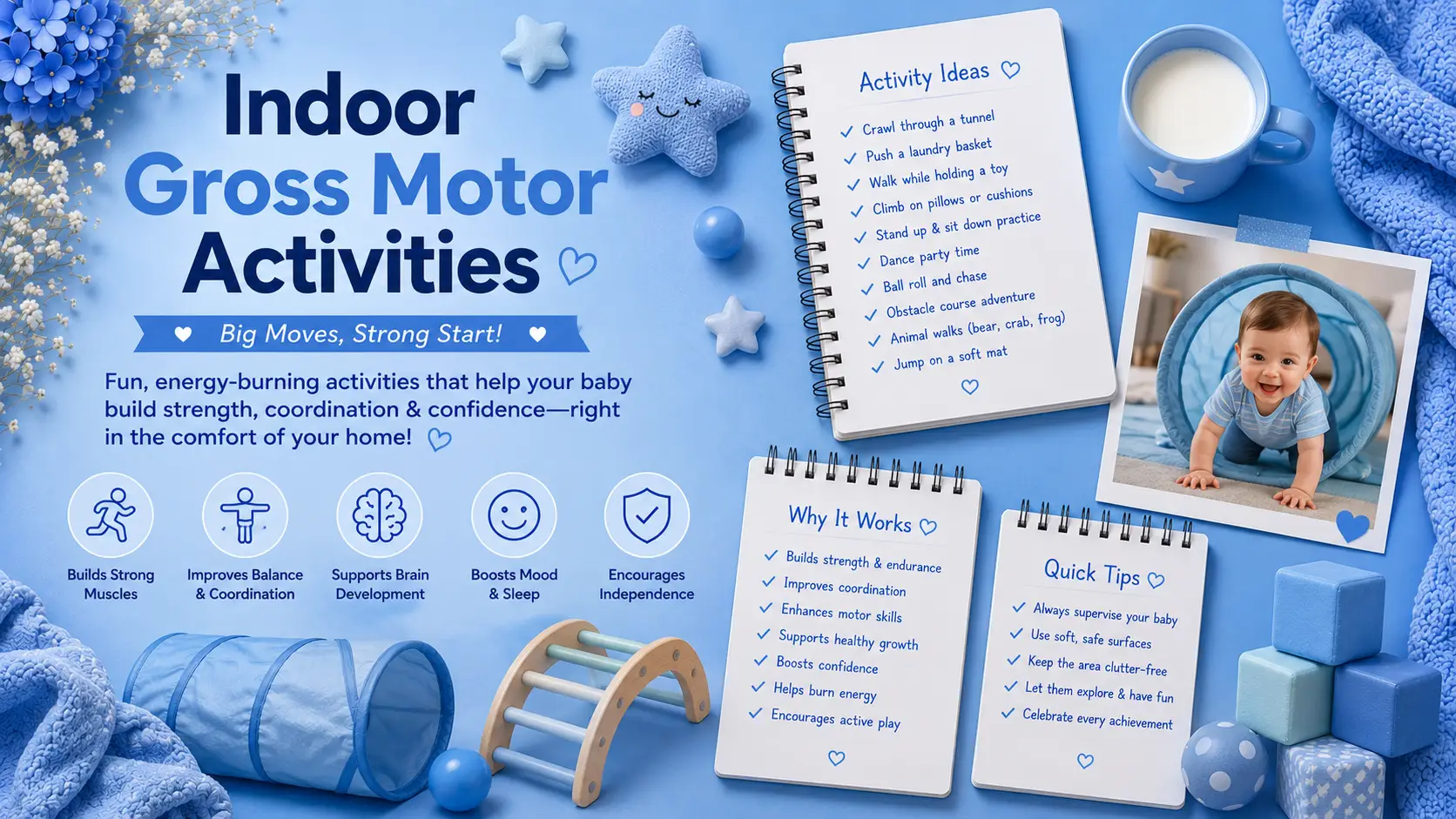
Obstacle courses rank among the most popular indoor gross motor activities. Use pillows as stepping stones, chairs and blankets to create tunnels, painter’s tape as a balance beam, and couch cushions for jumping zones. Kids can crawl under tables, hop over soft barriers, and balance along a tape line. Change the course every few days to keep it fresh. This activity works well for toddlers through elementary ages and builds planning, coordination, and confidence.
Animal walks require zero materials and endless creativity. Call out animals and have children move like them: hop like a frog, crawl like a bear, waddle like a penguin, stomp like an elephant, or scuttle like a crab. These movements strengthen core muscles, improve coordination, and are surprisingly tiring. Turn it into a parade or a follow-the-leader game for extra fun.
Balloon games are perfect for smaller spaces. Blow up a balloon and challenge kids to keep it off the ground using hands, heads, or elbows. Play balloon volleyball over a line of tape or a low “net” made from a string. The slow movement of a balloon makes success feel achievable while still practicing hand-eye coordination and quick reactions.
Painter’s tape activities transform any floor into a movement playground. Create hopscotch patterns, zigzag balance beams, or shapes that kids must jump into on command. A simple straight line becomes a tightrope for walking heel-to-toe, sideways, or backward. Tape is low-cost, easy to remove, and works on most floors.
Dance and freeze games combine music with movement. Put on favorite songs for a free dance party, then freeze when the music stops. Add variations such as “freeze like a statue,” “freeze like a superhero,” or “freeze on one foot.” Simon Says with big movements (jump, spin, touch the floor, reach high) also builds listening skills alongside gross motor practice.
Pillow or cushion jumping turns the living room into a soft playground. Arrange pillows in a path and challenge kids to jump from one to the next without touching the floor (the “lava”). This develops leg strength, balance, and spatial awareness. For younger toddlers, simply climbing on and off cushions provides valuable practice.
Paper-plate skating is another crowd-pleaser on smooth floors. Kids place paper plates under their feet (or hands and feet for bear crawls) and glide carefully. It encourages controlled movement and core engagement while feeling like ice skating indoors.
Other quick options include wall push-ups, high-knee marching in place, log rolls across a soft rug, and simple yoga poses such as downward dog or tree pose. For slightly older children, add relay races with beanbags or soft toys, or create a scavenger hunt that requires crawling, stretching, and reaching.
Tips for Success at Home or in the Classroom
Clear a safe space by moving breakable items and securing rugs. Supervise closely, especially with younger children or when jumping is involved. Keep sessions short—10 to 20 minutes is often enough—and offer choices so kids feel ownership. Rotate activities to maintain interest, and join in when possible; modeling movement makes it more engaging.
Many families look for “indoor gross motor activities for preschoolers” or “gross motor games for indoor recess.” The ideas above adapt easily to both home and group settings. Pair them with quieter activities afterward so children can settle.
Making Movement a Daily Habit
Indoor gross motor play doesn’t require fancy equipment or large rooms. A roll of painter’s tape, a few balloons, some pillows, and a bit of imagination open the door to hours of beneficial movement. On days when outdoor play isn’t possible, these activities keep bodies strong, minds focused, and spirits high. Start with one or two favorites and build from there—you’ll quickly discover which ones become household staples.
Consistent opportunities to move large muscles support lifelong physical confidence and overall well-being. Whether it’s a rainy afternoon or a long winter stretch, indoor gross motor activities turn limited space into an active playground.
FAQ
What are some easy indoor gross motor activities for toddlers?
Animal walks, balloon keep-up, simple pillow obstacle courses, tape balance lines, and dance parties work well. Keep movements simple, supervise closely, and use soft surfaces.
Why are indoor gross motor activities important?
They develop strength, balance, coordination, and body awareness while providing needed sensory input. Regular movement also supports attention, emotional regulation, and better sleep.
How can I set up an indoor obstacle course with household items?
Use pillows as stepping stones, chairs and blankets for tunnels, painter’s tape for balance beams, and cushions for jumping. Arrange a sequence of crawl-under, step-over, and balance challenges, then change the layout regularly.
Do I need special equipment for indoor gross motor play?
No. Most effective activities use items already at home—tape, balloons, pillows, paper plates, and music. Open floor space is the main requirement.
How long should indoor gross motor activities last?
Aim for 10–20 minutes at a time for younger children, with short energy breaks throughout the day. Older kids may enjoy longer sessions. Watch for signs of fatigue or overstimulation and adjust accordingly.