
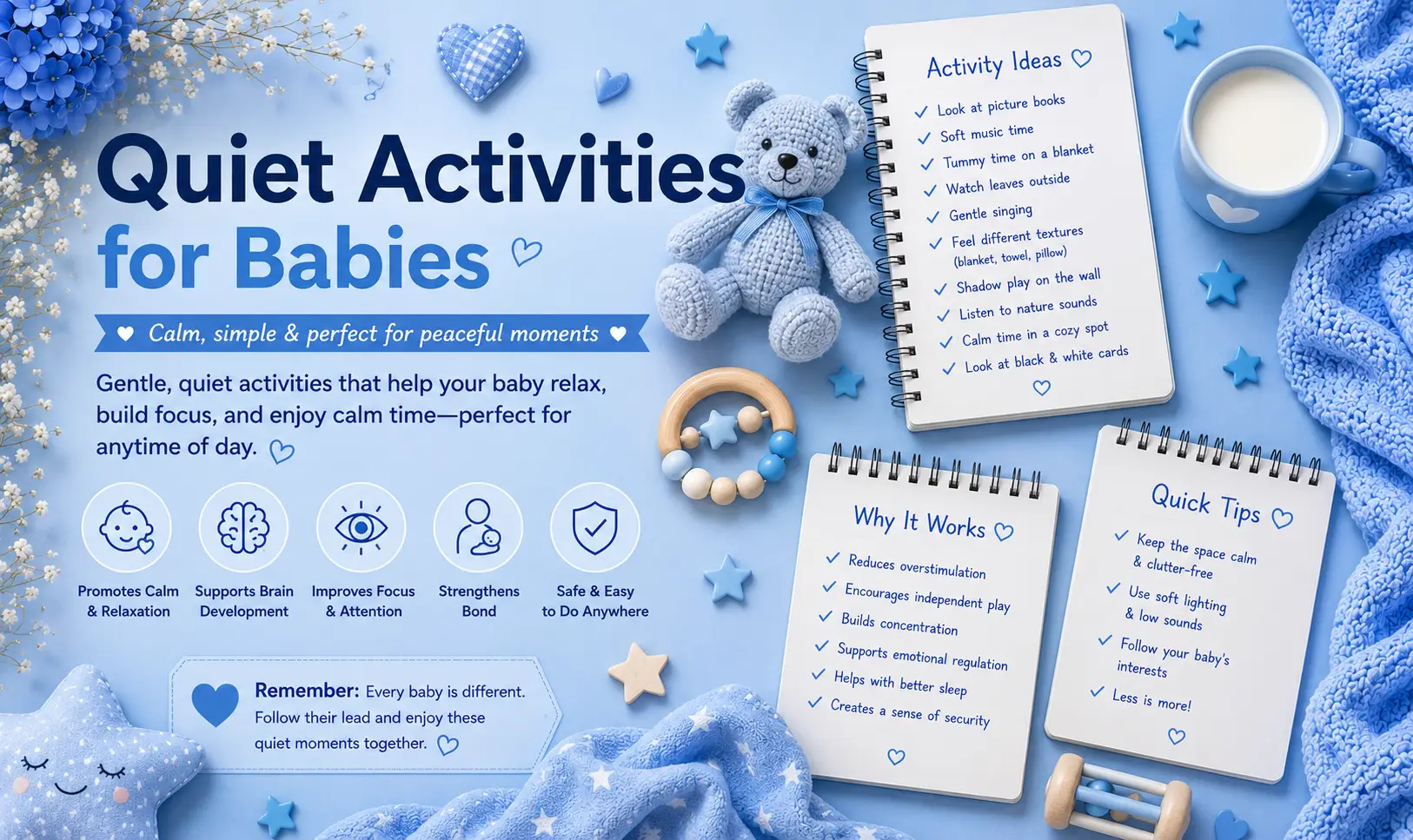

Finding peaceful moments with a baby can feel like a rare gift. Quiet activities for babies offer a gentle way to engage your little one without overstimulation, support early development, and give both of you a chance to reset. These calm, low-noise experiences help babies practice focus, explore their senses, and wind down—whether you’re easing into nap time, managing a long afternoon, or simply needing a breather.
Unlike high-energy play, quiet activities for infants emphasize soft textures, visual interest, gentle sounds, and simple interactions. They’re especially useful for newborns through the first year, when babies are highly sensitive to noise and overstimulation. Incorporating them regularly can build independent play skills later and strengthen the parent-baby bond through shared calm moments.
Why Quiet Time Matters for Babies
Babies thrive on balance. Active play builds strength and curiosity, while quiet periods support emotional regulation, concentration, and rest. Research and parenting experts note that calm activities help infants process the world at their own pace, reduce fussiness, and prepare their bodies for sleep. For parents, these moments create space to observe developmental cues, enjoy connection without constant motion, and sometimes tackle a quick task nearby.
Quiet activities also encourage early skills: tracking objects with the eyes, reaching and grasping, exploring textures, and beginning to understand cause and effect—all without loud toys or screens.
Simple Quiet Activities for Babies by Stage
Newborns to 3 Months At this age, babies respond best to soft visual and auditory stimulation while held or lying safely on a mat.
Soft books and high-contrast cards: Black-and-white images or simple board books hold attention. Sit together and slowly turn pages while describing what you see in a calm voice.
Gentle baby massage: Use a small amount of baby-safe oil and light strokes on arms, legs, and back. This soothes the nervous system and promotes bonding.
Listening to soft music or white noise: Soft lullabies, classical music, or nature sounds played at low volume create a peaceful atmosphere.
Face-to-face gazing and talking: Hold your baby close, make soft facial expressions, and speak gently. This quiet interaction builds attachment and early communication skills.
3 to 6 Months Babies gain better head control and start reaching. Supervised tummy time and sensory exploration shine here.
Sensory bottles: Fill clear, sealed bottles with water, oil, glitter, or colorful beads. Babies love watching the slow movement. Always use tightly sealed containers and supervise closely.
Activity mats or baby gyms with soft hanging toys: Encourage reaching and batting at dangling items while lying on the back or during short tummy-time sessions.
Soft textured toys and cloth books: Offer fabric books with different textures, crinkle paper, or ribbons. Babies explore with hands and mouths under close watch.
Mirror play: A baby-safe mirror lets them discover their own reflection. Place it nearby during tummy time for quiet fascination.
6 to 12 Months Older babies sit, crawl, and begin more purposeful play. Focus on simple cause-and-effect and fine-motor activities that stay low-key.
Shape sorters or soft puzzles: Large, chunky pieces encourage problem-solving without frustration or noise.
Quiet books or busy books: Fabric or board books with flaps, zippers, or soft fasteners keep hands busy and minds engaged.
Stacking soft cups or blocks: Soft materials prevent loud crashes. Babies enjoy stacking and knocking down gently.
Sensory bags: Seal a zip-top bag with gel, beads, or small safe objects (double-bag for safety). Babies press and move the contents with their hands.
Looking at picture books together: Choose sturdy board books with clear photos of everyday objects, animals, or faces. Point and name items softly.
Many parents search for “quiet time activities for babies during nap transition” or “calm play ideas for infants.” These options work well when one child needs rest while another is awake, or when you want screen-free entertainment that doesn’t disrupt the household.
Tips for Successful Quiet Time
Create a consistent, calm environment. Dim the lights slightly, reduce background noise, and choose a comfortable, safe space such as a play mat or your lap. Start with short sessions—10 to 15 minutes for younger babies, stretching to 20–30 minutes as they grow. Watch for cues: if your baby turns away, fusses, or seems tired, end the activity and offer a change of pace or rest.
Rotate a small selection of toys and books so they stay interesting. Safety comes first—never leave a baby unattended with small parts, bottles, or bags, and always choose age-appropriate items free of choking hazards.
Quiet activities pair beautifully with daily routines. Try one after a feed, before a nap, or during the late afternoon “witching hour” to help regulate energy. Over time, many babies learn to settle into these peaceful moments more readily.
Making It Part of Everyday Life
You don’t need elaborate setups. Everyday items often work best: a soft blanket for peek-a-boo, your voice singing a quiet song, or simply lying side-by-side looking at a mobile. The goal is connection and calm, not perfection. Some days your baby may prefer being held and rocked; other days they may happily explore a sensory bottle on their own for several minutes.
As babies approach their first birthday, these quiet habits lay the groundwork for independent play. Many parents later expand into toddler quiet-time baskets filled with puzzles, stickers, and books—skills that often begin with the simple, soothing experiences of infancy.
Quiet activities for babies remind us that stimulation doesn’t have to be loud or flashy. Soft engagement supports healthy development, reduces overstimulation, and creates treasured peaceful moments in the busy early months. Start small, follow your baby’s lead, and enjoy the calm together.
FAQ
What are some quiet time activities for babies?
Looking at high-contrast cards or board books, exploring sensory bottles, gentle massage, soft music, tummy time with a mirror, textured cloth books, and simple stacking toys all work well. Choose activities matched to your baby’s age and always supervise.
Why is quiet time important for babies?
It helps babies wind down, practice focus and sensory exploration, regulate emotions, and prepare for sleep. It also gives parents a moment of calm connection and can ease transitions throughout the day.
At what age can babies start quiet activities?
Quiet, calming interactions can begin from the newborn stage with soft talking, gazing, and gentle touch. Structured sensory play and books become more engaging around 2–3 months and evolve as motor skills develop.
How long should quiet time last for a baby?
Younger babies often do best with 10–15 minutes. Older infants may enjoy 20–30 minutes. Follow your baby’s cues—end the activity if they show signs of tiredness or disinterest.
How can I encourage my baby to enjoy quiet play?
Create a calm space with soft lighting and minimal noise. Offer a few age-appropriate options, stay nearby for reassurance, model quiet engagement yourself, and keep sessions short and positive. Consistency helps babies learn to settle into these moments over time.