
Babies don’t need a mountain of plastic toys to learn, explore, and thrive. In fact, many of the richest early experiences come from everyday interactions and ordinary household objects. Parents often search for baby activities without toys, no-toy baby play ideas, and activities for babies using everyday objects because they want simple, low-cost ways to support development without adding more clutter. The truth is that your face, voice, body, and the items already in your kitchen or laundry basket can provide everything a baby needs.
Toy-free play encourages creativity, reduces overstimulation, and helps babies connect more deeply with the real world. Here’s a practical guide to engaging activities that require zero store-bought toys.
Face-to-Face Games and Body Play
Your presence is the ultimate “toy.” Simple interactive games build social-emotional skills, language, and trust.
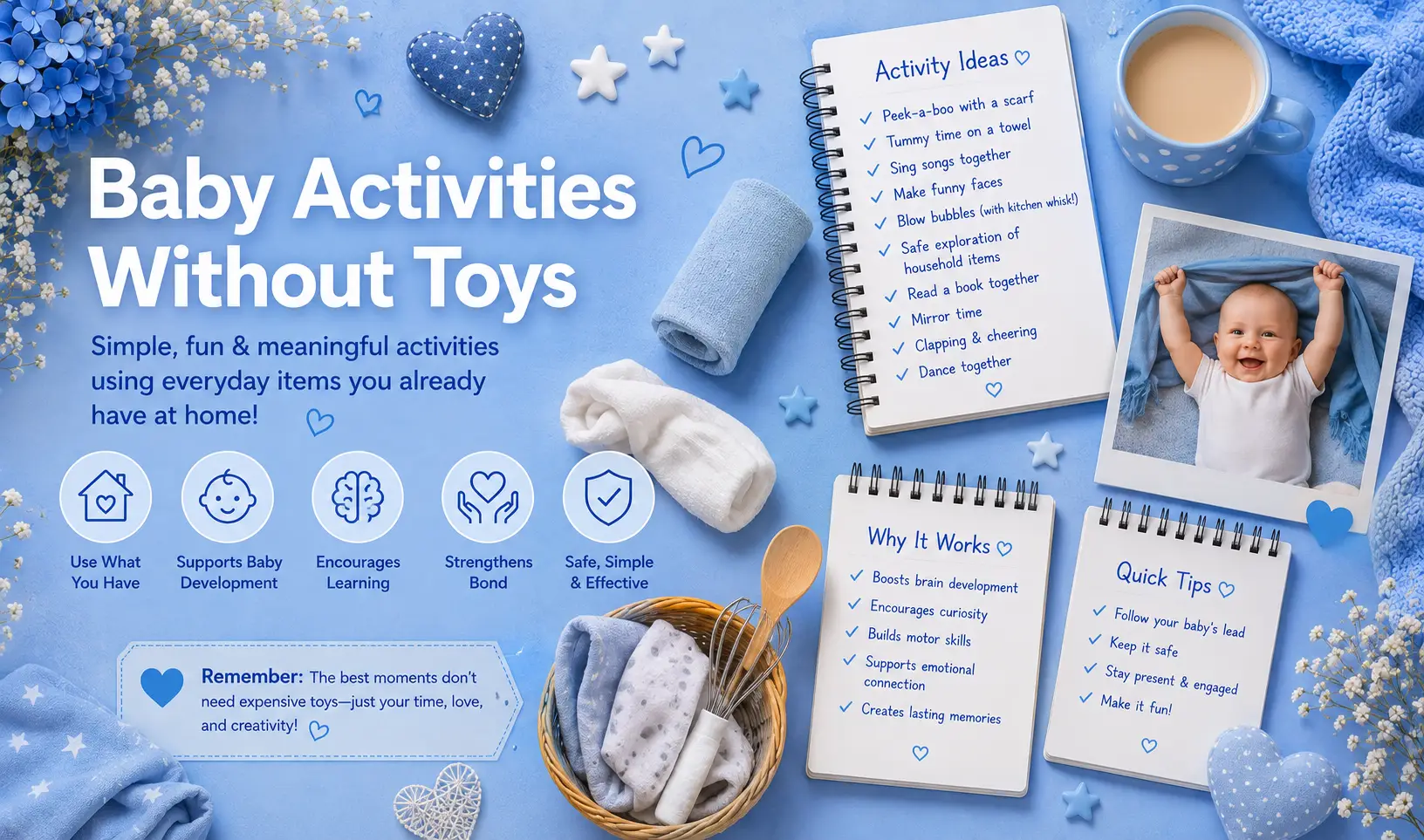
Play peekaboo by covering your face with your hands or a soft cloth and revealing it with a smile. This classic supports object permanence—the understanding that things still exist even when out of sight. Try “So Big!” by lifting your baby’s arms high while asking how big they are, then answering with an exaggerated “Sooooo big!” Babies often start anticipating and joining in.
Fingerplays such as Pat-a-Cake, Itsy Bitsy Spider, or tapping the bottoms of their feet in rhythm while singing create bonding and early rhythm awareness. Make silly faces, stick out your tongue, or copy their coos and babbles. These back-and-forth exchanges are powerful for language development and require nothing but attention.
Sensory Exploration with Household Items
Sensory play fuels brain growth, and everyday objects offer endless textures, sounds, and visuals. Always supervise closely and choose large, safe items free of choking hazards.
Offer a variety of fabrics—soft scarves, a knit hat, a cotton washcloth, or a fluffy towel—for touching and mouthing. Describe the sensations: “This feels smooth,” or “This one is bumpy.” A clean natural sponge provides interesting resistance when squeezed. Wooden spoons, silicone spatulas, or large plastic measuring cups invite grasping, banging, and transferring from hand to hand.
Mirrors fascinate babies. Hold a safe hand mirror or sit together in front of a full-length one. Point to their reflection and name body parts. Many younger babies treat the image as another “friend,” which supports early social awareness.
Kitchen Cupboard Adventures
The kitchen is a treasure trove for household items for baby play. Empty plastic containers, pots, and lids become stacking, nesting, or drumming tools. A wooden spoon and a couple of pots create an instant band—great for cause-and-effect learning and auditory exploration. Show your baby how to bang gently, then let them experiment.
Fill a shallow baking sheet or plastic bin with a little water (or keep it dry) and add large, safe items like silicone cups or a colander. Water play in a supervised shallow container or during bath time offers cooling sensory input and practice with pouring and splashing. A sealed water bottle partially filled with rice or pasta makes a simple shaker for tracking sounds side to side.
Stuff different textured fabrics into an empty wipe container or tissue box and let your baby pull them out. This “container surprise” builds fine motor skills and curiosity.
Movement and Gross Motor Fun
Babies need to move, and you don’t need gear for that. During tummy time, place yourself or a colorful household object (like a scarf) just out of reach to encourage lifting the head and reaching. Once they start crawling, create a soft obstacle path with couch cushions and pillows for climbing and navigating.
Hold your baby securely and gently sway, bounce, or dance to music. Or lay them on a soft towel or blanket on the floor and slowly pull them around the room for a gentle “magic carpet” ride—wonderful for core strength and vestibular input when done carefully on a clear, soft surface.
Cardboard boxes of various sizes become tunnels, dens, or things to climb into and out of. Large boxes can be open-ended play spaces that evolve with your baby’s abilities.
Everyday Routines as Play
Turn ordinary moments into learning opportunities. During diaper changes, sing songs or play “This Little Piggy” on their toes. While folding laundry, let them feel different fabrics or watch you sort. Name objects and actions throughout the day: “Here’s your sock—on goes the sock!” Narrating builds vocabulary naturally.
Go for a walk and talk about what you see and hear—birds, wind, cars, leaves. Even indoor “nature” exploration with a few safe leaves, a smooth stone (closely supervised), or looking out the window counts.
Safety First and Keeping It Fresh
Always stay within arm’s reach. Avoid anything small enough to fit through a toilet-paper tube, sharp edges, strings that could tangle, or items that could break. Rotate the objects you offer every few days so familiar items feel new again. Follow your baby’s lead—short, engaged bursts are more valuable than long forced sessions.
Toy-free play doesn’t mean never using toys. It simply shows that connection, conversation, and ordinary objects form the foundation of early learning. Many parents find that reducing toy clutter leads to longer, more focused play and deeper interaction.
These free baby games and toy-free activities for infants prove that the best stimulation often comes from what you already have—and from you.
FAQ
What are the best baby activities without any toys for newborns?
Focus on face-to-face interaction: talking, singing, making eye contact, gentle rocking, and supervised tummy time while you lie nearby. High-contrast patterns from a simple black-and-white paper or your face provide visual interest. Skin-to-skin contact and listening to your voice are powerful early activities.
How can I do sensory play for babies using only household items?
Offer safe textures like scarves, sponges, wooden spoons, or different fabrics. Create sound with pots and a spoon or a sealed rice shaker. Use a mirror for visual exploration and supervised water play in a shallow bin or bath. Always describe the sensations and supervise closely.
Are no-toy activities good for development?
Yes. Research and pediatric experts emphasize that responsive interaction, sensory experiences with real objects, and movement support motor skills, language, cognition, and emotional bonding as effectively—or more so—than many commercial toys. Everyday objects often provide richer, more open-ended exploration.
What household objects are safest for babies to play with?
Large items that can’t be swallowed: wooden spoons, silicone kitchen tools, plastic containers and lids, scarves or soft fabrics, clean sponges, cardboard boxes, and sturdy pots or pans. Avoid anything with small parts, sharp edges, or toxic materials. Check items regularly and supervise every session.
How do I keep my baby entertained without buying more toys?
Rotate a small selection of household objects, join in the play yourself, turn routines into games, and follow your baby’s cues. Simple games like peekaboo, singing, and exploring textures often hold attention longer than complicated toys because they involve connection and novelty through interaction.