
Living in an apartment with a baby doesn’t mean you’re stuck with limited options or constant cabin fever. In fact, smaller spaces often spark more creative, intentional play. Many parents search for indoor activities for babies, baby activities at home, and apartment-friendly play ideas precisely because high-rises, one-bedrooms, and shared walls make big outdoor adventures or sprawling playrooms unrealistic. The good news? Some of the richest developmental experiences happen right on your living room floor, using items you already own.
Babies don’t need elaborate setups. They thrive on sensory input, movement, connection, and simple repetition. Here’s a practical collection of apartment-friendly ideas that support growth without taking over your square footage or annoying the neighbors.
Make the Most of Limited Floor Space
Start by carving out a dedicated but flexible play zone. A soft play mat or rug defines the area and protects knees during tummy time. Use vertical storage—wall shelves, over-the-door organizers, or hanging bins—to keep toys accessible yet out of the way. Rotate a small selection of items every week so the space stays fresh without clutter.
Think multi-purpose. A low shelf can hold books during the day and double as a surface for stacking cups later. Couch cushions become climbing structures or soft barriers for a mini obstacle course. These small space baby play strategies keep your home functional while giving your little one room to move.
Sensory Play That Fits Anywhere
Sensory exploration is one of the highest-value sensory play for babies activities, and it requires almost no space. Fill a shallow bin or baking sheet with dry rice, pasta, or water (supervise closely) and add measuring spoons, silicone cups, or large pom-poms. For mess-free versions, seal gel, glitter, and small toys inside a sturdy zip-top bag and tape it to the floor or high-chair tray.
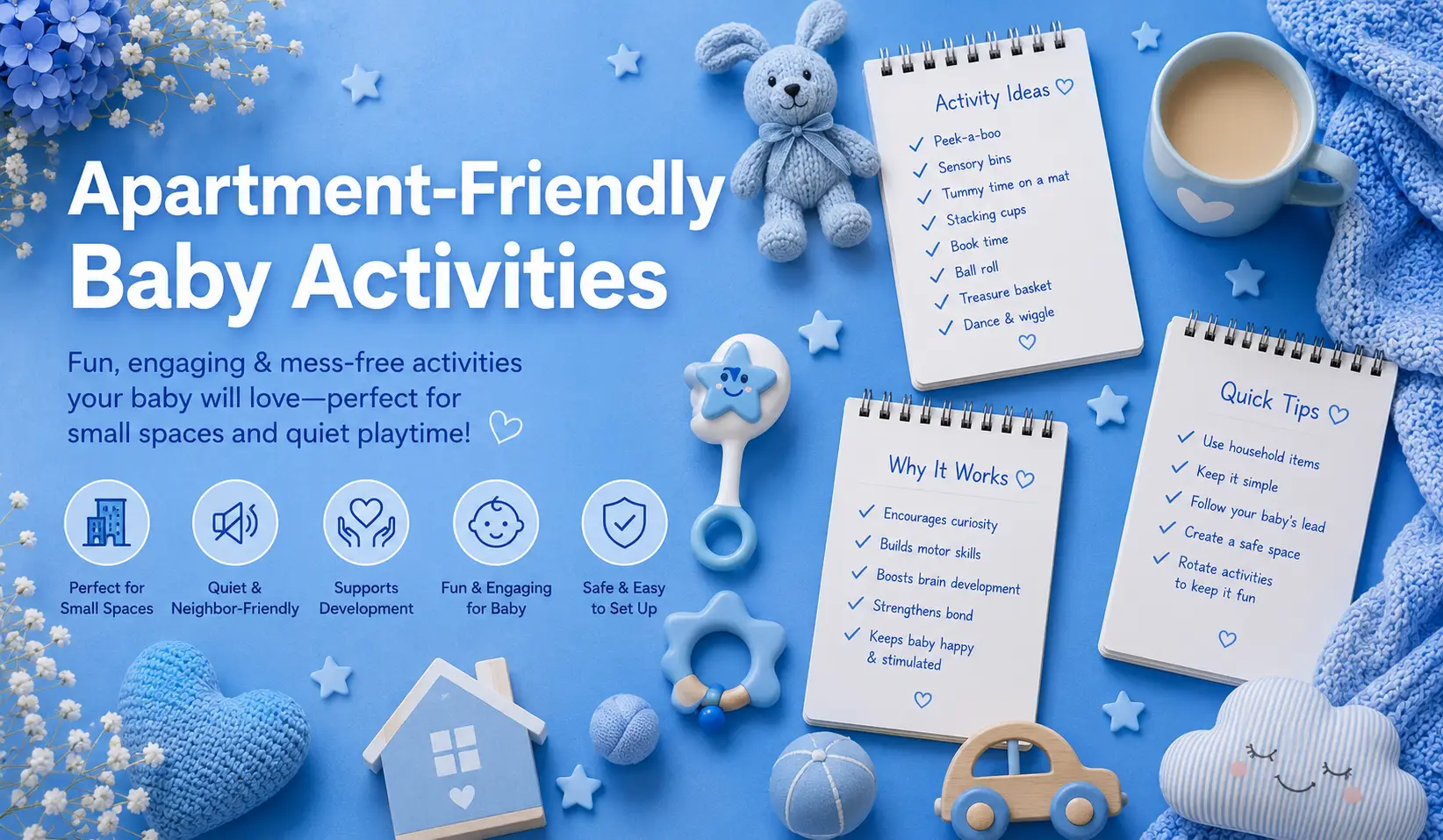
Treasure baskets are another apartment winner. Gather safe household objects with varied textures—a wooden spoon, silicone spatula, soft scarf, metal measuring cup, and a clean sponge—and place them in a low basket. Babies love exploring these “real” items. Rotate themes (kitchen, soft fabrics, or single colors) to keep interest high. These setups support fine motor skills, cause-and-effect learning, and focus without needing a dedicated sensory room.
Creative Tummy Time Ideas
Tummy time ideas remain essential for building neck, shoulder, and core strength, yet many parents struggle to make it engaging in tight quarters. Lay a mirror flat on the floor so your baby can see their reflection while on their tummy. Place high-contrast cards or a soft book just out of reach to encourage reaching. Drape a lightweight scarf or attach a colorful ribbon to a low table leg for visual tracking.
Prop your baby over a rolled towel or nursing pillow for variety. Or join them on the floor and make faces, sing, or roll a ball slowly back and forth. Short, frequent sessions beat long forced ones—especially when space is limited and attention spans are short.
Music, Movement, and Dance Parties
Movement is possible even in a studio. Turn on music and hold your baby while swaying, bouncing gently, or dancing around the coffee table. Simple instruments—shakers made from sealed bottles with rice, or store-bought rattles—encourage rhythm and cause-and-effect. Nursery rhymes and fingerplays like “Pat-a-Cake” or “Itsy Bitsy Spider” build language and bonding in zero extra square footage.
For older babies who sit or crawl, create a soft obstacle path with pillows, cushions, and a tunnel made from a draped blanket over chairs. Keep the noise level neighbor-friendly by choosing quieter activities during quiet hours, or use a white-noise machine if needed.
Everyday Household Adventures
Some of the best baby activities at home use what you already have. A cookie sheet and large magnets become a fine-motor station. Empty cardboard boxes turn into tunnels, dens, or “cars.” Sticky contact paper on the floor or wall (sticky side out) lets babies stick and peel lightweight objects. Water play in a shallow bin or the bathtub offers cooling sensory fun on hot days when going outside feels impossible.
Reading remains one of the simplest high-impact activities. Keep a small basket of board books in the play area. Point to pictures, use different voices, and follow your baby’s lead—even if they mostly chew the pages at first.
Rainy Day and All-Weather Favorites
When weather traps you inside, lean into rainy day activities for babies. Set up a flashlight or glow-stick exploration in a dimmed room. Create edible “paint” with yogurt and food coloring for safe art on a high-chair tray or sealed bag. Build a simple fort with blankets and chairs for a cozy reading nook. These low-prep ideas keep days feeling varied without requiring trips out or extra gear.
Safety and Sanity Tips for Apartment Living
Always supervise closely, especially with small objects or water. Baby-proof outlets, cords, and furniture edges in the play zone. Choose quiet toys during evening hours, and consider a playpen or gated area if you need a safe containment option that folds away. Most importantly, follow your baby’s cues—short bursts of engaged play beat forced long sessions.
Apartment living with a baby can feel constraining at first, but it often leads to more creative, connected routines. The activities that matter most—talking, singing, touching different textures, moving bodies, and sharing attention—fit beautifully into even the smallest homes.
FAQ
What are the best indoor activities for babies under 6 months?
Focus on tummy time with mirrors or high-contrast cards, gentle singing and talking face-to-face, tracking a slow-moving toy, and simple sensory experiences like feeling different fabrics or listening to soft music. Keep sessions short and interactive.
How can I do sensory play in a small apartment without making a huge mess?
Use sealed sensory bags, dry materials in a shallow tray with a mat underneath, or water play confined to the bathtub or high-chair tray. Choose one activity at a time and keep cleanup supplies nearby. Rotation prevents clutter buildup.
Are there quiet activities suitable for apartments with thin walls?
Yes—reading board books, looking in mirrors, exploring treasure baskets, fingerplays, and gentle dancing without loud music all work well. Soft toys, fabric books, and stacking cups produce minimal noise.
How do I create a play area when I don’t have a separate nursery or playroom?
Designate one corner of the living room or bedroom with a mat, a low shelf or basket of rotated toys, and vertical storage. Multi-use furniture and foldable items help the space return to adult use quickly.
What household items make great baby toys?
Safe options include wooden spoons, silicone measuring cups, large plastic containers, scarves, empty tissue boxes, muffin tins, and sturdy cardboard boxes. Always check for sharp edges, small parts, or choking hazards and supervise closely.