
Once your baby starts crawling, the world opens up—and so do the possibilities for play. This stage (typically around 6–10 months, though every baby is different) brings new energy, curiosity, and the need for safe, engaging indoor activities. Parents often search for “indoor activities for crawling babies,” “what to do with an active crawler at home,” or “obstacle courses for crawling infants” because floor time suddenly becomes nonstop exploration. The good news: you don’t need fancy equipment. Everyday household items and a baby-proofed space can support gross motor skills, sensory development, problem-solving, and bonding.
Why Focus on Movement for Crawlers
Crawling strengthens the core, shoulders, arms, and hands while building coordination and spatial awareness. Indoor play that encourages reaching, climbing over low obstacles, and navigating different surfaces helps prepare babies for pulling up and walking later. Short, repeated sessions work best—follow your baby’s interest and energy rather than forcing long structured play.
Obstacle Courses and Tunnels
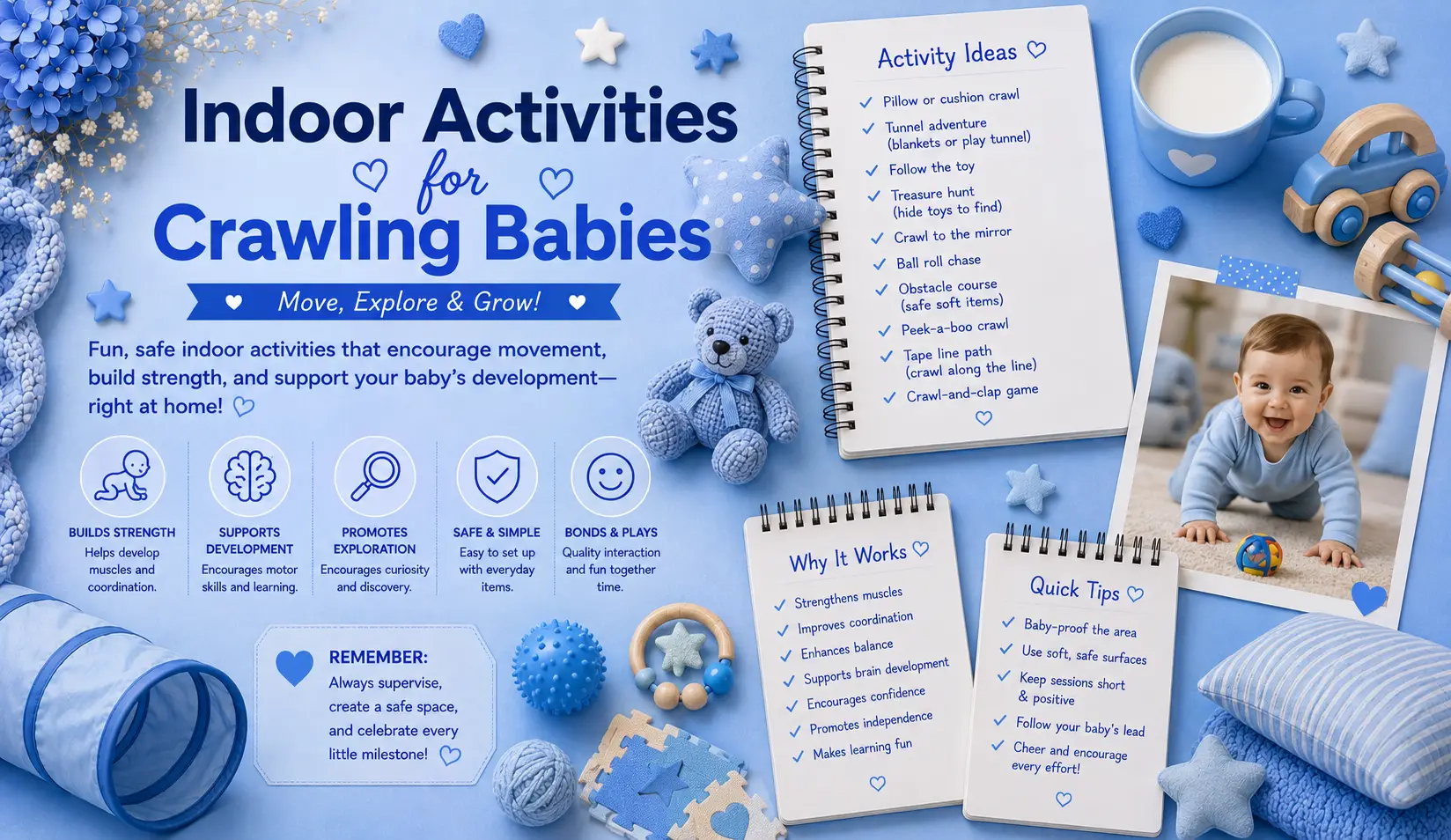
One of the highest-interest ideas across parent sites and searches is a simple obstacle course. Use couch cushions, pillows, and blankets to create low “mountains” or uneven surfaces for your baby to crawl over. Drape a sheet or towel between two chairs to make a bridge or tunnel. Cardboard boxes with the ends open form instant crawl-through tunnels. Place a favorite toy just out of reach at the end to motivate movement.
Add variety by mixing textures: a soft rug, a smoother floor section, or a bit of bubble wrap (supervised). These courses encourage problem-solving as babies figure out how to go under, over, or around. Keep the setup low and soft so falls stay gentle. Many parents find this becomes a daily favorite because it burns energy and builds confidence.
Games That Encourage Crawling
Classic games adapt perfectly for crawlers and rank high in searches for “games for crawling babies.”
Hide-and-seek works beautifully. Sit behind a couch or under a blanket and call your baby’s name so they crawl to find you. Start with easy, visible spots and celebrate the discovery. Blanket rides are another hit: lay your baby on a sturdy blanket or towel (tummy preferred for many), then gently pull them across a smooth floor for a short “ride.” Vary speed and direction while staying close.
Chase games keep things playful. Crawl a short distance away and invite your baby to follow, or let them get a head start and gently catch up with kisses. Rolling a soft ball just out of reach prompts crawling to retrieve it. Bubbles blown near the floor often send crawlers scrambling to catch or pop them—great for visual tracking and motivation.
Sensory Exploration and Everyday Objects
Crawlers love putting new experiences into their mouths and hands. Set up a safe sensory path with different textures on the floor—scarves, a piece of fleece, a silicone mat, or clean kitchen towels. A shallow bin or tray with large, taste-safe items (dry cereal, large pom-poms, or wooden spoons) invites scooping and transferring once your baby can sit steadily.
Household items shine here. Keep one low cupboard stocked with safe kitchen tools: plastic containers, wooden spoons, measuring cups, and lids. Babies often spend long stretches banging, stacking, and dumping. An empty cardboard box becomes a fort, a tunnel, or a place to drop toys through holes you cut in the top. Rotate a few toys or objects every few days so “new” discoveries keep interest high without overwhelming the space.
Simple Structured Play
Place toys in a zig-zag or short trail across the floor so your baby practices changing direction. A muffin tin with large balls or soft toys encourages reaching and transferring. Music and movement sessions—turning on songs and crawling or dancing together—add rhythm and joy. Reading board books on the floor, with your baby crawling over to turn pages or look at pictures, combines quiet time with mobility.
If your baby is practicing pulling to stand, position sturdy furniture or a low activity table nearby so they can cruise after crawling. Always stay within arm’s reach during climbing attempts.
Safety and Practical Tips
Baby-proof thoroughly from a crawler’s eye level: cover outlets, secure furniture, remove small objects, and gate off stairs or unsafe rooms. Supervise constantly—crawling babies move fast and investigate everything. Keep sessions short if your baby tires or becomes frustrated. Outdoor time is ideal when weather allows, but these indoor ideas work year-round and during rain or extreme temperatures.
Rotate activities to match your baby’s mood. Some days call for high-energy courses; other days suit quieter sensory exploration or books. The goal is engagement and movement, not perfection or elaborate setups.
These approaches address the common parent questions around keeping active crawlers busy, supporting development, and preventing boredom during long indoor stretches. Most require only items you already have, making them accessible and low-pressure. Watch what your particular baby gravitates toward—some love tunnels, others chase balls endlessly—and lean into those preferences. Consistent, responsive play helps crawlers thrive while giving you practical ways to fill the day.
FAQ
What are the best indoor activities for crawling babies?
Obstacle courses with pillows and tunnels, hide-and-seek, blanket rides, chasing soft balls or bubbles, and exploring safe household objects like pots, spoons, and cardboard boxes top the list. These encourage movement, problem-solving, and sensory input.
How can I encourage my baby to crawl more indoors?
Place interesting toys just out of reach, create simple paths or low obstacles, get down on the floor and crawl yourself as an invitation, and use motivating items like balls or bubbles. Keep the environment safe and engaging rather than forcing the skill.
Are obstacle courses safe for crawling infants?
Yes, when kept low, soft, and supervised. Use cushions, blankets, and open boxes. Avoid high or hard surfaces, and stay close to assist or catch if needed. Start simple and adjust based on your baby’s ability.
What household items work well for crawling baby play?
Cardboard boxes, pillows and blankets, wooden spoons, plastic containers, soft balls, scarves, and a designated low cupboard of safe kitchen tools. Always check for choking hazards and sharp edges.
How much floor time does a crawling baby need?
Aim for several periods of unrestricted floor play throughout the day rather than one long stretch. Follow your baby’s cues—active exploration mixed with rest, feeding, and quieter activities supports healthy development without overstimulation.