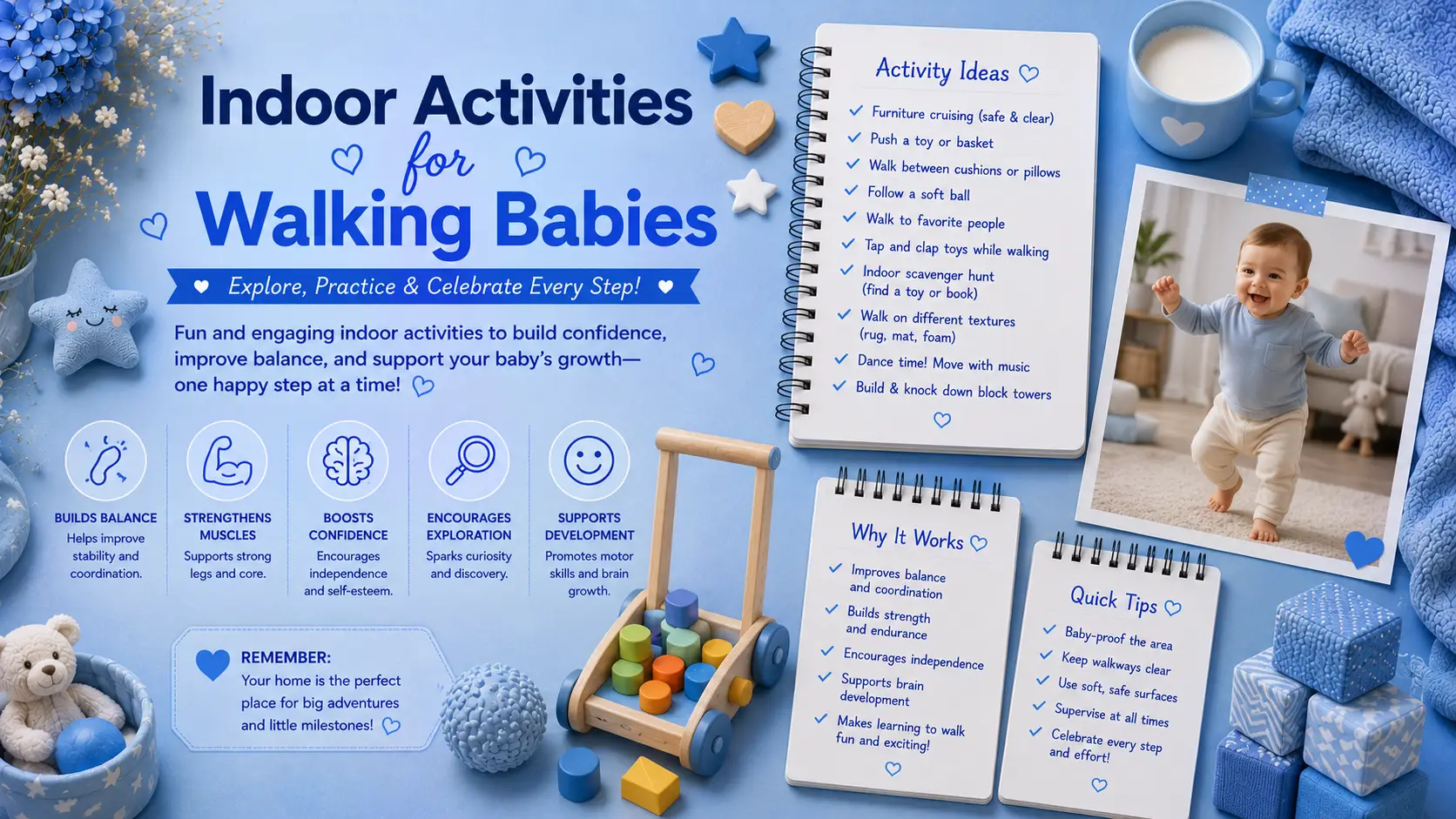

When your baby takes those first wobbly steps, everything changes. Suddenly the house feels smaller, curiosity skyrockets, and rainy days or cold weather can leave both of you restless. Indoor activities for walking babies (typically 9–18 months) are perfect for channeling that new mobility into fun, confidence-building play without needing fancy gear or a big budget.
These ideas focus on safe movement, sensory exploration, and simple problem-solving. They support gross motor skills while keeping things engaging for new walkers who still cruise along furniture or need a hand now and then. Always supervise closely, baby-proof the space, and let your little one set the pace.
Create a Simple Indoor Obstacle Course
Push chairs, ottomans, or sturdy boxes a short distance apart so your baby can cruise or take steps between them. Add soft pillows or cushions to climb over and under. This classic indoor activity for walking babies strengthens legs, improves balance, and turns the living room into an adventure zone. Keep the path clear of sharp edges and stay nearby for those inevitable tumbles. Many parents find that spacing furniture just far enough to encourage independent steps works wonders for practice.
Dance Party and Music Time
Turn on upbeat songs and dance together. Hold your baby’s hands for supported walking, or let them bounce and stomp freely. Nursery rhymes with actions or freeze-dance games add extra laughs. Music motivates movement and helps with rhythm and coordination. It’s one of the easiest rainy-day activities for babies who have just started walking—and it burns energy for both of you.
Push-and-Pull Play
A sturdy laundry basket, cardboard box, or push toy becomes a walking aid. Load it with soft toys or lightweight items and encourage your baby to push it across the floor. Pull toys on a string work well too once balance improves. These activities give new walkers something to hold onto while moving, building strength and confidence without relying on walkers (which many experts advise against for safety reasons).
Ball Games and Rolling Fun
Sit on the floor and roll a soft ball back and forth. Once your baby is steadier, encourage them to chase or kick it gently. Larger exercise balls can support standing balance when held with help. Fetching a favorite ball from a few steps away practices walking with purpose and following simple directions—great for both physical and early language skills.
Sensory Bins and Discovery Baskets
Fill a shallow bin or basket with safe household items: wooden spoons, plastic containers, scarves of different textures, or large pom-poms. Let your walking baby stand at a low table or cruise over to explore. Sorting by color or size, filling and dumping, or just feeling different materials engages the senses while they practice standing and moving between spots. Rotate the contents weekly to keep interest high. Always avoid small choking hazards.
Kitchen Cabinet Exploration
Designate one low, unlocked cupboard with safe items like plastic bowls, measuring cups, and lids. Your newly mobile baby will love opening it, pulling things out, and putting them back. This everyday indoor play supports fine motor skills and independence while giving them a reason to walk over and investigate.
Pillow Mountain and Tunnel Play
Pile pillows and blankets into a soft “mountain” for climbing. Drape a sheet between two chairs to create a tunnel to crawl or walk through. These setups encourage crawling, cruising, and early walking in a padded environment. They’re excellent for days when outdoor time isn’t possible and help develop spatial awareness.
Bubble Chasing
Blow bubbles and watch your baby toddle after them. Popping bubbles works on coordination and gives a fun reason to take steps. It’s simple, low-mess, and endlessly entertaining for most babies at this stage.
Mirror Play and Standing Games
Place a sturdy, unbreakable mirror at standing height. Encourage your baby to look, make faces, or reach for “the other baby.” Pair this with placing favorite toys just out of easy reach on a low table or couch so they practice pulling up and standing while playing.
Everyday Chores as Play
Invite your walker to “help” by carrying a lightweight item to another room, putting toys in a basket, or wiping a low surface with a cloth. These real-life tasks feel meaningful and naturally incorporate walking practice around the house.
Why These Activities Matter
New walkers are refining balance, strengthening muscles, and building the confidence to explore. Indoor play that mixes movement with sensory and problem-solving opportunities supports overall development—gross motor skills, hand-eye coordination, early language through narration, and emotional security from shared fun. Short, frequent sessions work better than long structured ones. Follow your baby’s cues and stop when they seem tired or frustrated.
Safety remains key: clear the floor of trip hazards, use soft surfaces where possible, keep furniture stable, and never leave a walking baby unsupervised. Bare feet often give better grip than socks on smooth floors.
These ideas require little more than items already in most homes. Rotate activities, narrate what you’re doing (“You’re pushing the basket so well!”), and join in. The goal isn’t perfection—it’s joyful movement and connection during those exciting early walking months.
Whether it’s a rainy afternoon, winter weather, or simply a day spent indoors, these activities turn ordinary spaces into places of discovery for your walking baby.
FAQ
What are the best indoor activities for babies who just started walking?
Obstacle courses with pillows and furniture, push toys or laundry baskets, dance parties, ball rolling, and bubble chasing rank among the most effective. They encourage safe movement while keeping play engaging and low-prep.
How can I encourage my baby to walk more indoors safely?
Create short paths between sturdy furniture for cruising, place interesting toys a few steps away, use push toys for support, and practice walking toward you with hands held. Soft surfaces and close supervision reduce injury risk.
Are there good rainy-day activities for walking toddlers or new walkers?
Yes—sensory bins, kitchen cupboard play, pillow mountains, music and dancing, fort-building with sheets, and simple hide-and-seek with toys all work well when outdoor time is limited.
What toys help babies practice walking indoors?
Sturdy push toys, soft balls, activity tables at standing height, large blocks or stacking cups, and simple pull toys are helpful. Household items like baskets and cardboard boxes often work just as well as store-bought options.
How much active play does a walking baby need each day?
There’s no strict number, but frequent short bursts of movement throughout the day—totaling opportunities to stand, cruise, and take steps—are beneficial. Follow your baby’s energy and interest rather than forcing long sessions. Combine free play with interactive activities for the best results.