
Winter with a baby can feel long and isolating when cold weather limits outdoor time. Short days, snow, and freezing temperatures often leave parents searching for ways to keep little ones active, stimulated, and happy indoors—or safely outside for brief bursts. The good news is that winter baby activities don’t require expensive toys or elaborate setups. Simple, everyday ideas support development, burn energy, and create cozy bonding moments.
Whether you’re dealing with a newborn, a crawling infant, or a new walker, these ideas mix indoor winter activities for babies and toddlers with occasional outdoor options. They draw from popular parent-tested approaches like sensory play, movement games, and low-mess crafts that rank high in searches for winter activities for babies.
Bring Winter Indoors with Sensory Play
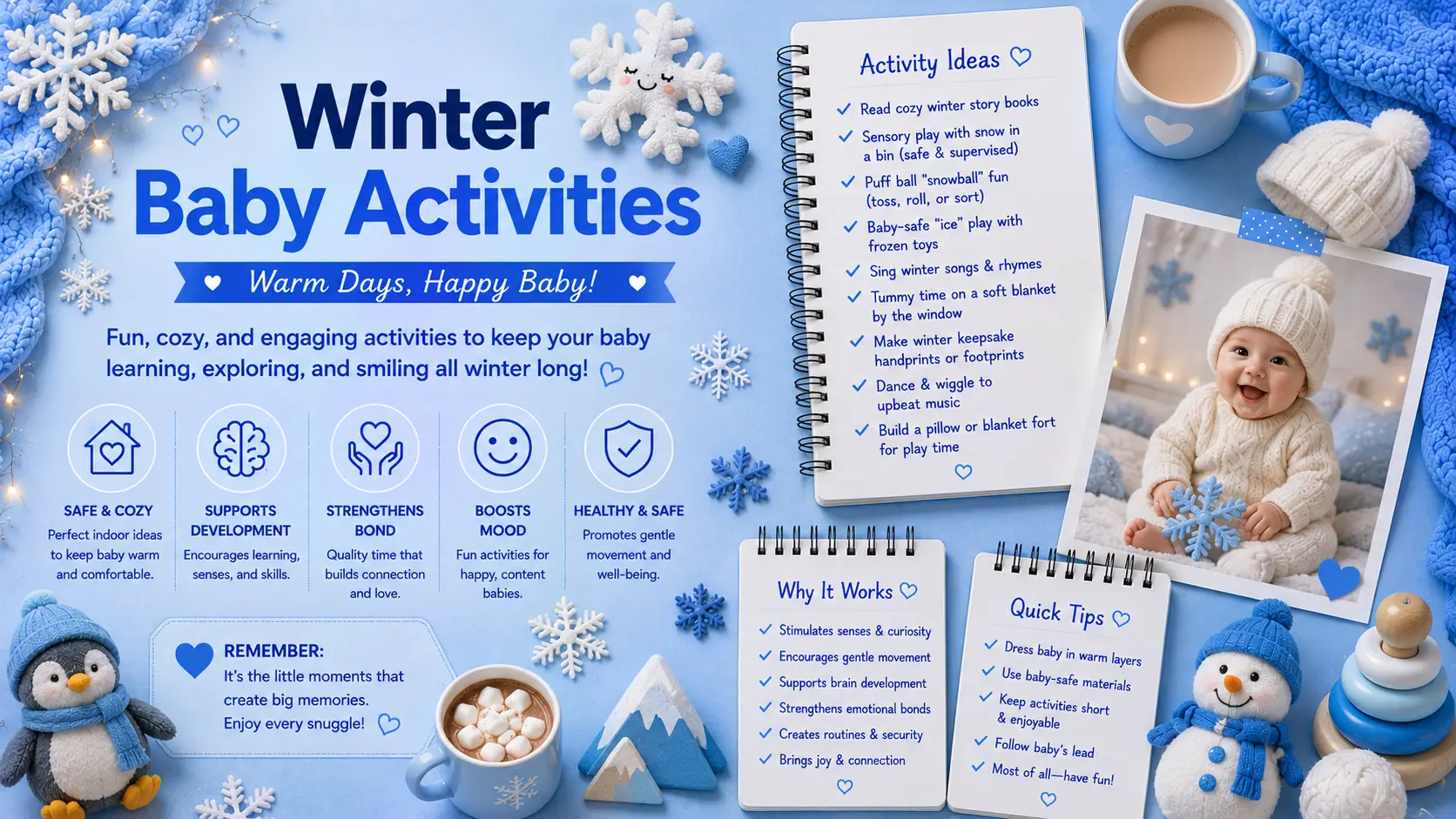
Sensory bins are a winter favorite. Fill a shallow plastic bin with cooked cooled rice, cloud dough, or store-bought fake snow. Add scoops, cups, and a few large toys or plastic animals for “rescue” play. For babies who still mouth everything, use taste-safe options like thickened yogurt or oatmeal on a tray. This kind of winter sensory play builds fine motor skills, focus, and language as you narrate textures and actions (“soft snow,” “cold ice”).
Ice painting is another easy win: freeze colored water in ice cube trays and let older babies “paint” on paper as the cubes melt. Or bring real snow inside for a short session in a water table or bin—add food coloring for extra fun, then clean up quickly.
Keep Bodies Moving with Indoor Obstacle Courses and Dance
Babies still need gross motor practice when parks are off-limits. Create a simple obstacle course with couch cushions to crawl over, a blanket tunnel between chairs, and a laundry basket to push. Painter’s tape roads on the floor turn the living room into a path for rolling, crawling, or early walking. These indoor winter activities for babies help develop strength and coordination while satisfying the urge to move.
Dance parties work for every age. Put on music, hold a younger baby close in a carrier or your arms, or let older ones stomp and bounce. Add glow sticks or flashlights for a special winter glow. Fort-building with blankets and chairs offers both movement (climbing in and out) and a cozy spot for quiet play afterward.
Cozy Crafts and Everyday “Helping”
Handprint art turns into penguins, snowmen, or mittens with a little paint and paper. Salt dough ornaments or cotton-ball snowmen are simple enough for toddlers with help. Water painting on construction paper keeps messes minimal for younger babies.
Invite your baby to “help” in the kitchen. A learning tower or sturdy chair lets them stand and stir, pour dry ingredients, or tear lettuce. Even high-chair time with a silicone brush and soft food for mashing counts as engaged play. These real-life tasks build confidence and keep hands busy on long winter afternoons.
Storytime, Music, and Quiet Connection
Build a pillow fort and settle in with winter-themed board books about snow, animals, or cozy homes. Act out simple stories with sock puppets or household props. Library storytimes (when available) offer social time in a warm public space. Sensory bottles filled with water, glitter, and small safe items provide mess-free visual interest for younger babies.
Bath time can become a winter highlight—add a few ice cubes for temperature exploration or bring in a bit of snow for a unique splash session (always supervised closely).
Safe Outdoor Winter Activities with Baby
Fresh air still matters. Bundle up properly (hat, mittens, layers, and a weather-appropriate carrier or stroller cover) and take short walks. Many parents find even 10–15 minutes outside boosts mood for both adult and baby. On snowy days, try a gentle sled ride on a mild slope, make simple snow angels, or let an older baby use a toddler shovel. Photograph the snowy scenery or look for animal tracks. Always watch for signs of cold and head inside before anyone gets chilled.
Why These Activities Work in Winter
Winter baby activities support the same developmental needs as any other season—movement, sensory input, language, and connection—while adapting to shorter days and colder weather. Alternating active play with calm moments helps regulate energy and sleep. Keep sessions short, follow your baby’s cues, and rotate a few ideas so nothing feels stale. A “rainy day” or winter bin with ready materials makes starting easier on low-energy days.
Safety first: supervise constantly, avoid small choking hazards, and dress appropriately for any outdoor time. Most of these ideas use items already at home, making them practical for real life.
Winter doesn’t have to mean cabin fever. With a mix of sensory exploration, movement games, creative play, and the occasional bundled-up outing, you can turn the colder months into a season of connection and discovery with your baby.
FAQ
What are the best indoor winter activities for babies?
Sensory bins with rice or fake snow, simple obstacle courses using pillows and blankets, dance parties, fort building, water or ice play, and kitchen “helping” rank among the most popular and effective. They keep babies engaged without needing special equipment.
How can I keep my baby active during winter when it’s too cold outside?
Focus on indoor gross motor play like crawling over cushions, pushing a laundry basket, dancing, or following painter’s tape paths. Short supervised outdoor walks in proper gear also help when temperatures allow.
Are outdoor winter activities safe for babies?
Yes, with proper preparation. Dress in layers, use a hat and mittens, limit time in extreme cold, and watch for signs of discomfort. Short stroller walks, gentle sledding, or snow play work well for many families.
What winter sensory play ideas work for young babies?
Taste-safe options like yogurt painting, oatmeal bins, or sealed sensory bottles are ideal for mouthers. Older babies enjoy cooked rice, cloud dough, or real snow brought inside for brief exploration under close supervision.
How do I prevent cabin fever with a baby in winter?
Rotate a few reliable activities, schedule short outdoor time when possible, join library storytimes or indoor parent groups, and prioritize connection over perfection. Even five to ten focused minutes of play several times a day makes a difference for both of you.