Skip to content
DidYouSearch DidYouSearch
  • did you search?
  • Baby Plus+
    • Baby Activities
      • Arts & Crafts
      • Indoor Activities
      • Montessori
      • Music
      • Outdoor Activities
      • Reading
      • Sensory Play
      • Tummy Time
    • Baby Development
      • Brain Development
      • Cognitive Development
      • Emotional Development
      • Fine Motor Skills
      • Growth Milestones
      • Monthly Milestones
      • Motor Skills
      • Physical Development
      • Social Development
      • Speech Development
    • Baby Feeding
      • Allergies
      • Baby Led Weaning
      • Bottle Feeding
      • Breast feeding
        • Breastfeeding Diet
        • Breastfeeding Positions
        • Latch Problems
        • Low Milk Supply
        • Mastitis
        • Pumping Schedule
        • Weaning
      • Burping
      • Cluster Feeding
      • Feeding Schedule
      • Formula Feeding
        • Formula Amount
        • Formula Brands
        • Formula Comparison
        • Formula Preparation
        • Formula Storage
      • Hydration
      • Pumping
      • Solid Foods
    • Baby Gear Reviews
      • Best Baby Carrier
      • Best Baby Monitor
      • Best Baby Strollers
      • Best Bottles
      • Best Breast Pump
      • Best Car Seat
      • Best Cribs
      • Best Diapers
      • Best Formula
      • Best Toys
    • Baby Growth
      • Growth Spurts
      • Height Charts
      • Monthly Growth
      • Percentiles
      • Weight Charts
    • Baby Health
      • Allergies
      • Cold
      • Constipation
      • Cough
      • Diarrhea
      • Ear Infection
      • Fever
      • Flu
      • Pediatric Visits
      • Rashes
      • Teething
      • Vaccines
      • Vomiting
    • Baby Nutrition
      • Dairy
      • Drinks
      • Eggs
      • Fish
      • Fruits
      • Healthy Recipes
      • Meat
      • Snacks
      • Vegetables
      • Vitamins
    • Baby Products
      • Baby Carriers
      • Bassinets
      • Bottles
      • Breast Pumps
      • Car Seats
      • Cribs
      • Diaper Bags
      • High Chairs
      • Monitors
      • Strollers
      • Swings
      • Toys
      • Walkers
    • Baby Recipes
      • BLW Recipes
      • Breakfast
      • Dinner
      • Finger Foods
      • Lunch
      • Purees
      • Snacks
    • Baby Safety
      • Baby Proofing
      • Car Seats
      • Choking Hazards
      • CPR
      • Home Safety
      • Poison Prevention
      • Safe Sleep
      • Sun Protection
      • Water Safety
  • Baby Names
    • Boy Names
    • Girl Names
    • American baby boy names
    • American baby girl names
    • Biblical Names
    • Middle Names
    • Modern Names
    • Short Names
    • Unique Names
    • Unisex Names
  • Recommended
    • Baby Shopping
      • Baby Registry
      • Budget Baby Shopping
      • Hospital Bag
      • Must Have Products
      • Newborn Checklist
      • Nursery Ideas
    • Baby Sleep
      • Bedtime Routine
      • Co Sleeping
      • Crib Safety
      • Nap Schedules
      • Night Wakings
      • Sleep Environment
      • Sleep Products
      • Sleep Regression
      • Sleep Training
      • Wake Windows
      • White Noise
    • Childcare
      • Daycare
      • Babysitters
      • Kindergarten
      • Nannies
      • Preschool
    • Newborn Care
      • Nail Care
      • Baby Hygiene
      • Bathing
      • Crying
      • Diapering
      • Ear Care
      • Eye Care
      • Skin Care
      • Soothing Techniques
      • Temperature
      • Umbilical Cord
    • Special Needs
      • Premature Babies
      • Autism Signs
      • Developmental Delays
      • Down Syndrome
      • NICU
      • Twins
    • Seasonal Baby Care
      • Spring
      • Summer
      • Travel
      • Fall
      • Holidays
      • Winter
  • Parenting
    • Bonding
    • Discipline
    • Emotional Intelligence
    • First Time Parents
    • Gentle Parenting
    • Positive Parenting
    • Routines
    • Single Parents
    • Working Parents
  • Pregnancy
    • Pregnancy Complications
    • Labor & Delivery
    • Postpartum Recovery
    • Pregnancy Exercises
    • Pregnancy Medications
    • Pregnancy Nutrition
    • Pregnancy Sleep
    • Pregnancy Symptoms
    • Pregnancy Tests
    • Pregnancy Vitamins
    • Pregnancy Weeks
  • Toddler
    • Preschool
    • Speech
    • Tantrums
    • Toddler Food
    • Toddler Sleep
    • Behavior
    • Independence
    • Learning
    • Potty Training
  • Traveling with Baby
    • Road Trips
    • Beach
    • Camping
    • Flying
    • Hotels
    • Packing Lists
  • did you search?
  • Baby Plus+
    • Baby Activities
      • Arts & Crafts
      • Indoor Activities
      • Montessori
      • Music
      • Outdoor Activities
      • Reading
      • Sensory Play
      • Tummy Time
    • Baby Development
      • Brain Development
      • Cognitive Development
      • Emotional Development
      • Fine Motor Skills
      • Growth Milestones
      • Monthly Milestones
      • Motor Skills
      • Physical Development
      • Social Development
      • Speech Development
    • Baby Feeding
      • Allergies
      • Baby Led Weaning
      • Bottle Feeding
      • Breast feeding
        • Breastfeeding Diet
        • Breastfeeding Positions
        • Latch Problems
        • Low Milk Supply
        • Mastitis
        • Pumping Schedule
        • Weaning
      • Burping
      • Cluster Feeding
      • Feeding Schedule
      • Formula Feeding
        • Formula Amount
        • Formula Brands
        • Formula Comparison
        • Formula Preparation
        • Formula Storage
      • Hydration
      • Pumping
      • Solid Foods
    • Baby Gear Reviews
      • Best Baby Carrier
      • Best Baby Monitor
      • Best Baby Strollers
      • Best Bottles
      • Best Breast Pump
      • Best Car Seat
      • Best Cribs
      • Best Diapers
      • Best Formula
      • Best Toys
    • Baby Growth
      • Growth Spurts
      • Height Charts
      • Monthly Growth
      • Percentiles
      • Weight Charts
    • Baby Health
      • Allergies
      • Cold
      • Constipation
      • Cough
      • Diarrhea
      • Ear Infection
      • Fever
      • Flu
      • Pediatric Visits
      • Rashes
      • Teething
      • Vaccines
      • Vomiting
    • Baby Nutrition
      • Dairy
      • Drinks
      • Eggs
      • Fish
      • Fruits
      • Healthy Recipes
      • Meat
      • Snacks
      • Vegetables
      • Vitamins
    • Baby Products
      • Baby Carriers
      • Bassinets
      • Bottles
      • Breast Pumps
      • Car Seats
      • Cribs
      • Diaper Bags
      • High Chairs
      • Monitors
      • Strollers
      • Swings
      • Toys
      • Walkers
    • Baby Recipes
      • BLW Recipes
      • Breakfast
      • Dinner
      • Finger Foods
      • Lunch
      • Purees
      • Snacks
    • Baby Safety
      • Baby Proofing
      • Car Seats
      • Choking Hazards
      • CPR
      • Home Safety
      • Poison Prevention
      • Safe Sleep
      • Sun Protection
      • Water Safety
  • Baby Names
    • Boy Names
    • Girl Names
    • American baby boy names
    • American baby girl names
    • Biblical Names
    • Middle Names
    • Modern Names
    • Short Names
    • Unique Names
    • Unisex Names
  • Recommended
    • Baby Shopping
      • Baby Registry
      • Budget Baby Shopping
      • Hospital Bag
      • Must Have Products
      • Newborn Checklist
      • Nursery Ideas
    • Baby Sleep
      • Bedtime Routine
      • Co Sleeping
      • Crib Safety
      • Nap Schedules
      • Night Wakings
      • Sleep Environment
      • Sleep Products
      • Sleep Regression
      • Sleep Training
      • Wake Windows
      • White Noise
    • Childcare
      • Daycare
      • Babysitters
      • Kindergarten
      • Nannies
      • Preschool
    • Newborn Care
      • Nail Care
      • Baby Hygiene
      • Bathing
      • Crying
      • Diapering
      • Ear Care
      • Eye Care
      • Skin Care
      • Soothing Techniques
      • Temperature
      • Umbilical Cord
    • Special Needs
      • Premature Babies
      • Autism Signs
      • Developmental Delays
      • Down Syndrome
      • NICU
      • Twins
    • Seasonal Baby Care
      • Spring
      • Summer
      • Travel
      • Fall
      • Holidays
      • Winter
  • Parenting
    • Bonding
    • Discipline
    • Emotional Intelligence
    • First Time Parents
    • Gentle Parenting
    • Positive Parenting
    • Routines
    • Single Parents
    • Working Parents
  • Pregnancy
    • Pregnancy Complications
    • Labor & Delivery
    • Postpartum Recovery
    • Pregnancy Exercises
    • Pregnancy Medications
    • Pregnancy Nutrition
    • Pregnancy Sleep
    • Pregnancy Symptoms
    • Pregnancy Tests
    • Pregnancy Vitamins
    • Pregnancy Weeks
  • Toddler
    • Preschool
    • Speech
    • Tantrums
    • Toddler Food
    • Toddler Sleep
    • Behavior
    • Independence
    • Learning
    • Potty Training
  • Traveling with Baby
    • Road Trips
    • Beach
    • Camping
    • Flying
    • Hotels
    • Packing Lists
Close

Search

Home/Baby Activities/Indoor Activities/Indoor Activities by Age (3,6,9,12 months)
Indoor Activities

Indoor Activities by Age (3,6,9,12 months)

By DrAdam
August 11, 2026 5 Min Read
0

Indoor play is one of the best ways to support your baby’s development during the first year. When weather, schedules, or energy keep you inside, simple age-appropriate activities help build motor skills, language, sensory awareness, and connection. The key is matching play to where your baby is right now—what works at 3 months looks very different at 12 months.

These indoor activities for babies by age draw from developmental milestones and parent-tested ideas. They use everyday items, require little setup, and stay flexible for real life. Always supervise closely and follow your baby’s cues.

Indoor Activities for 3-Month-Olds

Contents hide
1 Indoor Activities for 3-Month-Olds
2 Indoor Activities for 6-Month-Olds
3 Indoor Activities for 9-Month-Olds
4 Indoor Activities for 12-Month-Olds
5 Making Indoor Play Work Across the First Year
6 FAQ
6.1 What are the best indoor activities for a 3-month-old baby?
6.2 How do indoor activities change from 6 to 9 months?
6.3 What indoor play ideas work well for a 12-month-old?
6.4 Do I need special toys for age-appropriate indoor activities?
6.5 How much structured indoor play does a baby need each day?

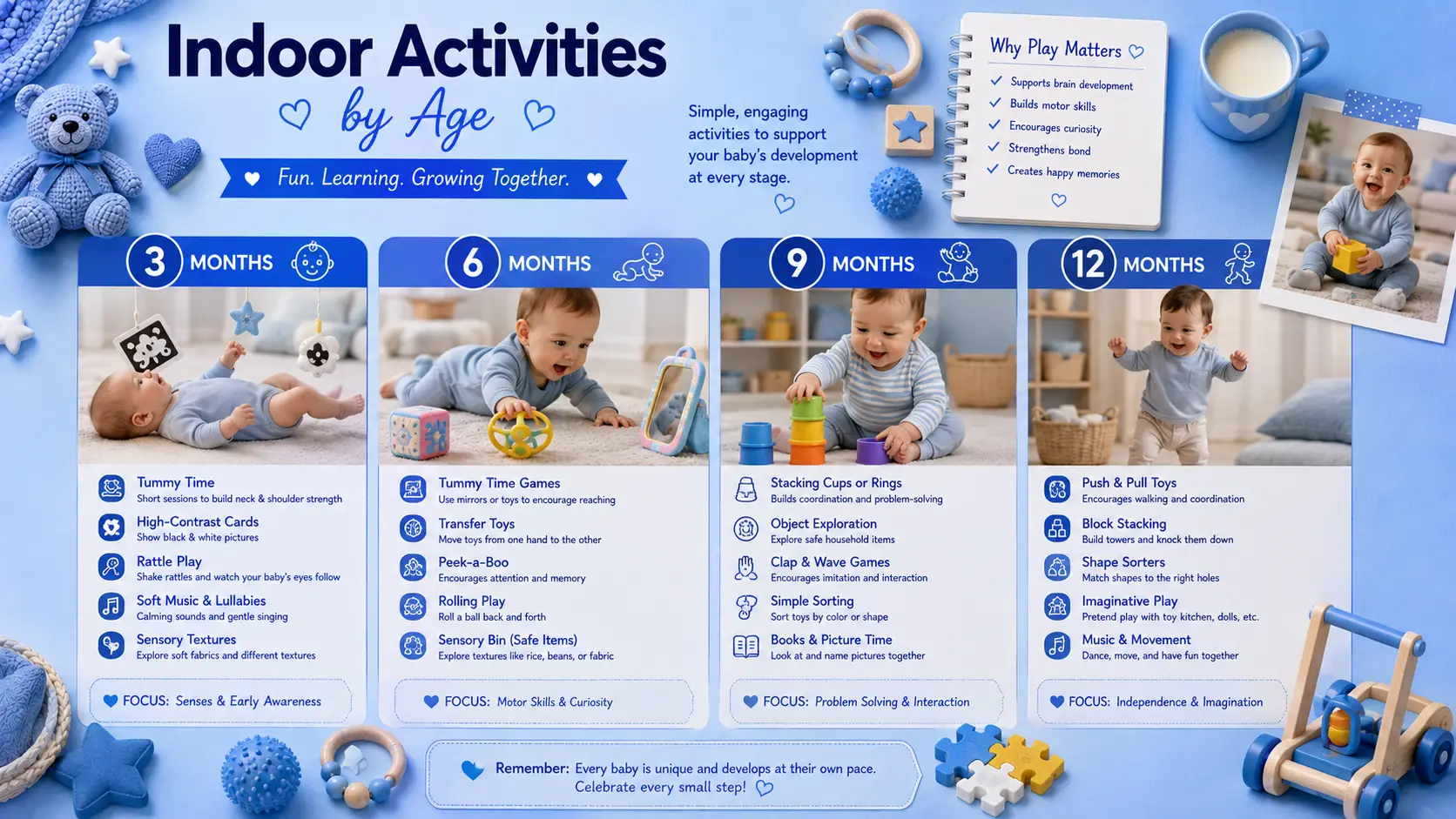
At 3 months, babies are discovering their hands, tracking moving objects, and strengthening neck and core muscles through tummy time. Play is mostly interactive and sensory.

Focus on face-to-face time. Hold your baby close, make eye contact, smile, and talk or sing. Narrate what you’re doing—this builds early language and bonding. High-contrast books or black-and-white cards hold attention well because vision is still developing.

Tummy time remains essential. Place your baby on a play mat or your chest for short sessions. Dangle a colorful toy or scarf just out of reach to encourage lifting the head and reaching. Gently move a rattle or soft object slowly across their field of vision so they practice tracking.

Simple songs with motions, like “Itsy Bitsy Spider,” help them feel rhythm while you guide their arms. A baby-safe mirror lets them look at faces (yours and theirs). These indoor activities for a 3-month-old keep sessions short—just a few minutes at a time is plenty.

Indoor Activities for 6-Month-Olds

By 6 months many babies roll, sit with support, grasp objects, and explore everything with their mouths. They’re ready for more purposeful play.

Encourage rolling by placing a favorite toy just out of reach on a soft surface. Practice supported sitting in front of a mirror so they can see themselves and you. Offer toys they can hold and shake—rattles, soft blocks, or household items like a wooden spoon.

Container play is a hit: put fabric squares, large pom-poms, or small toys into a wipe container or tissue box and let them pull items out. Transferring an object from one hand to the other builds coordination. Peek-a-boo with a scarf or your hands introduces object permanence in a fun way.

Sensory exploration works well—offer different textures such as a soft blanket, a sponge, or a crinkly book while describing how they feel. Music and gentle dancing in your arms or on the floor add movement and joy. These activities for a 6-month-old baby support both gross and fine motor skills while keeping play interactive.

Indoor Activities for 9-Month-Olds

Around 9 months babies often crawl, pull to stand, cruise along furniture, and understand simple cause-and-effect. They love exploring and testing what their bodies can do.

Set up a soft obstacle course with pillows and cushions for crawling over and around. Place toys just out of reach to motivate movement. Practice standing by offering stable furniture or your hands for support. A low activity table or couch edge encourages cruising.

Object permanence games shine now—hide a toy under a blanket or cup and encourage searching. Stacking cups or soft blocks that they can knock down teach cause and effect. Simple kitchen play (a safe low cupboard with plastic containers and lids) satisfies the urge to open, dump, and explore.

Copycat games work well: clap, wave, or bang a pot and see if they imitate. Sensory bins with large, safe items (supervised) or water play in a shallow pan add variety. These indoor activities for a 9-month-old keep energetic babies busy while building strength, problem-solving, and early language.

Indoor Activities for 12-Month-Olds

Near the first birthday many babies walk (or are close), stack, fill and empty containers, and follow simple directions. Play becomes more independent yet still benefits from your involvement.

Encourage walking with short paths between furniture or a push toy/laundry basket. Hide-and-seek with toys under a towel or in a box strengthens object permanence and problem-solving. Stacking blocks, nesting cups, or putting toys into a basket practices fine motor skills and following directions (“put it in”).

Kitchen cabinet play remains a classic—fill a low cupboard with safe items for dumping and exploring. Dance parties, rolling a ball back and forth, or simple fetch games (“bring me the ball”) combine movement and language. Reading board books and naming objects they point to continues language growth.

Pretend play starts emerging—rocking a stuffed animal or “talking” on a toy phone. These activities for a 12-month-old support independence while keeping play purposeful and fun indoors.

Making Indoor Play Work Across the First Year

Rotate a few reliable activities so nothing feels stale. Keep sessions short and end on a positive note. Narrate what your baby is doing—it builds vocabulary naturally. Safety always comes first: clear hazards, avoid small choking risks, and stay close.

Every baby develops at their own pace. If an activity feels too advanced or too simple, adjust it. The goal isn’t perfect play—it’s connection, movement, and exploration that fits your day.

With these age-specific indoor activities, you can support milestones from early tracking and tummy time all the way to walking and problem-solving, all without leaving the house.

FAQ

What are the best indoor activities for a 3-month-old baby?

Tummy time on a play mat, high-contrast books or cards, tracking a moving toy, face-to-face talking and singing, and looking in a baby-safe mirror are ideal. Keep sessions brief and interactive.

How do indoor activities change from 6 to 9 months?

At 6 months focus on rolling, supported sitting, grasping, and simple container play. By 9 months shift toward crawling obstacle courses, pulling to stand, object permanence games, and more independent exploration of safe household items.

What indoor play ideas work well for a 12-month-old?

Push toys or furniture cruising for walking practice, stacking and filling containers, hide-and-seek with toys, kitchen cabinet exploration, ball rolling, and simple direction-following games support the skills emerging around the first birthday.

Do I need special toys for age-appropriate indoor activities?

No. Everyday items like scarves, plastic containers, wooden spoons, pillows, blankets, and board books work extremely well. Specialty toys can be helpful but are not required.

How much structured indoor play does a baby need each day?

There is no strict amount. Short, frequent bursts of interactive play mixed with free floor time throughout the day are more effective than long structured sessions. Follow your baby’s interest and energy levels.


Author

DrAdam

Dr. Adam. Obstetrician and Gynecologist

Follow Me
Other Articles
Previous

Winter Baby Activities

Next

Montessori Activities for Babies

No Comment! Be the first one.

Leave a Reply Cancel reply

Your email address will not be published. Required fields are marked *

What is Did You Search?

The “Did You Search” website was created for all mothers and families. Just search to find all your needs about your children.

Links

  • about
  • contact
  • privacy policy
  • medical disclaimer
  • sitemap
Copyright 2026 — DidYouSearch. All rights reserved.