Skip to content
DidYouSearch DidYouSearch
  • did you search?
  • Baby Plus+
    • Baby Activities
      • Arts & Crafts
      • Indoor Activities
      • Montessori
      • Music
      • Outdoor Activities
      • Reading
      • Sensory Play
      • Tummy Time
    • Baby Development
      • Brain Development
      • Cognitive Development
      • Emotional Development
      • Fine Motor Skills
      • Growth Milestones
      • Monthly Milestones
      • Motor Skills
      • Physical Development
      • Social Development
      • Speech Development
    • Baby Feeding
      • Allergies
      • Baby Led Weaning
      • Bottle Feeding
      • Breast feeding
        • Breastfeeding Diet
        • Breastfeeding Positions
        • Latch Problems
        • Low Milk Supply
        • Mastitis
        • Pumping Schedule
        • Weaning
      • Burping
      • Cluster Feeding
      • Feeding Schedule
      • Formula Feeding
        • Formula Amount
        • Formula Brands
        • Formula Comparison
        • Formula Preparation
        • Formula Storage
      • Hydration
      • Pumping
      • Solid Foods
    • Baby Gear Reviews
      • Best Baby Carrier
      • Best Baby Monitor
      • Best Baby Strollers
      • Best Bottles
      • Best Breast Pump
      • Best Car Seat
      • Best Cribs
      • Best Diapers
      • Best Formula
      • Best Toys
    • Baby Growth
      • Growth Spurts
      • Height Charts
      • Monthly Growth
      • Percentiles
      • Weight Charts
    • Baby Health
      • Allergies
      • Cold
      • Constipation
      • Cough
      • Diarrhea
      • Ear Infection
      • Fever
      • Flu
      • Pediatric Visits
      • Rashes
      • Teething
      • Vaccines
      • Vomiting
    • Baby Nutrition
      • Dairy
      • Drinks
      • Eggs
      • Fish
      • Fruits
      • Healthy Recipes
      • Meat
      • Snacks
      • Vegetables
      • Vitamins
    • Baby Products
      • Baby Carriers
      • Bassinets
      • Bottles
      • Breast Pumps
      • Car Seats
      • Cribs
      • Diaper Bags
      • High Chairs
      • Monitors
      • Strollers
      • Swings
      • Toys
      • Walkers
    • Baby Recipes
      • BLW Recipes
      • Breakfast
      • Dinner
      • Finger Foods
      • Lunch
      • Purees
      • Snacks
    • Baby Safety
      • Baby Proofing
      • Car Seats
      • Choking Hazards
      • CPR
      • Home Safety
      • Poison Prevention
      • Safe Sleep
      • Sun Protection
      • Water Safety
  • Baby Names
    • Boy Names
    • Girl Names
    • American baby boy names
    • American baby girl names
    • Biblical Names
    • Middle Names
    • Modern Names
    • Short Names
    • Unique Names
    • Unisex Names
  • Recommended
    • Baby Shopping
      • Baby Registry
      • Budget Baby Shopping
      • Hospital Bag
      • Must Have Products
      • Newborn Checklist
      • Nursery Ideas
    • Baby Sleep
      • Bedtime Routine
      • Co Sleeping
      • Crib Safety
      • Nap Schedules
      • Night Wakings
      • Sleep Environment
      • Sleep Products
      • Sleep Regression
      • Sleep Training
      • Wake Windows
      • White Noise
    • Childcare
      • Daycare
      • Babysitters
      • Kindergarten
      • Nannies
      • Preschool
    • Newborn Care
      • Nail Care
      • Baby Hygiene
      • Bathing
      • Crying
      • Diapering
      • Ear Care
      • Eye Care
      • Skin Care
      • Soothing Techniques
      • Temperature
      • Umbilical Cord
    • Special Needs
      • Premature Babies
      • Autism Signs
      • Developmental Delays
      • Down Syndrome
      • NICU
      • Twins
    • Seasonal Baby Care
      • Spring
      • Summer
      • Travel
      • Fall
      • Holidays
      • Winter
  • Parenting
    • Bonding
    • Discipline
    • Emotional Intelligence
    • First Time Parents
    • Gentle Parenting
    • Positive Parenting
    • Routines
    • Single Parents
    • Working Parents
  • Pregnancy
    • Pregnancy Complications
    • Labor & Delivery
    • Postpartum Recovery
    • Pregnancy Exercises
    • Pregnancy Medications
    • Pregnancy Nutrition
    • Pregnancy Sleep
    • Pregnancy Symptoms
    • Pregnancy Tests
    • Pregnancy Vitamins
    • Pregnancy Weeks
  • Toddler
    • Preschool
    • Speech
    • Tantrums
    • Toddler Food
    • Toddler Sleep
    • Behavior
    • Independence
    • Learning
    • Potty Training
  • Traveling with Baby
    • Road Trips
    • Beach
    • Camping
    • Flying
    • Hotels
    • Packing Lists
  • did you search?
  • Baby Plus+
    • Baby Activities
      • Arts & Crafts
      • Indoor Activities
      • Montessori
      • Music
      • Outdoor Activities
      • Reading
      • Sensory Play
      • Tummy Time
    • Baby Development
      • Brain Development
      • Cognitive Development
      • Emotional Development
      • Fine Motor Skills
      • Growth Milestones
      • Monthly Milestones
      • Motor Skills
      • Physical Development
      • Social Development
      • Speech Development
    • Baby Feeding
      • Allergies
      • Baby Led Weaning
      • Bottle Feeding
      • Breast feeding
        • Breastfeeding Diet
        • Breastfeeding Positions
        • Latch Problems
        • Low Milk Supply
        • Mastitis
        • Pumping Schedule
        • Weaning
      • Burping
      • Cluster Feeding
      • Feeding Schedule
      • Formula Feeding
        • Formula Amount
        • Formula Brands
        • Formula Comparison
        • Formula Preparation
        • Formula Storage
      • Hydration
      • Pumping
      • Solid Foods
    • Baby Gear Reviews
      • Best Baby Carrier
      • Best Baby Monitor
      • Best Baby Strollers
      • Best Bottles
      • Best Breast Pump
      • Best Car Seat
      • Best Cribs
      • Best Diapers
      • Best Formula
      • Best Toys
    • Baby Growth
      • Growth Spurts
      • Height Charts
      • Monthly Growth
      • Percentiles
      • Weight Charts
    • Baby Health
      • Allergies
      • Cold
      • Constipation
      • Cough
      • Diarrhea
      • Ear Infection
      • Fever
      • Flu
      • Pediatric Visits
      • Rashes
      • Teething
      • Vaccines
      • Vomiting
    • Baby Nutrition
      • Dairy
      • Drinks
      • Eggs
      • Fish
      • Fruits
      • Healthy Recipes
      • Meat
      • Snacks
      • Vegetables
      • Vitamins
    • Baby Products
      • Baby Carriers
      • Bassinets
      • Bottles
      • Breast Pumps
      • Car Seats
      • Cribs
      • Diaper Bags
      • High Chairs
      • Monitors
      • Strollers
      • Swings
      • Toys
      • Walkers
    • Baby Recipes
      • BLW Recipes
      • Breakfast
      • Dinner
      • Finger Foods
      • Lunch
      • Purees
      • Snacks
    • Baby Safety
      • Baby Proofing
      • Car Seats
      • Choking Hazards
      • CPR
      • Home Safety
      • Poison Prevention
      • Safe Sleep
      • Sun Protection
      • Water Safety
  • Baby Names
    • Boy Names
    • Girl Names
    • American baby boy names
    • American baby girl names
    • Biblical Names
    • Middle Names
    • Modern Names
    • Short Names
    • Unique Names
    • Unisex Names
  • Recommended
    • Baby Shopping
      • Baby Registry
      • Budget Baby Shopping
      • Hospital Bag
      • Must Have Products
      • Newborn Checklist
      • Nursery Ideas
    • Baby Sleep
      • Bedtime Routine
      • Co Sleeping
      • Crib Safety
      • Nap Schedules
      • Night Wakings
      • Sleep Environment
      • Sleep Products
      • Sleep Regression
      • Sleep Training
      • Wake Windows
      • White Noise
    • Childcare
      • Daycare
      • Babysitters
      • Kindergarten
      • Nannies
      • Preschool
    • Newborn Care
      • Nail Care
      • Baby Hygiene
      • Bathing
      • Crying
      • Diapering
      • Ear Care
      • Eye Care
      • Skin Care
      • Soothing Techniques
      • Temperature
      • Umbilical Cord
    • Special Needs
      • Premature Babies
      • Autism Signs
      • Developmental Delays
      • Down Syndrome
      • NICU
      • Twins
    • Seasonal Baby Care
      • Spring
      • Summer
      • Travel
      • Fall
      • Holidays
      • Winter
  • Parenting
    • Bonding
    • Discipline
    • Emotional Intelligence
    • First Time Parents
    • Gentle Parenting
    • Positive Parenting
    • Routines
    • Single Parents
    • Working Parents
  • Pregnancy
    • Pregnancy Complications
    • Labor & Delivery
    • Postpartum Recovery
    • Pregnancy Exercises
    • Pregnancy Medications
    • Pregnancy Nutrition
    • Pregnancy Sleep
    • Pregnancy Symptoms
    • Pregnancy Tests
    • Pregnancy Vitamins
    • Pregnancy Weeks
  • Toddler
    • Preschool
    • Speech
    • Tantrums
    • Toddler Food
    • Toddler Sleep
    • Behavior
    • Independence
    • Learning
    • Potty Training
  • Traveling with Baby
    • Road Trips
    • Beach
    • Camping
    • Flying
    • Hotels
    • Packing Lists
Close

Search

Home/Baby Activities/Montessori/Montessori Principles for Parents
Montessori

Montessori Principles for Parents

By DrAdam
August 12, 2026 5 Min Read
0

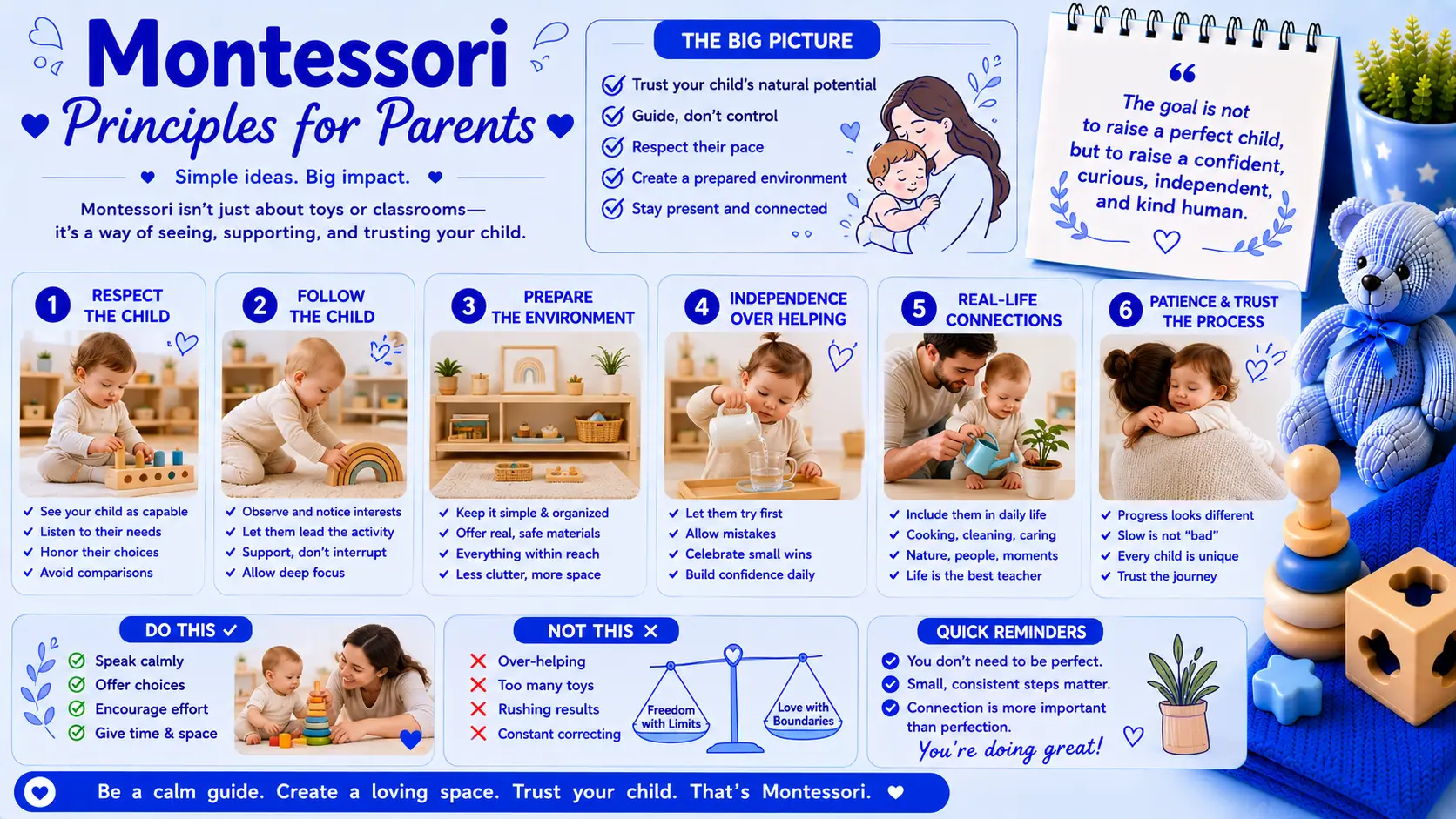
Montessori principles for parents offer a practical, respectful framework for raising capable, confident children. Developed by Dr. Maria Montessori more than a century ago, these ideas go far beyond classroom materials or expensive toys. At their heart, they ask adults to see the child as a whole person—curious, competent, and driven to learn—and to create conditions that support that natural drive.

Parents searching for Montessori parenting principles, how to apply Montessori at home, or the Montessori parenting style often discover the same core ideas: respect the child, prepare the environment, offer freedom within limits, observe carefully, and foster independence. These principles work whether your child attends a Montessori school or not. They shape daily interactions, reduce power struggles, and build intrinsic motivation.

Respect for the Child

Contents hide
1 Respect for the Child
2 The Prepared Environment
3 Freedom Within Limits
4 Observation and Following the Child
5 Independence and “Help Me to Do It Myself”
6 The Absorbent Mind and Hands-On Learning
7 Putting the Principles into Everyday Life
8 FAQ
8.1 What are the main Montessori principles for parents?
8.2 How can I apply Montessori principles at home without buying special materials?
8.3 Is Montessori parenting the same as gentle parenting or permissive parenting?
8.4 What does “freedom within limits” look like day to day?
8.5 Do Montessori principles work for all ages and temperaments?

This is the foundation of every Montessori principle for parents. Children are not incomplete adults waiting to be shaped; they are fully human beings with their own thoughts, feelings, and timing. Respect shows up in how we speak (at their eye level, with real language rather than baby talk), how we move them (announcing actions before lifting or changing them), and how we respond to their efforts (allowing struggle instead of rushing to “help”).

When parents practice this respect, children feel seen. They develop stronger self-worth and are more willing to cooperate because the relationship is built on mutual dignity rather than control.

The Prepared Environment

A prepared environment is one of the most searched and practical Montessori concepts for home. It means arranging spaces so children can act independently and purposefully. Low shelves with a few carefully chosen activities, child-sized tools, accessible clothing and dishes, and clear order all communicate: “This is your space, and you are capable here.”

The goal is not perfection or Pinterest aesthetics. It is accessibility and beauty scaled to the child. When the environment invites independence, parents spend less time managing and more time observing. Order in the physical space also supports the child’s internal sense of order—one of the sensitive periods Montessori identified.

Freedom Within Limits

Freedom with limits is frequently misunderstood. It does not mean children do whatever they want. It means they have genuine choices inside clear, consistent boundaries that keep everyone safe and respectful. A child may choose which shirt to wear from two options, which activity to take from the shelf, or how long to work on a puzzle—within the limits of the home’s routines and safety rules.

This principle builds decision-making skills and self-regulation. Children learn that freedom comes with responsibility: caring for materials, cleaning up, and considering others. Parents who master freedom within limits often notice fewer battles over control because the child experiences real agency every day.

Observation and Following the Child

Montessori parenting relies heavily on observation. Instead of constantly directing or entertaining, parents watch. What captures the child’s deep interest? Where do they show concentration? What skills are they trying to master? These observations reveal sensitive periods—windows when a child is especially ready to learn language, movement, order, or social skills.

“Follow the child” does not mean abandoning guidance. It means responding to the child’s developmental needs rather than imposing an adult agenda. When a toddler is obsessed with pouring water, offer safe pouring opportunities. When a preschooler wants to help cook, invite them into real food preparation. Observation turns parenting from reactive to responsive.

Independence and “Help Me to Do It Myself”

Independence is the practical expression of respect. From the earliest months, parents can look for ways to let the child participate: holding a wipe during diapering, pulling off a sock, carrying a plate to the table, or choosing a book. Practical life activities—sweeping, washing dishes, preparing snacks, dressing—are not chores; they are the child’s meaningful work.

This principle reduces helplessness and builds competence. Children who regularly experience “I can do it” develop confidence that carries into academic and social challenges later.

The Absorbent Mind and Hands-On Learning

Young children (especially under six) absorb their environment effortlessly. Everything they see, hear, and touch becomes part of who they are. Montessori principles for parents therefore emphasize real experiences over screens and fantasy in the early years: real tools, real food preparation, real conversations about the world, and natural materials that refine the senses.

Hands-on learning is not just for school. Baking, gardening, sorting laundry, and exploring nature all engage the body and mind together. Movement and cognition are linked; children learn best when they can move and manipulate.

Putting the Principles into Everyday Life

You do not need a fully equipped classroom. Start with one or two changes: lower a few items so your child can reach them, slow down care routines and narrate what you are doing, protect concentration by avoiding unnecessary interruptions, and replace constant praise or rewards with quiet acknowledgment of effort. Involve children in real family life rather than creating a parallel “kids’ world.”

Many parents find that these shifts reduce stress. Power struggles ease when children feel capable and respected. Concentration grows when the environment supports it. And the parent’s role becomes clearer: guide and prepare, then step back.

Montessori principles for parents are not a rigid system. They are a mindset of trust in the child’s developmental wisdom and a commitment to creating conditions where that wisdom can flourish. Applied consistently, they help raise children who are independent, respectful, curious, and intrinsically motivated—qualities that serve them for life.

FAQ

What are the main Montessori principles for parents?

The core ones are respect for the child, the prepared environment, freedom within limits, careful observation (following the child), fostering independence, and supporting the absorbent mind through hands-on, real-world experiences.

How can I apply Montessori principles at home without buying special materials?

Focus on accessibility and participation. Put everyday items within reach, invite your child into real household tasks, offer limited choices, protect uninterrupted play or work time, and speak and interact with respect. The principles matter more than the materials.

Is Montessori parenting the same as gentle parenting or permissive parenting?

No. Montessori includes clear limits and expectations. Freedom exists inside boundaries that protect safety, respect for others, and the environment. It is neither permissive nor authoritarian; it is respectful guidance.

What does “freedom within limits” look like day to day?

A child may choose their activity from a prepared selection, decide the order of a routine within reason, or select clothing from appropriate options. Limits include safety rules, cleaning up after oneself, and treating people and materials with care.

Do Montessori principles work for all ages and temperaments?

Yes. The principles adapt. Infants need freedom of movement and respectful care. Toddlers thrive with practical life and clear limits. Older children benefit from increasing responsibility and longer periods of independent work. Observation helps tailor the approach to each child’s unique personality and stage.

Author

DrAdam

Dr. Adam. Obstetrician and Gynecologist

Follow Me
Other Articles
Previous

Montessori Routine for Babies

Next

Music Activities for Babies

No Comment! Be the first one.

Leave a Reply Cancel reply

Your email address will not be published. Required fields are marked *

What is Did You Search?

The “Did You Search” website was created for all mothers and families. Just search to find all your needs about your children.

Links

  • about
  • contact
  • privacy policy
  • medical disclaimer
  • sitemap
Copyright 2026 — DidYouSearch. All rights reserved.