
A Montessori routine for babies centers on respect, observation, and following your child’s natural rhythms rather than imposing a rigid adult schedule. From birth, babies absorb everything through their senses and movements. Maria Montessori emphasized that education begins at birth, and everyday care moments—feeding, changing, sleeping, and free movement—form the foundation for independence, concentration, and trust.
Unlike traditional approaches that prioritize convenience or entertainment, a Montessori infant routine treats care as connection. It builds predictability so babies feel secure, while leaving space for their emerging capabilities. High-interest topics parents search for—such as Montessori for babies, Montessori daily schedule for infants, Montessori activities for babies 0-12 months, and how to start Montessori at home with a baby—all point back to the same core idea: prepare the environment, observe closely, and respond with presence.
Core Principles Behind a Montessori Baby Routine
Montessori infant practice rests on a few guiding ideas. The absorbent mind means babies take in their surroundings effortlessly. Sensitive periods drive intense focus on movement, language, and order. Freedom of movement supports natural motor development without restrictive gear. And care routines become opportunities for communication and cooperation rather than tasks to rush through.
Consistency creates security. A predictable flow of waking, feeding, playing, resting, and sleeping helps regulate sleep and reduces fussiness over time. At the same time, the routine stays flexible—follow your baby’s cues for hunger, tiredness, and alertness rather than the clock alone. This balance of structure and responsiveness is what many parents seek when looking for a Montessori sleep approach or a realistic daily infant schedule.
Preparing the Environment
A Montessori-inspired space for babies prioritizes safety, simplicity, and accessibility. Keep the area calm with soft lighting, muted colors, and minimal clutter. A low floor bed or firm mattress on the floor (once your pediatrician approves) allows the baby eventual freedom to enter and leave sleep independently. A defined movement area with a soft mat or rug, a low mirror, and a simple mobile or hanging objects supports visual tracking and reaching.
Limit containers such as swings and bouncers for extended periods. Instead offer floor time so the baby can practice lifting the head, rolling, and later crawling. Clothing should allow free movement of arms and legs. Real objects and natural materials often hold more interest than noisy plastic toys. These choices support the Montessori activities for babies that many parents research, especially in the first year.
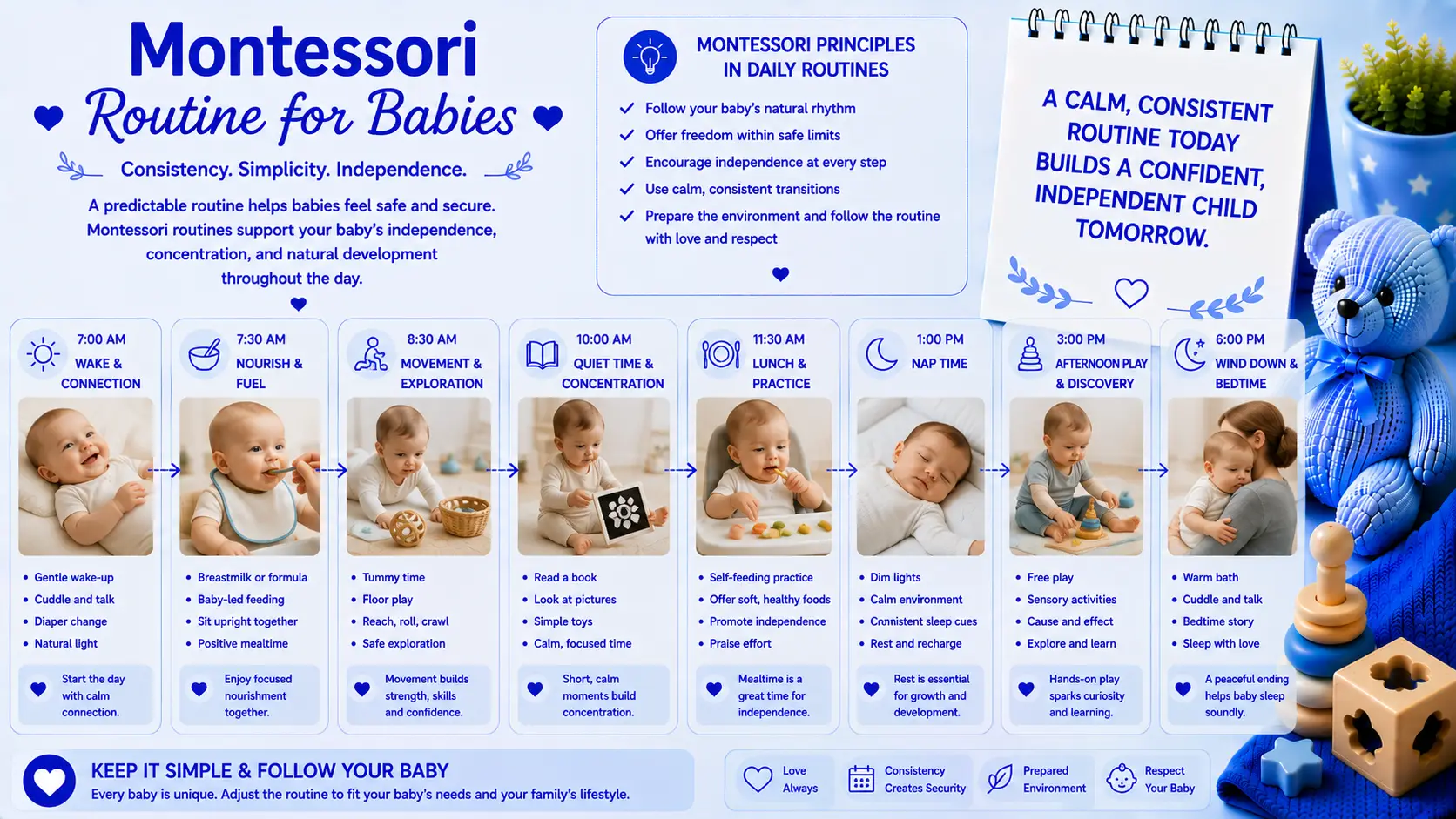
Sample Flow of a Montessori Daily Routine
Exact times vary by age and individual needs, but a typical day for infants follows a gentle rhythm rather than a strict timetable.
Morning often begins with a calm wake-up. Narrate softly what is happening (“Good morning, we’re going to change your diaper now”). Involve the baby by making eye contact, waiting a moment for their response, and offering a clean diaper or clothing item to hold when possible. Feeding follows—whether nursing, bottle, or later solids—done with presence and minimal distraction. After feeding comes a period of alert play or movement time on the floor.
Throughout the day, alternate short periods of focused interaction (talking, singing, reading simple real-life picture books) with independent exploration. Outdoor time, weather permitting, exposes the baby to natural light, sounds, and sights. Nap times follow sleepy cues rather than a fixed schedule; a consistent pre-sleep routine (dim lights, soft song, gentle touch) helps signal rest. Evening winds down similarly, with a predictable sequence of bath or wipe-down, pajamas, feeding if needed, and quiet connection before sleep.
As babies grow from 0–3 months into the crawling stage and beyond, the same principles expand. Tummy time becomes more intentional. Simple grasping objects replace early mobiles. Around six months and later, low shelves with a few carefully chosen items invite choice and order. Care of self begins in tiny ways—holding a spoon, helping pull off a sock—building the independence that Montessori infant programs emphasize.
Key Moments: Sleep, Feeding, and Care
Sleep benefits from a prepared sleep space separate from the active play area when possible, and from putting the baby down drowsy but awake once routines are established. There is no single Montessori sleep-training method, but the approach favors observation of cues, a calm environment, and gradual support for self-settling within a respectful relationship.
Feeding is treated as a relationship and a sensory experience. Talk about what is happening, allow the baby to participate as ability grows, and avoid using screens or constant entertainment. Later, a low weaning table and chair support independent sitting and self-feeding with soft, graspable foods.
Diapering and dressing become cooperative rather than done to the baby. Announce actions, pause, and invite participation. These moments build trust and language, two pillars of Montessori care for infants.
Practical Tips for Parents
Start small. Choose one or two care routines to slow down and narrate. Observe for 10–15 minutes without intervening when the baby is content on the floor. Rotate a few high-quality objects rather than overflowing the space with toys. Protect long uninterrupted stretches of free movement when the baby is alert. Most importantly, give yourself grace—Montessori at home with a baby is about intention, not perfection.
Many families find that establishing these patterns early makes the transition to toddlerhood smoother. The same respect for concentration, order, and independence continues as the child grows.
FAQ
What is a typical Montessori routine for a newborn or young baby?
It is less a fixed schedule and more a consistent sequence of care, feeding, rest, and free movement that follows the baby’s cues. Predictability helps, but flexibility is essential in the early months.
How do I create a Montessori daily schedule for infants at home?
Observe sleep and wake windows, build simple rituals around diapering, feeding, and bedtime, provide daily floor time, and keep the environment calm and uncluttered. Adjust as your baby’s rhythms change.
What Montessori activities are suitable for babies under one year?
Visual mobiles (early months), reaching and grasping objects, floor time for movement, simple language and songs, looking in a low mirror, and later, object permanence boxes or baskets of real household items. Follow the child’s interest and developmental stage.
Is there a Montessori way to handle sleep training?
Montessori principles encourage reading cues, creating a calm sleep space, using consistent pre-sleep routines, and supporting independence gradually while remaining responsive. It is relationship-based rather than a strict method.
When should I start a Montessori approach with my baby?
From birth. The earliest months are ideal for establishing respectful care, freedom of movement, and a prepared environment. Small consistent practices compound over time.