
A Montessori playroom is not about perfect aesthetics or endless toys. It is a prepared environment designed so children can move freely, choose independently, and engage deeply with materials that support their development. Maria Montessori believed the environment itself teaches. When shelves sit at a child’s height, when choices are limited and purposeful, and when everything has a clear place, children naturally develop concentration, order, and independence.
Whether you have a dedicated room, a corner of the living room, or a shared flex space, the same principles apply. Here are practical, real-life Montessori playroom ideas that work in everyday homes.
Start with the Foundations
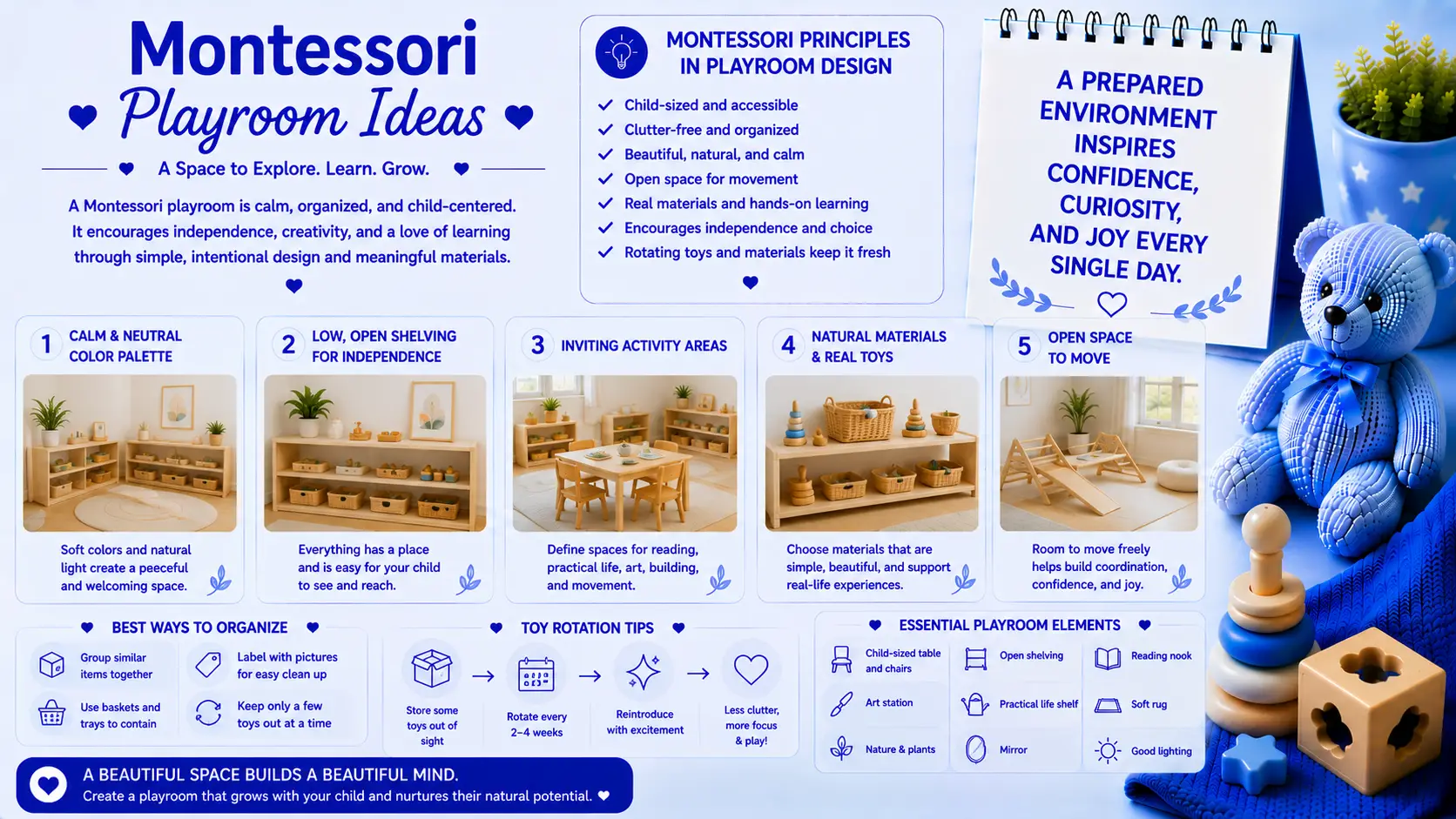
Keep the space simple. Most Montessori-inspired playrooms display only 8–10 activities or toys at a time. Too many options overwhelm young children and lead to scattered play. The rest go into rotation—stored out of sight and swapped every one to two weeks based on your child’s current interests and skills. This “less is more” approach is one of the highest-impact changes you can make.
Use low, open shelves so children can see and reach everything themselves. IKEA Kallax units turned on their side, simple wooden shelves, or even sturdy crates work well. Place each activity on its own tray or in its own basket. This visual order helps children know where things belong and makes cleanup part of the work rather than a battle.
Leave open floor space. Children need room to move, build, and stretch. A clear center area supports gross motor development and prevents the room from feeling cramped. Natural light, a plant or two, and a few pieces of artwork hung at child height add calm and beauty without visual noise.
Furniture and Layout That Support Independence
Child-sized furniture is key. A low table and chairs invite focused work. A floor cushion or small reading nook creates a quiet corner for books. For babies and toddlers, a low mirror mounted securely on the wall supports body awareness and movement. A soft rug can define a workspace without needing a full table.
In small spaces, think vertically and multi-functionally. Floating shelves higher up can hold adult items or seasonal decor while lower levels stay accessible to children. Baskets under a bench or inside an ottoman keep rotated toys tidy. A play couch (like a Nugget) or simple floor cushions can double as climbing and resting spots.
Practical life has a natural home in the playroom. A small broom and dustpan, a pitcher and cups for pouring practice, or a child-sized cleaning set invite real work. Many families include a simple art station with paper, crayons, or watercolor on a low table or easel.
Choosing Toys and Materials
Focus on open-ended, engaging materials rather than battery-powered entertainment. Wooden blocks, puzzles, stacking toys, threading activities, simple musical instruments, and realistic animal or vehicle figures encourage creative and purposeful play. Natural materials—wood, metal, fabric, and glass (when appropriate)—tend to hold attention longer and feel more satisfying to handle.
Include a mix of fine motor, gross motor, sensorial, and imaginative options. Rotate based on observation: if your child is drawn to puzzles, put out two or three different ones; if climbing energy is high, make sure movement materials are available. Books displayed face-out on a low ledge or in a basket invite independent reading.
Avoid deep toy bins that hide everything. When children can see their choices clearly, they engage more deeply and clean up more willingly.
Ideas for Different Ages and Spaces
For infants and young toddlers, keep the space especially open with a movement mat, a few grasping toys, a mirror, and a soft climbing option if space allows. As children grow into the preschool years, add more complex puzzles, practical life trays, and building materials.
Small-space Montessori playroom ideas work surprisingly well. Dedicate one wall to low shelves, use vertical storage, and keep the center clear. Even a hallway nook or corner of a bedroom can become a focused activity area when organized with intention. Many families successfully create Montessori-inspired zones throughout the house rather than one perfect room.
Creating a Calm, Inviting Atmosphere
The room should feel cozy and respectful of the child. Soft natural colors or thoughtful pops of color work better than overwhelming patterns. Bring in nature—a plant the child can help water, a bowl of smooth stones, or a single flower in a small vase. Soft lighting and a comfortable place for an adult to sit nearby support connection without hovering.
Observe how your child uses the space and adjust. The best Montessori playroom evolves with the child rather than staying frozen in a Pinterest-perfect snapshot.
FAQ
How do I set up a Montessori playroom on a budget?
Start with what you have. Clear out excess toys, use existing low shelves or crates, and display only a few carefully chosen activities. DIY trays, baskets from thrift stores, and household items for practical life work go a long way. Focus on organization and accessibility first—expensive wooden toys are optional.
What are the best Montessori playroom ideas for small spaces?
Use vertical storage, keep open floor space, rotate toys strictly, and define zones with rugs or low furniture. A single low shelf unit, a work mat, and a reading corner can create a highly functional Montessori-inspired area even in a tiny room or shared living space.
How many toys should be out in a Montessori playroom?
Most guides recommend 8–10 activities or toys at a time. This limited selection supports deeper concentration and easier cleanup. Rotate the rest every week or two based on your child’s interests and developmental stage.
Do Montessori playrooms have to be all wooden and neutral?
No. The priority is purposeful materials that invite engagement rather than passive entertainment. Color is welcome when used intentionally. Plastic toys can work if they serve a clear developmental purpose. The goal is clarity and calm, not a strict aesthetic.
How often should I rotate toys in a Montessori playroom?
Every one to two weeks is common, though some families adjust based on observation. Keep materials the child is still deeply engaged with and swap out those that are ignored or mastered. Regular rotation keeps the space fresh without adding clutter.