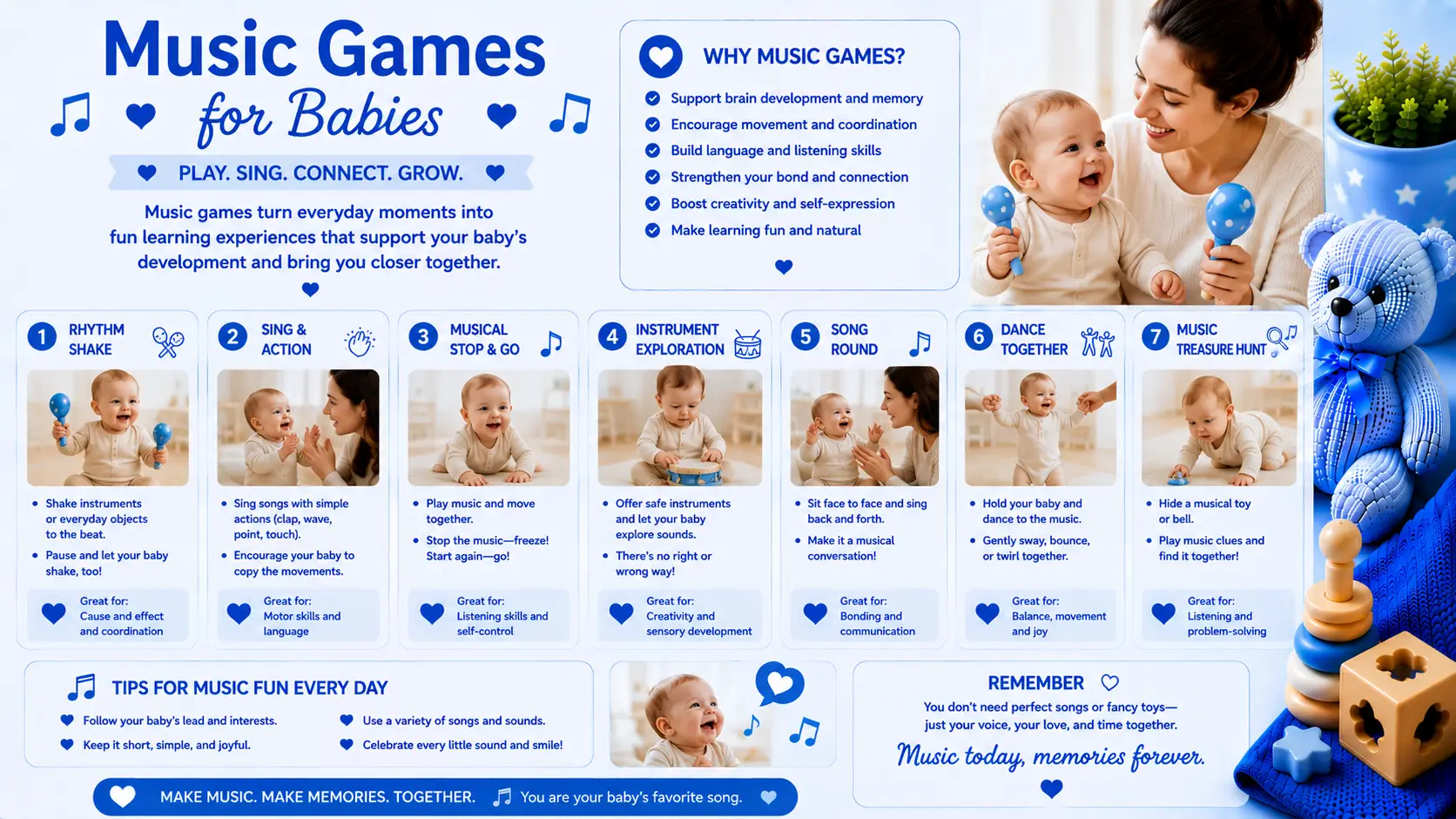

Music games for babies are one of the easiest ways to turn everyday playtime into a developmental boost. Long before babies can talk, they’re already responding to rhythm, tone, and sound — cooing back when you sing, kicking their legs to a beat, or giggling when a song suddenly stops. Turning music into a game keeps babies engaged while building real skills: listening, coordination, cause-and-effect thinking, and early communication. Best of all, you don’t need any special training or expensive gear to play. Below are some of the best music games for babies, organized by what they help develop, plus tips to get the most out of playtime.
Why Music Games Matter for Baby Development
Music does more than entertain — it actively shapes how babies’ brains process sound, language, and emotion. Musical play has been linked to stronger language skills, better coordination and balance, and improved cognitive functioning in young children. Interactive music games in particular — where a baby sings, claps, or moves and gets a response from you — help lay the foundation for back-and-forth communication, which is one of the earliest building blocks of conversation.
Music games also support:
Cause-and-effect learning. Babies quickly figure out that shaking an object makes a sound, or that a song stops and starts on cue.
Motor skills. Clapping, shaking, tapping, and bouncing to music build both fine and gross motor control.
Emotional bonding. Games that involve eye contact, singing, and touch (like bouncing on your knee) strengthen attachment.
Listening and attention. Games with pauses, tempo changes, or call-and-response patterns train babies to focus and anticipate what’s next.
Best Music Games for Babies
Stop and Go
Play a favorite song and dance, bounce, or sway with your baby. When the music stops, freeze completely — then start again when the music resumes. This simple game teaches babies to listen closely and begins building early impulse control and anticipation skills.
Pass the Shaker
Sit in a circle (even just you and your baby) and pass a shaker, soft ball, or scarf back and forth in time with the music. For younger babies, you can gently guide their hands. This game introduces the idea of rhythm and turn-taking in a playful, low-pressure way.
Copy-the-Sound
Sing a short note or sound and pause to see if your baby “answers” with a coo, babble, or squeal. Repeat back whatever sound they make. This call-and-response game mimics the rhythm of real conversation and encourages early vocal experimentation.
Peekaboo with Music
Combine a classic favorite with music by singing a short tune each time you “reveal” your face. The predictable pattern of sound and surprise helps babies build memory and anticipation while reinforcing the pure joy of interaction.
Body Part Bounce
Hold your baby securely on your lap or in your arms and gently bounce or tap different body parts (their hands, feet, or knees) in time with a song. This playful game introduces early body awareness alongside rhythm.
Instrument Exploration
Give your baby a few safe, simple instruments — a soft rattle, a small tambourine, or a homemade shaker — and let them experiment freely with different sounds. Narrate what they’re doing (“You’re shaking it fast!”) to connect the movement with language.
Musical Scarves
Wave a lightweight scarf in time with music, letting your baby track it with their eyes or reach for it. This game supports visual tracking and reaching skills while introducing tempo and movement.
Tips for Playing Music Games with Babies
Keep it short. A few minutes of focused musical play is plenty — babies’ attention spans are short, and that’s completely normal.
Follow your baby’s lead. If they seem more interested in mouthing the shaker than shaking it, that’s still valuable sensory exploration.
Use exaggerated expressions. Babies respond strongly to animated faces, playful pitch changes, and big smiles during musical games.
Repeat often. Babies thrive on repetition, so don’t worry about “running out” of games — the same one can be played daily and still hold their interest.
Rotate music styles. Mixing tempos and genres (upbeat, slow, instrumental, vocal) helps expose babies to a wider range of sound and rhythm.
Make it part of routines. Turning diaper changes or clean-up time into a mini music game can smooth transitions and reduce fussiness.
When to Try Group Music Classes
Many communities offer parent-and-baby music classes, often through local libraries, community centers, or dedicated early-childhood music programs. These classes typically include structured versions of games like pass-the-shaker or stop-and-go, along with the added benefit of social exposure to other babies and caregivers. If you’re looking to build a regular music routine but want some structure and community, a local class can be a great complement to at-home play.
Final Thoughts
Music games for babies don’t need to be complicated to be effective. A few minutes of singing, shaking, bouncing, or freezing to the beat gives your baby a fun, playful way to build real developmental skills — all while deepening your bond. Start with one or two simple games, follow your baby’s cues, and let repetition do the rest.
FAQ
What age can babies start playing music games?
Babies can enjoy simple music games from birth, though active participation — like shaking a rattle or reaching for a scarf — typically develops around 4 to 6 months as motor skills improve.
What are the benefits of music games for babies?
Music games support language development, motor skills, emotional bonding, and early listening and attention skills through playful, repetitive interaction.
What household items can be used for baby music games?
Sealed containers filled with rice or beans, wooden spoons and pots, soft scarves, and small balls all work well as simple props for music games.
How long should a music game session last for a baby?
A few minutes is plenty. Babies have short attention spans, so shorter, more frequent sessions tend to work better than long ones.
Are parent-and-baby music classes worth it?
They can be a great addition to at-home play, offering structured games, social interaction, and exposure to instruments in a guided setting — though they’re not necessary for babies to benefit from musical play.