
You don’t need a background in music to introduce your baby to their first instrument. From simple shakers to soft xylophones, musical instruments for babies are one of the easiest ways to spark curiosity, build coordination, and add a little rhythm to everyday play. And here’s some good news: research shows babies are most sensitive to music and musical activities from birth through around age seven, making this the ideal window to start exploring sound together.
Whether you’re shopping for age-appropriate musical toys or wondering which instruments are actually safe (and worth it) for a baby, this guide breaks down the best options by age, what to look for, and simple ways to use them at home.
Why Musical Instruments Matter for Babies
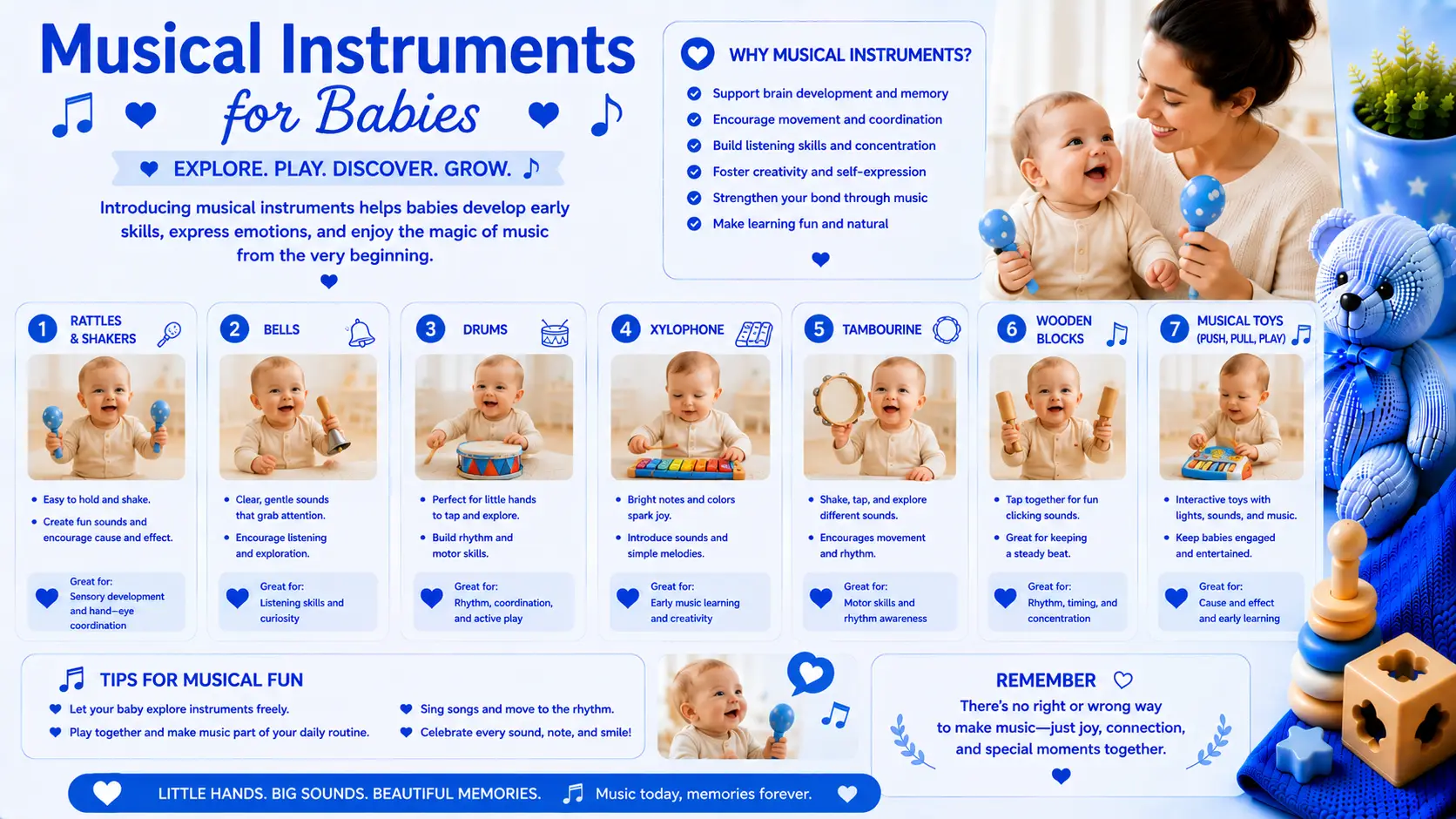
Musical instruments do more than make noise — they give babies an early, hands-on way to explore cause and effect. When a baby shakes a rattle and hears a sound, they’re learning that their actions have an impact on the world around them. Over time, that simple discovery builds into something bigger.
According to the American Academy of Pediatrics, music offers real developmental benefits for young children, including increased attention and reasoning skills, more pro-social behavior, and reduced impulsivity. Musical instruments specifically — especially percussion toys like shakers and drums — are linked to improvements in coordination, fine motor skills, and even early language development, since instrument play often pairs naturally with songs, counting, and new vocabulary.
Best Musical Instruments for Babies by Age
Newborn to 6 Months
At this stage, babies are listening far more than they’re actively playing. The most important “instrument” is actually your own voice — babies respond strongly to singing, humming, and gentle vocal sounds, especially from a parent they recognize. You can also introduce:
Soft rattle socks or wrist rattles – Lightweight and easy for tiny hands or feet to activate without needing a strong grip.
Wind chimes or mobiles with gentle sound – Great for auditory stimulation during tummy time or while lying in a crib.
6 to 12 Months
As babies develop better hand control and start sitting up, they can begin actively exploring simple, safe instruments:
Egg shakers – A favorite first instrument; the small, egg-shaped design fits neatly into little hands and produces an easy, satisfying sound.
Soft fabric or wooden rattles – Simple to grasp and shake, helping build fine motor skills.
Jingle bells on a wrist or ankle band – Let babies “make music” just by moving, which is especially fun during tummy time or crawling.
Small handbells – Easy to grip and produce a pleasant, gentle tone.
12 to 24 Months
Once babies are walking and have more hand-eye coordination, they can handle instruments with a bit more complexity:
Toy xylophones – Many are designed specifically for toddlers, with large, colorful bars that produce simple, tuned notes.
Tambourines – Combine shaking and tapping motions, which support coordination and rhythm.
Drums (toy versions) – Wooden or plastic toddler drums let little ones explore tempo, volume, and rhythm through banging — a favorite activity at this age. Real drums are best saved for much older children.
Maracas – Simple to hold and shake, and often sold in sets so siblings or playmates can join in.
What to Look for When Choosing Musical Instruments for Babies
Size and grip. Choose instruments sized for small hands — bulky or heavy instruments are frustrating and unsafe for babies to hold.
Material safety. Look for non-toxic, lead-free materials. Wood and BPA-free plastics tend to hold up well and are considered safer, longer-lasting choices. – No small or detachable parts. Any parts that could be a choking hazard should be avoided, especially for babies still exploring toys with their mouths.
Durability. Babies and toddlers are not gentle with toys. Look for well-reviewed instruments that can handle repeated banging, shaking, and dropping.
Simple, pleasant sound. Instruments with a soft or naturally pleasing tone (rather than harsh or overly loud sounds) are more enjoyable for both baby and parent during repeated play.
DIY Musical Instruments for Babies
If you’d rather not buy anything new, plenty of effective baby instruments can be made at home:
A sealed container filled with rice or dried beans makes an easy homemade shaker.
A pot and wooden spoon become an instant drum.
Stretched rubber bands over an empty container create a simple string-instrument sound.
Homemade instruments are a great low-cost way to introduce musical exploration, as long as they’re securely sealed and supervised closely during play.
Simple Ways to Use Instruments with Your Baby
Narrate the sounds. Describe what your baby is doing (“You’re shaking it so fast!”) to connect movement, sound, and language.
Play along together. Take turns shaking, tapping, or playing your own “instrument” alongside your baby to model turn-taking.
Pair instruments with songs. Familiar tunes like “Twinkle, Twinkle, Little Star” or “Itsy Bitsy Spider” give babies a rhythm to follow while exploring their instrument.
Let them explore freely. Structured play isn’t necessary — simply letting babies bang, shake, and discover sound on their own terms builds curiosity and confidence.
Final Thoughts
You don’t need a full toy chest of instruments to give your baby a strong musical foundation — a rattle, a shaker, and your own singing voice are more than enough to start. As your baby grows, gradually introducing new instruments like tambourines, xylophones, and toy drums keeps musical play fresh, fun, and developmentally rich every step of the way.
FAQ
What age can babies start using musical instruments?
Babies can begin exploring simple instruments, like soft rattles, from birth, and start actively engaging with shakers and bells around 6 months once they have better hand control.
What is the best first instrument for a baby?
Egg shakers and soft rattles are widely considered ideal first instruments, since they’re lightweight, easy to grip, and produce an immediate, satisfying sound.
Are musical instruments safe for babies?
Yes, as long as they’re age-appropriate, made from non-toxic materials, and free of small or detachable parts that could pose a choking hazard. Always supervise play.
Can homemade instruments work as well as store-bought ones?
Absolutely. Items like rice-filled containers or pots and spoons offer the same developmental benefits as store-bought instruments, as long as they’re safely made and supervised.
Do musical instruments actually help babies develop skills?
Yes. Playing with instruments supports fine motor skills, coordination, cause-and-effect learning, and early language development, especially when paired with singing and narration.