
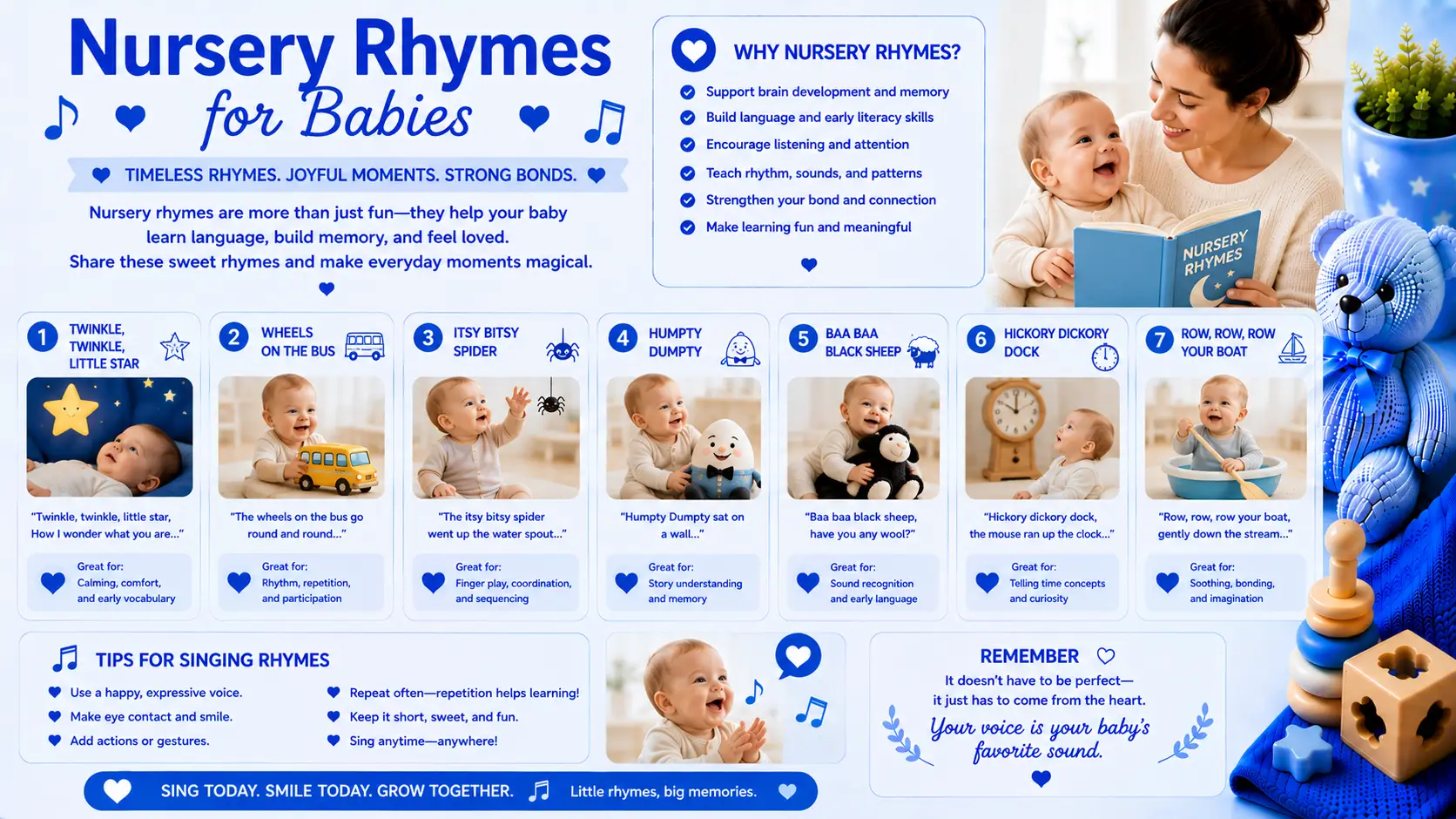

Long before babies understand what words mean, they’re picking up on rhythm, repetition, and rhyme — which is exactly what makes nursery rhymes for babies such a powerful early learning tool. These simple, sing-song verses have been passed down for generations, and for good reason: they’re short, catchy, easy to remember, and full of the exact sound patterns that help little brains build language.
Whether you’re looking for the best nursery rhymes for babies, wondering when to start reciting them, or just need a refresher on the classics, this guide covers everything you need to build rhyme time into your daily routine.
Why Nursery Rhymes Matter for Baby Development
Nursery rhymes aren’t just cute — they’re doing real developmental work. The repetition and rhyme found in classic nursery songs help babies build vocabulary, recognize sound patterns, and strengthen early listening skills. Because nursery rhymes are short and predictable, babies can start anticipating what comes next, which builds memory and attention span over time.
Nursery rhymes also support:
Language development. The rhyme and rhythm reinforce sound recognition, an essential building block for speech.
Bonding. A calm, loving voice reciting a familiar rhyme helps babies feel safe and connected to their caregiver.
Motor skills. Many nursery rhymes come with hand motions or actions (like “Itsy Bitsy Spider” or “Pat-a-Cake”), which help babies build coordination as they try to imitate the movements.
Early literacy. Rhymes introduce babies to sentence structure, storytelling, and word patterns well before they can read.
Most babies begin actively participating in nursery rhymes — through clapping, babbling, or trying to join in — somewhere between 9 and 12 months, though it’s never too early to start reciting rhymes to a newborn.
Classic Nursery Rhymes for Babies
Some nursery rhymes have stood the test of time for a reason: catchy rhythms, simple language, and timeless charm. Here are some of the most popular and enduring choices:
“Twinkle, Twinkle, Little Star” – Based on a poem written by Jane Taylor in the early 19th century, this gentle rhyme about the night sky remains one of the most recognized bedtime songs in the world.
“Row, Row, Row Your Boat” – A simple, repetitive rhyme that pairs naturally with a rocking or bouncing motion, making it a favorite for playtime.
“Itsy Bitsy Spider” – Known for its accompanying finger movements, this rhyme helps babies connect words with physical actions.
“Wheels on the Bus” – Originally titled “The Bus” when first published in 1937, this beloved rhyme’s repetitive structure and endless verses make it a go-to for both babies and toddlers.
“Hickory Dickory Dock” – A short, playful rhyme about a mouse and a clock, easy for babies to follow along with thanks to its steady rhythm.
“Humpty Dumpty” – A classic storytelling rhyme that introduces babies to narrative structure in a fun, memorable way.
“Old MacDonald Had a Farm” – Great for teaching animal names and sounds, with a repeating structure that helps build memory and word association.
“This Little Piggy” – An interactive rhyme, often used with a baby’s toes or fingers, that makes for playful one-on-one bonding time.
“Pat-a-Cake” – A clapping rhyme that introduces rhythm and turn-taking, perfect for babies starting to mimic hand movements.
“Ding Dong Bell” – Considered one of the earliest known nursery rhymes, first recorded in 1580.
How to Use Nursery Rhymes in Everyday Routines
You don’t need a special “rhyme time” to fit nursery rhymes into your day — they work beautifully woven into routines babies already experience:
Diaper changes and bath time. A short, familiar rhyme can turn a fussy moment into a predictable, calming ritual.
Bedtime wind-down. Gentle, slower rhymes like “Twinkle, Twinkle, Little Star” work well as part of a soothing bedtime routine.
Tummy time or playtime. Upbeat, interactive rhymes with hand motions keep babies engaged and add movement to playtime.
Car rides or errands. Rhymes with call-and-response patterns, like “Wheels on the Bus,” are great for keeping babies entertained on the go.
Tips for Reciting Nursery Rhymes to Your Baby
Use an expressive voice. Babies respond strongly to varied pitch, exaggerated expressions, and playful tone — don’t worry about sounding silly.
Repeat often. Repetition is a feature, not a flaw. The more familiar a rhyme becomes, the more your baby will anticipate and engage with it.
Add movement. Pairing rhymes with claps, bounces, or finger motions helps babies connect sound with physical action.
Don’t wait for them to “understand.” Babies benefit from hearing rhymes long before they can speak or fully comprehend the words — the sound patterns themselves are doing the work.
Mix old and new. Alongside timeless classics, feel free to introduce your own family favorites or rhymes in your home language.
Final Thoughts
Nursery rhymes for babies are simple, low-effort, and remarkably effective — a few minutes of rhyme time here and there adds up to real developmental benefits over time. Whether you’re reciting “Twinkle, Twinkle, Little Star” at bedtime or clapping along to “Pat-a-Cake” during playtime, these small moments help build your baby’s language skills, memory, and their bond with you, one familiar rhyme at a time.
FAQ
What age should I start reciting nursery rhymes to my baby?
You can start from birth. While babies won’t actively participate right away, they benefit from hearing the rhythm and repetition of nursery rhymes from their earliest days.
What are the most popular nursery rhymes for babies?
Classics like “Twinkle, Twinkle, Little Star,” “Itsy Bitsy Spider,” “Wheels on the Bus,” and “Pat-a-Cake” consistently rank among the most popular and widely used nursery rhymes for babies.
Do nursery rhymes actually help with speech development?
Yes. The repetition and rhyme in nursery rhymes reinforce sound recognition and pattern awareness, both of which are important building blocks for early language and speech development.
When do babies start participating in nursery rhymes?
Most babies begin joining in through clapping, babbling, or simple actions between 9 and 12 months, though full participation typically develops over the following year or two.
Should I use nursery rhymes with actions or just sing them?
Both are valuable, but rhymes with actions (like “Itsy Bitsy Spider” or “Pat-a-Cake”) offer added benefits for motor skills and coordination, since babies try to imitate the movements.